Diet App Development: Build a Nutrition App That Sticks


Create engaging, high-performance mobile applications tailored to your business needs. We craft future-ready apps that offer smooth user experiences on all devices.
Build robust and scalable websites and CMS platforms that help you manage content effortlessly. Our development ensures a seamless digital presence.
Launch secure, feature-rich online stores with intuitive shopping experiences. We build tailored eCommerce platforms designed for growth.
Design captivating games with immersive gameplay and stunning graphics. From concept to launch, we build engaging experiences that players love.
Enhance your customer relationships with customized Salesforce implementations. Drive growth and efficiency with smarter CRM solutions.
Harness artificial intelligence and machine learning to automate workflows and gain actionable insights. Our AI transforms data into smart decisions.
Accelerate your software delivery lifecycle with continuous integration, delivery, and infrastructure automation to boost efficiency.

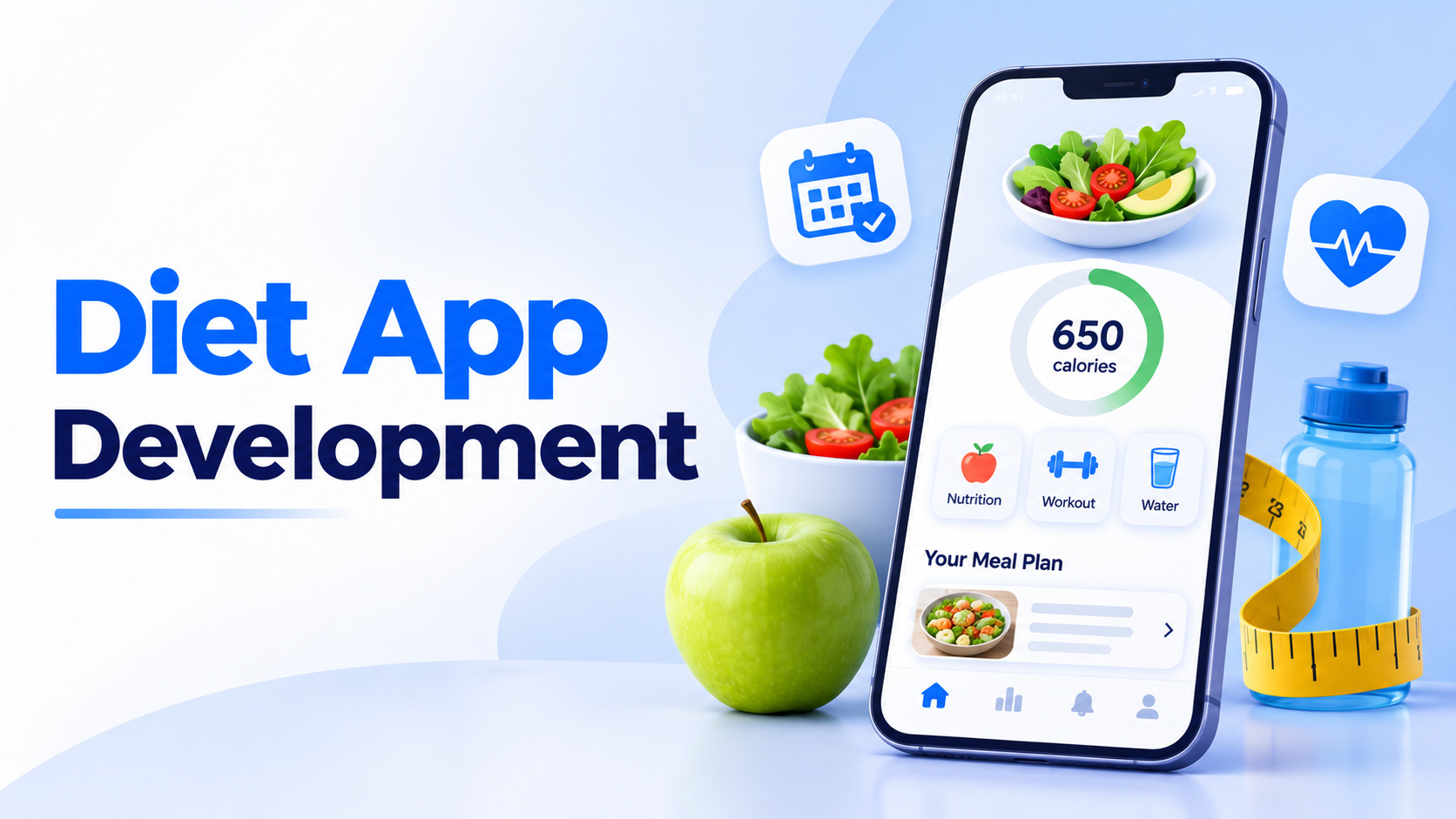
A diet app tracks what someone eats, turns that into nutrition data, and nudges behavior toward a goal. Simple to describe, hard to sustain. The apps that survive solve friction first and features second.
This guide breaks down the product models, the data layer, the features tied to retention, and what the build actually costs.
The diet and nutrition apps market is projected to grow from USD 6.94 billion in 2026 to USD 27.73 billion by 2035, at a 16.64% CAGR, per Towards Healthcare. Growth is real, but so is saturation at the free tier.
The money has shifted toward specificity. Apps built for diabetes management, perimenopause, muscle gain, or GLP-1 users outperform general calorie counters on both pricing and retention.
Broad diet app development without a defined user is the hardest version of this business.
The classic model. Users log meals, the app returns calories and macros against a target. Low clinical complexity, high data dependency, and brutal competition.
Best for: fitness audiences and teams with a strong consumer acquisition engine.
Human coaches or AI coaches review logs and respond with guidance. Retention runs much higher because someone is watching. Operations cost rises with every user.
Best for: premium pricing and outcome based positioning.
The app generates plans, builds shopping lists, and pushes orders to grocery partners. Logging burden drops sharply, which solves the biggest churn driver.
Best for: families, busy professionals, and partnership led distribution.
Built around a condition such as diabetes, renal disease, or IBS, often with dietitian oversight and provider billing. Highest trust, slowest to ship.
Best for: healthcare partnerships and reimbursement driven revenue.
This is the part founders discover too late. Nutrition accuracy depends entirely on the database behind the logging screen.
Public sources like USDA FoodData Central are free and reliable for whole foods, but weak on packaged and regional items. Commercial providers cover branded products and restaurant menus, with licensing costs that scale by user count. User generated entries fill gaps fast and introduce errors just as fast.
Most production apps run a layered approach. Verified records first, licensed branded data second, moderated user entries last, with a confidence flag shown in the UI. Plan your moderation workflow during diet app development, not after the one star reviews arrive.
Decide who the app serves and what measurable change it promises. A GLP-1 support app needs protein and hydration tracking plus side effect logging. A sports nutrition app needs timing windows and training load.
This choice determines your database scope, your coaching content, and your pricing power. Teams that define this in week one avoid the feature sprawl that sinks consumer health products. Write the promise as one sentence, then test it with twenty target users before design begins.
Start with the single screen users touch daily, not the onboarding or dashboard. Prototype three logging paths, time them with real users, and keep the fastest. Strong UI/UX design here is worth more than any additional feature, because logging friction is the primary churn cause in nutrition apps.
Build the rest of the product around that flow. Teams that design dashboards first usually ship something beautiful that nobody opens on day eight.
Set up the food database pipeline, normalization rules, and portion logic before the AI work. Then layer recognition models, recommendation logic, and goal adjustment on top.
A focused MVP development approach works well here, shipping barcode and manual logging first, then adding photo recognition once real usage data exists. Instrument everything, since model tuning depends on knowing which foods users log most and where entries get abandoned.
Track day 7, day 30, and day 90 retention from the first cohort. Watch logging streak length and the drop off point in onboarding. Those three numbers tell you more than downloads ever will. Ship small changes weekly against them.
Plan for mobile app maintenance and support from launch, because food databases, OS health APIs, and nutrition guidelines all change on their own schedules, independent of your roadmap.
Cross platform frameworks suit most nutrition apps, since the heavy lifting happens server side. Comparing the best cross-platform app frameworks early saves a costly migration later. Native modules still make sense for camera based recognition and background health data sync.
On the backend, separate the food data service from the user service. Food data changes constantly through licensing updates, while user records need stability and privacy controls. Keeping them apart makes diet app development easier to scale and audit.
Freemium with a paid tier remains standard, but the split matters. Lock advanced analytics, coaching, and meal planning behind the paywall, never basic logging. Gating the core loop destroys the habit that drives conversion.
Subscription infrastructure deserves real engineering attention, covering trials, pauses, win back offers, and annual plans. The same patterns used to build a SaaS subscription management platform apply directly.
Secondary revenue comes from employer wellness contracts, grocery and supplement partnerships, and licensed white label deployments.
| Scope | Range | Typical timeline |
| MVP tracker with barcode scanning | $35,000 to $70,000 | 3 to 4 months |
| AI logging, wearables, meal plans | $80,000 to $160,000 | 5 to 7 months |
| Clinical or coaching platform | $180,000 to $300,000+ | 8 to 12 months |
Food database licensing, AI inference, and content production sit outside these figures and recur monthly. For broader benchmarks, this breakdown of mobile app development cost puts the numbers in context across app categories.
EngineerBabu builds consumer health products where data quality and retention decide the outcome.
The team handles food database architecture, computer vision for meal recognition, wearable and health platform integration, subscription systems, and the analytics stack that tells you which features actually hold users.
Delivery runs on a CMMI Level 5 process with senior engineers staying on the project, backed by work across 200+ VC funded products.
Related builds like fitness app development and women’s health app development share much of the same foundation, which shortens the path from scope to a working product.
Diet app development is won in the first ten seconds of the logging flow and in the quality of the data behind it. Pick a specific user, make entry effortless, invest in your food database, and price around outcomes rather than features. Everything else is iteration.
General tracking apps do not require one legally. Any app giving personalized nutrition advice for a medical condition should have licensed oversight, both for user safety and for credibility with partners.
Current vision models identify common dishes well and estimate portions within a usable range. Accuracy drops with mixed dishes and hidden ingredients, so most apps let users confirm or adjust results.
General wellness apps typically do not. Clearance becomes relevant when an app claims to diagnose, treat, or manage a disease, or when it drives decisions like insulin dosing.
Day 30 retention above 20% is solid for consumer nutrition apps, and above 35% is strong. Coaching and clinical products generally outperform self serve trackers on this metric.
Yes. Several grocery and delivery platforms offer partner APIs that accept shopping lists or carts, which turns a generated meal plan into a completed order inside the app.