Mobile App Frauds: Types, Red Flags and How to Stop Them


Create engaging, high-performance mobile applications tailored to your business needs. We craft future-ready apps that offer smooth user experiences on all devices.
Build robust and scalable websites and CMS platforms that help you manage content effortlessly. Our development ensures a seamless digital presence.
Launch secure, feature-rich online stores with intuitive shopping experiences. We build tailored eCommerce platforms designed for growth.
Design captivating games with immersive gameplay and stunning graphics. From concept to launch, we build engaging experiences that players love.
Enhance your customer relationships with customized Salesforce implementations. Drive growth and efficiency with smarter CRM solutions.
Harness artificial intelligence and machine learning to automate workflows and gain actionable insights. Our AI transforms data into smart decisions.
Accelerate your software delivery lifecycle with continuous integration, delivery, and infrastructure automation to boost efficiency.
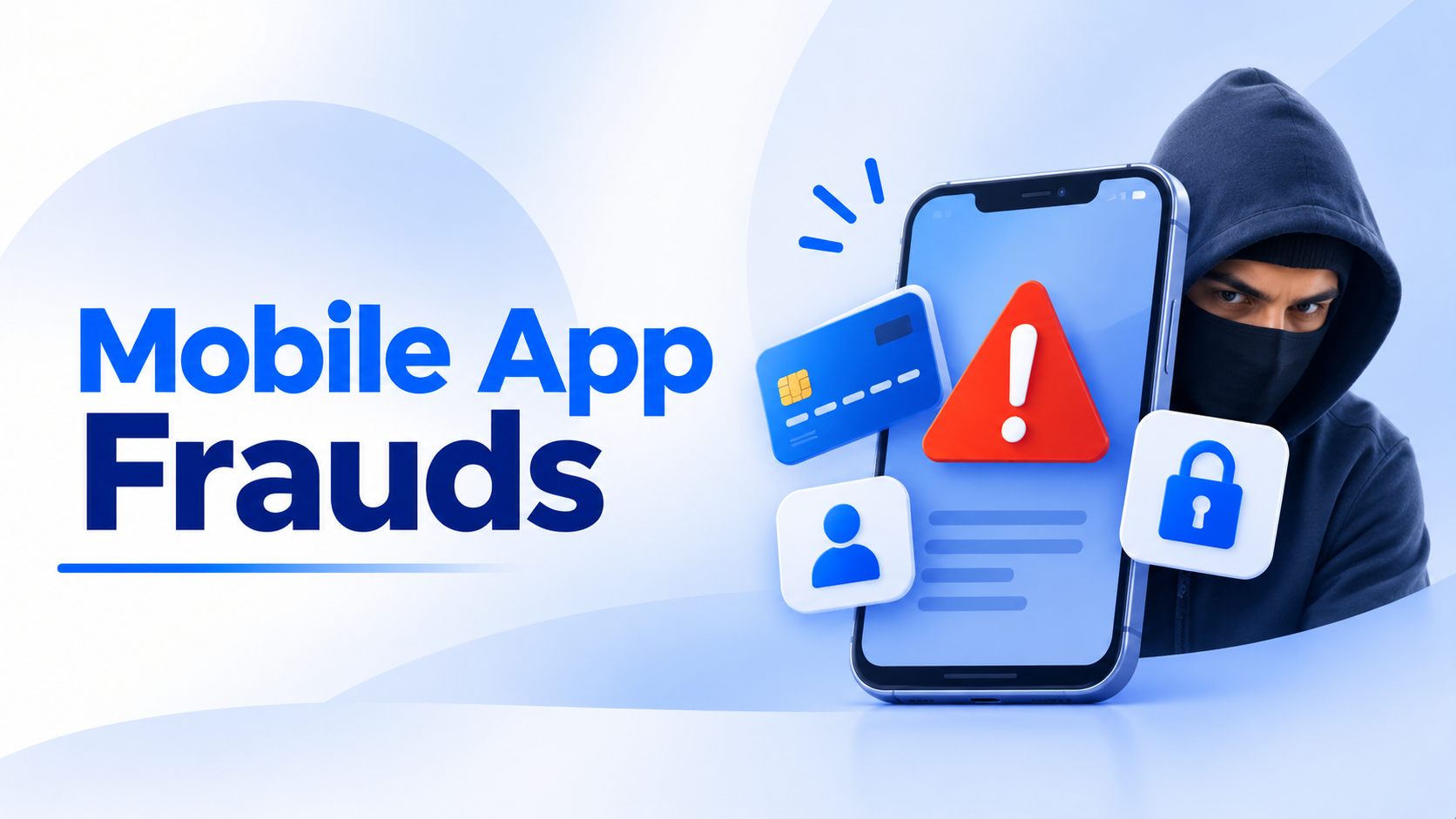
Mobile app frauds are rarely hacks in the movie sense. They are your own app logic used exactly as built, by the wrong person, at scale. A cloned APK collects real credentials. A scripted client drains a promo budget overnight.
A stolen session approves a payout nobody recovers. Most teams notice after the money leaves, because nothing in the app was built to notice sooner.
This guide covers the mobile app frauds that hit real products, the signals that expose them early, and the engineering choices that keep them out.
TL;DR
Fraud usually gets handed to security as a checklist item. That misses where mobile app frauds actually live. They sit in the gap between what your app allows and what your business assumed users would do.
A signup flow with no device check invites farmed accounts. A refund endpoint that trusts client input invites free orders. A referral bonus with no velocity cap invites scripted abuse within hours.
None of that requires breaking encryption. It requires finding the rule you forgot to write, which is how mobile app frauds beat products with strong infrastructure and weak product logic.
Fraud looks different depending on where your money moves. This section covers the five patterns of mobile app frauds that show up most across fintech, commerce and on-demand products. Each needs its own control, which is why one blanket fix never holds for long.
Attackers pull your APK, strip signature checks, inject their own code, and publish it on third-party stores. Users install it believing it is yours, and the clone harvests logins, card data and OTPs. Binary protection, certificate pinning and runtime integrity checks stop these mobile app frauds, and they belong in the build pipeline.
Credential stuffing tools test leaked passwords against your login endpoint at machine speed. Once inside, the attacker changes the recovery email and drains stored value. This works mostly because the app has no device binding and no step-up check on sensitive actions.
This covers stolen cards, triangulation schemes and friendly fraud, where a real customer disputes a real purchase. Checkout is fast on mobile and identity checks are thin. Money-handling products deserve the rigor applied to cybersecurity in fintech work, since chargebacks stack up quietly before anyone flags them.
Click spamming, click injection and SDK spoofing exist to claim credit for installs that were organic or fake. Your acquisition dashboard looks healthy while retention quietly collapses. The tell is a cohort that installs well and never completes a single meaningful action.
Your mobile API is public by definition. Anyone can inspect traffic, replay a request and automate it. Scraped inventory, drained promo codes and fake bookings are the least visible mobile app frauds. Rate limits, request signing and anomaly detection matter far more than obfuscation on the client.
The direct loss is the easy part to measure. The expensive part comes attached: chargeback fees, manual review headcount, processor scrutiny, store complaints and the churn that follows an incident.
The trend is not improving. Juniper Research expects eCommerce fraud to climb from $56 billion in 2025 to $131 billion by 2030. That is a 134% rise, driven largely by friendly fraud and automation (ICT Business).
Mobile app frauds carry a quieter cost too. They force emergency work nobody scoped, so engineering stops shipping features and the roadmap slips by months.
Detection fails when teams watch only outcomes like chargebacks and refund rates. By then the money is gone. These four steps move detection upstream, into the layer where mobile app frauds actually happen.
Server logs tell you what was requested. They do not tell you whether a real device and a real human sent it. Capture device fingerprint, emulator and root signals, app integrity status and session age inside the app itself.
Send that context with every sensitive request. Most mobile app frauds become obvious once you can see a payout request coming from an emulator running an unsigned build on a reused device.
Define what normal looks like in each critical flow before trying to spot abnormal. Measure median signup time, typical transaction size by segment, the usual gap between login and first payment, and device count per account.
Thresholds built on your own cohort data catch more mobile app frauds than generic vendor rules ever will. Review them quarterly, because attackers pace activity to sit under any limit that never moves. Stale baselines are where repeat mobile app frauds hide.
Static rules age badly, and attackers find the edges within weeks. A scoring model weighs dozens of signals together, so one weak flag does not block a good customer and five weak flags do.
Techniques used in AI based fraud detection suit mobile app frauds well, especially when decisions must land inside a few hundred milliseconds. Route high scores to step-up verification rather than a hard block. Good customers pass through, and most mobile app frauds stall.
Every confirmed case should feed back into your signals within days, not quarters. Tag it, trace which signals were present at the time, and check whether current rules would catch the same pattern again.
Without this loop, mobile app frauds that already cost you money return in a slightly different shape next quarter. Assign one owner, because shared ownership of fraud learnings usually means nobody does it. Share each finding with product too, since mobile app frauds often start as feature gaps.
Prevention is architectural, and the decisions that matter get made before the first screen is designed. Experienced teams price that work into the build instead of deferring it. These four practices separate apps that resist mobile app frauds from apps that invite them.
Assume every value sent from the device can be forged. Prices, discounts, user IDs, entitlement flags and balances need server-side validation every time, without exception. Seasoned teams do this by reflex, which is why common mobile app development mistakes cluster around trusting client input.
Server-side truth stays the cheapest defense against mobile app frauds. Platform hardening closes the rest, so the security features of iOS apps and their Android equivalents should be enabled deliberately.
Weak onboarding guarantees downstream pain, since most mobile app frauds begin with an account that should never have been approved. Document checks, liveness detection, phone verification and device binding stop mule accounts before they transact.
Choosing KYC identity verification software early costs far less than retrofitting under regulatory pressure. Tier friction by risk, so a small first purchase stays smooth while a large withdrawal triggers more. Strong identity checks remove most downstream fraud work.
A single pre-launch audit proves nothing about the release you shipped three weeks later. A documented web application security checklist stops the same gaps from reappearing with each new developer. Automated static analysis, dependency scanning and regular penetration work belong on every meaningful change.
Teams offering proper security testing treat it as a standing workflow against mobile app frauds, not a certificate. Every release reopens a door that mobile app frauds walk through.
Fraud patterns change faster than release cycles, and your controls go stale quietly. You need anomaly dashboards, alerting on unusual velocity, and a rollback plan for the day something slips through. Serious mobile app maintenance and support arrangements include monitoring for mobile app frauds, not crash fixes alone.
Budget for it upfront, because treating monitoring as optional ends with losses explained to the board. Most teams catch mobile app frauds late because nobody owns the dashboards.
Low-cost builds skip exactly the work that stops fraud. Certificate pinning, server-side validation, device intelligence and rate limiting add engineering hours, so they get cut first when a quote has to look competitive.
A debate like custom app vs no-code app looks purely financial until you need risk logic the platform cannot express. Then you rebuild under pressure.
Picking the right mobile app development company is a decision about mobile app frauds as much as delivery. Ask who owns session management and who watches risk after go-live.
Attack tooling keeps getting cheaper. Synthetic identities built from AI-generated documents already clear weak onboarding checks, and voice cloning is pressuring call-center recovery flows.
Automation is the bigger shift. Scripted abuse once needed real skill and now runs from off-the-shelf kits, so mobile app frauds scale against new products within days of launch.
Defense is moving the same way. Continuous authentication, behavioral biometrics and risk scoring built with AI in mobile app development are becoming standard wherever money moves.
Most teams call us after their first real incident. The better moment is before the build starts, when controls cost hours instead of rewrites.
EngineerBabu designs resistance to mobile app frauds into the architecture: hardened clients, server-side validation, device intelligence, tiered verification and monitored APIs.
That work runs through a CMMI Level 5 process with senior engineers on the project across fintech, healthtech and commerce. To build it in from the start, explore our mobile app development services.
Mobile app frauds are not a problem you solve once. They are an ongoing cost of running a product that moves money, data or value, and they grow with your success.
Teams that stay ahead treat fraud as an engineering discipline with owners, budgets and metrics. Everyone else treats it as a recurring emergency and pays more each time.
These are the questions founders and product owners ask most once mobile app frauds move onto their roadmap. The answers below stay practical rather than legal. Treat them as a starting point for your own risk review.
Yes. Store review checks the submitted build, not copies redistributed elsewhere. Attackers repackage your APK and publish it on third-party stores, so runtime integrity checks and certificate pinning stay necessary.
It blocks most credential stuffing, but not SIM swaps or real-time OTP phishing. Pair it with device binding and step-up checks on withdrawals, password changes and recovery email updates.
Expect roughly 8 to 15% of build cost, depending on risk profile and regulation. Fintech and healthcare products sit higher because verification and audit requirements are heavier there.
Liability depends on your jurisdiction, payment network rules and your own terms. Card networks often push chargeback costs to merchants, which is why documented authentication evidence matters during disputes.
Yes, though retrofitting costs more than designing upfront. Start with server-side validation and monitoring, then phase in device intelligence and stronger verification across later releases without disrupting users.