APIs for Lending Platforms: Integrating Credit Bureau & Payment Gateways


Create engaging, high-performance mobile applications tailored to your business needs. We craft future-ready apps that offer smooth user experiences on all devices.
Build robust and scalable websites and CMS platforms that help you manage content effortlessly. Our development ensures a seamless digital presence.
Launch secure, feature-rich online stores with intuitive shopping experiences. We build tailored eCommerce platforms designed for growth.
Design captivating games with immersive gameplay and stunning graphics. From concept to launch, we build engaging experiences that players love.
Enhance your customer relationships with customized Salesforce implementations. Drive growth and efficiency with smarter CRM solutions.
Harness artificial intelligence and machine learning to automate workflows and gain actionable insights. Our AI transforms data into smart decisions.
Accelerate your software delivery lifecycle with continuous integration, delivery, and infrastructure automation to boost efficiency.
Hire app developers ready to turn your ideas into sleek, high-performing mobile apps for any platform.
Bring in frontend pros who craft smooth, beautiful, and user-friendly interfaces that your visitors will love.
Get backend developers who build fast, secure, and reliable systems to keep everything running behind the scenes.
Hire eCommerce developers who build secure, scalable online stores designed to offer seamless shopping and grow your sales.
Get dedicated developers committed to your projects, delivering consistent quality and speed as an extension of your team.
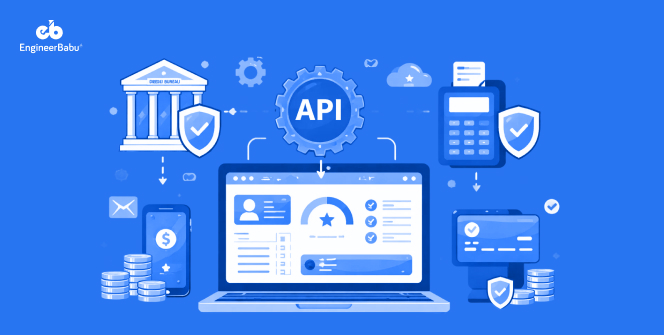
A borrower applies for a loan at 11 PM on a Sunday. By midnight, they have an approval. No paperwork. No waiting for a bank to open. No manual review sitting in someone’s queue. That kind of experience isn’t magic. It’s APIs doing exactly what they were built to do.
APIs for lending platforms are the connective tissue between your loan origination system, credit bureaus, and payment gateways. When integrated correctly, they eliminate manual touchpoints, reduce processing time, and let lenders focus on decisions rather than data wrangling.
When integrated poorly, they become the reason borrowers abandon applications halfway through.
So, this blog walks you through exactly how to integrate credit bureau and payment gateway APIs into your lending platform, step by step.
Lending is a data-intensive business. A single loan application touches credit history, identity verification, bank account data, repayment scheduling, and regulatory reporting. Doing any of this manually at scale is not just slow. It’s expensive and error-prone.
As per reports, APIs cut approximately 33% operational costs for financial institutions in 2025 through process automation.
APIs make that automation possible. They let your platform pull a credit score from Experian in real time, verify a bank account via Plaid, and schedule a repayment through Stripe, all within a single application flow.
Before we start learning about APIs for Lending Platforms, let’s understand the main categories. It helps to understand what each type of API actually does in a lending context.
These connect your platform to the three major U.S. credit bureaus: Experian, Equifax, and TransUnion. They return credit scores, tradeline history, derogatory marks, and inquiry data.
Some also support soft pulls (no impact on credit score) for pre-qualification and hard pulls for final underwriting.
Key providers worth knowing:
These handle the money movement side: disbursing loan funds, collecting repayments, and managing failed payments. The right APIs for lending platforms depend on your disbursement model (ACH, wire, or card) and your repayment collection method.
Key providers:
Decide upfront whether you need soft pulls, hard pulls, or both. Most APIs for lending platforms use a soft pull during pre-qualification and a hard pull at final underwriting. This protects your borrowers’ credit scores and reduces friction in the funnel.
Document what data fields you actually need from the bureau response. Pulling a full credit report when you only need a FICO score wastes API credits and adds latency.
Credit bureau API access is not open. You need to apply for access, pass a compliance review, and sign a data use agreement. For Experian and Equifax, this typically involves:
Budget 2 to 4 weeks for this process. It’s not fast, but it’s non-negotiable.
Each bureau has slightly different request structures, but the core inputs are the same: borrower’s full name, SSN (or last four digits for soft pulls), date of birth, and address.
Here’s a simplified example of what a credit pull request looks like structurally:
{
“applicant”: {
“name”: { “first”: “Jane”, “last”: “Doe” },
“ssn”: “XXX-XX-1234”,
“dob”: “1990-04-15”,
“address”: {
“street”: “123 Main St”,
“city”: “Austin”,
“state”: “TX”,
“zip”: “78701”
}
},
“product”: “CreditReport”,
“inquiryType”: “soft”
}
Your API development team should build an abstraction layer here so your application logic doesn’t care which bureau it’s talking to. This makes switching or adding bureaus far easier later.
Bureau responses are typically returned in XML or JSON and can be verbose. A full Experian credit report response can contain hundreds of data fields. Parse only what your decisioning engine needs and store it securely with field-level encryption.
Critical fields to extract for underwriting:
Bureau APIs for lending platforms fail sometimes. SSN mismatches, thin credit files, and frozen credit reports all return errors that need clean handling.
Design your workflow so the application doesn’t just crash. Instead, route the borrower to a manual review queue or offer an alternative verification path.
Also build in retry logic with exponential backoff for transient failures.
Lending platforms have two distinct payment directions: disbursement (you sending money to the borrower) and collection (the borrower repaying you). These often use different rails.
Common flow combinations:
| Use Case | Disbursement Method | Repayment Method |
| Personal loans | ACH push | ACH pull (recurring) |
| BNPL | Virtual card or ACH | Card charge or ACH |
| SMB lending | Wire or ACH | ACH debit |
Map both flows before you write a single line of integration code.
Before you disburse via ACH or set up recurring debits, you need to verify the borrower’s bank account.
Plaid’s Auth APIs for lending platforms are the standard here. It retrieves account and routing numbers after the borrower authenticates through their bank. This takes seconds and eliminates the days-long micro-deposit verification process.
const response = await plaidClient.authGet({
access_token: PLAID_ACCESS_TOKEN,
});
const { accounts, numbers } = response.data;
If you’re working with a lending software development company, they’ll typically handle Plaid integration as part of the onboarding flow build.
For most consumer and SMB lenders, ACH push is the disbursement standard. Using Dwolla or Stripe’s payment API, you create a transfer from your platform’s funding account to the borrower’s verified account.
With Stripe:
const transfer = await stripe.transfers.create({
amount: 500000, // in cents
currency: “usd”,
destination: borrower_connected_account_id,
});
Timing matters here. Same-day ACH settles within the business day. Standard ACH takes 1 to 3 days. Build your loan activation logic around actual settlement, not just initiation confirmation.
This is where most platforms get tripped up. Scheduled ACH debits require you to obtain authorization from the borrower, store it securely, and trigger debits on the correct dates. Stripe’s Payment Intents API or Dwolla’s webhook-driven transfer model both handle this well.
Key things to build into your repayment module:
Payment failures are not edge cases in lending. NSF rates on consumer loans can run 10 to 20% of payment attempts on any given cycle.
Your platform needs a clear retry schedule, borrower notification flow, and late fee application logic all triggered automatically by gateway webhooks.
Build a payment status state machine: scheduled → initiated → settled or scheduled → initiated → returned → retry_queued.
APIs for lending platforms don’t operate in a legal vacuum. Lending platforms pulling credit data and moving money are subject to:
Make sure your API integration stores borrower consent records, generates proper adverse action notices when credit pulls lead to declines, and logs all payment authorizations with timestamps.
Once your credit bureau and payment APIs for lending platforms are running, you have rich data flowing through your platform. That’s where AI development starts adding serious value.
ML development models can sit on top of your bureau data to build custom credit scores tuned to your specific borrower population. Instead of relying entirely on FICO, you can weigh factors like employment stability, payment velocity, or cash flow patterns from bank data.
This is especially powerful for thin-file borrowers who look risky on paper but are actually reliable.
On the payment side, ML models can predict which borrowers are likely to miss a payment 5 to 7 days before it’s due, letting you trigger proactive outreach instead of reacting to returns.
Your APIs for lending platforms integration architecture will depend heavily on your loan volume, team size, and compliance requirements. Three common patterns:
If you’re building an MVP, start direct and plan to refactor toward middleware or event-driven as volume grows.
Building APIs for lending platforms isn’t just a technical task. It’s the foundation of how fast you can approve loans, how accurately you can price risk, and how reliably you collect repayments.
Getting the credit bureau and payment gateway integrations right from the start saves you months of refactoring and keeps you on the right side of regulators.
Experian, Equifax, and TransUnion all offer direct API access for permissible-purpose lending use cases. Nova Credit is a strong option for non-traditional or thin-file borrowers.
Most gateways send webhook notifications with NACHA return codes when a debit fails. Your platform needs to listen for these codes and trigger retry or escalation logic accordingly.
Yes. Aggregators like Alloy, Finicity, and Array offer normalized APIs that pull from multiple bureaus through a single integration, simplifying both development and compliance overhead.
A soft pull retrieves credit data without affecting the borrower’s score. It’s used for pre-qualification. A hard pull is recorded on the borrower’s credit file and is used during final underwriting.
Typically 2 to 4 weeks. It involves a permissible purpose review, data security assessment, and a data use agreement with the bureau.