What is Geofencing and How does it Work in an App?


Create engaging, high-performance mobile applications tailored to your business needs. We craft future-ready apps that offer smooth user experiences on all devices.
Build robust and scalable websites and CMS platforms that help you manage content effortlessly. Our development ensures a seamless digital presence.
Launch secure, feature-rich online stores with intuitive shopping experiences. We build tailored eCommerce platforms designed for growth.
Design captivating games with immersive gameplay and stunning graphics. From concept to launch, we build engaging experiences that players love.
Enhance your customer relationships with customized Salesforce implementations. Drive growth and efficiency with smarter CRM solutions.
Harness artificial intelligence and machine learning to automate workflows and gain actionable insights. Our AI transforms data into smart decisions.
Accelerate your software delivery lifecycle with continuous integration, delivery, and infrastructure automation to boost efficiency.
Hire app developers ready to turn your ideas into sleek, high-performing mobile apps for any platform.
Bring in frontend pros who craft smooth, beautiful, and user-friendly interfaces that your visitors will love.
Get backend developers who build fast, secure, and reliable systems to keep everything running behind the scenes.
Hire eCommerce developers who build secure, scalable online stores designed to offer seamless shopping and grow your sales.
Get dedicated developers committed to your projects, delivering consistent quality and speed as an extension of your team.
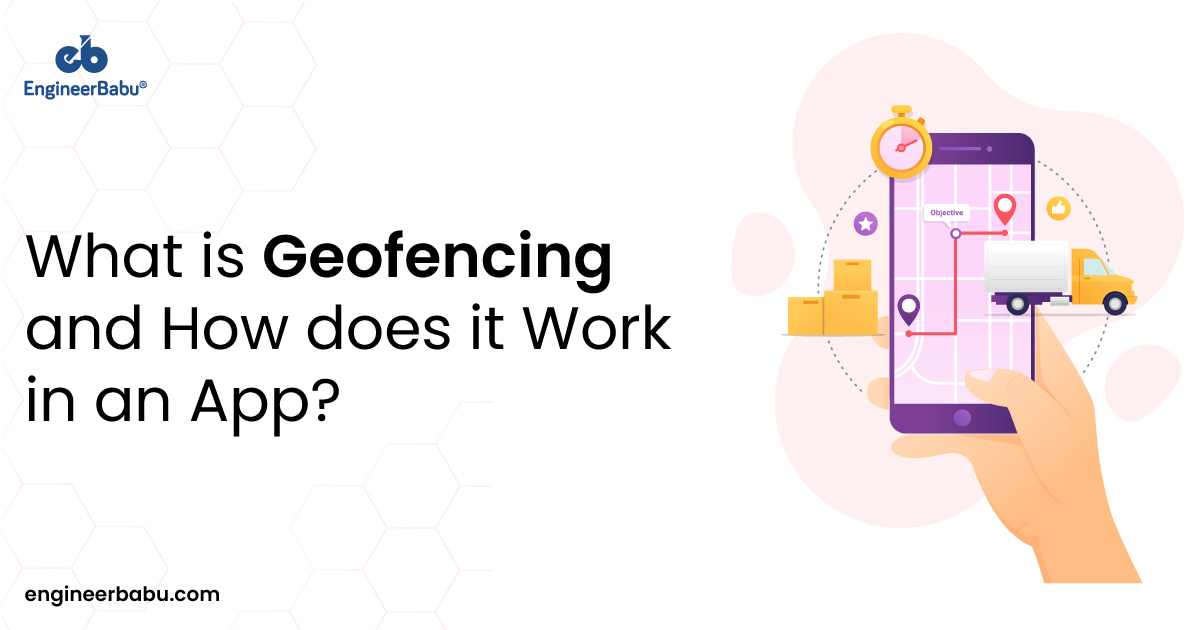
Ever walked past a coffee shop and, seconds later, received a discount from its app? That’s not a coincidence. It’s geofencing technology at work.
What started as a niche location feature has become a mainstream marketing and operations tool. The global geofencing market is projected to grow from $3.92 billion in 2026 to $11.85 billion by 2034, according to Fortune Business Insights.
But What is Geofencing Technology?
Geofencing technology creates a virtual boundary around a real-world location. When a mobile device enters or exits that boundary, it triggers a pre-set action, like a push notification, an ad, or an alert.
For businesses, this means reaching the right people at the right place and time. Location and timing are the two signals that matter most in mobile marketing, and geofencing captures both.
Geofencing is a location-based technology used in mobile apps and software. It relies on GPS, Wi-Fi, RFID, or cellular data to detect when a device or tag enters or leaves a defined area.
Depending on how it’s configured, crossing the boundary can:
The concept is simple, but the impact can be big. It lets businesses reach customers based on where they are in relation to a store, venue, or service area.
Geofencing technology falls into two main types.
| Type | How It Works | Best For |
| Active geofencing | Requires the app to be open and running. Uses GPS for precise, real-time tracking, but uses more battery. | Navigation, ride-hailing, food delivery app tracking |
| Passive geofencing | Runs in the background without the app open. Relies mostly on Wi-Fi and cellular data, so it’s lighter on battery but less precise. | Retail alerts, marketing, attendance logging |
The two terms often get mixed up. Geofencing triggers an action when someone crosses a specific boundary. Geotargeting shows content to people based on a broader location, like a city, zip code, or country. Geofencing reacts to movement, while geotargeting filters by place.
Like every technology, geofencing has matured quickly. Developers now use it in far more creative and precise ways than simple proximity alerts.
Ride sharing apps like Uber are one of the best-known examples. Geofencing technology is central to how the app finds nearby drivers and confirms pickup points. Uber also uses geofences at airports to manage driver queues and keep pickup zones from getting clogged.
Everyday apps use it too. Smart thermostats switch to energy-saving mode when you leave and warm up the house as you head home. The iOS Reminders app even lets you set alerts that fire when you arrive at or leave a specific place.
Geofencing tells a business when a potential customer is near its store, near a competitor, or inside a predefined area.
The setup is straightforward. The business or developer marks the boundary on a map using coordinates and a radius. Once users opt in to location services, the app watches for entry and exit events and fires the assigned action instantly.
In some apps, users can create their own geofences, such as location-based reminders on iOS.
Android allows up to 100 active geofences per app, per device user. iOS limits each app to monitoring 20 regions at a time. Apps with many locations, like retail chains, swap geofences in and out based on where the user is. Handling these limits well is one of the quieter features of a successful mobile app.
Geofencing goes beyond phones, too. It’s used to monitor shipping vehicles, track livestock and wildlife, and control drones. Many drones come pre-programmed with no-fly geofences around airports, military zones, and other restricted areas.
With smartphone use nearly universal, geofencing has become standard practice across industries. Here are the most common uses.
Snapchat’s geofilters are one of the most visible examples. They unlock custom filters at concerts, campuses, events, and private parties within a defined area. Brands also sponsor geofilters to reach people at a specific venue. Location features like these are now a staple of social media app development.
With geofencing technology, stores can send in-app promotions the moment a shopper walks into range. Some retailers even place geofences around competitor locations to send a well-timed offer. If a user has a grocery app installed, they might get a deal as they pass the nearest store, a tactic common in grocery delivery app development.
Smart thermostats, lights, and locks can react to your location. Your heating can switch on as you head home from work, and lights can turn off once everyone leaves. Offices use the same idea at scale through smart building software development, adjusting lighting and climate based on occupancy.
Companies use geofencing to automate time cards and log when employees arrive at or leave a work site. It’s especially useful for teams that spend most of the day in the field. That’s why it’s a core feature in field force automation software development. Clear employee consent and transparent policies are essential here.
Concerts, festivals, fairs, and conferences use geofencing to share schedules, venue maps, and exclusive content with attendees. Organizers can also prompt people to post about the event, boosting its social reach.
Geofencing can lock or unlock your smart door as you arrive or leave. You can also get alerts when someone enters or exits your home. Because it raises fair privacy questions, security features should always be opt-in.
Logistics companies draw virtual zones around depots, job sites, and secure areas. When a vehicle or person enters or leaves a zone, the system alerts operators instantly. The same approach powers modern yard management system development, where trucks are tracked as they arrive and depart.
Geofencing is still maturing, but its results have been strong. Users tend to welcome location-based messages when they’re relevant and well-timed. Here’s what businesses gain.
Geofencing only works when users trust you with their location. Both iOS and Android require explicit permission, and users can revoke it anytime.
Privacy laws add another layer. GDPR in Europe, CCPA in California, and India’s Digital Personal Data Protection Act all regulate how location data is collected and used. Some rules go further. Washington’s My Health My Data Act bans geofencing within 2,000 feet of facilities that provide in-person healthcare.
The safest approach is simple. Ask for permission clearly, explain the value to users, and collect only the data you need. Teams building regulated products can use compliance automation to keep consent records audit-ready.
Geofencing technology is far more than a location tracker. Used thoughtfully, it connects businesses with nearby customers at the moments that matter most. The result is better engagement, more loyal customers, and higher conversion rates.
Looking to build a mobile app with geofencing built in? You can hire mobile app developers from EngineerBabu to turn your idea into a working product. Get in touch to discuss your project.
It’s a virtual fence around a real place. When your phone crosses that fence, an app can send you a message, log your visit, or trigger another action.
It can, especially with GPS-based active geofencing. Passive geofencing that relies on Wi-Fi and cellular data uses much less power.
Yes, as long as users opt in and you follow privacy laws like GDPR, CCPA, and India’s DPDP Act. Some places restrict geofencing near sensitive locations, such as healthcare facilities.
It depends on the platforms you target, the number of locations, and backend features like analytics and dashboards. This guide to mobile app development cost in the USA gives a useful broader benchmark.