CIBIL API Integration for Lending Apps: Working and Why It Matters


Create engaging, high-performance mobile applications tailored to your business needs. We craft future-ready apps that offer smooth user experiences on all devices.
Build robust and scalable websites and CMS platforms that help you manage content effortlessly. Our development ensures a seamless digital presence.
Launch secure, feature-rich online stores with intuitive shopping experiences. We build tailored eCommerce platforms designed for growth.
Design captivating games with immersive gameplay and stunning graphics. From concept to launch, we build engaging experiences that players love.
Enhance your customer relationships with customized Salesforce implementations. Drive growth and efficiency with smarter CRM solutions.
Harness artificial intelligence and machine learning to automate workflows and gain actionable insights. Our AI transforms data into smart decisions.
Accelerate your software delivery lifecycle with continuous integration, delivery, and infrastructure automation to boost efficiency.
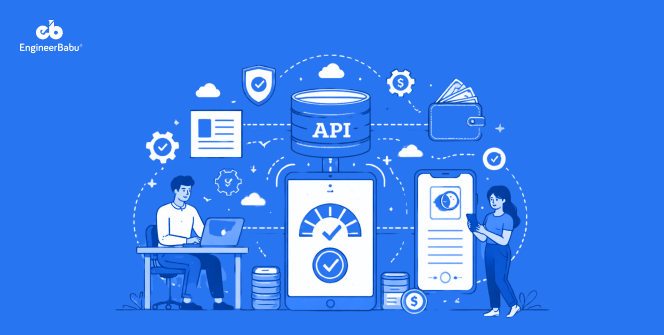
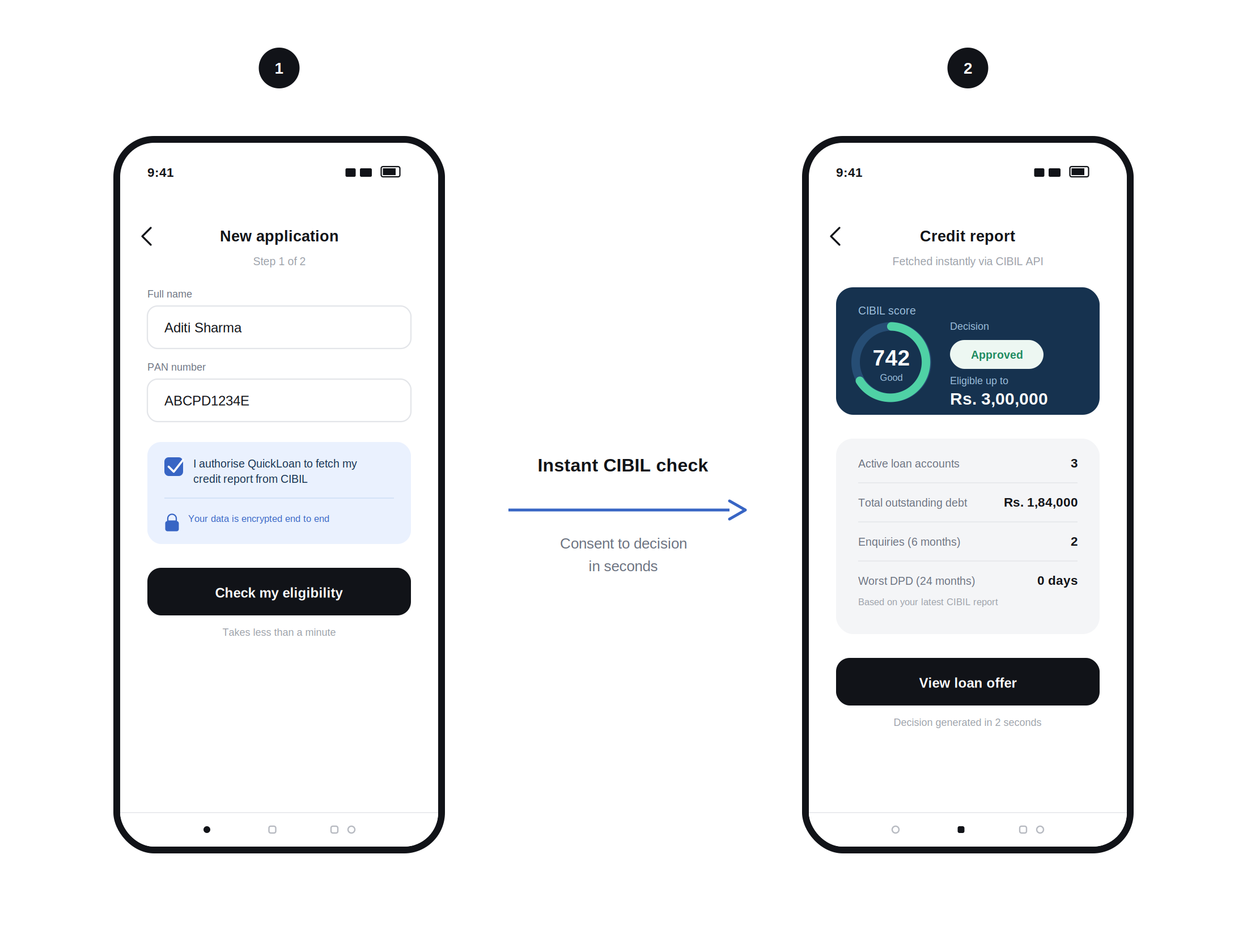
A borrower submits a loan application. Within seconds, your system already knows their credit score, active loan accounts, repayment history, and default flags. No phone calls. No manual bureau checks. No delays at the underwriting stage.
That is exactly what CIBIL API integration for lending apps makes possible. And for any lender building a digital product today, this is not optional. It is foundational.
TransUnion CIBIL maintains credit data on over 600 million individuals and 35 million commercial entities. When your lending app connects directly to this database through an API, you get instant, accurate, and decision-ready credit intelligence at the point of application.
Here is a complete breakdown of how the integration works, what it involves technically, and what lenders need to get right.
CIBIL API integration connects your lending application to TransUnion CIBIL’s credit database in real time. When a borrower submits their details, your app sends a query to the CIBIL system. The response comes back with a structured credit report that includes:
This data feeds directly into your underwriting engine. It removes the manual step of pulling reports separately and reduces the time between application and decision from days to seconds.
Before diving into the integration steps, it’s important to understand the overall workflow and prerequisites. This ensures a smoother and more secure implementation process.
TransUnion CIBIL does not offer open API access. You need to apply for membership as a credit institution. Banks, NBFCs, fintech lenders, and housing finance companies are eligible.
The process involves submitting business documentation, agreeing to CIBIL’s data usage terms, and getting your credentials approved.
This step takes time. Plan for it early in your product development roadmap, especially if you are building an MVP.
Once approved, CIBIL provides access to their technical documentation. The API follows a request-response model where your system sends a borrower query and receives a structured XML or JSON response.
Before writing a single line of code, your API development team needs to thoroughly review:
Skipping this step leads to integration failures that are difficult to debug in production.
This is the technical core of the project. Your backend sends a properly formatted credit inquiry request to CIBIL’s endpoint. The system authenticates the request, queries the database, and returns the credit report in a predefined format.
A few things to handle carefully at this stage:
The raw CIBIL response contains dozens of fields. Your system needs to extract the relevant ones and map them to your internal data model. Most lending apps display a simplified credit summary to the underwriting team rather than the full report.
Map the following as a minimum:
Your mobile app development team can build a clean credit summary view that surfaces these data points for loan officers or for automated rule evaluation.
Pulling the CIBIL report is only useful if it actually drives a decision. The score and data fields should connect directly to your underwriting engine. Common configurations include:
This is where AI development can add real value. AI-based credit decisioning models go beyond score thresholds and consider patterns across multiple variables to predict repayment behavior more accurately.
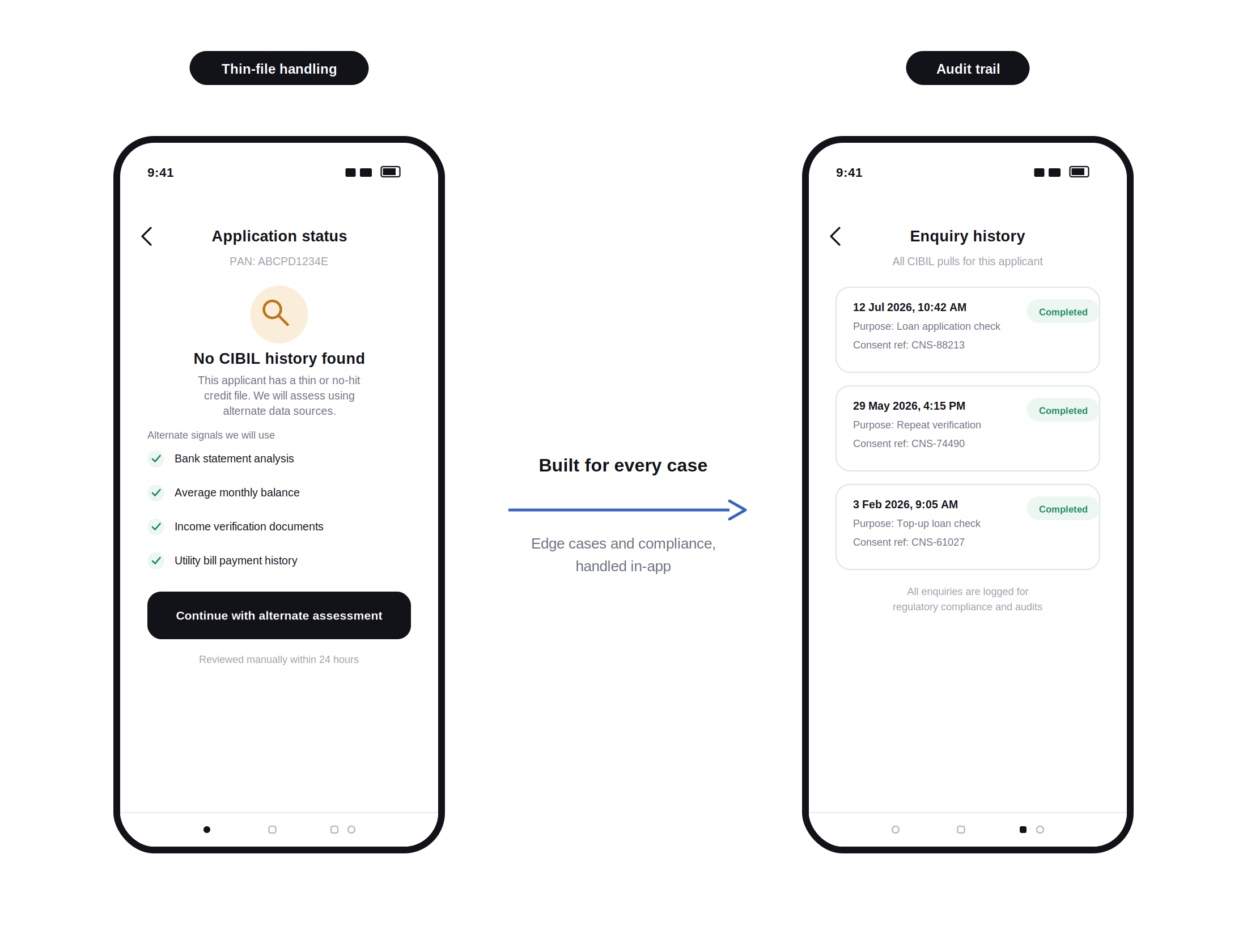
CIBIL provides a sandbox environment for testing. Use it to validate that your integration handles all response scenarios correctly, including no-hit cases where a borrower has no bureau history, thin-file cases with minimal data, and error responses.
Test edge cases like:
Production failures in credit checks create a bad experience for borrowers and create compliance gaps. Testing thoroughly before launch is non-negotiable.
CIBIL periodically updates its API specifications. Your team needs to stay aligned with version changes and deprecation notices. Set up monitoring on the API endpoint to track response times, failure rates, and latency spikes. A broken CIBIL integration can silently fail and block loan applications without obvious error messages.
Credit assessment is the single most important decision a lender makes. A lending app that relies on manual bureau checks or delayed credit reports will always lose to one that delivers instant, automated, and accurate credit intelligence.
CIBIL API integration for lending apps is what separates a functional lending tool from a truly competitive digital lending product. When integrated correctly, it reduces underwriting time, improves decision accuracy, and gives borrowers a faster and more transparent experience.
If you are building or scaling a lending platform and need expert support with API integration, automation, or the full lending stack, EngineerBabu is your best bet.
We work with NBFCs, fintechs, and banks to deliver secure, compliant, and scalable systems built for modern digital lending.
CIBIL API integration for lending apps is not a feature you add later. It is the backbone of any serious digital lending product. When your application pulls real-time bureau data, maps it to your underwriting rules, and drives instant credit decisions, you remove the biggest bottleneck in the lending journey.
The steps covered here give you a clear path from CIBIL membership approval to a production-ready integration. But the quality of the outcome depends heavily on how well the integration is architected, secured, and maintained over time.
Building a lending app that handles credit checks poorly is a liability, not a product. Therefore, it is crucial to partner with an experienced lending software development company that understands both the technical and regulatory side of the work.
It is a technical connection between a lending application and TransUnion CIBIL’s credit database. It allows lenders to pull a borrower’s credit report and score in real time during the loan application process.
Any lender that makes credit decisions based on bureau data should have direct API access. Manual bureau checks create delays and errors that hurt the borrower experience and operational efficiency.
Yes. Borrowers must provide explicit consent before a lender can query their credit report. This consent must be captured and stored with a timestamp as part of the application flow.
The membership approval process can take several weeks. The actual technical integration, testing, and go-live typically takes four to eight weeks depending on your existing infrastructure and team readiness.
Yes. AI models can analyze CIBIL data alongside other financial signals to make more accurate lending decisions, especially for thin-file borrowers who have limited bureau history.