How to Build a Real-Time Business Intelligence Dashboard - Multi-Source Connectors, KPI Alerting, Self-Serve Analytics 2026


Create engaging, high-performance mobile applications tailored to your business needs. We craft future-ready apps that offer smooth user experiences on all devices.
Build robust and scalable websites and CMS platforms that help you manage content effortlessly. Our development ensures a seamless digital presence.
Launch secure, feature-rich online stores with intuitive shopping experiences. We build tailored eCommerce platforms designed for growth.
Design captivating games with immersive gameplay and stunning graphics. From concept to launch, we build engaging experiences that players love.
Enhance your customer relationships with customized Salesforce implementations. Drive growth and efficiency with smarter CRM solutions.
Harness artificial intelligence and machine learning to automate workflows and gain actionable insights. Our AI transforms data into smart decisions.
Accelerate your software delivery lifecycle with continuous integration, delivery, and infrastructure automation to boost efficiency.
Hire app developers ready to turn your ideas into sleek, high-performing mobile apps for any platform.
Bring in frontend pros who craft smooth, beautiful, and user-friendly interfaces that your visitors will love.
Get backend developers who build fast, secure, and reliable systems to keep everything running behind the scenes.
Hire eCommerce developers who build secure, scalable online stores designed to offer seamless shopping and grow your sales.
Get dedicated developers committed to your projects, delivering consistent quality and speed as an extension of your team.
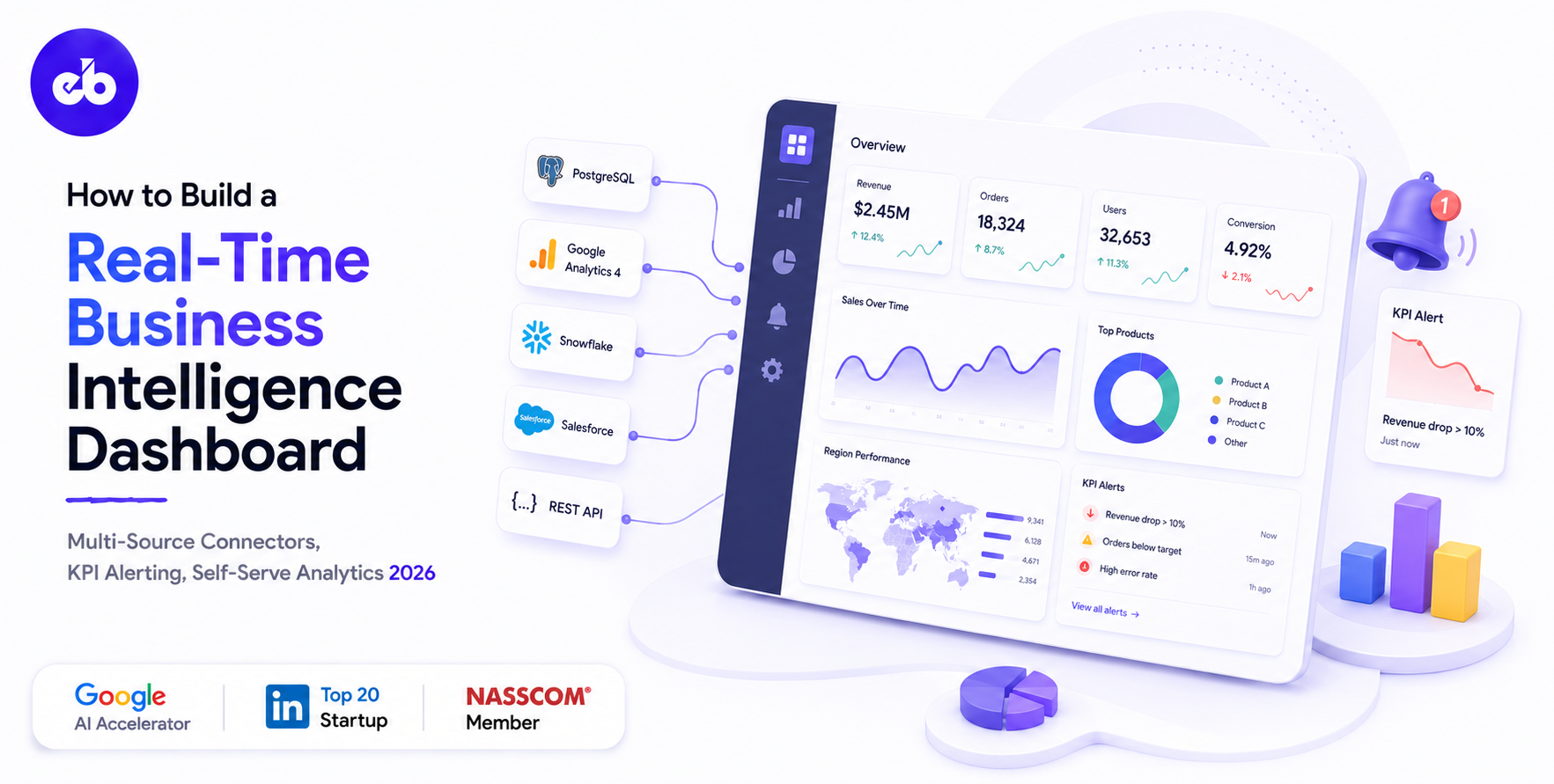
Every business has data. Most businesses cannot use their data effectively because accessing it requires writing SQL (a skill most business users lack) or waiting for an analyst to run a report. A BI dashboard platform solves both, making data accessible to non-technical users through interactive visual interfaces, and making data current through real-time pipelines.
Organizations generate massive volumes of operational, financial, marketing, and customer data every day. Yet much of this information remains underutilized because business users depend on technical teams to write SQL queries, prepare reports, or build dashboards.
A modern Business Intelligence (BI) platform democratizes data access by connecting multiple data sources, transforming raw information into business-friendly metrics, and delivering real-time dashboards with interactive visualizations.
The result is faster decision-making, improved operational visibility, and data-driven business growth.
At EngineerBabu, we build enterprise analytics platforms with expertise in Data Engineering, AI Development, Business Intelligence Solutions, and Cloud Data Platforms. Our BI solutions help organizations centralize data, automate reporting, and empower teams with self-service analytics.
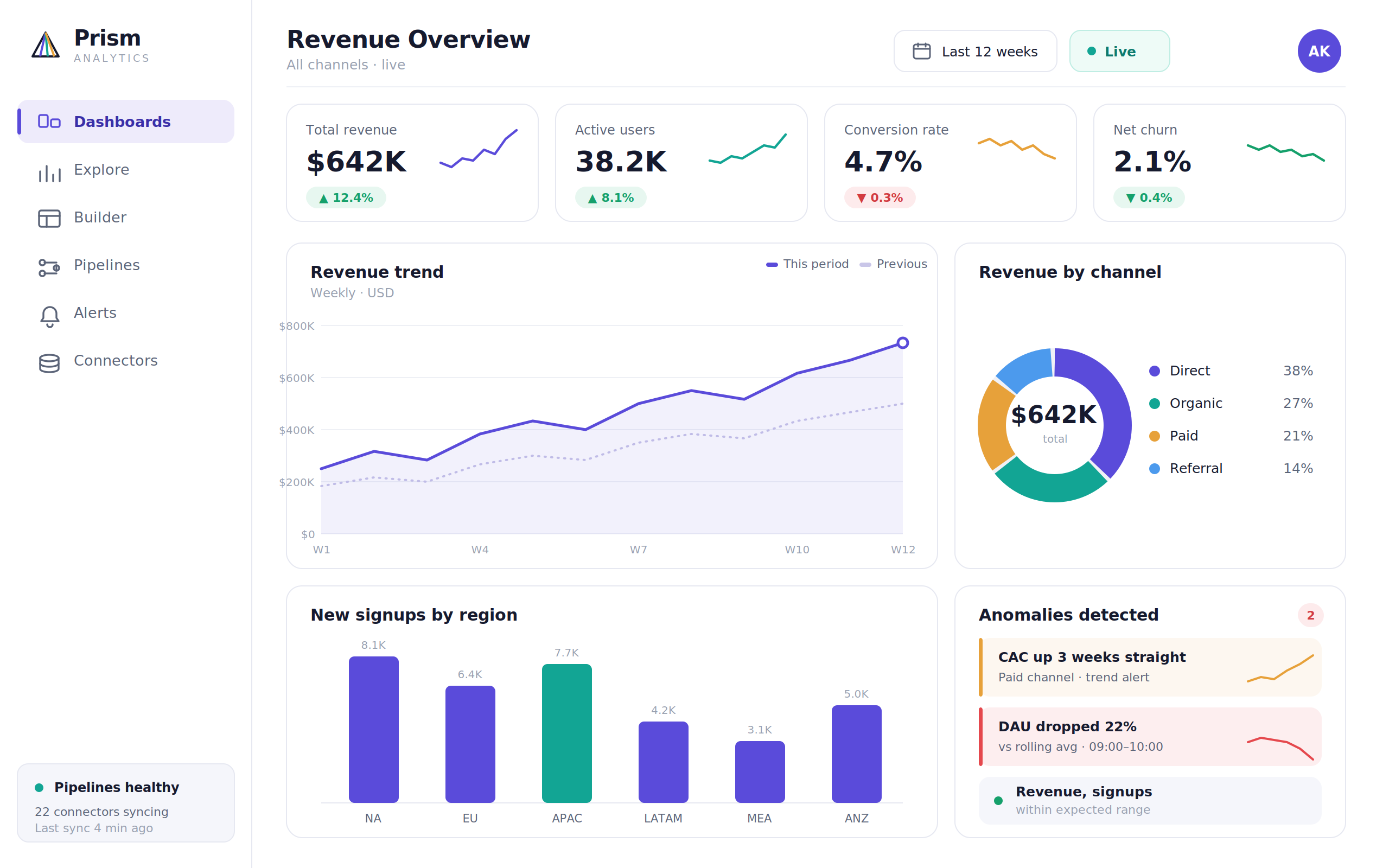
Enterprise BI software should do more than display charts. It should create a complete analytics ecosystem that transforms scattered business data into actionable insights.
Key platform capabilities include:
These capabilities enable technical and non-technical users alike to explore data without relying on manual reporting processes.
Connector library:
| Category | Sources |
| Databases | PostgreSQL, MySQL, BigQuery, Snowflake, Redshift, SQL Server |
| SaaS | Salesforce, HubSpot, Stripe, Zendesk, Jira, Google Analytics |
| File sources | CSV upload, S3, Google Drive, SFTP |
| APIs | REST APIs with custom authentication |
| Streaming | Kafka, Kinesis |
| ERPs | SAP, Oracle NetSuite, Microsoft Dynamics |
Each connector handles:
ELT vs ETL:
Modern BI platforms use ELT (Extract, Load, Transform), raw data loaded into the warehouse first, then transformations applied using SQL. This preserves raw data for reprocessing when transformation logic changes and leverages the warehouse’s computational power.
Data warehouse options:
| Option | When to Use |
| BigQuery | Google Cloud, ad-hoc analytics |
| Snowflake | Multi-cloud, concurrent workloads |
| ClickHouse | Ultra-high-speed real-time aggregations |
| DuckDB | Embedded analytics, <100GB |
The transformation layer (dbt):
The platform integrates dbt for SQL-based data transformation, version-controlled, tested, and documented. Every transformed view traces back to its raw source.
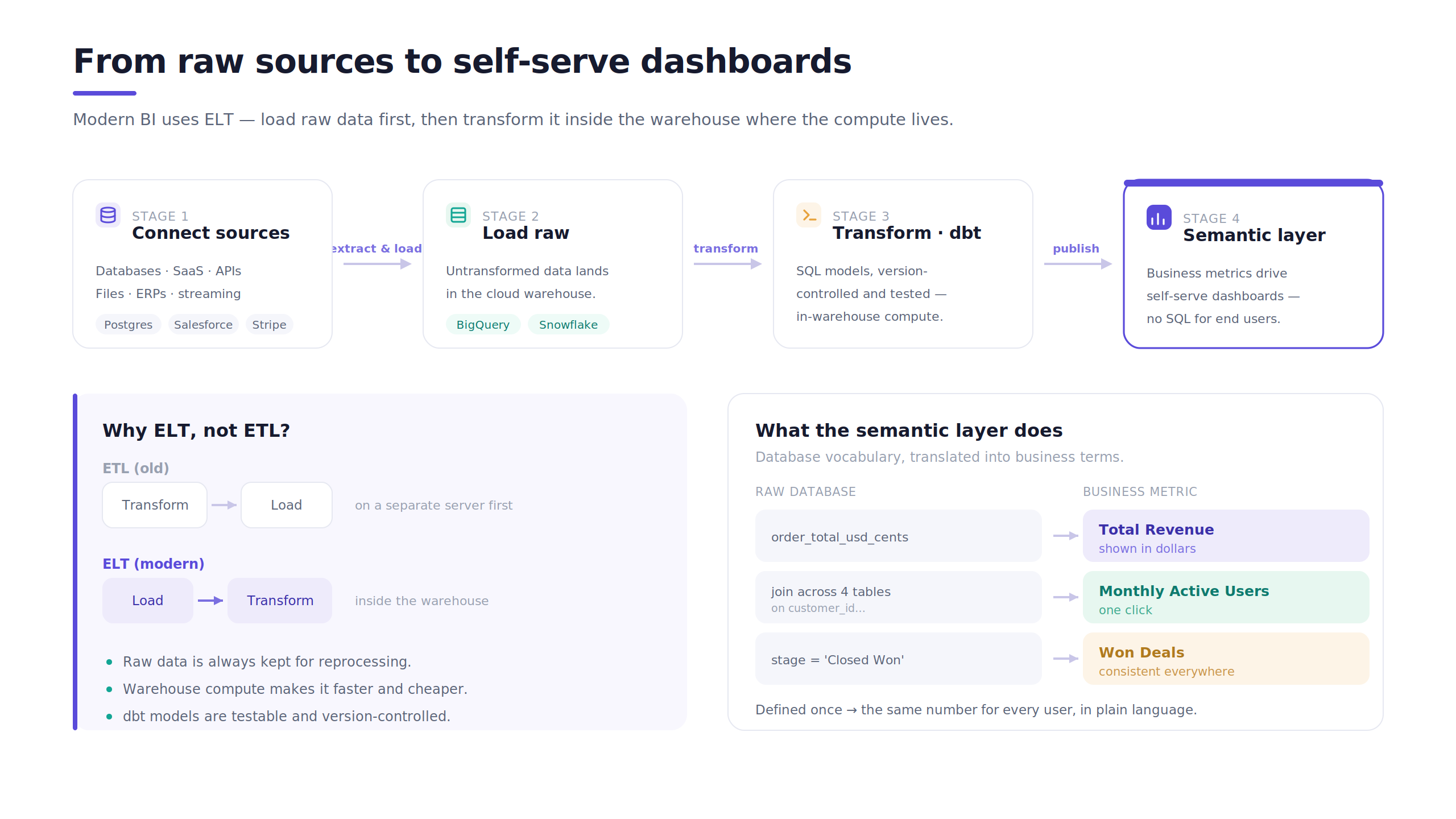
What the semantic layer provides:
| Raw Database | Semantic Layer Translation |
| fact_orders.order_total_usd_cents | “Total Revenue” (displayed in dollars) |
| Complex SQL join across 4 tables | “Monthly Active Users” (one click) |
| sfdc_stage_name = ‘Closed Won’ | “Won Deals” |
The semantic layer means a marketing analyst can build a “Revenue by Customer Cohort” dashboard without knowing it requires joining fact_orders to dim_customers on customer_id grouped by DATE_TRUNC.
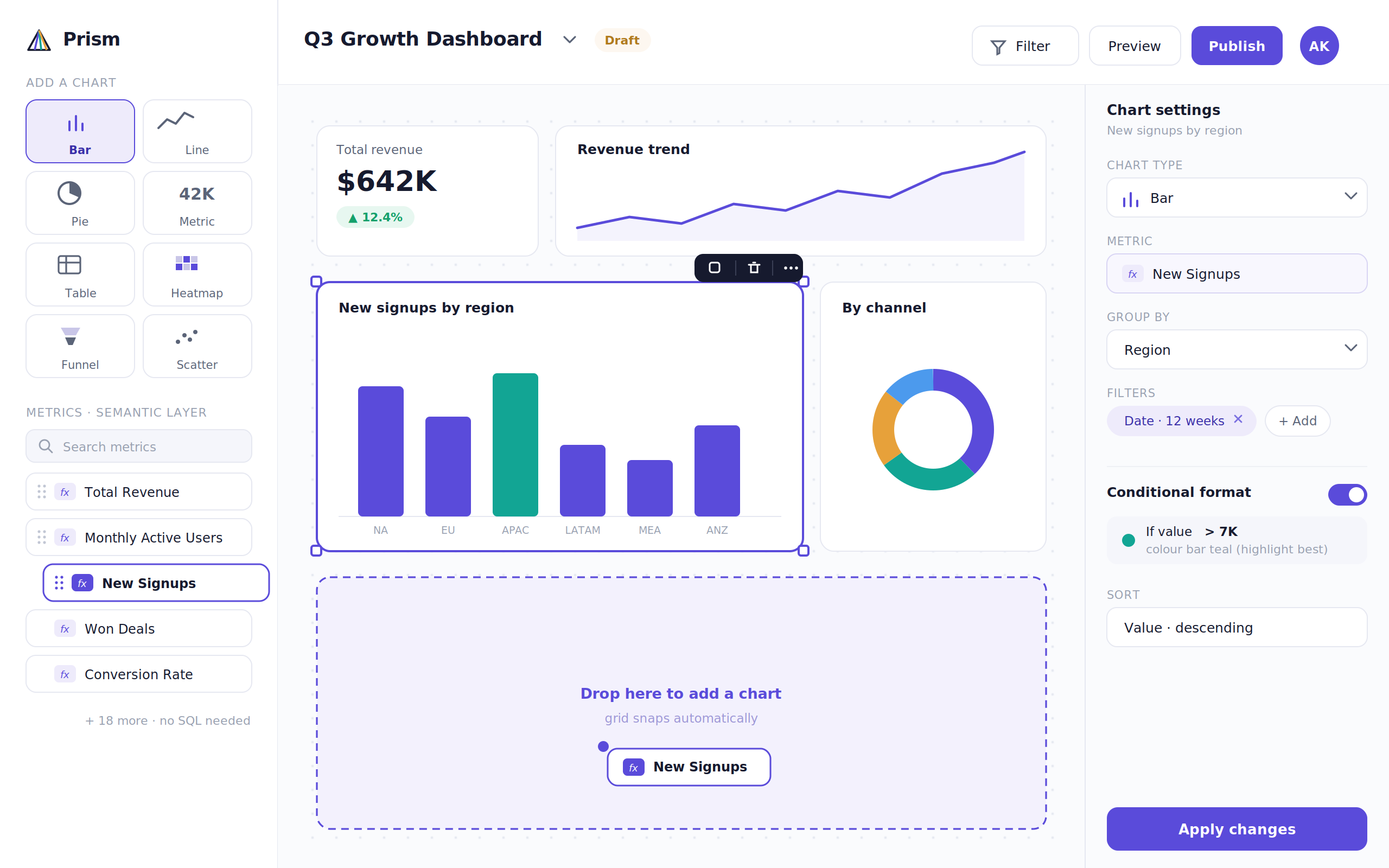
Dashboard builder features:
| Element | Functionality |
| Chart types | Bar, line, pie, scatter, table, metric tile, heat map, funnel |
| Drag-and-drop | Position and resize charts on a grid canvas |
| Metric selector | Choose from semantic layer – no SQL |
| Filter controls | Date range pickers, dropdowns, search filters |
| Cross-filter | Clicking one chart filters all others |
| Drill-down | Click a bar to see underlying records |
| Conditional formatting | Colour-code values based on thresholds |
Alert types:
| Alert Type | Example | Trigger |
| Threshold breach | Monthly revenue < $500K | Metric crosses threshold |
| Anomaly detection | DAU drops 20%+ from rolling average | Statistical anomaly |
| Trend alert | CAC increased 3 consecutive weeks | Directional trend |
| Zero-value alert | No transactions in last 2 hours | May indicate technical failure |
The anomaly detection model:
For each metric, the platform trains a time-series model on historical data, learning normal range, seasonality, and trend. Anomaly detection flags values statistically unlikely given historical patterns, catching anomalies that are within normal absolute range but abnormal for the time of day/week.
| Module | Cost Range (USD) | Notes |
| Data connector library (20 connectors) | $10K – $20K | ~$500–$1K per connector |
| ELT pipeline (dbt + Airflow) | $8K – $15K | |
| Data warehouse setup | $5K – $10K | BigQuery or Snowflake |
| Semantic layer builder | $8K – $15K | No-code metric definition |
| Interactive dashboard builder | $10K – $20K | All chart types |
| KPI alerting + anomaly detection | $8K – $15K | |
| Self-serve natural language query | $6K – $12K | LLM text-to-SQL |
| Embedded analytics API | $5K – $10K | iframe + auth |
| Role-based access control | $4K – $8K | Row + column level security |
| AWS + SOC 2 + VAPT | $5K – $10K | |
| Total | $69K – $135K | Full BI platform |
Contact: mayank@engineerbabu.com
Business intelligence platforms are no longer just reporting tools, they are strategic decision-support systems. By integrating multiple data sources, automating data pipelines, and providing intuitive dashboards, organizations can turn complex datasets into meaningful business insights.
Whether you’re building an internal analytics platform or embedding dashboards into your product, a scalable BI solution delivers long-term operational value.
EngineerBabu develops secure, cloud-native business intelligence platforms tailored to enterprise requirements. To discuss your BI dashboard or analytics platform, contact mayank@engineerbabu.com.
The semantic layer translates database concepts (table names, column names, complex joins) into business vocabulary that non-technical users can understand. Without it, self-serve analytics requires users to understand the database schema, limiting access to only technically skilled users. With it, a finance manager can build a revenue breakdown dashboard by selecting metrics from a business-vocabulary menu, with SQL generated automatically. The semantic layer also ensures consistency, “Monthly Recurring Revenue” means the same thing regardless of which user queries it, because the calculation logic is defined once.
ETL transforms data before loading it into the destination, the transformation happens on a separate server. ELT loads raw data into the warehouse first, then transforms it using SQL within the warehouse. Modern BI platforms prefer ELT because: raw data is always available for reprocessing when business logic changes; modern cloud warehouses have enormous computational power making in-warehouse transformation faster and cheaper; and SQL-based transformations managed with dbt are easier to version-control, test, and debug.
Popular options include Google BigQuery, Snowflake, Amazon Redshift, Azure Synapse Analytics, and ClickHouse. The ideal choice depends on data volume, query performance requirements, cloud ecosystem, and budget.
Yes. Modern BI platforms include semantic layers, drag-and-drop dashboard builders, and AI-powered natural language querying, allowing business users to create reports and visualizations without technical expertise.
Enterprise BI solutions typically support role-based access control (RBAC), row-level and column-level security, single sign-on (SSO), encrypted data storage, audit logs, and compliance frameworks such as SOC 2, ensuring sensitive business data remains protected.