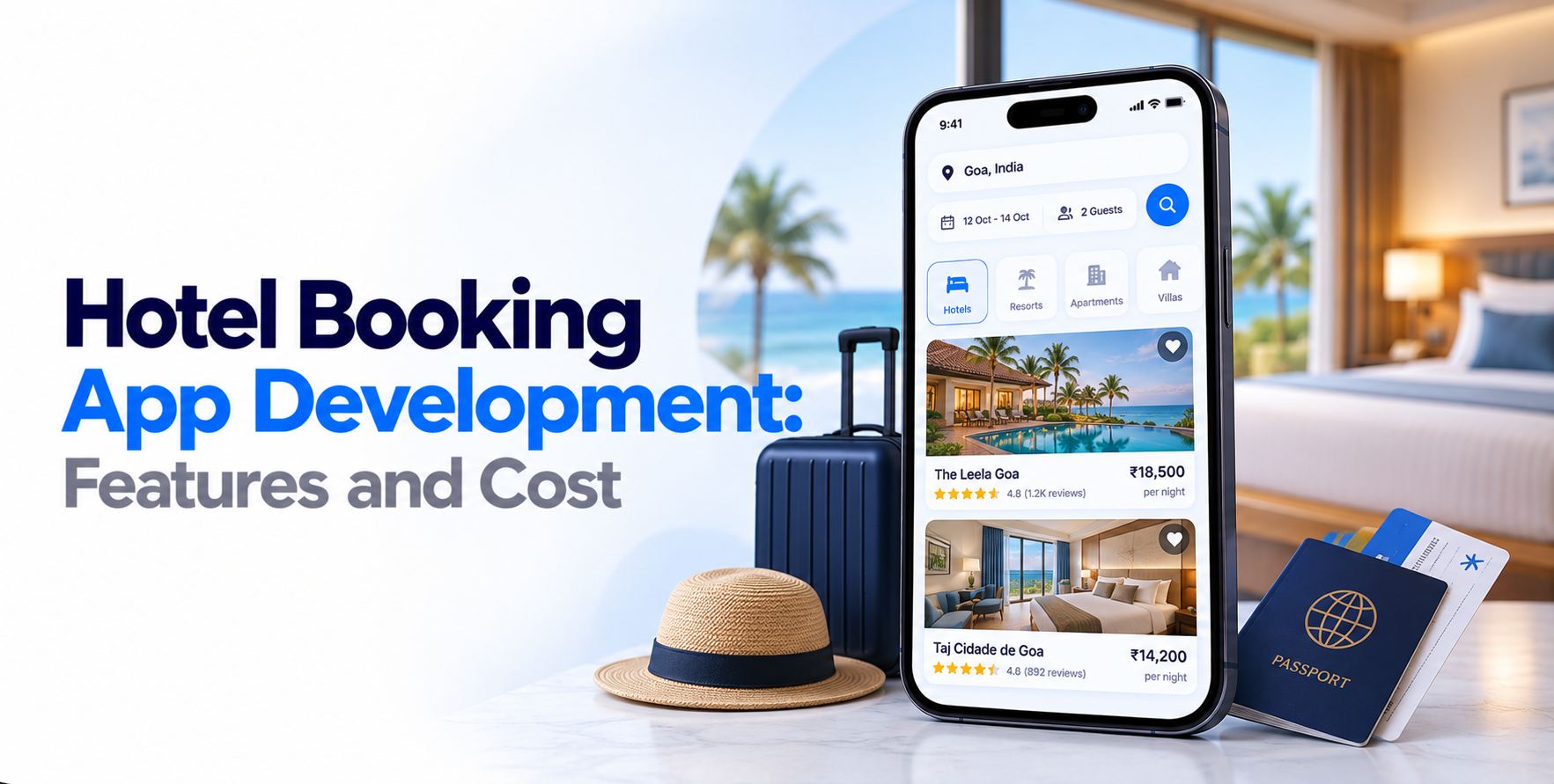
Hotel Booking App Development: Features and Cost


Create engaging, high-performance mobile applications tailored to your business needs. We craft future-ready apps that offer smooth user experiences on all devices.
Build robust and scalable websites and CMS platforms that help you manage content effortlessly. Our development ensures a seamless digital presence.
Launch secure, feature-rich online stores with intuitive shopping experiences. We build tailored eCommerce platforms designed for growth.
Design captivating games with immersive gameplay and stunning graphics. From concept to launch, we build engaging experiences that players love.
Enhance your customer relationships with customized Salesforce implementations. Drive growth and efficiency with smarter CRM solutions.
Harness artificial intelligence and machine learning to automate workflows and gain actionable insights. Our AI transforms data into smart decisions.
Accelerate your software delivery lifecycle with continuous integration, delivery, and infrastructure automation to boost efficiency.

TL;DR
Nobody abandons a hotel booking because the hotel looked bad. They abandon it because the app asked for a date range three times and then showed a price different from the one on the search page.
Booking apps are not won on design. They are won on whether the inventory, pricing and payment layers stay in sync.
Travel has already moved to mobile, and the software underneath it is growing with it. A January 2026 analysis published on GlobeNewswire puts the hotel and hospitality management software market at $6.12 billion in 2026, heading to $12.21 billion by 2032 at an 11.87% CAGR.
That growth is pulling in independent chains, regional aggregators and vertical players targeting specific traveler segments. If you are entering this space, you are competing with Booking.com on convenience, so the bar on the basics is high.
Most teams approach it through a travel app development company rather than from scratch, simply because the integration surface is wide.
This is the product your conversion rate lives in. Keep it ruthless.
The rest of the guest-side checklist follows the same principles as any other online booking app, and the fundamentals in features of a successful mobile app apply here without modification.
Hotels will not adopt your platform if managing it is painful.
This layer is where most hotel booking app development projects underestimate effort by half. It is a full hospitality software development product sitting inside your app project.
Property onboarding and verification, commission configuration, content moderation, dispute handling, refund approval, promotional campaigns and platform analytics. Thin at launch, but it becomes your operations team’s entire workday by month six.
A clean API development layer that normalizes all of this behind one internal contract is worth building early. Without it, every new property system becomes a rewrite.
| Build scope | Range | What you get |
| MVP, single market | $35,000 to $55,000 | Guest app on one platform, basic property panel, one payment gateway, manual onboarding |
| Standard platform | $60,000 to $110,000 | iOS and Android, full property dashboard, channel manager sync, multi-currency, reviews |
| Multi-property or enterprise | $120,000 to $250,000+ | PMS integrations, dynamic pricing engine, loyalty, multi-language, advanced analytics |
Roughly how that splits: discovery and architecture take 8 to 10%, design 12 to 18%, guest app development 30%, property and admin tooling 25%, integrations 15%, and QA plus launch the remainder.
Compare any quote you receive against a stage-by-stage mobile app development cost model, because lump-sum numbers in this category hide an enormous amount of integration work.
Multi-language and right-to-left layouts. Real-time dynamic pricing with a rules engine. Loyalty and points systems. PMS integrations beyond the first two. Offline itinerary access. Concierge or in-stay service ordering. Each adds weeks, not days.
Define supply model, commission structure and which property systems you integrate first. Map the booking state machine completely, including modification, partial refund, no-show and overbooking paths.
Decide early whether you run your own inventory or aggregate from channel managers, because that choice shapes every layer above it. Most teams that skip this stage rebuild their pricing logic within six months of launch.
Wireframes, then high-fidelity screens for search, detail, checkout and trip management. Prototype the booking flow and test it with ten real travelers before development begins.
Design the property dashboard with equal care, since hotel staff use it daily under time pressure. Solid UI/UX design work at this stage removes the most expensive category of late change.
Guest app, property dashboard, admin console and the integration layer, built in parallel tracks. Payments and channel sync go in early rather than late, because both reveal edge cases that reshape the data model.
Run integration testing against sandbox environments from the first sprint. Target a working end-to-end booking by week twelve, even if the interface is unfinished.
Test across devices, networks and currencies. Run a controlled pilot with three to five properties and real money before public release. Watch for double bookings, timezone errors in check-in dates and currency rounding gaps.
Fix the operational playbook alongside the software, then submit to both stores with two weeks of buffer for review cycles.
Commission per booking at 10 to 18% is the default. Subscription fees for properties wanting premium placement or advanced analytics add predictable revenue. Featured listings and sponsored placement work once you have traffic.
Service fees charged to guests are common but need transparency to avoid trust damage.
Many platforms also layer in AI in mobile app development for personalized recommendations and demand forecasting, which lifts both conversion and average booking value.
Pick one primary model at launch. Mixing three from day one makes your unit economics unreadable.
Hotel booking app development rewards teams who treat it as an inventory synchronization problem with a booking interface attached, not the reverse. Get the property side right and the guest side becomes straightforward.
Get it wrong and no amount of interface polish saves you from an oversold room on a Friday night.
Start narrow, prove the booking loop with a handful of real properties, then scale supply. If you want that first phase scoped properly, a staged MVP development plan with EngineerBabu gets you to live bookings before the full platform budget is committed.
Not immediately. A single property listed nowhere else can run on direct inventory. The moment you also sell through an OTA, channel sync becomes necessary to prevent double bookings.
Stripe and Adyen both support multi-currency, pre-authorization and delayed capture, which hotel bookings need. Regional gateways often beat them on local payment methods and settlement fees in specific markets.
Usually no. Launching on the platform your target travelers use most, then adding the second within three months, lowers initial cost and surfaces product issues before you duplicate them.
Through policy rules attached to each rate, enforced at booking time. Refunds route back through the original payment method, with commission reversal logic handled separately in the payout reconciliation layer.
Yes, and it is faster to market. The tradeoff is limited control over the booking flow, commission structure and data, which matters once you want to differentiate on experience.