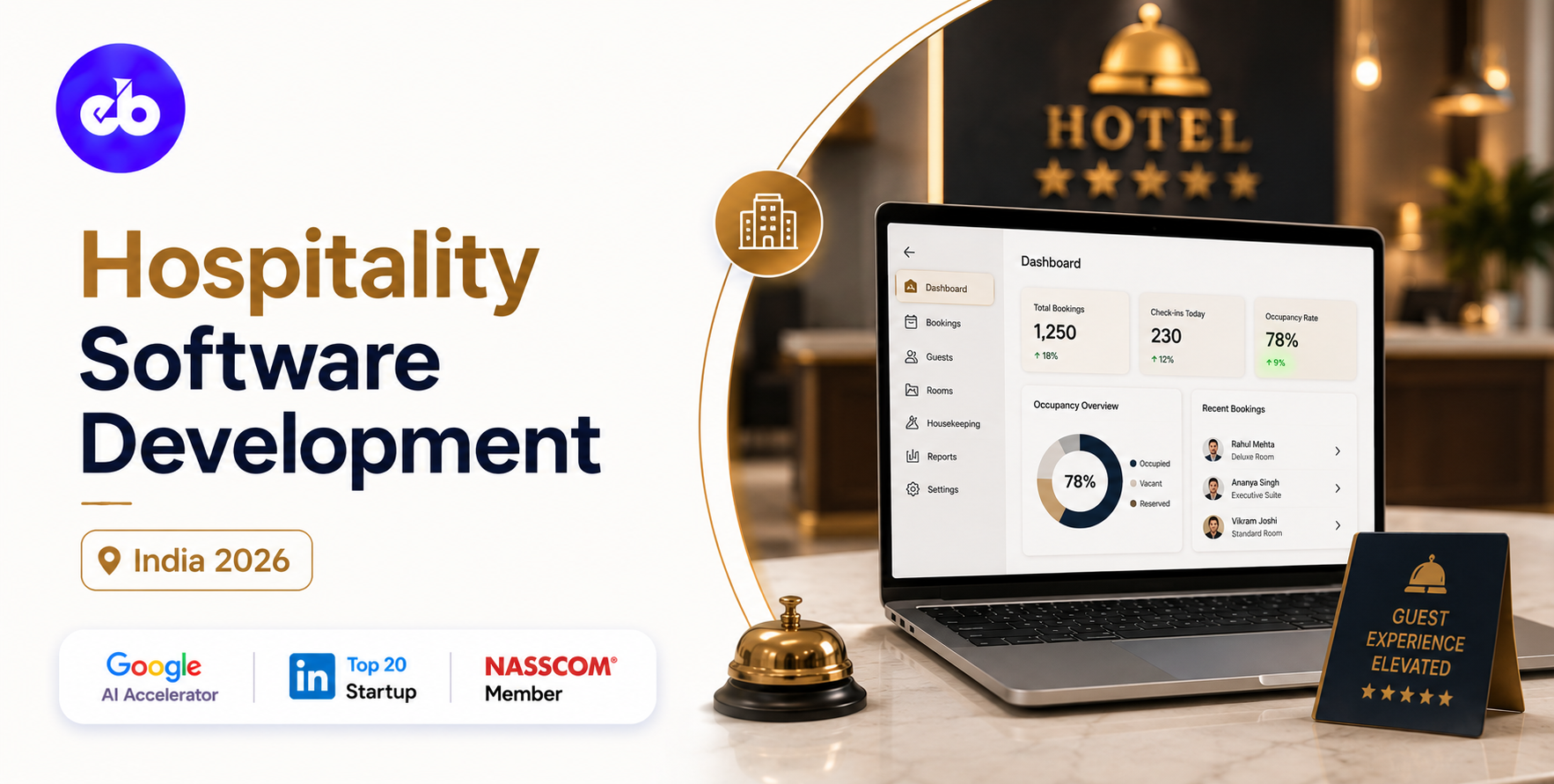
A 140-room business hotel in Ahmedabad was losing ₹3–4 lakh per month to a single problem.
MakeMyTrip, Booking.com, Goibibo, and Agoda were all showing rooms as available simultaneously. When a guest booked on MakeMyTrip, the room wasn’t marked unavailable on the other platforms for 8–12 minutes, the time it took the front desk to manually update each portal. In that window, the same room would sometimes get booked again on Booking.com.
The result: Overbooking. A guest arriving at 11pm to find their room occupied. Emergency walk-to-another-property arrangements. Compensation costs. Negative reviews.
The fix, a channel manager that updates all OTA inventory in real time when any booking occurs is a solved problem. The hotel had quotes for three channel manager products. The cheapest was ₹2 lakh per year subscription.
The most expensive was ₹8 lakh. None of them integrated with the hotel’s existing billing software, which was a custom-built system from 2015 that tracked GST-compliant invoices in the format required for India’s dual-slab hospitality GST (12% for rooms under ₹7,500/night, 18% for rooms at or above ₹7,500/night).
So the hotel was going to pay ₹2–8 lakh per year, plus the cost of rebuilding their billing integration, to solve the overbooking problem.
Or they could invest in custom hospitality software development that solved the overbooking problem, integrated with their billing system, added revenue management, and gave them a real-time dashboard, all at a one-time cost they owned.
I co-founded EngineerBabu 14 years ago. The team builds food and restaurant technology as a defined vertical, with the food delivery app and restaurant software experience across the team. Google AI Accelerator 2024. 500+ products across 20+ countries.
India’s hospitality sector is growing. Post-COVID domestic tourism has driven occupancy to pre-pandemic levels and beyond. India’s hospitality tech market is expanding rapidly as independent hotels, the 50,000+ independent properties that can’t afford OPERA or Cloudbeds enterprise pricing, look for affordable, India-specific alternatives.
Email mayank@engineerbabu.com for your hospitality software conversation.
India’s Hospitality Technology Market in 2026
India’s hotel industry has a structural complexity that generic PMS platforms don’t accommodate well:
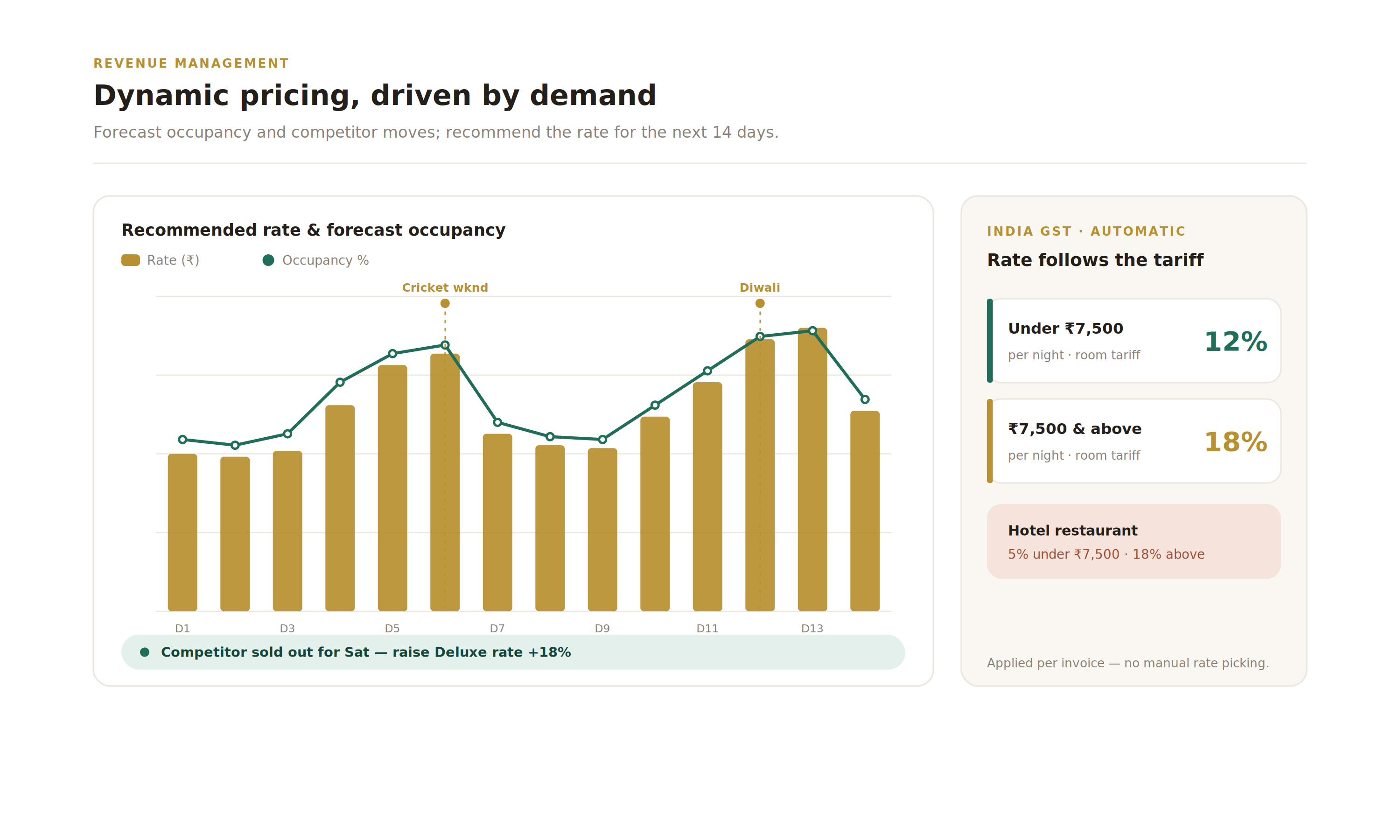
- India-specific GST on hospitality, two GST rates for room revenue: 12% for rooms priced under ₹7,500/night (for the entire booking, regardless of the room type), 18% for rooms at ₹7,500 and above. Restaurant revenue within a hotel: 5% GST (without ITC) for standalone restaurants, 18% for restaurants in hotels with declared tariff above ₹7,500. This dual-slab complexity, where the GST rate changes based on the declared tariff rather than the actual billed amount in some cases, creates invoicing requirements that generic PMS systems don’t handle correctly.
- India’s OTA landscape, MakeMyTrip (dominant for domestic travel), Goibibo, Booking.com, Agoda, Airbnb (for homestays), ClearTrip, Yatra, EaseMyTrip. The hotel’s channel manager must integrate with at least the top 5 to capture India’s domestic booking volume. Generic channel managers often have better coverage of Booking.com and Expedia than MakeMyTrip and Goibibo.
- WhatsApp-first guest communication, India’s hospitality guests expect communication via WhatsApp, not email. Booking confirmations, pre-arrival information, check-in instructions, feedback requests all via WhatsApp. PMS that send email-only communications miss most of the touchpoints.
- Budget and mid-market segment dominance, India’s largest hotel segment is budget (under ₹3,000/night) and mid-market (₹3,000–₹10,000/night). These properties need affordable, functional software not the enterprise pricing of Cloudbeds, Mews, or Oracle Hospitality.
The 2026 Hotel PMS Impact study found that 89% of hoteliers believe PMS directly drives revenue growth, and 89% report saving 2–10 hours per week with a good system.
The 7 Core Modules of a Production Hospitality Platform
1. Property Management System (PMS) Core
The PMS is the system of record for a hotel’s operations:
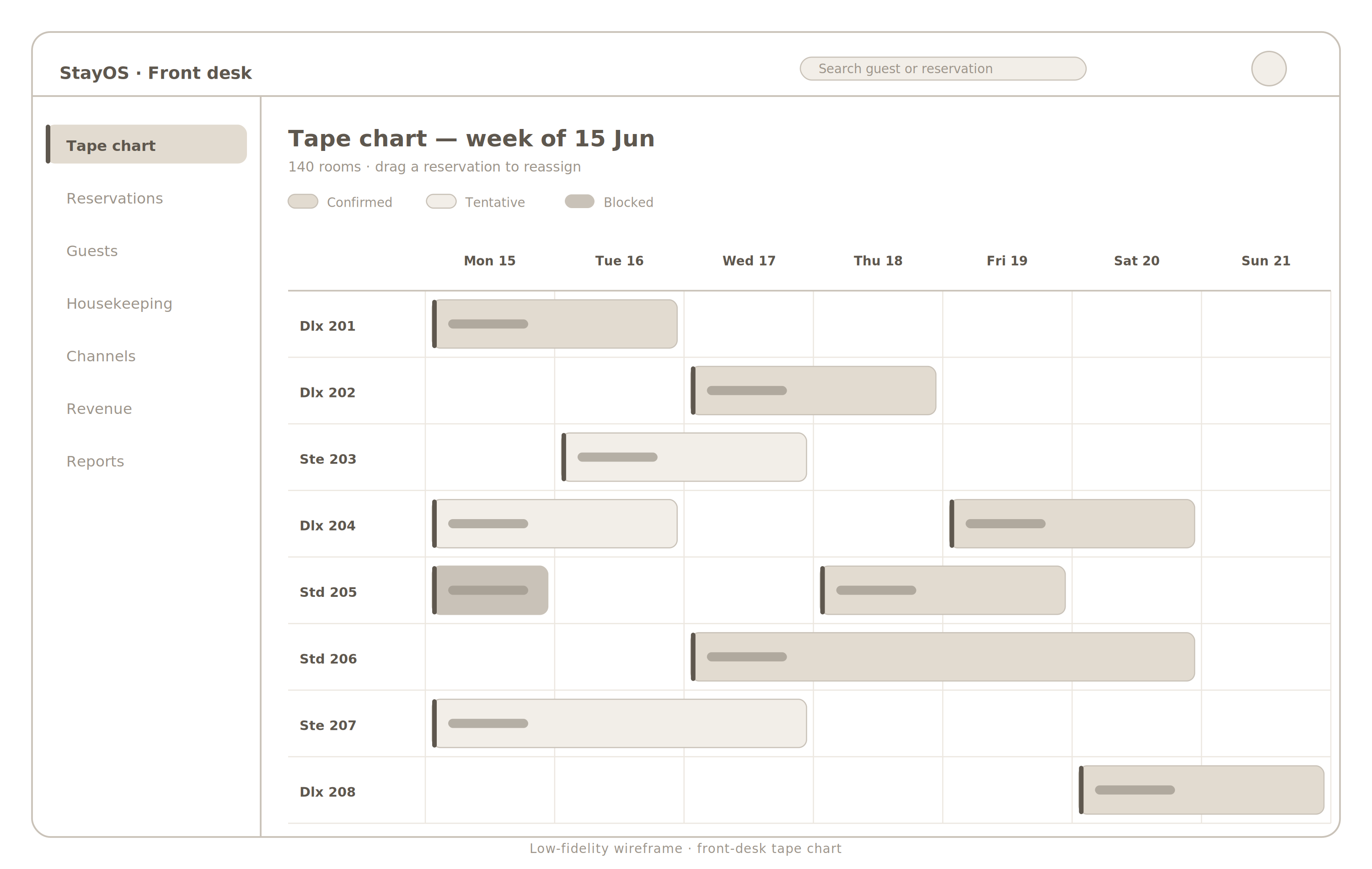
- Reservation management: the central calendar showing all reservations, arrivals, departures, and in-house guests. Drag-and-drop interface for room assignments. Group booking management (block of rooms for events, corporate agreements).
- Room type and rate configuration: standard room rates by room type, season-based rate plans (peak season, off-season), corporate rates, advance purchase rates, non-refundable rates. The rate plan engine must support India’s GST dual-slab automatically, when a rate plan crosses the ₹7,500 threshold, GST rate changes in the billing.
- Check-in and check-out workflows: guest arrival, verify booking, assign room, collect advance, generate registration card (name, address, ID proof as required by Form C for Indian citizens and Form B for foreign nationals). Guest departure, generate folio (itemised bill for all charges during stay), collect payment, close account.
- Folio management: every charge during a stay is posted to the guest’s folio, room rate (daily), restaurant charges, laundry, minibar, damage, additional services. The folio builds throughout the stay and generates the final GST-compliant tax invoice at checkout.
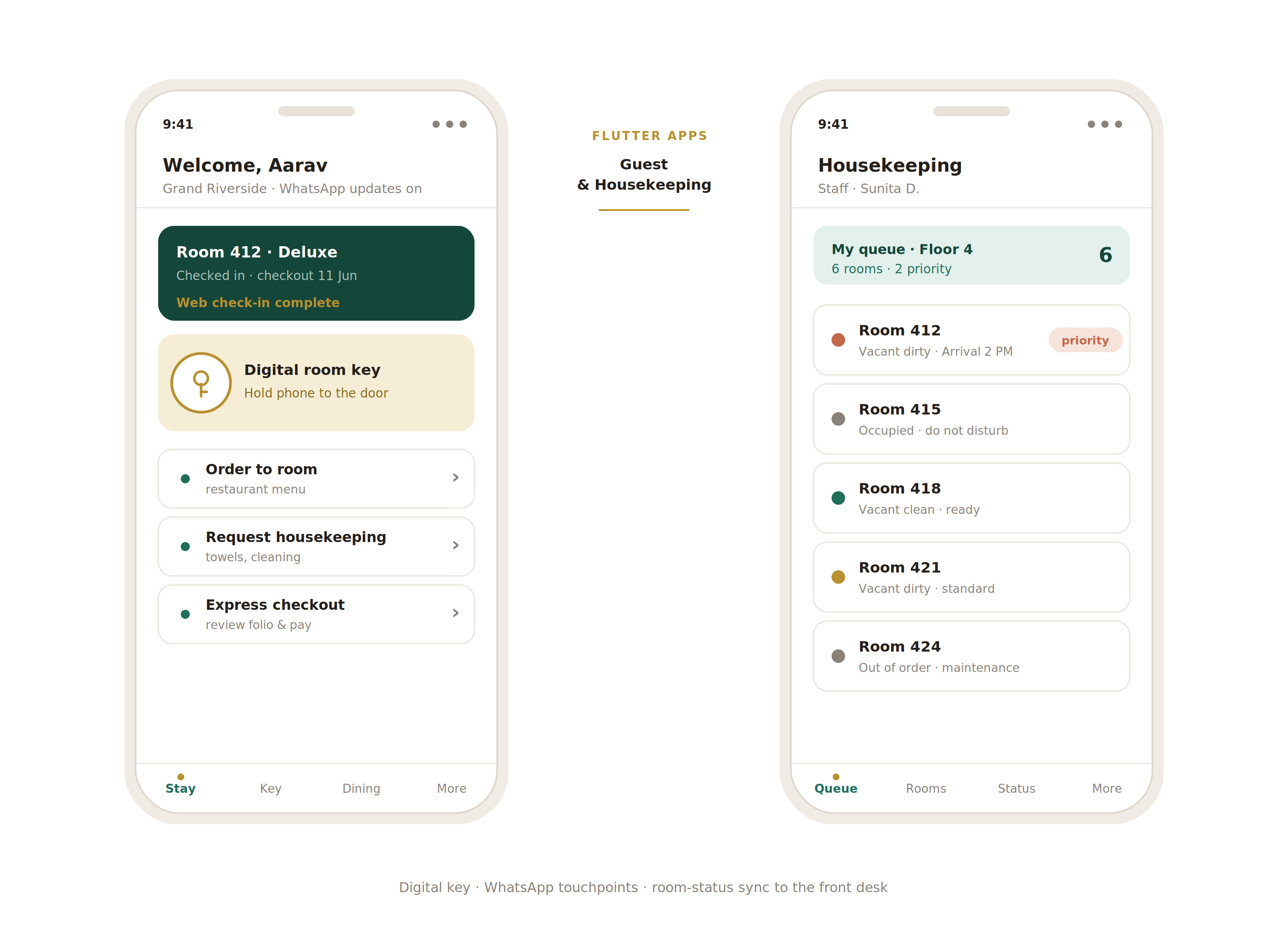
- Housekeeping module: room status updated by housekeeping staff via mobile app (vacant clean, vacant dirty, occupied, out of order). Front desk sees real-time room status, essential for efficient check-in assignment.
- Night audit: end-of-day process that posts room charges to all in-house folios, advances reservation dates, generates daily reports (occupancy, revenue, arrivals, departures). In a well-built PMS, night audit runs automatically at a configured time.
2. Channel Manager with Real-Time Synchronisation
The channel manager is the layer between the hotel’s PMS and the OTA platforms:
-
- Two-way synchronisation: when a booking arrives from any OTA, the channel manager immediately updates inventory across all connected OTAs. When inventory is updated from the PMS (a room blocked for maintenance, a group booking), all OTAs reflect the change within seconds.
- Rate parity management: the hotel’s rates must typically be at or below the rates listed on OTAs (OTAs require rate parity in their contracts). The channel manager enforces rate parity across all connected channels and alerts the revenue manager when a rate discrepancy is detected.
- OTA connectivity for India:
-
- MakeMyTrip + Goibibo (same parent company, one API integration)
- Booking.com
- Agoda
- Airbnb (for properties with eligible room types)
- ClearTrip
- EaseMyTrip
- Expedia (for international traveller capture)
- Direct booking engine: the hotel’s own website booking button. When a guest books directly, no OTA commission is paid (typically 15–25% of the booking value). A well-designed direct booking engine with best-rate guarantee increases direct bookings, reducing OTA dependency.
- Global Distribution System (GDS): for business hotels targeting corporate travel (Amadeus, Sabre, Travelport), the booking channels used by corporate travel managers and travel agencies. Optional for budget properties, important for business hotels.
3. Revenue Management and Dynamic Pricing
Revenue management is the discipline of selling the right room to the right guest at the right price at the right time. AI has transformed this from an art to a science:
- Demand forecasting: occupancy prediction by date, based on historical occupancy patterns, local event calendar (conferences, festivals, matches), competitor rate intelligence, and advance booking pace (bookings received for a future date vs. the historical pattern at the same point).
- Dynamic rate recommendations: when demand is forecast to be high (local cricket match weekend, Diwali, business conference), the revenue management module recommends rate increases. When demand is forecast to be low (mid-week, off-season), it recommends rate reductions or promotions.
- Competitor rate monitoring: real-time scraping of competitor hotels’ rates on Booking.com and MakeMyTrip. Rate positioning intelligence is the hotel priced above, at, or below the competitive set?
- Yield management: different rates for different booking windows (book-90-days-ahead discount, last-minute premium), different rates for different lengths of stay, minimum length of stay restrictions during high-demand periods.
- Upsell management: at check-in, the system surfaces upsell opportunities based on guest profile, room upgrade at a premium, early check-in fee, late checkout fee, F&B package.
4. Restaurant POS and Kitchen Management
For hotels with F&B outlets, the PMS must integrate with a restaurant point-of-sale:
- Table management: floor plan with table status (vacant, occupied, reserved). Order entry by waiter via tablet or handheld terminal.
- KOT (Kitchen Order Ticket): when an order is placed, the KOT is automatically printed at the kitchen printer or displayed on the kitchen display system (KDS). The kitchen sees orders as they arrive without waiting for the waiter to carry a paper ticket. KOT management is India’s dominant restaurant workflow, global POS systems often don’t implement it correctly.
- Bill generation with GST: restaurant bill with correct GST application. For hotel restaurants, the GST rate depends on the hotel’s declared room tariff (5% for hotels under ₹7,500 tariff, 18% for hotels above). GST-compliant tax invoice with GSTIN, place of supply, and HSN/SAC codes.
- Room posting: when a hotel guest orders food to their room or charges their restaurant bill to their room, the charge is posted directly to the guest’s PMS folio, no cash collection at the restaurant, no manual posting error.
- Zomato and Swiggy integration: for hotel restaurants accepting online orders, the POS integrates with Zomato and Swiggy APIs. Online orders appear on the KDS automatically. Delivery orders managed separately from dine-in.
5. Banquet and Event Management
For hotels with banquet facilities, one of India’s highest-revenue hotel segments:
- Event booking: function room availability calendar, banquet enquiry management, proposal generation with menu options and pricing, contract generation, advance collection.
- Event execution: function sheet (event order) with all operational details, setup requirements, F&B orders, AV requirements, staffing allocation, distributed to all relevant departments automatically.
- Billing: post-event billing from the function sheet. Partial billing (advance, balance), split billing for corporate events (some charges to corporate, some to delegates).
- Catering to room reservation link: when a wedding or conference books the banquet hall, they often also block a number of rooms. Banquet booking and room block must be linked for coordinated management.
6. Guest Experience and Loyalty Management
- Digital check-in: pre-arrival web check-in where the guest completes the registration card, uploads their ID, and receives their room assignment before arriving. At check-in, the entire process takes under 2 minutes.
- WhatsApp guest communication: automated WhatsApp messages at each touchpoint, booking confirmation, pre-arrival welcome message with hotel information, check-in notification, digital room key (where supported), checkout invoice, and post-stay feedback request.
- Guest history: every returning guest’s preferences tracked, room type preference, floor preference, food allergies, pillow preference, newspaper preference. When they book again, these preferences are surfaced automatically at check-in for personalisation.
- Loyalty programme: points earned per stay, redeemable for room upgrades, F&B credits, or discount on future stays. Particularly valuable for business hotels with repeat corporate guests.
- Review management: post-stay feedback collection and automated routing to TripAdvisor, Google, and Booking.com review platforms. Review sentiment monitoring with alerts when rating drops below threshold.
7. Back Office and GST Accounting Integration
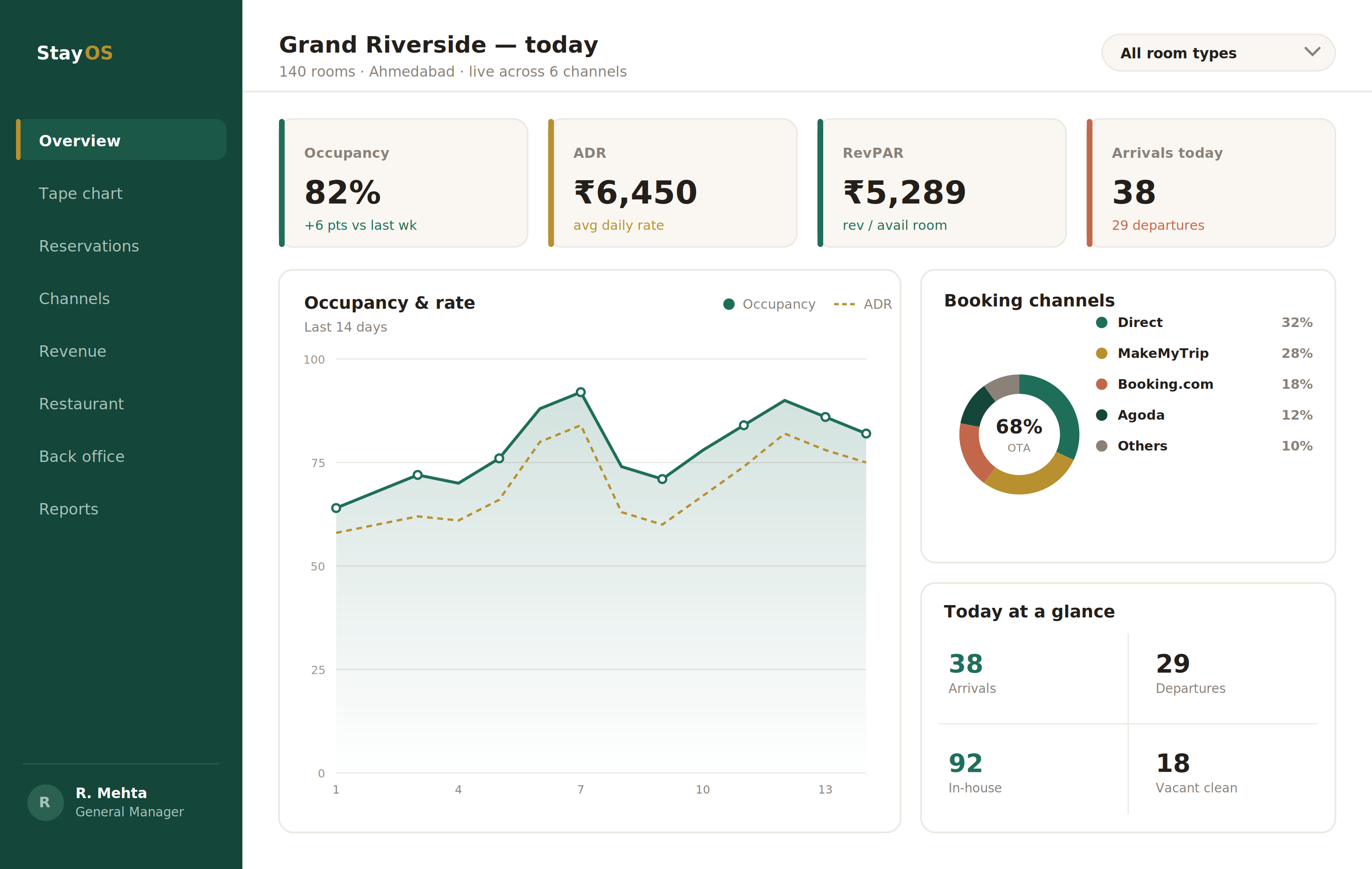
- Daily revenue report: room revenue, F&B revenue, other revenue, total occupancy, average daily rate (ADR), Revenue Per Available Room (RevPAR). India’s standard hotel performance metrics.
- GST invoicing and filing: all tax invoices for room, F&B, and banquet generated with correct GST rates, GSTIN, and SAC codes. Monthly GSTR-1 data export. TDS on hotel bookings above ₹30,000 (applicable for corporate bookings) handled.
- Accounts receivable: city ledger management for corporate accounts (post-paid billing for corporate clients with credit facilities). Monthly billing cycle, statement generation, collection follow-up.
- Tally/accounting integration: revenue data from PMS synced to Tally or the hotel’s accounting system for bookkeeping and financial reporting.
What Agentic AI Makes Possible in Hospitality
-
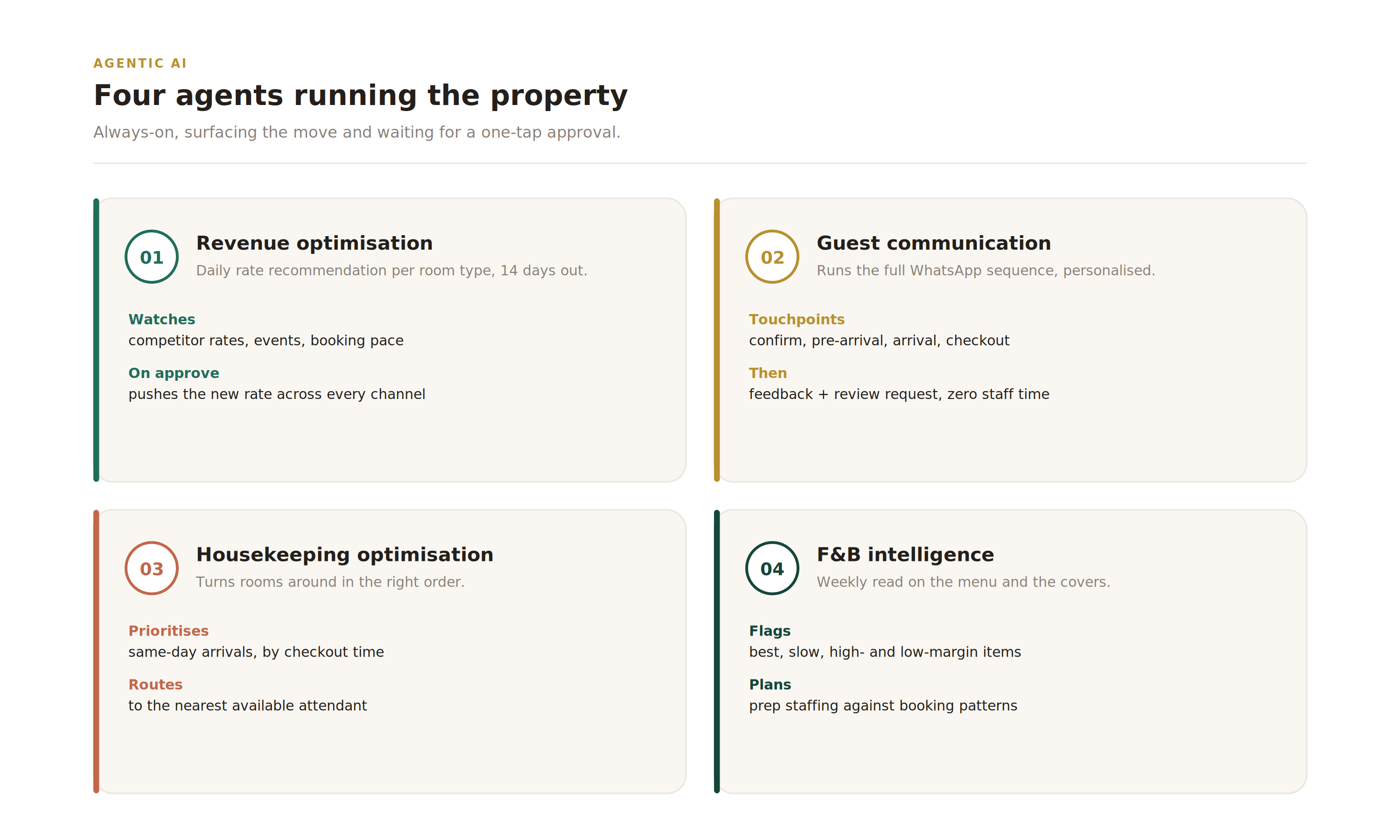
Agent 1 – Revenue Optimisation Agent:
Monitors competitor rates, upcoming event calendar, booking pace, and current occupancy forecasts continuously. Generates daily rate recommendation for each room type for the next 14 days. Surfaces opportunities (a competitor is sold out for the upcoming weekend — raise rates) and risks (advance booking pace is 30% below last year for next month — launch promotion). Revenue manager reviews and approves; Agent executes the rate change across all channels.
-
Agent 2 – Guest Communication Agent:
Manages the complete guest communication sequence automatically. Booking confirmation via WhatsApp with hotel information. Pre-arrival message 2 days before with check-in time and directions. Day-of-arrival message with check-in status. Post-checkout feedback request. Review request 24 hours after checkout. Zero staff involvement for routine communications; all personalised by guest name, booking details, and room type.
-
Agent 3 – Housekeeping Optimisation Agent:
Monitors checkout times and room status updates. Identifies rooms that are vacant-dirty and assigns housekeeping staff based on checkout time, room type cleaning time estimate, and staff availability. Routes to the nearest available housekeeping staff member. Priority routing: rooms with same-day arrivals are cleaned first. Reduces room-ready time, enabling earlier check-in.
-
Agent 4 – F&B Intelligence Agent:
Monitors restaurant covers, menu item performance (best-selling, low-selling, high-margin, low-margin), food cost percentage by category, and waste reports. Generates weekly F&B intelligence report: which items to promote, which to remove, which days need more prep staff based on booking patterns. Surfaces the insights the F&B manager would otherwise spend 4 hours compiling.
Technology Stack for Hospitality Software Development
- Flutter (guest mobile app, digital check-in, room key, F&B ordering, feedback; housekeeping mobile app; F&B waiter ordering app) + Next.js (hotel management dashboard, revenue management, channel manager, banquet management, back office).
- Node.js NestJS (PMS workflow, channel manager synchronisation engine, rate management, folio management, GST invoice generation) + Python FastAPI (revenue management AI, demand forecasting, competitor rate monitoring, housekeeping optimisation).
- PostgreSQL (reservation ledger, folio, guest history, loyalty points) + Redis (live room availability cache, channel manager rate cache).
- India integrations: MakeMyTrip/Goibibo/Booking.com/Agoda channel manager APIs · WhatsApp Business API · Zomato and Swiggy restaurant APIs · Razorpay payment gateway · GST e-invoice API · Tally accounting integration · GSTN GST filing export.
The Failure Framework
- Failure 1: The 8-Minute Window, channel manager sends inventory updates sequentially to each OTA rather than simultaneously. In high-demand periods, the sequential update creates a window where the same room appears available on multiple platforms simultaneously. Overbooking occurs. Fix: parallel, asynchronous inventory push to all channels simultaneously on every inventory change event.
- Failure 2: The GST Rate Error, PMS configured with the wrong GST rate slab. Rooms priced at ₹7,200/night (below the ₹7,500 threshold) are billed at 18% instead of 12%. Guest disputes the invoice. The error affects every invoice generated until discovered. Fix: GST slab configuration is validated against the declared tariff at PMS setup. Tax audit on every invoice generated. Automated compliance check before any change to room rate configuration.
- Failure 3: The OTA Disconnect, channel manager integration with MakeMyTrip works in development. In production, MakeMyTrip’s API rate limits the hotel’s inventory pushes during peak booking periods, causing stale inventory on MakeMyTrip. Bookings still come in for unavailable rooms. Fix: rate limit awareness built into the channel manager. Prioritised push during high-booking periods. MakeMyTrip webhook subscriptions (push from MakeMyTrip, not just pull by the hotel) for real-time booking notifications.
- Failure 4: The Folio Chaos, room charges posted manually by front desk staff. Late charges (minibar discovered at checkout, damage noticed after departure) not linked to the correct folio. Month-end reconciliation finds unrecovered charges totalling ₹50,000+. Fix: every charge is system-posted with room association. Late charges handled via a documented post-checkout charge workflow with guest communication.
Cost and Timeline for Hospitality Software Development
Hospitality software development starts from $20,000 for a production MVP development, PMS core (reservations, check-in/checkout, folio), channel manager integration with top 4 OTAs for India, and WhatsApp guest communication.
Full platform, PMS + channel manager + revenue management + restaurant POS with KOT + banquet management + guest loyalty + back office integration: $55,000–$130,000 built in India.
Timeline: MVP in 10–14 weeks. Full platform: 5–8 months.
40–60% lower cost than US/UK equivalent. Google AI Accelerator 2024 revenue intelligence. Food & restaurant technology experience. Full IP ownership.
FAQ about Hospitality Software Development
-
What is the GST structure for Indian hotels?
Two rates: 12% GST for rooms with declared tariff under ₹7,500/night, 18% for rooms with declared tariff at ₹7,500 and above. For hotel restaurants: 5% (without ITC) for hotels with declared tariff under ₹7,500, 18% for hotels above ₹7,500. The hotel management software must automatically apply the correct rate based on the declared tariff configuration, not require manual rate selection per invoice.
-
What is a channel manager and why does a hotel need it?
A channel manager connects the hotel’s inventory (available rooms and rates) to all OTA platforms simultaneously. When a booking is received from any channel, inventory is updated across all others in real time, preventing overbooking. Without a channel manager, manual OTA updates create an 8–12 minute window where the same room can be double-booked.
-
What is KOT in restaurant management software?
Kitchen Order Ticket, a printout or digital display at the kitchen showing each order received from the dining room. KOT management is the standard workflow in Indian restaurants: waiter enters order, KOT printed at kitchen printer, kitchen cooks in order, order served. POS software must implement KOT natively; many international POS systems treat it as an add-on.
-
What OTAs must a hotel channel manager integrate with for India?
MakeMyTrip (dominant for domestic travel), Goibibo (same parent as MMT), Booking.com, Agoda, and ClearTrip or EaseMyTrip for comprehensive India domestic coverage. Expedia for international travellers. Airbnb for eligible property types. MakeMyTrip and Goibibo are often underprioritised by international channel manager vendors, the most important for India domestic bookings.
-
How long does it take to build hotel management software?
MVP with PMS, channel manager (top 4 OTAs), and WhatsApp integration: 10–14 weeks. Full platform with revenue management, restaurant POS, banquet module, and loyalty: 5–8 months.