Collection Agent App Development: Features and Workflow


Create engaging, high-performance mobile applications tailored to your business needs. We craft future-ready apps that offer smooth user experiences on all devices.
Build robust and scalable websites and CMS platforms that help you manage content effortlessly. Our development ensures a seamless digital presence.
Launch secure, feature-rich online stores with intuitive shopping experiences. We build tailored eCommerce platforms designed for growth.
Design captivating games with immersive gameplay and stunning graphics. From concept to launch, we build engaging experiences that players love.
Enhance your customer relationships with customized Salesforce implementations. Drive growth and efficiency with smarter CRM solutions.
Harness artificial intelligence and machine learning to automate workflows and gain actionable insights. Our AI transforms data into smart decisions.
Accelerate your software delivery lifecycle with continuous integration, delivery, and infrastructure automation to boost efficiency.
Hire app developers ready to turn your ideas into sleek, high-performing mobile apps for any platform.
Bring in frontend pros who craft smooth, beautiful, and user-friendly interfaces that your visitors will love.
Get backend developers who build fast, secure, and reliable systems to keep everything running behind the scenes.
Hire eCommerce developers who build secure, scalable online stores designed to offer seamless shopping and grow your sales.
Get dedicated developers committed to your projects, delivering consistent quality and speed as an extension of your team.
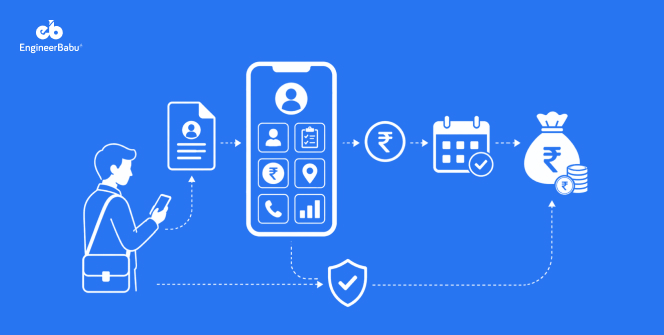
Debt collectors are still printing call logs, writing notes on paper, and switching between three different tools just to update one account. In 2026, that is not a process problem. It is a product gap, and collection agent app development is filling it fast.
The numbers back this up. According to Mordor Intelligence, the global debt collection software market is projected to grow from $4.78 billion in 2024 to $7.52 billion by 2029. That is driven largely by mobile-first, AI-integrated platforms replacing legacy workflows.
If you are building a fintech product or launching a standalone collections tool, this guide walks you through what a collection agent app actually needs.
A collection agent app is a web or mobile app platform built for debt recovery professionals. It gives agents everything they need in one place: borrower data, payment history, communication tools, compliance checklists, and performance dashboards.
Unlike generic CRM tools adapted for collections, a purpose-built app is structured around the actual workflow of a collections agent. That means case queues, escalation paths, dispute logging, and settlement tracking are all first-class features, not workarounds.
These apps are used across consumer lending, BNPL platforms, auto finance, credit card recovery, and B2B receivables management.
Getting collection agent app development right starts with understanding which features actually matter on the ground.
With the foundational steps outlined below, you will now have a clear roadmap for building a collection agent app from scratch.
Before writing a single line of code, clarify who the app is built for.
A field collections agent working in-person has different needs than a call center agent handling 80 accounts remotely. Likewise, consumer debt recovery has different compliance requirements than B2B receivables.
Your feature scope, UI decisions, and integrations all depend on this definition. For instance, AI in loan lending apps has different use cases than traditional basic applications.
Document how accounts move through your collection process, from assignment to closure. Identify every touchpoint: first contact attempt, follow-up cadence, dispute handling, settlement approval, legal escalation, and write-off.
This workflow map becomes the blueprint for your app’s navigation, case states, and notification triggers. Skipping this step is where most collection agent app development projects create unnecessary rework.
For mobile app development, React Native or Flutter are strong choices for cross-platform builds. The backend needs to handle concurrent sessions, real-time updates, and large account datasets reliably. Node.js or Go work well here.
For cloud infrastructure, AWS or GCP offer the compliance and scalability features fintech products typically require. If AI scoring or automation is planned from the start, factor in infrastructure for model serving alongside the core app.
A collection agent app does not work in isolation. It needs to pull borrower data from your loan management system, push payment updates back, connect to telephony platforms like Twilio, and sync with payment gateways.
Structured API development is what makes these connections reliable and maintainable. Poorly built integrations are among the top reasons collection apps fail in production. Plan for webhook-based real-time sync rather than batch polling wherever possible.
This is where modern collection agent app development separates from legacy tools. Repayment propensity scoring helps prioritize which accounts an agent should contact first. Automated follow-up reminders, templated message suggestions, and predictive escalation triggers reduce manual decisions significantly.
AI Development applied to collections also enables sentiment detection during calls and promise-to-pay prediction based on historical patterns. These features improve both agent efficiency and recovery rates in measurable ways.
Compliance is not a feature you add at the end. In most markets, debt collection is governed by strict regulations around contact frequency, communication channels, dispute handling, and data retention. Build consent logging, do-not-contact flags, and audit trails into the data model from the start.
For products serving multiple geographies, your compliance layer needs to be configurable, not hardcoded. Work with legal advisors who understand collections regulations before finalizing the feature list.
Launch a scoped version first. Include the core case queue, borrower profile, communication tools, and basic reporting. Avoid building the full feature set before testing with real agents.
A proper MVP development helps you validate the workflow assumptions you made in Step 2 before they become expensive architectural decisions. Feedback from agents using the app daily will surface gaps that no amount of planning can predict.
As account volumes grow, your app needs to handle large datasets, high concurrent usage, and real-time sync without slowing down. Security becomes critical at this stage. Borrower data, payment records, and communication logs require encryption at rest and in transit, role-based access control, and regular penetration testing.
Partnering with a lending software development company that understands fintech infrastructure gives you an architecture built for scale, not just launch.
AI is no longer a premium add-on in collections technology. It is becoming a baseline expectation.
Repayment propensity models now help prioritize accounts with the highest recovery potential, so agents spend time on conversations that are most likely to result in payment. Conversational AI handles first-contact outreach at scale, escalating only accounts that need human intervention.
Sentiment analysis on call recordings helps supervisors identify coaching opportunities and flag high-risk interactions in near real-time. Automated promise-to-pay tracking reduces the manual follow-up burden on agents by triggering reminders and checking fulfillment without human input.
If you are building or upgrading a collections platform, AI in automating B2B loan approvals gives useful context on how similar automation logic applies across the lending lifecycle.
Cost depends on scope, integrations, and AI complexity.
A focused MVP with core agent features, basic admin dashboards, and standard integrations typically falls between $10,000 and $15,000. This covers the essential workflow without advanced AI layers.
A mid-tier platform with multi-channel communication, AI scoring, compliance tools, and supervisor dashboards usually ranges from $15,000 to $40,000, depending on the number of third-party integrations and the complexity of the collections workflow.
An enterprise-grade app built for large portfolios, multi-tenant architecture, advanced ML models, and regulatory reporting can exceed $40,000 to $100,000, particularly if real-time telephony integration and custom analytics are included.
Development timelines range from 3 to 4 months for an MVP to 6 to 9 months for a full-featured platform.
Collection agent app development is not about digitizing a paper process. It is about rebuilding a workflow that directly affects revenue recovery, agent performance, and borrower relationships.
The apps that work are the ones built around how agents actually operate, with the compliance safeguards, integrations, and intelligence layers baked in from the start.
If you are planning to build a collections platform and want a team that understands both the product and the fintech context, EngineerBabu has worked across lending, recovery, and financial operations products.
Getting the architecture right early saves significant time and cost down the road.
A collection agent app is a platform built for debt recovery professionals. It gives agents a unified workspace for managing accounts, communicating with borrowers, logging interactions, and processing payments, all within a single tool.
An MVP typically takes 3 to 4 months. A full-featured platform with AI, multi-channel communication, and compliance tools usually takes 5 to 8 months depending on scope.
Essential integrations include loan management systems, payment gateways, telephony platforms like Twilio, SMS and WhatsApp APIs, and core banking or CRM systems depending on the use case.
AI is not mandatory for an MVP, but repayment scoring, automated follow-ups, and sentiment analysis provide measurable improvements in recovery rates and agent efficiency. Most competitive platforms in 2026 are incorporating these features.
Requirements vary by market. In the US, FDCPA governs contact frequency, dispute handling, and communication standards. In other regions, equivalent frameworks apply. Compliance logging, consent management, and audit trails should be built into the platform from day one.