How to Build a DSA Management Loan Software: A Step-by-Step Guide


Create engaging, high-performance mobile applications tailored to your business needs. We craft future-ready apps that offer smooth user experiences on all devices.
Build robust and scalable websites and CMS platforms that help you manage content effortlessly. Our development ensures a seamless digital presence.
Launch secure, feature-rich online stores with intuitive shopping experiences. We build tailored eCommerce platforms designed for growth.
Design captivating games with immersive gameplay and stunning graphics. From concept to launch, we build engaging experiences that players love.
Enhance your customer relationships with customized Salesforce implementations. Drive growth and efficiency with smarter CRM solutions.
Harness artificial intelligence and machine learning to automate workflows and gain actionable insights. Our AI transforms data into smart decisions.
Accelerate your software delivery lifecycle with continuous integration, delivery, and infrastructure automation to boost efficiency.
Hire app developers ready to turn your ideas into sleek, high-performing mobile apps for any platform.
Bring in frontend pros who craft smooth, beautiful, and user-friendly interfaces that your visitors will love.
Get backend developers who build fast, secure, and reliable systems to keep everything running behind the scenes.
Hire eCommerce developers who build secure, scalable online stores designed to offer seamless shopping and grow your sales.
Get dedicated developers committed to your projects, delivering consistent quality and speed as an extension of your team.
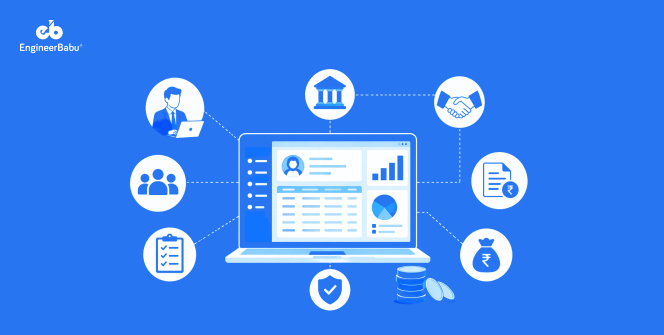
Most lending businesses still track their Direct Selling Agent networks through Excel sheets, WhatsApp messages, and manual commission calculations. If that sounds familiar, you already know how quickly things fall apart when your DSA network scales.
A single missed payout, a misreported lead, or a compliance gap can cost you both agents and clients. That is exactly why more lending companies are now choosing to build a DSA management loan software tailored to how their operations actually work.
According to the IBEF, digital lending disbursements in India crossed INR 1.46 lakh crore, with DSA-driven channels accounting for a significant share of retail and MSME loan sourcing. The volume alone makes managing DSA operations manually a serious operational risk.
So, this guide walks you through exactly how to build a DSA management loan software that handles lead tracking, commission automation, and compliance without cutting corners.
A DSA management loan software is a platform built specifically to manage the end-to-end lifecycle of Direct Selling Agents operating within a lending business. It handles how leads are sourced, assigned, and tracked. It automates commission calculations and payout processing.
It also gives lenders real-time visibility into agent performance and loan pipeline health.
Think of it as the operational backbone connecting your DSA network to your loan origination process. Without it, you are essentially running a distributed sales operation blind.
Building a DSA management loan software involves defining requirements, designing the system, developing core features, and deploying a secure, scalable solution.
The next section outlines each step clearly to help you understand how everything comes together in the development process.
Before writing a single line of code, document exactly how your DSA network operates today. This is the step most teams skip, and it creates expensive rework later.
Identify how DSAs are onboarded, how they submit leads, how those leads get verified and assigned to loan officers, and how commissions are calculated per product type. Different lenders have different structures.
Some work with master DSAs who manage sub-agents. Others have direct DSA relationships only. Your software architecture needs to mirror your actual workflow, not a generic template.
Define the lead stages, approval triggers, rejection criteria, and escalation rules before moving into feature planning.
Once your workflow is mapped, translate it into a focused feature set. When you build a DSA management loan software, your MVP should solve the core operational problems first.
The non-negotiable features for an initial build include a DSA registration and KYC module, a lead submission and tracking dashboard and a loan application pipeline with status updates.
Others are: an automated commission engine, a document management system, and a reporting panel for admin oversight.
Avoid adding advanced features like predictive scoring or AI recommendations in the first version. Work with a structured MVP Development approach so you can launch, validate, and iterate based on real DSA and internal team feedback.
Technology decisions made here will affect your platform’s security, scalability, and integration capability for years. For the frontend, React or Next.js delivers the responsive, role-based dashboards your admin teams and DSAs both need.
On the backend, a Node.js or Python environment works well for handling concurrent loan application processing and real-time status updates. Use PostgreSQL or a similar relational database for structured financial records.
Since DSA management software integrates heavily with loan origination systems, credit bureaus, payment gateways and robust API Development is not optional. Every integration point needs secure, well-documented API connections from the start.
This is the first module your agents will touch, and it sets the tone for the entire platform experience. A clunky onboarding flow means lower DSA adoption regardless of how well the rest of the software works.
Build a self-serve onboarding portal where DSAs can register, upload KYC documents, and get verified without manual back-and-forth with your operations team. Include document verification workflows with status tracking so agents know exactly where they stand.
Role-based access should be configured here too. A master DSA managing a sub-agent network needs different permissions than an individual field agent.
This is the operational core of the software. Every DSA-sourced lead needs to move through a defined pipeline from submission to disbursement without falling through the cracks.
Build a lead submission form that DSAs access through a mobile or web portal. When you build a DSA management loan software, ensuring mobile accessibility matters because most field agents work from smartphones.
Align this with a broader Mobile App Development strategy if you want a dedicated agent app rather than a mobile-responsive web portal.
Each submitted lead should trigger automatic assignment to the relevant loan officer, with status updates visible to both the DSA and the internal team in real time.
Manual commission calculations are one of the biggest pain points in DSA-driven lending operations. Errors damage trust and increase agent churn. This module needs to be airtight.
Build a commission engine that calculates payouts based on product type, loan amount, disbursement status, and any clawback conditions that apply. Support multiple commission structures since lenders often pay differently for home loans, personal loans, and business loans.
Integrate the payout module with your banking or payment gateway so approved commissions are processed automatically on a defined schedule.
Every payout should generate an itemized statement the DSA can access directly from their dashboard.
Lending operations are heavily regulated. Any software handling loan sourcing, agent payments, and borrower data needs compliance built in from the start, not bolted on later.
Build a full audit trail for every action taken on the platform. Lead submissions, status changes, document uploads, commission approvals, and login events should all be logged with timestamps and user IDs. This is non-negotiable for regulatory audits.
Reporting dashboards should give your admin team visibility into DSA performance metrics, lead conversion rates, disbursement volumes by agent, and pending commission liabilities.
If you plan to add predictive analytics or flag underperforming DSAs automatically, that is where AI Development capabilities become valuable in later iterations.
Testing a DSA management loan software requires you to simulate the platform experience across every user type. DSAs using the lead portal, loan officers reviewing applications, finance teams processing payouts, and admins running reports all interact with different parts of the system.
Run performance tests to verify that the platform holds up when a large DSA network submits simultaneous leads. Test commission calculation accuracy against known scenarios.
Verify that API integrations with credit bureaus and payment gateways handle edge cases without breaking the pipeline. Security testing should cover data encryption, access control, and session management given the sensitivity of borrower and agent financial data.
Launch to a limited DSA cohort first rather than your full network. A phased rollout lets you catch usability issues before they affect your entire operation.
Monitor lead submission rates, drop-off points in the onboarding flow, commission query volumes, and support tickets to understand where friction still exists.
Partnering with an experienced lending software development company during this phase helps you move faster on fixes and architectural improvements without disrupting live operations.
Once your core platform is stable and your DSA network is actively using it, you can start layering in capabilities that improve efficiency and outcomes.
Integrating AI to score incoming DSA leads based on historical conversion data helps your loan officers prioritize the strongest applications. The role of AI in automating B2B loan approvals is already well-established, and the same principles apply to DSA-sourced lead prioritization.
Machine learning models can predict commission liabilities based on pipeline volume and historical disbursement rates. This gives your finance team better cash flow visibility. Structured ML Development can power this layer without requiring a complete platform rebuild.
DSA-driven lending is vulnerable to lead fabrication and document fraud. AI-based anomaly detection can flag suspicious patterns in lead submissions before they reach the approval stage. This is particularly relevant if you have a large, distributed agent network that is difficult to monitor manually.
Cost depends heavily on feature scope, integrations, and whether you need a mobile app alongside the web platform.
The timeline for an MVP is typically three to four months. A fuller platform build runs four to seven months.
Building DSA management loan software is not about feature lists. It is about replacing fragile manual processes with a system your agents trust and your operations team can rely on.
When you take the time to map your workflow accurately, build your MVP on the right foundation, and iterate based on real usage data, not just an internal tool.
The lending businesses that get this right see measurable improvements in agent retention, lead quality, and disbursement efficiency.
If you are ready to build a DSA management loan software that actually fits how your business works, having the right development partner like EngineerBabu from day one makes that process predictable rather than painful.
It centralizes how lending businesses manage their Direct Selling Agent network, from onboarding and lead tracking to commission automation and compliance reporting.
A basic MVP typically takes three to four months. A full-featured platform with integrations and mobile access can take four to seven months depending on complexity.
Yes. Through well-structured API connections, the software can integrate with loan origination platforms, credit bureaus, KYC services, and payment gateways.
Absolutely. AI adds value in lead scoring, fraud detection, commission forecasting, and predictive analytics. These capabilities are typically added after the core platform is stable.
An MVP ranges from $20,000 to $40,000. A mid-tier platform falls between $40,000 and $80,000. Enterprise-grade builds with AI and large network support can go significantly higher.