How to Build a Clinical Decision Support System - CDS Hooks, Drug Interactions, Alert Engine 2026


Create engaging, high-performance mobile applications tailored to your business needs. We craft future-ready apps that offer smooth user experiences on all devices.
Build robust and scalable websites and CMS platforms that help you manage content effortlessly. Our development ensures a seamless digital presence.
Launch secure, feature-rich online stores with intuitive shopping experiences. We build tailored eCommerce platforms designed for growth.
Design captivating games with immersive gameplay and stunning graphics. From concept to launch, we build engaging experiences that players love.
Enhance your customer relationships with customized Salesforce implementations. Drive growth and efficiency with smarter CRM solutions.
Harness artificial intelligence and machine learning to automate workflows and gain actionable insights. Our AI transforms data into smart decisions.
Accelerate your software delivery lifecycle with continuous integration, delivery, and infrastructure automation to boost efficiency.
Clinical decision support delivers the right information to the right clinician at the right moment. A physician ordering a medication should know about drug interactions before the order is placed, not after.
An ED physician should see the recommended workup protocol embedded in their order entry screen.
These are not manual lookups. They are automated interventions embedded in the clinical workflow.
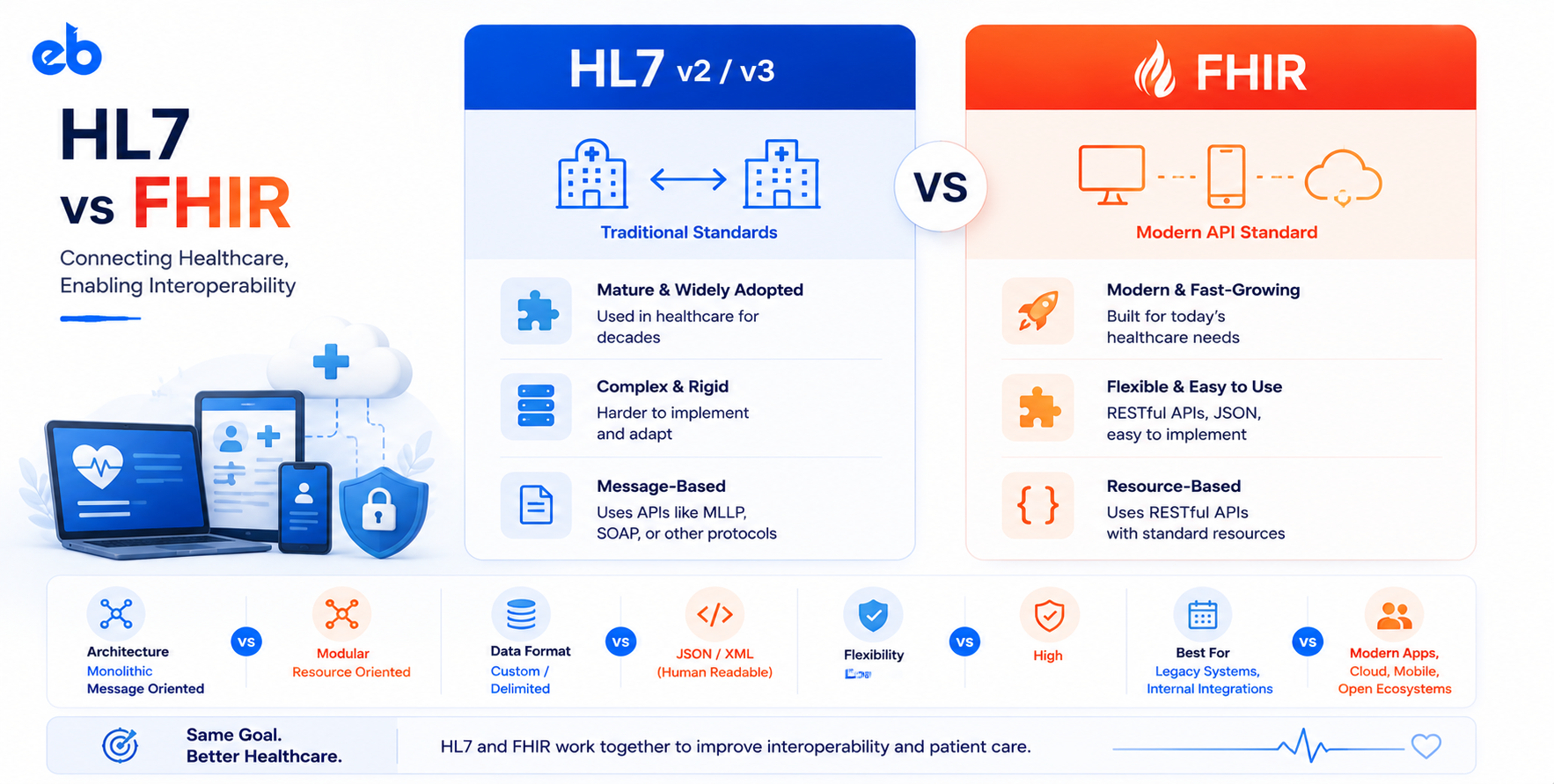
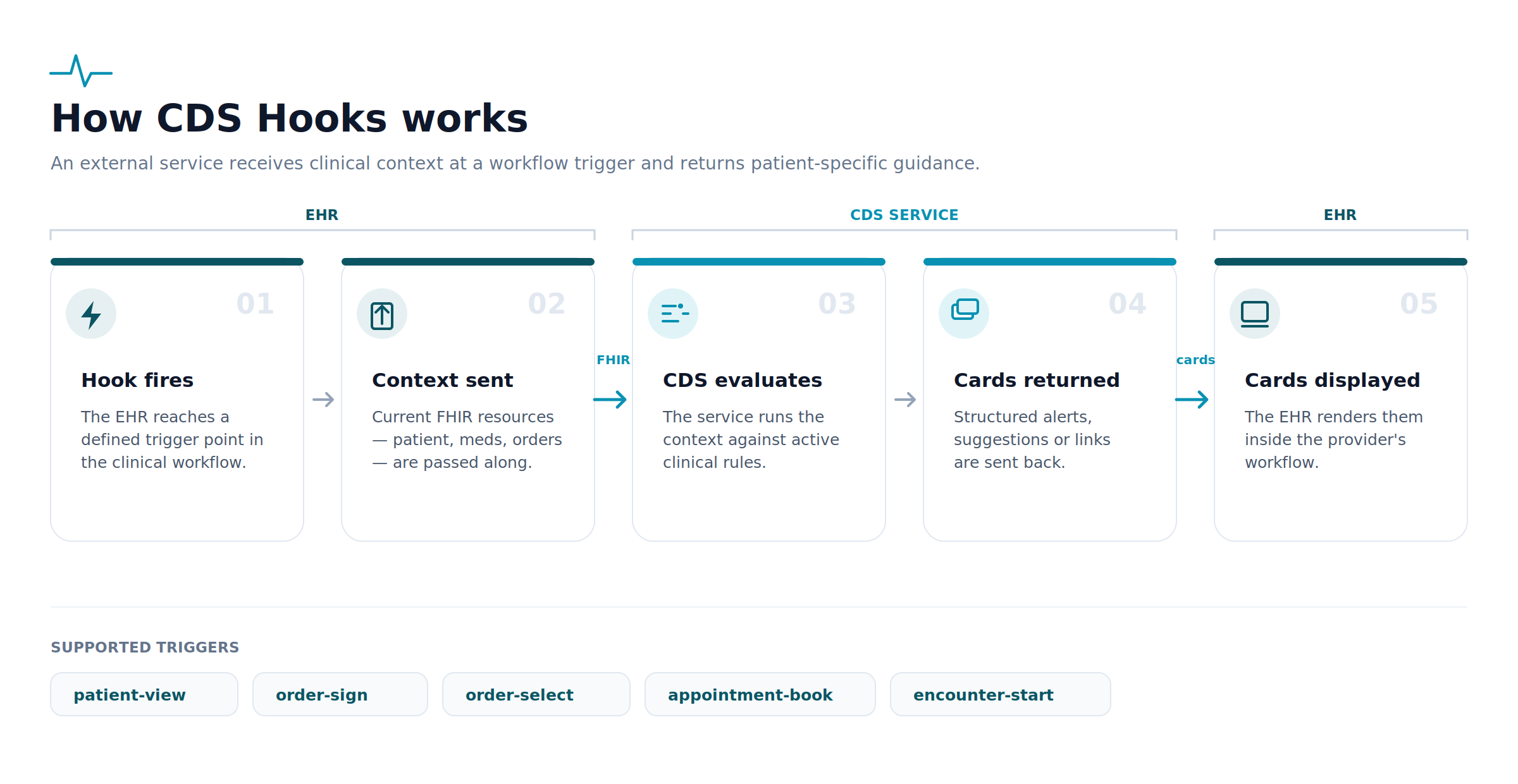
CDS Hooks is the HL7 FHIR standard that allows external CDS services to embed guidance within EHR workflows.
How CDS Hooks works:
| Step | What Happens |
| 1. Hook fires | EHR encounters a trigger point |
| 2. Context sent | EHR sends FHIR resources representing current context |
| 3. CDS evaluates | Service evaluates against clinical rules |
| 4. Cards returned | Structured alerts, suggestions, or links returned |
| 5. Cards displayed | EHR renders cards within provider workflow |
Supported CDS Hooks:
| Hook | When It Fires | Use Case |
| patient-view | Provider opens patient chart | Care gap reminders, outstanding orders |
| order-sign | Provider signs a medication order | Drug interactions, dosing alerts |
| order-select | Provider selects medication from list | Allergy check, formulary guidance |
| appointment-book | Appointment scheduled | Preventive care reminders |
| encounter-start | Encounter begins | Relevant protocol suggestions |
The interaction database:
| Database | Coverage | Use |
| First Databank (FDB) | 7M+ interactions | Gold standard for enterprise clinical systems |
| Multum (Cerner) | 6M+ interactions | Standard in Cerner deployments |
| Medi-Span | 6M+ interactions | Alternative to FDB |
Severity tiers and alert behaviour:
| Severity | Definition | Alert Behaviour |
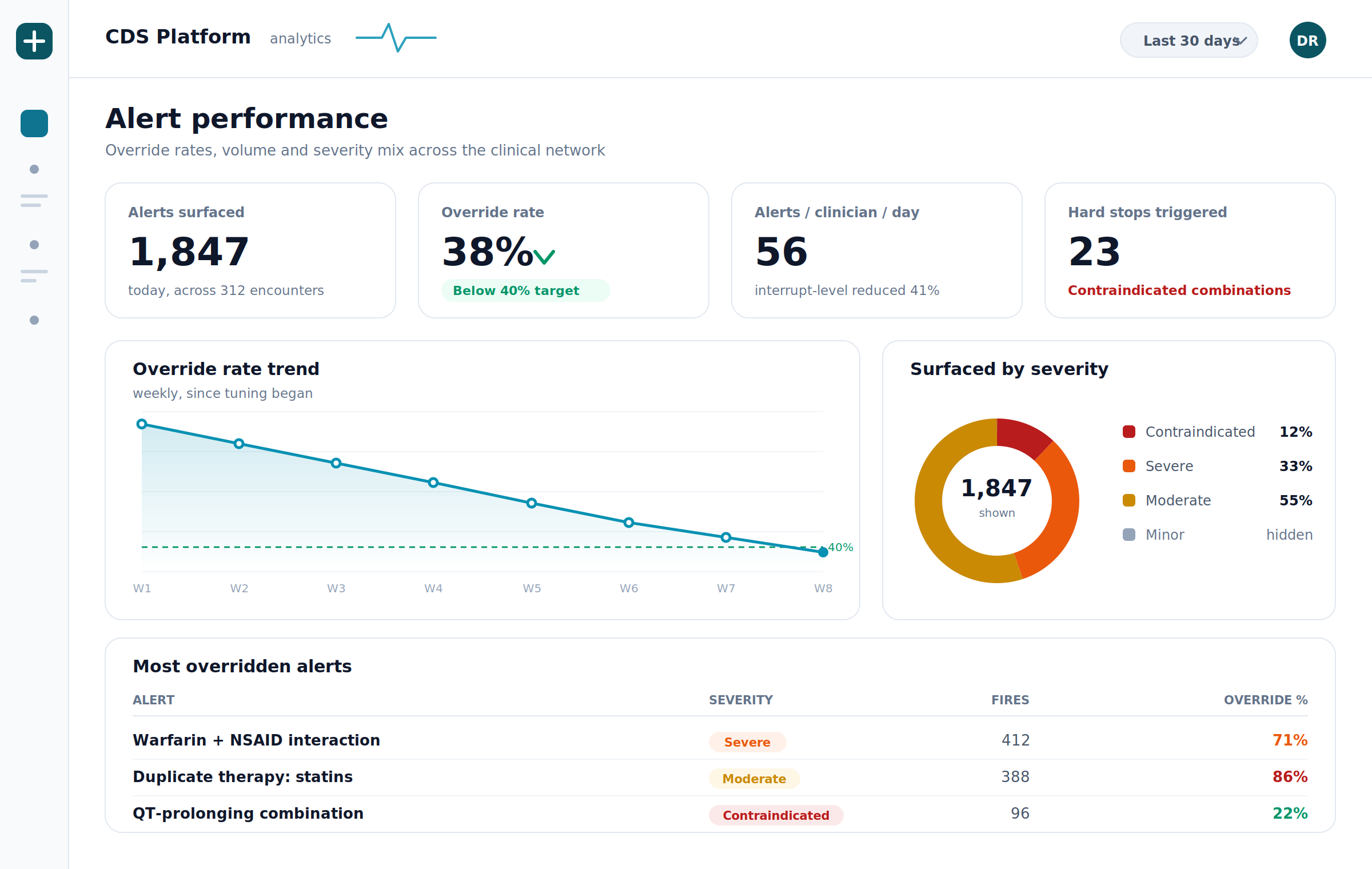
| Contraindicated | Must not use together | Hard stop – order cannot proceed without override |
| Severe | Avoid combination | Soft stop – prominent alert, override with documentation |
| Moderate | Use with monitoring | Advisory – shown, can be acknowledged |
| Minor | Minimal significance | Not shown (prevents alert fatigue) |
Drug-allergy checking:
When a medication order is placed:
Cross-reactivity checking (penicillin allergy + cephalosporin order) requires the drug class relationship database.
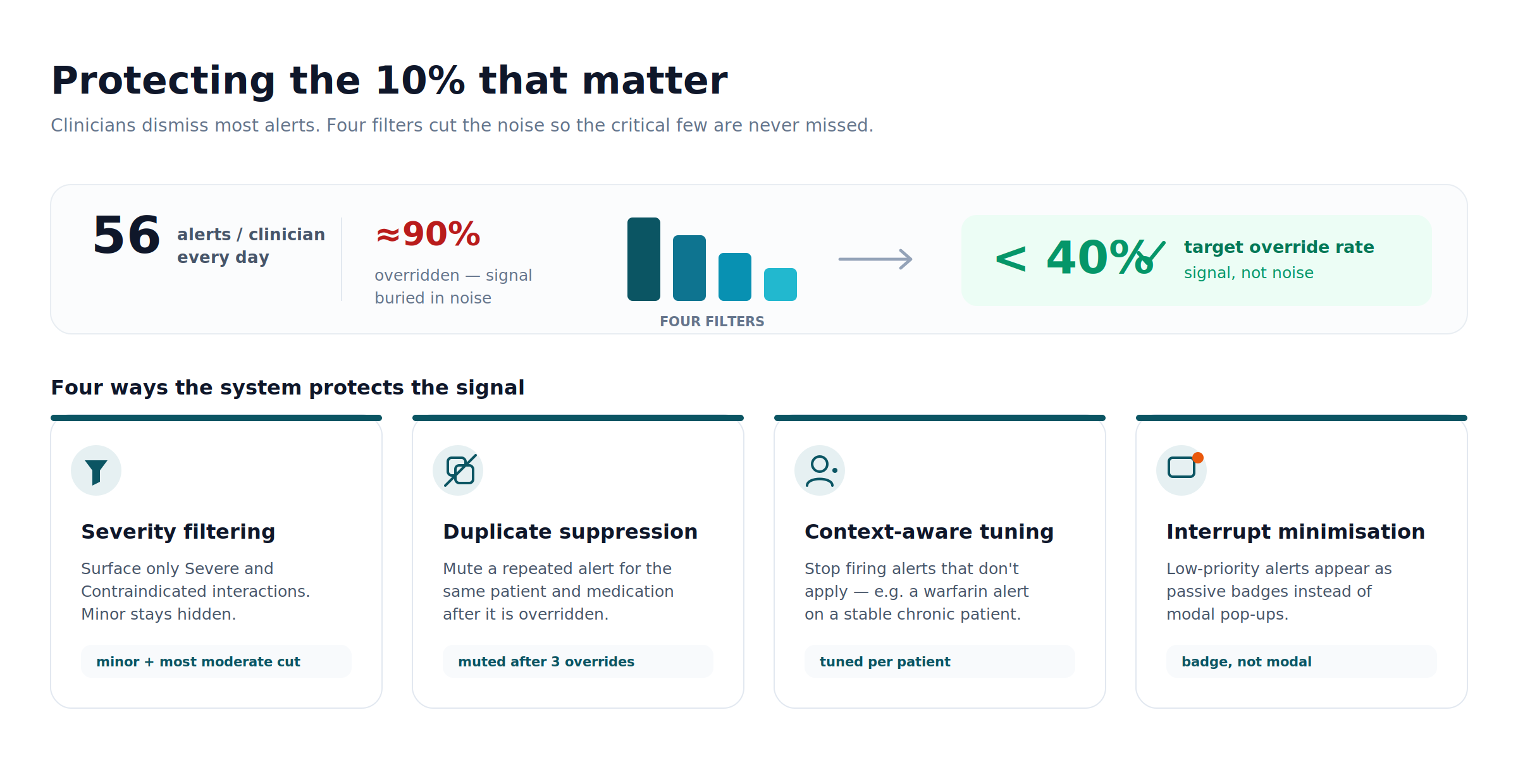
Clinicians receive an average of 56 CDS alerts per day and override 90% of them. The design challenge is ensuring the 10% that matter are not missed.
Four prevention strategies:
Order set examples:
| Condition | Contents |
| Community-acquired pneumonia | Azithromycin + amoxicillin, CBC, BMP, chest X-ray, pulse oximetry, incentive spirometer |
| Acute MI | Aspirin, heparin, troponin series, ECG, cardiology consult, cath lab activation criteria |
| Sepsis | Blood cultures x2, broad-spectrum antibiotics within 1 hour, lactate, IV fluids 30mL/kg |
The order set management interface:
Clinicians maintain order sets through an admin interface, no code deployment required. Changes are versioned and require clinical review before activation.
Each clinical rule has:
| Element | Content |
| Trigger condition | FHIR-expressed clinical context that activates the rule |
| Recommendation | Guidance text + optional FHIR actions |
| Evidence grade | A/B/C from clinical guidelines |
| Guideline source | USPSTF, ACC/AHA, IDSA |
| Last reviewed date | When last reviewed against current guidelines |
| Status | Active / Retired / Under review |
The rule authoring interface:
Clinical informaticists create rules using structured editor, no coding required. Rules expressed using:
| Module | Cost Range (USD) | Notes |
| CDS Hooks server implementation | $8K – $15K | |
| Drug interaction database (FDB/Multum) | $5K – $10K | Annual licensing extra |
| Drug-allergy + cross-reactivity checking | $5K – $10K | |
| Alert severity tier + fatigue prevention | $8K – $15K | |
| Order set management system | $8K – $15K | |
| Evidence rule engine + CQL support | $10K – $18K | |
| Rule authoring interface | $6K – $12K | No-code builder |
| EHR development & integration (Epic, Cerner, athena) | $8K – $15K | Per EHR |
| Analytics (override rates, performance) | $4K – $8K | |
| AWS HIPAA + SOC 2 + VAPT | $5K – $10K | |
| Total | $67K – $128K | Full CDSS platform |
Contact: mayank@engineerbabu.com
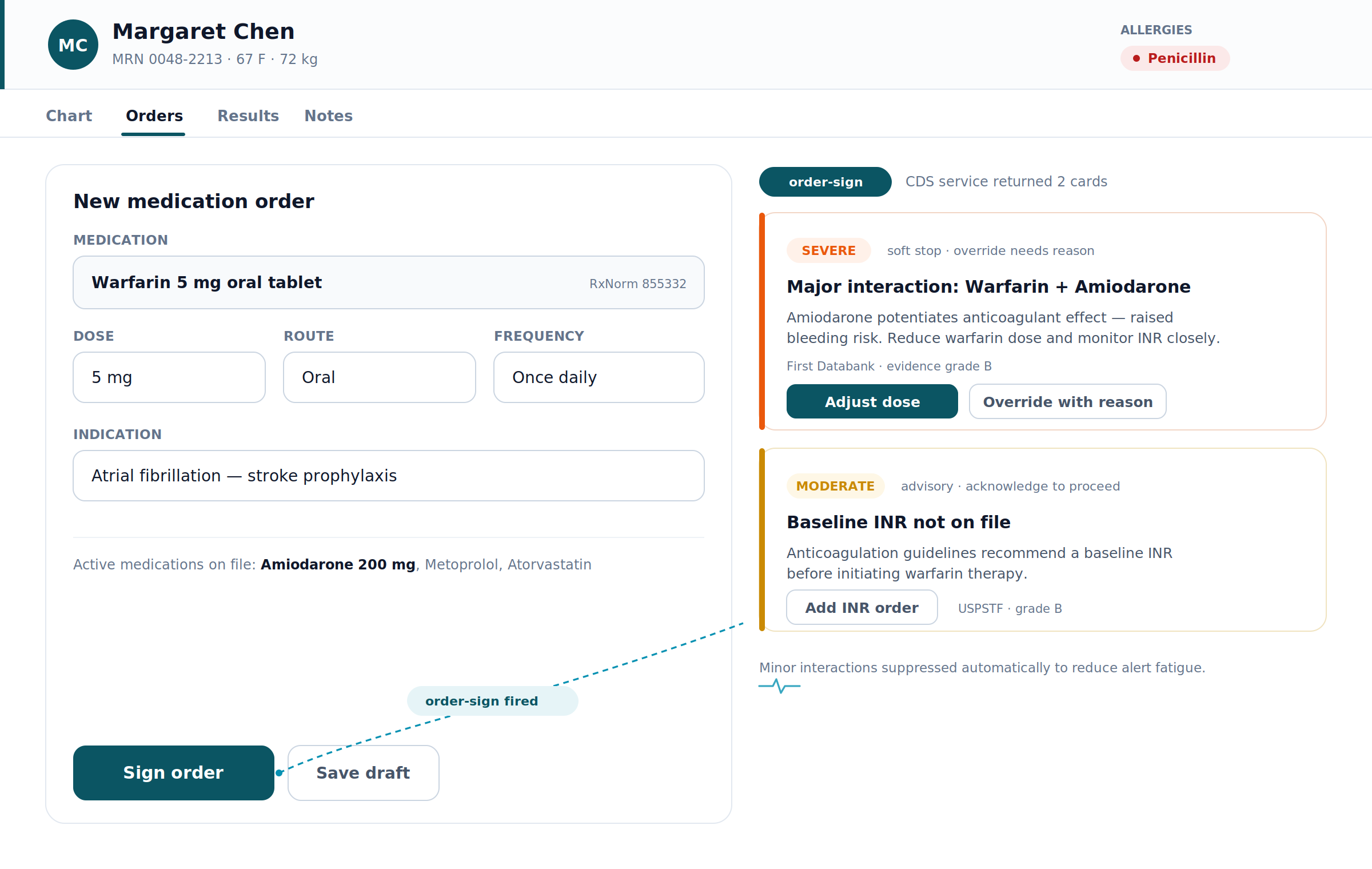
Traditional EHR alerts are built inside the EHR by the vendor, hard to customise, requiring EHR configuration projects for changes. CDS Hooks allows an external service to receive context at specific workflow triggers and return patient-specific recommendations that appear within the EHR interface. The CDS logic lives outside the EHR and can be updated independently, enabling clinical informatics teams to maintain current evidence-based guidance without EHR vendor involvement.
The key is severity-based filtering combined with context awareness. Show only Severe and Contraindicated drug interaction alerts not Minor and most Moderate ones. Use duplicate suppression for alerts that have been consistently overridden for specific patient-medication combinations. Apply interrupt minimisation so low-priority alerts appear as passive indicators rather than modal dialogs. Target override rates below 40%, when more than 60% of alerts are actioned, the system is delivering signal rather than noise.