How to Build a Remote Patient Monitoring Platform - IoT Devices, CMS Billing, Alert Engine, HIPAA Architecture 2026


Create engaging, high-performance mobile applications tailored to your business needs. We craft future-ready apps that offer smooth user experiences on all devices.
Build robust and scalable websites and CMS platforms that help you manage content effortlessly. Our development ensures a seamless digital presence.
Launch secure, feature-rich online stores with intuitive shopping experiences. We build tailored eCommerce platforms designed for growth.
Design captivating games with immersive gameplay and stunning graphics. From concept to launch, we build engaging experiences that players love.
Enhance your customer relationships with customized Salesforce implementations. Drive growth and efficiency with smarter CRM solutions.
Harness artificial intelligence and machine learning to automate workflows and gain actionable insights. Our AI transforms data into smart decisions.
Accelerate your software delivery lifecycle with continuous integration, delivery, and infrastructure automation to boost efficiency.
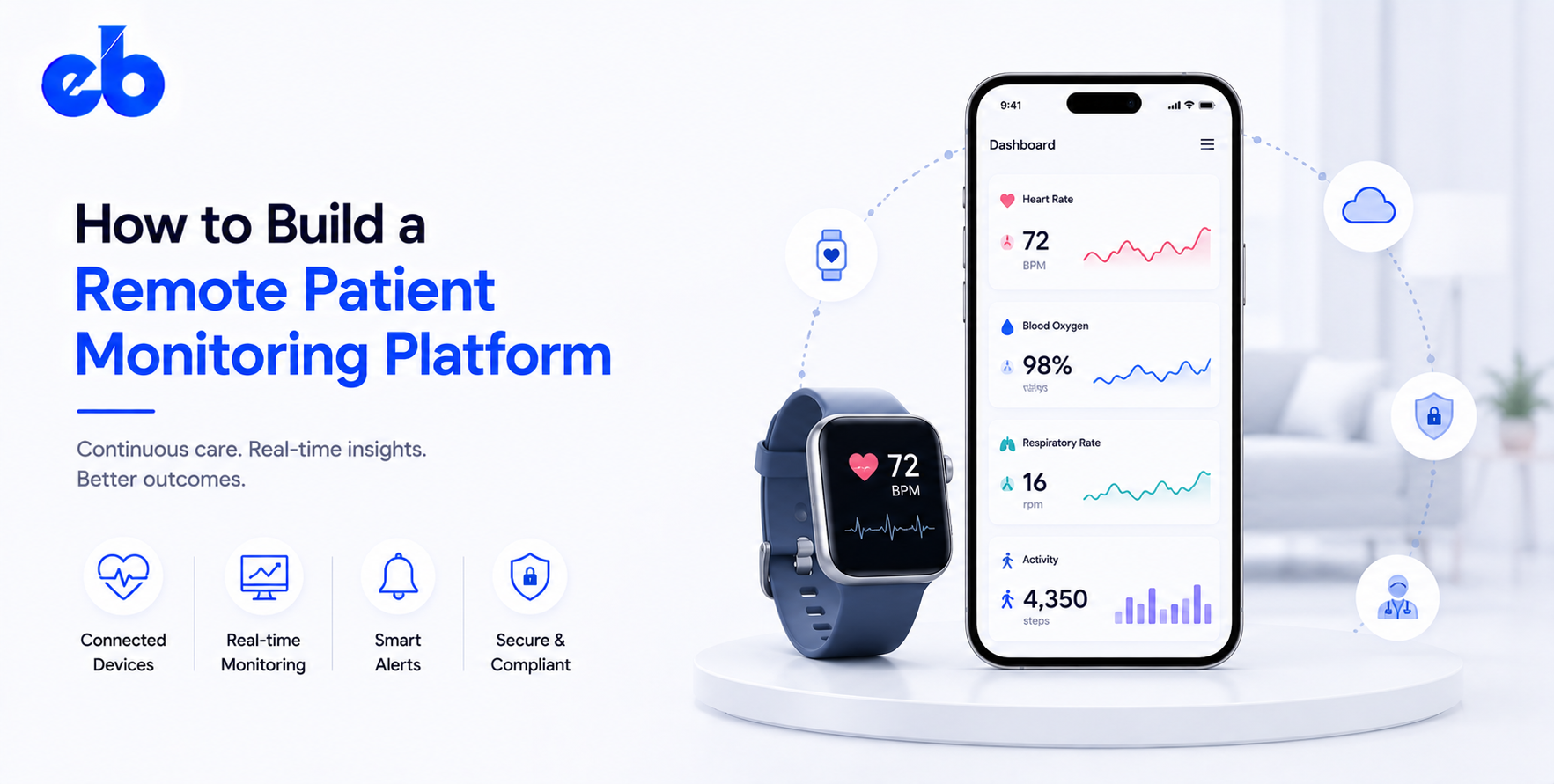
Remote patient monitoring is the fastest-growing segment in digital health with a sustainable CMS reimbursement model that does not depend on venture capital. EngineerBabu built Somnoware, the remote monitoring platform for ResMed’s sleep therapy device network, subsequently acquired by ResMed. We understand production-grade medical IoT at scale.
2026 RPM billing codes:
| CPT Code | What It Covers | 2026 Rate |
| 99453 | Device setup + patient education | ~$22 |
| 99454 | Device supply + 16+ days transmission | ~$52/month |
| 99445 | Device supply + 2–15 days transmission (2026 new) | ~$26/month |
| 99457 | First 20 minutes clinical management | ~$52/month |
| 99470 | First 10 minutes clinical management (2026 new) | ~$26/month |
| 99458 | Additional 20 minutes clinical management | ~$42/month |
RPM devices must be FDA-cleared. Consumer-grade fitness trackers do not qualify.
Device categories and integration methods:
| Device | Common Brands | Integration |
| Blood pressure monitors | Omron, Withings, A&D Medical | Bluetooth LE + manufacturer SDK |
| Continuous glucose monitors | Dexcom G7, FreeStyle Libre 3 | Bluetooth LE + Dexcom/Abbott API |
| Weight scales | Withings, iHealth | WiFi + manufacturer cloud API |
| Pulse oximeters | Nonin, Masimo | Bluetooth LE + SDK |
| ECG patches | iRhythm Zio, AliveCor | Cellular + cloud API |
| Spirometers | NuvoAir, Smart Respiratory | Bluetooth LE + SDK |
The device abstraction layer:
A standardised internal interface normalises data from every device regardless of manufacturer format. Adding a new device requires implementing one new adapter not modifying the core platform.
Data model per reading:
| Field | Notes |
| patient_id | Platform patient identifier |
| device_id | Specific physical device (serial number) |
| measurement_type | Blood pressure / glucose / weight / SpO2 |
| value(s) | Systolic + diastolic for BP, mg/dL for glucose |
| device_timestamp | UTC — device-reported |
| transmission_timestamp | When reading reached the platform server |
| quality_flag | Manufacturer-reported quality indicator |
The timestamp distinction matters for billing, CMS counts days where data was transmitted, not measured. Both timestamps must be recorded.
The data pipeline:
Device → Bluetooth → patient smartphone → device manufacturer cloud → platform API → time-series database → alert evaluation
Time-series database choice:
| Option | When to Use |
| PostgreSQL (TimescaleDB) | < 50,000 patients, simplicity preferred |
| InfluxDB | 50,000+ patients, high-frequency readings |
| Amazon Timestream | AWS-native, managed, scales automatically |
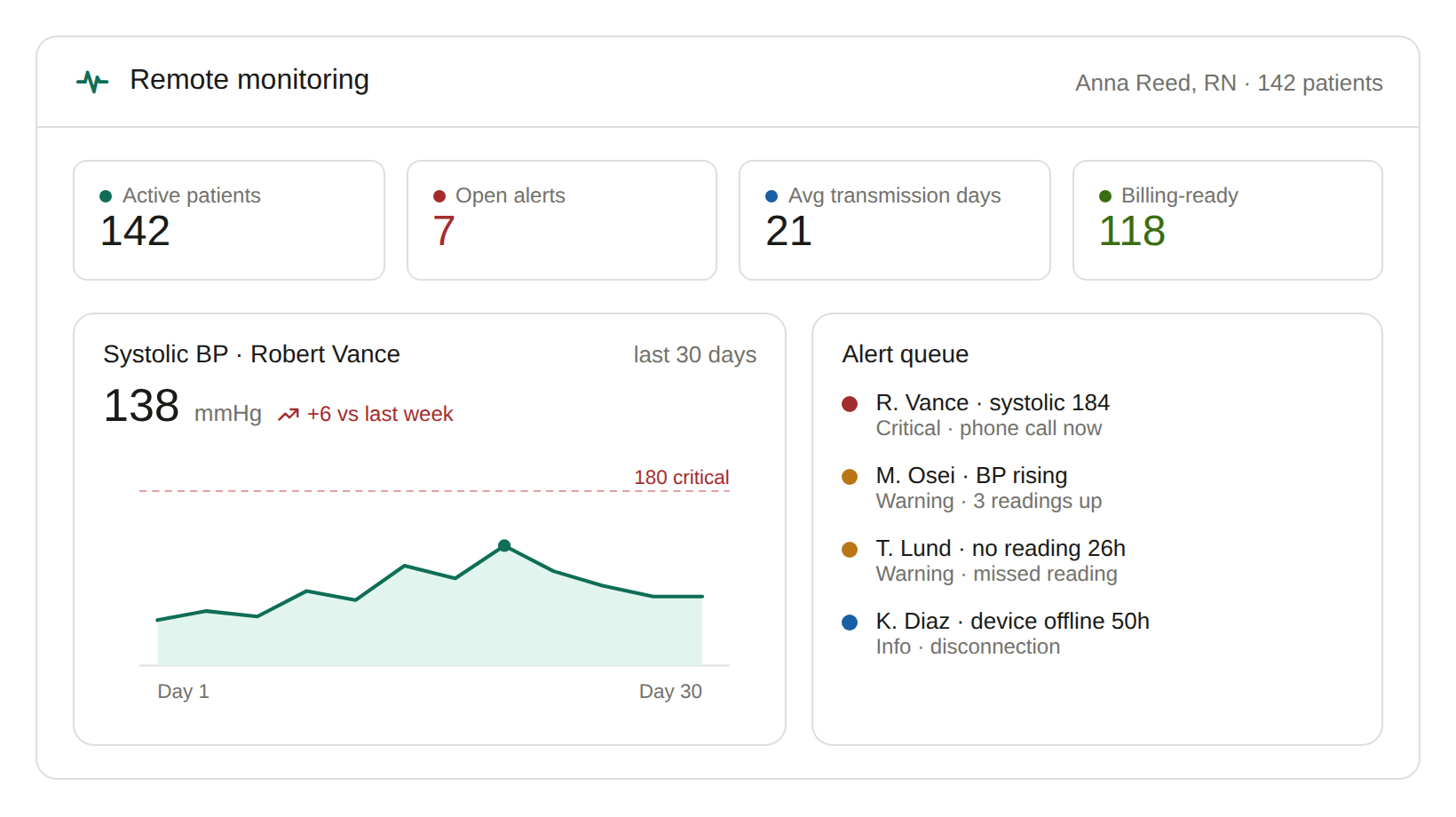
Alert evaluation, every incoming reading is evaluated:
| Alert Type | Example | Severity |
| Absolute threshold | Systolic BP > 180 mmHg | 🔴 Critical |
| Trend alert | BP rising > 15 mmHg over 3 consecutive readings | 🟡 Warning |
| Missed reading | No reading in 24 hours | 🟡 Warning |
| Device disconnection | Device not synced in 48 hours | ℹ️ Info |
Alert fatigue prevention: four mechanisms:
The compliance tracking engine:
| CPT Code | Requirement | Platform Tracking |
| 99445 | 2–15 transmission days | Count distinct calendar days with transmission |
| 99454 | 16+ transmission days | Same count, determines 99445 vs 99454 |
| 99457 | 20 minutes clinical management + patient contact | Time-stamped log of interactions |
| 99470 | 10 minutes clinical management | Same, determines 99470 vs 99457 |
Mid-month compliance alerts (critical feature):
During the month not at month-end, the platform surfaces compliance gaps:
| Alert | Timing | Action |
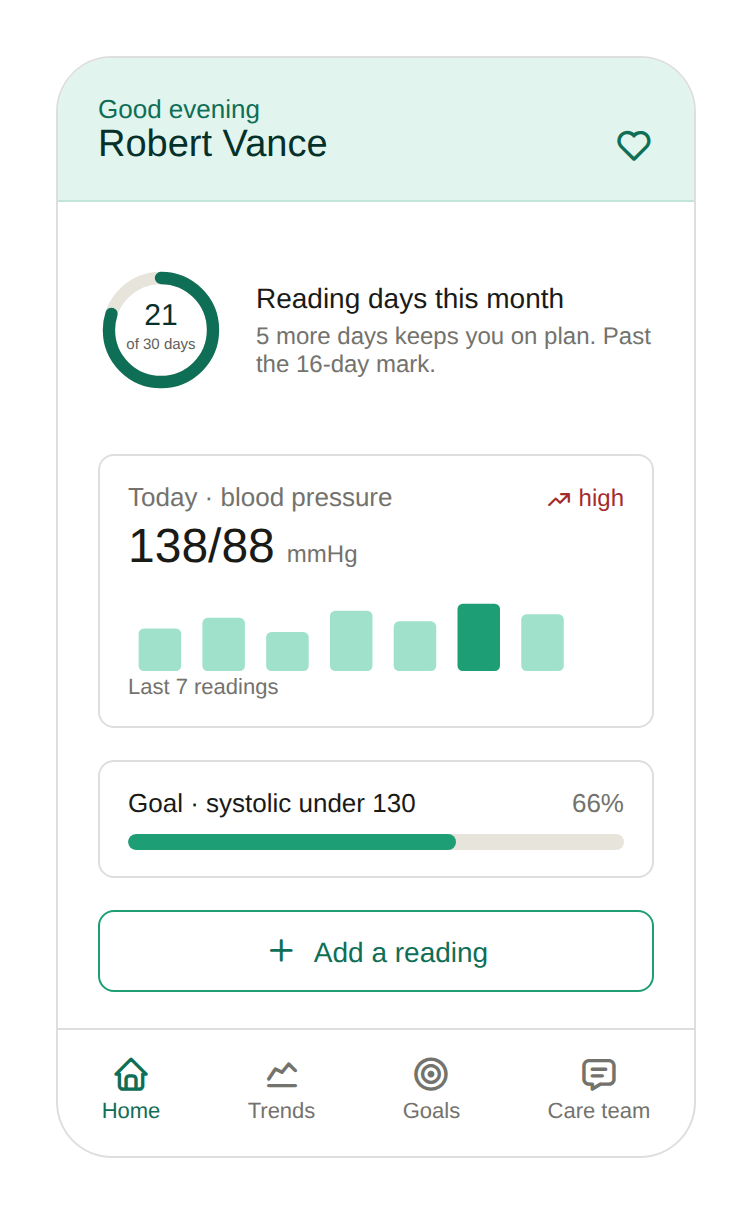
| Patient approaching 16-day threshold | When at 12 days | Provider prompts patient to take readings |
| Clinical time short of 20-minute threshold | With 5 days left in month | Provider reviews and adds documented interaction |
| Patient not responsive | 72 hours without reading | Outreach call from care coordinator |
The billing automation workflow:
At month end, the platform automatically:
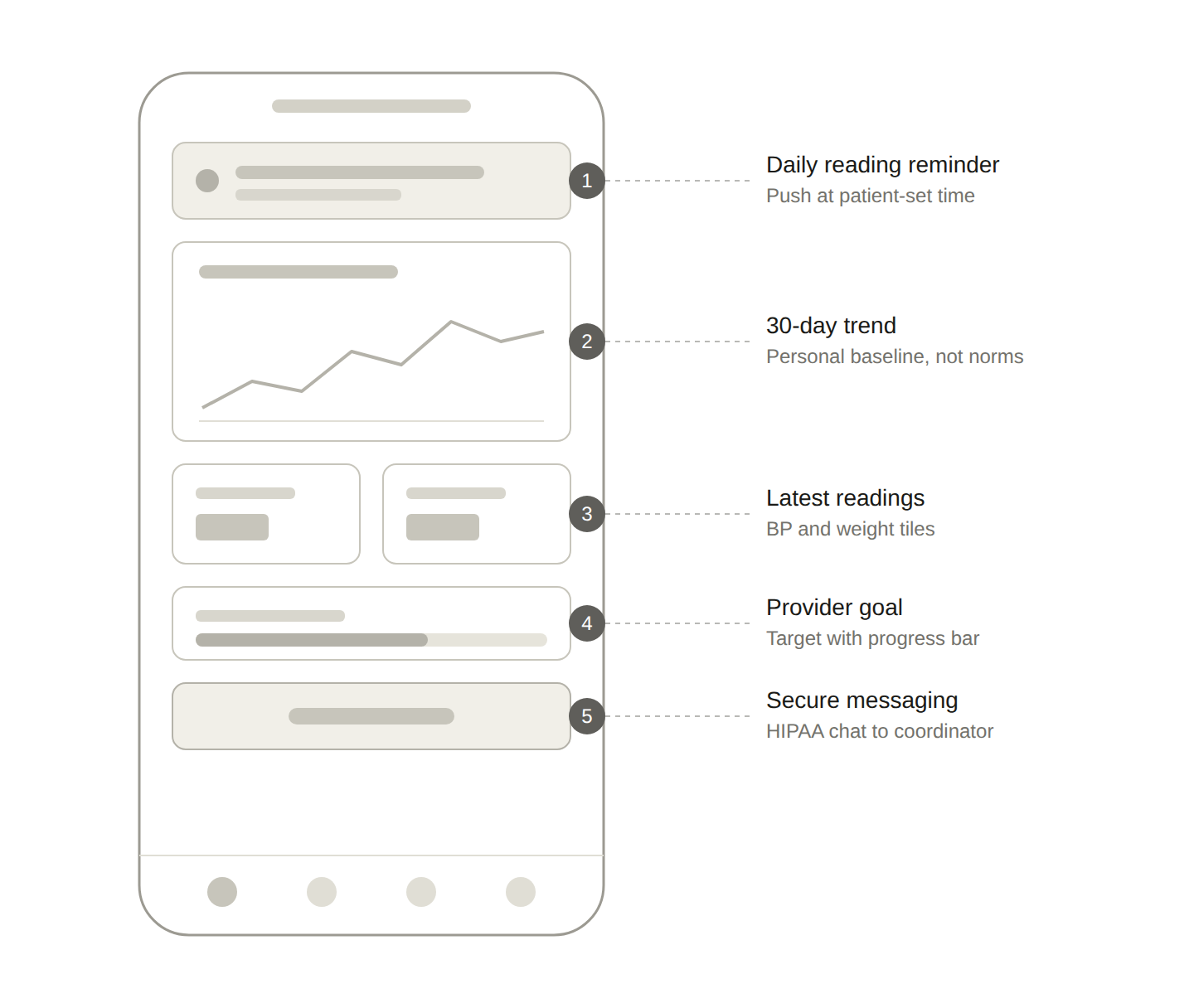
The patient mobile app (iOS + Android, Flutter):
| Feature | Details |
| Reading reminders | Daily notification at patient-selected time |
| Trend visualisation | “Your blood pressure over the last 30 days” |
| Goal tracking | Provider-set targets with patient progress |
| Secure messaging | HIPAA-compliant messaging to care coordinator |
| Education content | Condition-specific educational materials |
The engagement cadence:
| Day | Action |
| Enrolment | Welcome + device setup guide |
| Day 3 | Check-in: “How is the device working?” |
| Day 7 | First week summary |
| Day 30 | Monthly summary with trend comparison |
| No reading 24h | Automated reminder |
The provider dashboard:
| View | Contents |
| Patient panel | All RPM patients, current readings, alert status, compliance |
| Alert queue | Prioritised alerts requiring clinical review |
| Compliance tracker | Per-patient transmission days and clinical time |
| Month-end billing preview | Projected claims before month closes |
The care coordinator workflow:
| Trigger | Action |
| Critical alert | Immediate phone call to patient |
| Warning alert | Secure message within 4 hours |
| Low compliance | Motivational outreach and troubleshooting |
| Patient missed appointment | Reschedule and document |
| Module | Cost Range (USD) | Notes |
| Device integration layer (10 device types) | $10K – $20K | ~$1K–$2K per device adapter |
| Time-series database + data pipeline | $6K – $12K | |
| Real-time alert evaluation engine | $8K – $15K | |
| Alert fatigue prevention (ML baseline) | $8K – $15K | |
| CMS billing compliance engine | $10K – $18K | All 2026 CPT codes |
| Claims generation + clearinghouse | $6K – $12K | 837P EDI |
| Patient app (iOS + Android) | $10K – $18K | Flutter |
| Provider dashboard + care coordinator | $8K – $15K | |
| EHR integration (FHIR R4) | $6K – $12K | |
| AWS HIPAA + IoT security + VAPT | $8K – $15K | |
| Total | $80K – $152K | Full RPM platform |
EngineerBabu built Somnoware, the RPM platform for ResMed’s sleep therapy device network, acquired by ResMed. Contact: mayank@engineerbabu.com
CPT 99454 requires a minimum of 16 distinct calendar days of data transmission in a 30-day billing period. The 2026 update added CPT 99445 for 2 to 15 transmission days. The platform tracks transmission days automatically, counting any calendar day where at least one reading was received. At month-end, the platform selects the correct code based on the actual count. Mid-month alerts notify the care team when a patient is on track for 99445 instead of 99454, enabling proactive outreach to increase transmission frequency before the billing window closes.
Somnoware was built for ResMed’s connected sleep therapy devices, CPAP and BiPAP machines that transmit usage data nightly. The core challenges were identical to a general RPM platform: device protocol normalisation across multiple device generations, alert engine design that surfaces clinically meaningful signals without alert fatigue, compliance tracking for billing purposes, and a patient app that drives engagement with patients who have chronic conditions. The acquisition by ResMed validated the platform’s clinical and technical quality. EngineerBabu applies these lessons, specifically the device abstraction layer architecture, the alert fatigue prevention model, and the compliance billing engine to new RPM builds.