EMR Software Development Company in India: What 14 Years of Shipping Products Taught Me


Create engaging, high-performance mobile applications tailored to your business needs. We craft future-ready apps that offer smooth user experiences on all devices.
Build robust and scalable websites and CMS platforms that help you manage content effortlessly. Our development ensures a seamless digital presence.
Launch secure, feature-rich online stores with intuitive shopping experiences. We build tailored eCommerce platforms designed for growth.
Design captivating games with immersive gameplay and stunning graphics. From concept to launch, we build engaging experiences that players love.
Enhance your customer relationships with customized Salesforce implementations. Drive growth and efficiency with smarter CRM solutions.
Harness artificial intelligence and machine learning to automate workflows and gain actionable insights. Our AI transforms data into smart decisions.
Accelerate your software delivery lifecycle with continuous integration, delivery, and infrastructure automation to boost efficiency.
Hire app developers ready to turn your ideas into sleek, high-performing mobile apps for any platform.
Bring in frontend pros who craft smooth, beautiful, and user-friendly interfaces that your visitors will love.
Get backend developers who build fast, secure, and reliable systems to keep everything running behind the scenes.
Hire eCommerce developers who build secure, scalable online stores designed to offer seamless shopping and grow your sales.
Get dedicated developers committed to your projects, delivering consistent quality and speed as an extension of your team.
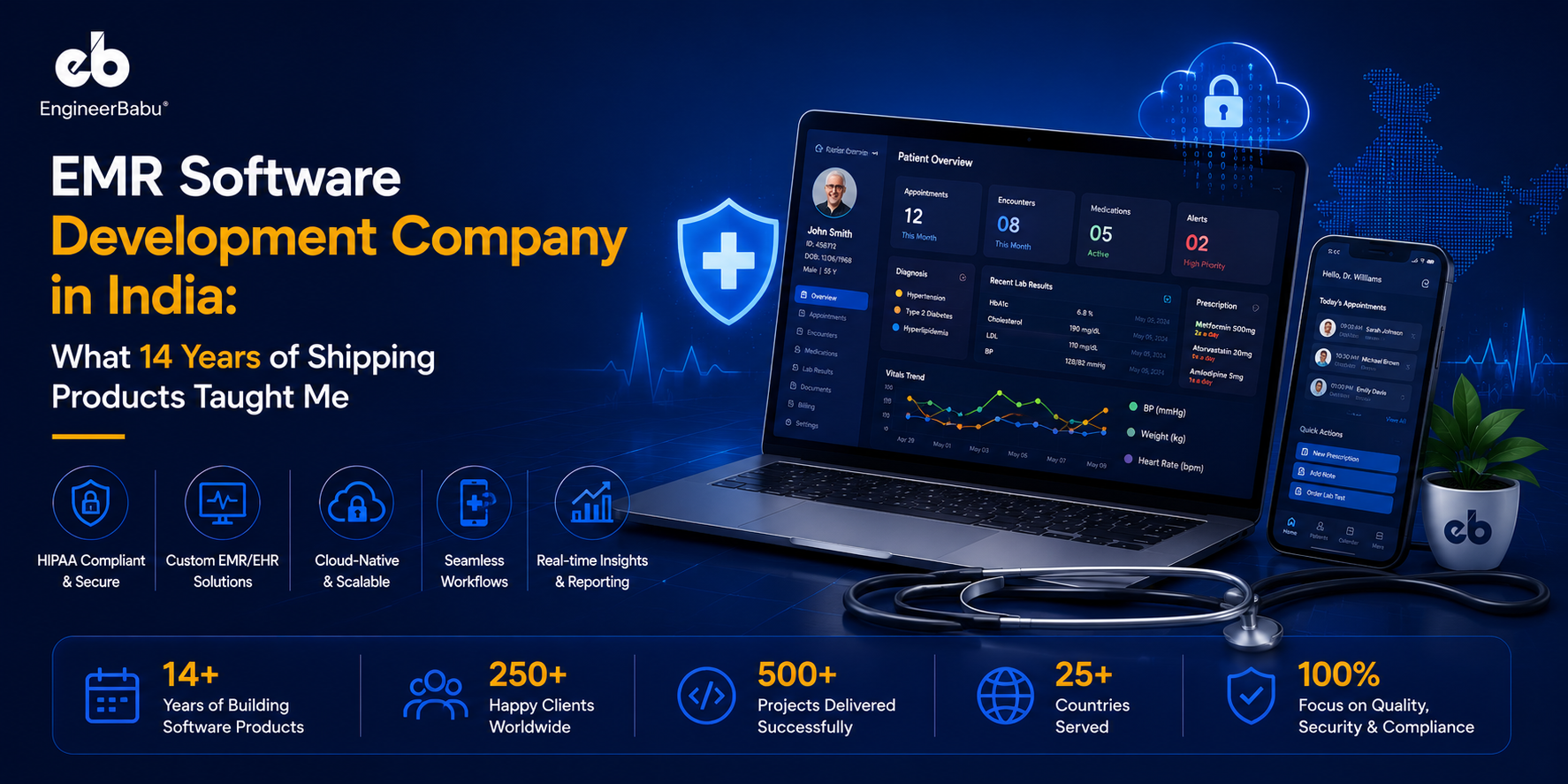
I recently sat across from a hospital CTO who had spent 18 months and $180,000 building an EMR system in-house. It wasn’t live yet. Not a single doctor had used it.
His engineering team had rewritten the patient record module three times because nobody told them upfront that HL7 FHIR R4 compliance isn’t optional if you want to connect with insurance systems. The fourth rewrite was happening when we spoke.
That’s not a horror story. That’s Tuesday in healthcare software.
The difference between a functional EMR and an expensive shelf item usually comes down to one decision made at the start: who you’re building with, and whether they’ve shipped healthcare software before or just claim they have.
I’m Mayank Pratap, co-founder of EngineerBabu.
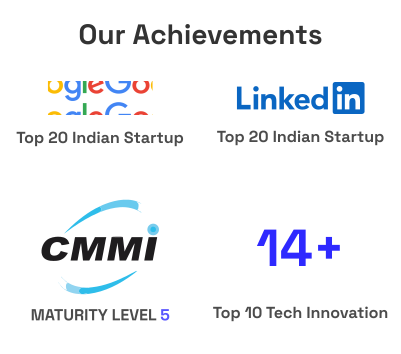
We’re a CMMI Level 5 product engineering company, recognized by Google AI Accelerator (Top 20 globally, 2024), NASSCOM, and LinkedIn Top 20 Startups India.
We’ve shipped 500+ products across 20+ countries, including fintech platforms now processing thousands of crores in transactions. Healthcare is one of the verticals where we go deep, not wide.
This is my honest breakdown of what EMR software development actually costs, how long it actually takes, what the architecture decisions actually look like, and how to pick a company in India that won’t waste your money.
EMR software development is the process of designing, building, and deploying Electronic Medical Records systems that allow healthcare providers to create, store, manage, and share patient health data digitally.
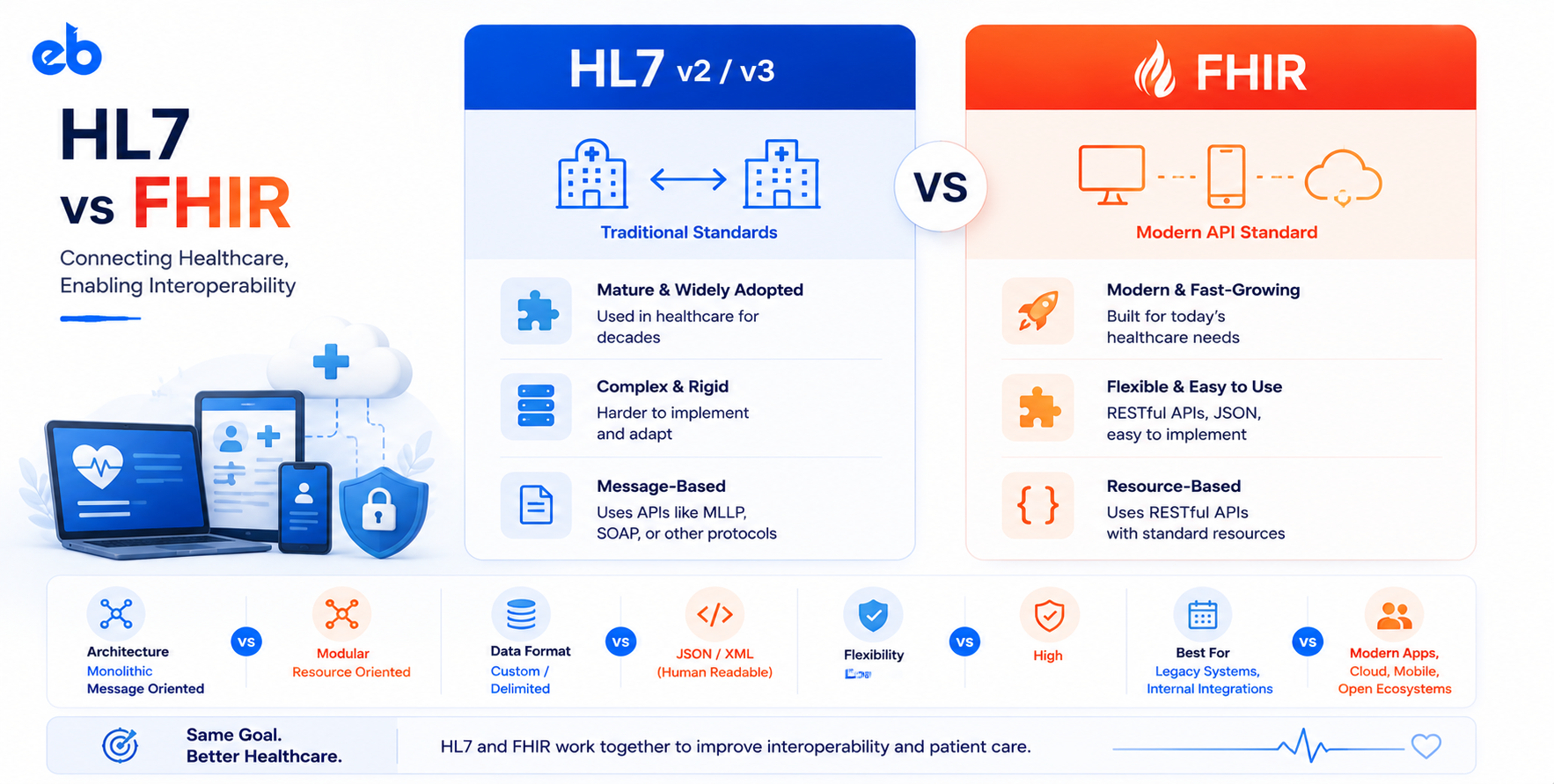
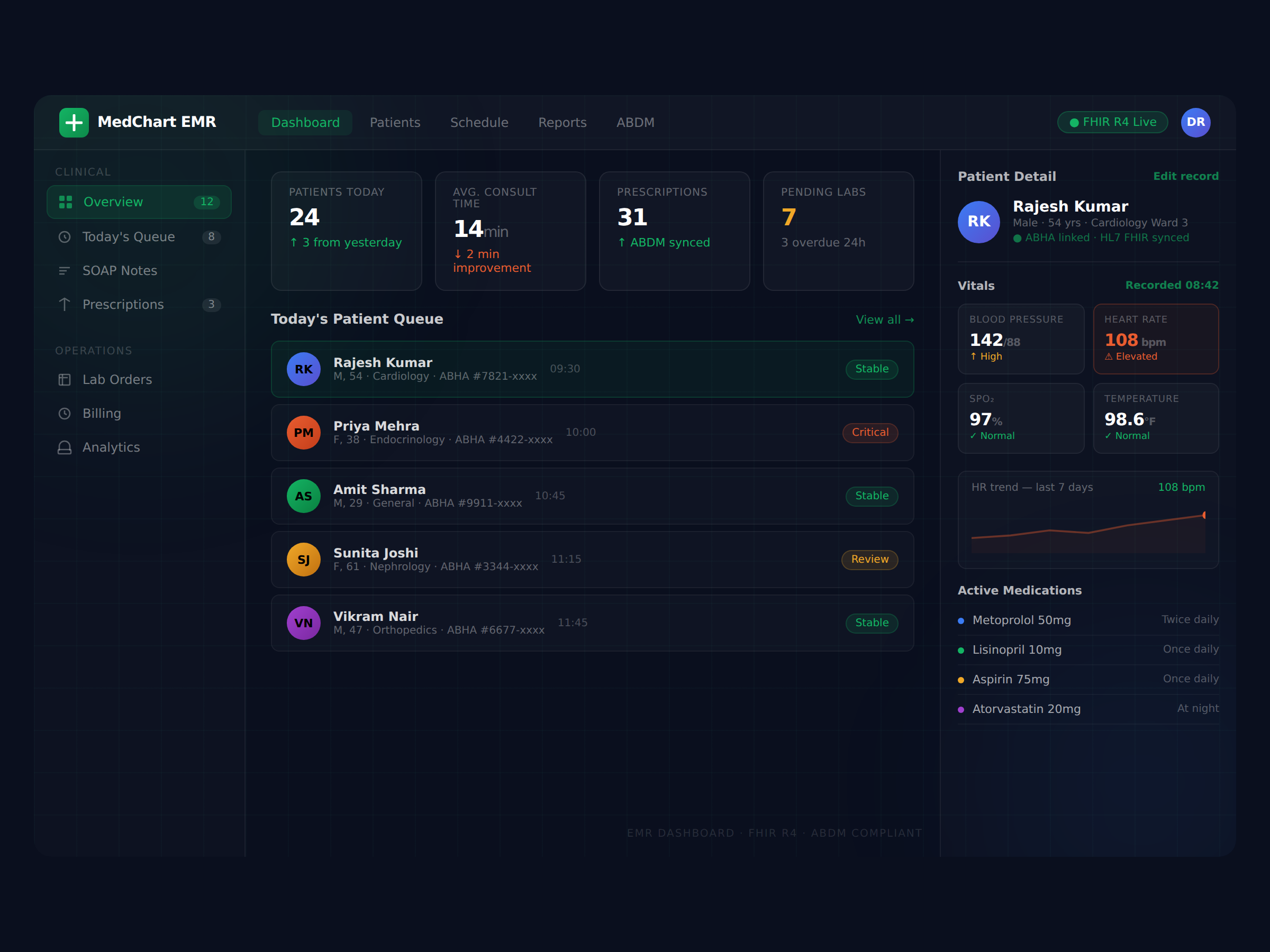
A modern EMR system includes clinical documentation, patient scheduling, prescription management, lab order workflows, billing integration, interoperability via HL7/FHIR standards, and increasingly AI-assisted clinical decision support.
Why India specifically? Not because it’s cheap. Because the talent density for healthcare-adjacent software has grown sharply in the last 5 years.
India’s IT services sector crossed $254 billion in revenue in FY2024 (NASSCOM), and a significant portion of that growth is in regulated industry software, including healthcare, fintech, and insurtech.
The engineers who built banking-grade compliance systems for fintech companies are the same ones who understand audit trails, data integrity, and regulatory architecture in EMR systems.
Cost is a factor, but it’s the secondary factor. The primary factor is finding a team that’s actually done this before.
Most CTOs I talk to underestimate the budget by 3-4x. They come in expecting ₹20-30 lakhs for an MVP development and leave the conversation understanding why a production-ready EMR starts at ₹60-120 lakhs for a focused build.
Here’s why:
HIPAA (if you’re building for US clients), ABDM compliance (for India’s Ayushman Bharat Digital Mission), HL7 FHIR R4, and SNOMED-CT/ICD-10 coding aren’t features you sprinkle on top.
They shape your entire data architecture. If your vendor quotes without asking about compliance requirements in the first call, that’s your signal to walk.
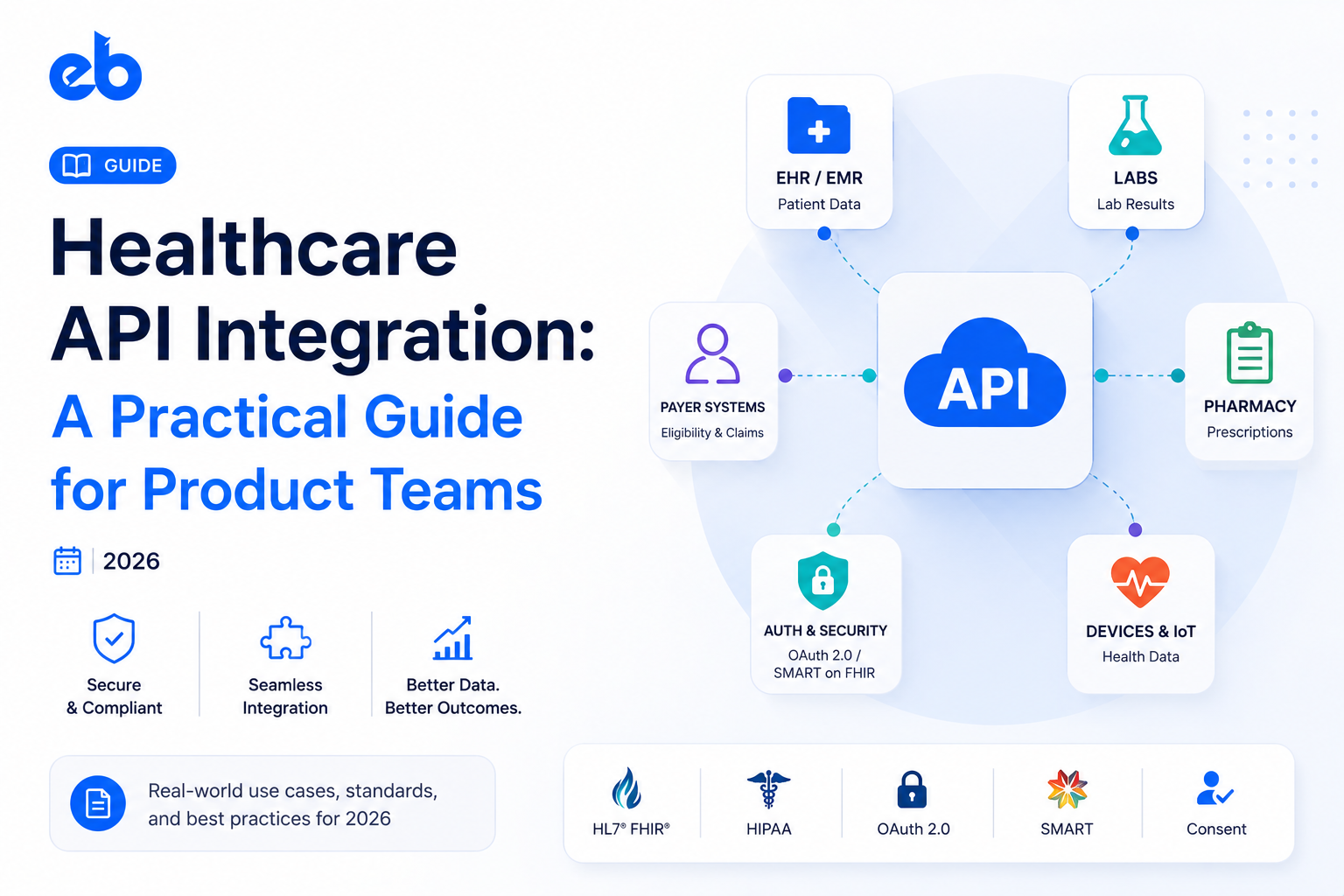
A typical mid-size hospital EMR connects to: a PACS/RIS system for radiology, a LIS for pathology, a pharmacy management system, an insurance/TPA portal, a government health registry, and billing software.
Each of these integrations is 3-6 weeks of work at a minimum. A vendor who quotes without scoping integrations is quoting for a system that won’t function in the real world.
Here’s a realistic budget framework by scope:
| EMR Build Type | Scope | Estimated Cost (INR) | Timeline |
| Department-level MVP | Single specialty, basic records + scheduling | ₹40-70 lakhs | 5-7 months |
| Mid-size hospital EMR | Multi-department, ABDM-compliant, basic integrations | ₹90-160 lakhs | 9-14 months |
| Enterprise EMR Platform | Multi-facility, full interoperability, and AI features | ₹2-5 crores | 18-30 months |
| White-label EMR SaaS | Multi-tenant, configurable per hospital | ₹1.5-4 crores | 14-24 months |
These aren’t padded estimates. They’re what it takes to build something a doctor will trust with patient data.
I’ve seen technically sound EMR systems that doctors refused to use after go-live. Not because they were buggy.
Because the clinical workflow design was built by engineers who had never watched a doctor work.
The modules that determine adoption:
This is the front door. If registration takes more than 90 seconds, front desk staff find workarounds. The UX here needs to be built with actual registration clerks in the room, not from a requirements document.
Free-text entry with structured templates. Voice-to-text integration is no longer a nice-to-have.
According to a 2025 survey by KLAS Research, 67% of physicians cite documentation time as their primary driver of burnout. An EMR that adds to documentation time will get rejected inside 6 months.
This needs real-time drug interaction databases (Multum, First Databank, or equivalent). Skipping this is a patient safety issue, not just a feature gap.
Bidirectional LIS integration. Orders go out, results come back, and abnormal flags surface automatically. Anything less than this creates manual reconciliation work that eats a lab technician’s entire morning.
In 2025, patients expect self-scheduling, digital intake forms, and appointment reminders via WhatsApp or SMS.
A 2025 report by Deloitte Healthcare found that hospitals with patient self-service portals saw 23% reduction in no-show rates.
ICD-10 coding, claim scrubbing, rejection management. The billing module is where EMR projects die in India. Most developers underestimate how hospital billing workflows vary by facility type, specialty, and state.
This is the section that competitors won’t write because they haven’t made these calls in production.
For a single-hospital deployment under 200 concurrent users, a well-structured monolith with modular internal architecture is faster to build, easier to maintain, and cheaper to host.
I push back on teams that want microservices for an EMR MVP. The operational overhead is not worth it at that scale.
Microservices make sense when you’re building a multi-tenant SaaS EMR platform serving 50+ hospitals. Know the difference before the architecture review.
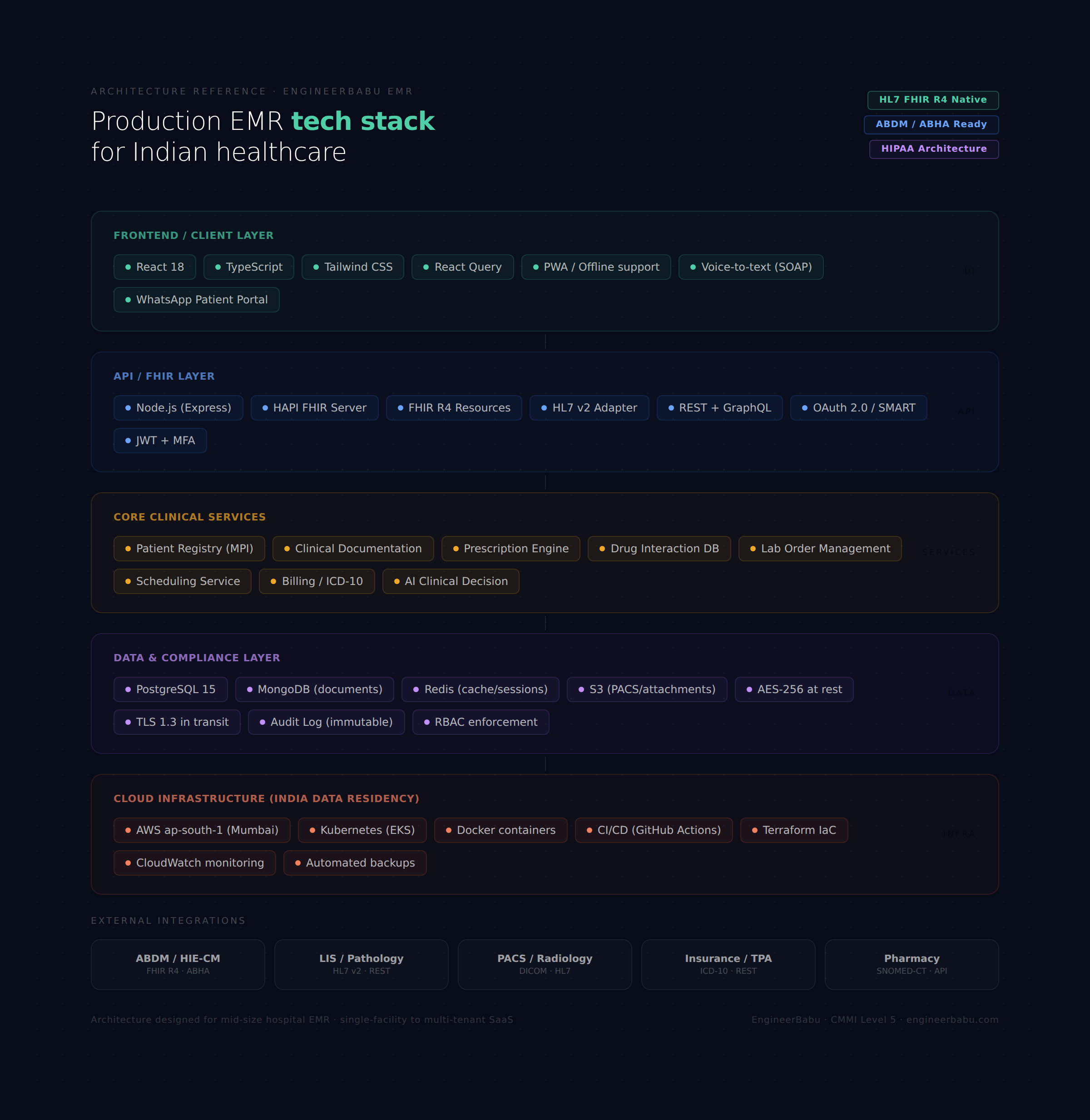
PostgreSQL as the primary data store for structured clinical data, with document storage (MongoDB or S3-backed blob storage) for unstructured attachments like scan images, discharge summaries, and uploaded PDFs.
Mixing these appropriately is a judgment call. Teams that use a single NoSQL database for everything haven’t dealt with audit trail requirements in a regulated environment.
If you’re building for interoperability (and you should be), your FHIR R4 server needs to expose resources including Patient, Encounter, Observation, MedicationRequest, DiagnosticReport, and Appointment.
This layer is not just for government compliance. It’s what lets you connect to insurance portals, referral networks, and national health exchanges without custom point-to-point integrations for every connection.
For ABDM compliance in India, patient data must remain within Indian territory. AWS Mumbai (ap-south-1) or Azure India Central are the standard choices.
Government health projects sometimes require NIC Cloud or private cloud deployment. Confirm data residency requirements before you sign anything with a hosting provider.
Every record access, every modification, every data export needs to be logged with timestamp, user identity, and action type.
This isn’t a feature for large hospitals only. A 3-doctor clinic with one EMR incident where patient data was accessed without authorization faces the same regulatory exposure. Build RBAC and audit logging from day one, not as a retrofit.
AES-256 at rest, TLS 1.3 in transit, field-level encryption for sensitive identifiers like Aadhaar numbers. If a vendor doesn’t bring up encryption specifics in a technical discussion, that’s a red flag.
When the EngineerBabu team built EarlySalary’s lending platform, now processing ₹10,000 crore in disbursements, the core lesson was: compliance infrastructure and core product architecture are the same decision.
You can’t separate them. The same principle applies harder in healthcare, where the stakes aren’t just financial penalties but patient safety.
In one healthcare engagement we took on, a mid-size diagnostic chain needed to replace a legacy on-premise EMR with a cloud-native system across 12 centers. The previous vendor had delivered a system that worked in isolation at one center.
The moment they tried to centralize patient records across locations, the data model broke down. There was no unified patient ID strategy, no master patient index, and no deduplication logic.
We spent 6 weeks in data archaeology before writing a line of new code.
The lesson:
Ask any EMR vendor how they handle patient identity management across multiple facilities. If they haven’t built multi-facility systems before, their single-facility system will create migration debt the moment you grow.
Another pattern I see repeatedly: teams that underestimate the effort of clinical change management. You can build a technically perfect EMR and still fail implementation. Doctors have workflow muscle memory built over the years.
The go-live strategy, training design, and 30-day hypercare support period are as important as the software itself.
Before you sign a contract or pay a rupee, run this evaluation:
If the answers are vague, move on.
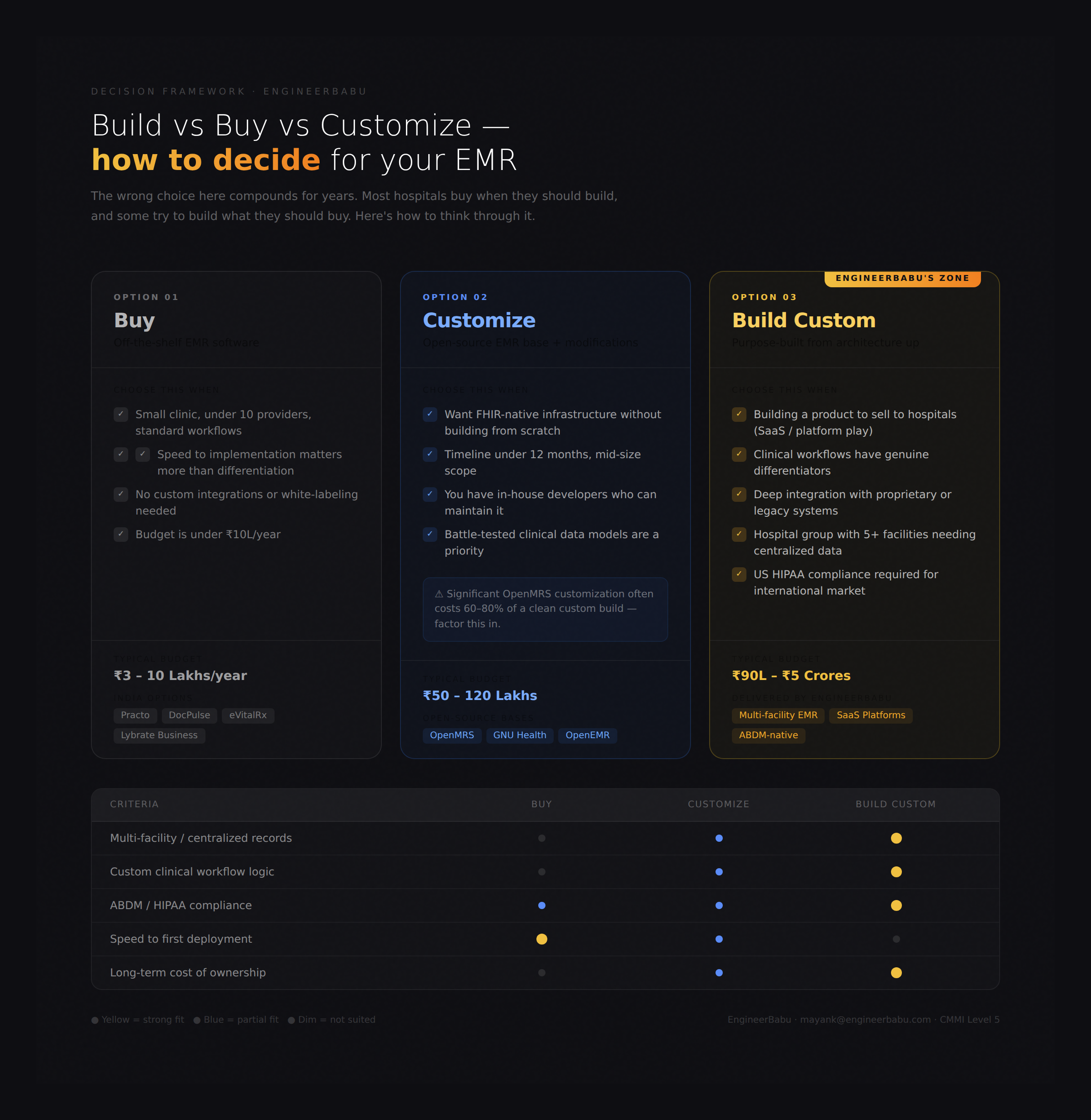
This question comes up in every healthcare tech conversation I have. Here’s how I think about it:
Options in India: Practo, Lybrate for Business, DocPulse, eVitalRx for pharmacy.
OpenMRS and GNU Health are the two most credible open-source EMR bases for Indian deployments.
Be realistic about customization costs: significant customization of OpenMRS often costs 60-80% of what a clean custom build would cost, but you start with battle-tested clinical data models.
The biggest mistake isn’t picking the wrong vendor. It’s skipping the requirements phase to save money.
I’ve watched companies spend ₹8-12 lakhs on a “requirements document” with a consultancy and then argue it was wasted money. That document is what keeps a ₹1.5 crore build from becoming a ₹3 crore rebuild.
The second mistake: assuming your IT team can manage an EMR implementation as a side project. EMR go-lives need a dedicated internal project owner with clinical credibility, someone doctors will listen to when there’s resistance.
This is not an IT project. It’s a clinical operations project that IT enables.
Third: underestimating data migration. If you’re replacing a legacy system, the cost and time of migrating legacy patient records into a FHIR-compliant data model is often 20-30% of the total project budget.
It needs its own workstream, its own timeline, and its own QA protocol. Vendors who bundle it into “implementation” without a separate breakdown haven’t done it before.
Fourth: skipping pilot deployment. Every EMR I’ve seen go live successfully went through a 4-6 week pilot at one ward, one department, or one facility before full rollout.
Every one that went straight to full rollout had a painful first 60 days.
If you’re evaluating EMR software development and want to work through the architecture decisions, compliance scope, and build-vs-buy calculus before you commit to anything, I’m usually the one on those calls at EngineerBabu.
We take 20 projects a year. No sales team. No account managers. If I think your project is better served by an off-the-shelf solution or an open-source base, I’ll tell you that in the first conversation.
If it’s the kind of build we can genuinely help with, we’ll show you exactly how we’d approach it.
No pitch deck. No follow-up email sequence. Just a direct conversation.
————————————————————————————————————————–
Mayank Pratap is the co-founder of EngineerBabu, a CMMI Level 5 product engineering company recognized by Google AI Accelerator (Top 20 globally, 2024) and LinkedIn Top 20 Startups India.
He has 14 years of experience building technology products across fintech, healthtech, and enterprise SaaS, with 500+ projects delivered across 20+ countries.
A focused department-level EMR MVP takes 5-7 months from requirements sign-off to go-live. A full hospital EMR with multi-department workflows, ABDM compliance, and core integrations takes 9-14 months.
Enterprise multi-facility platforms should budget 18-30 months. These timelines assume a discovery phase is completed before development starts.
ABDM stands for Ayushman Bharat Digital Mission, India’s national digital health infrastructure.
ABDM compliance means your EMR can generate and link ABHA (health IDs), participate in the Health Records network, and share data through the HIE-CM gateway. Any
EMR operating in India that connects with government health schemes, insurance systems, or referral networks needs ABDM compliance. It’s not optional for 2025 and beyond.
Yes, but HIPAA compliance requires specific engineering practices: Business Associate Agreements (BAAs), documented security risk assessments, audit controls, access management, and encrypted data transmission and storage.
Several CMMI Level 5 companies in India have delivered HIPAA-compliant systems. Verify the vendor has done it before, not just claims to understand it.
EMR (Electronic Medical Record) is a digital version of a patient’s chart within a single practice.
EHR (Electronic Health Record) extends across facilities and is designed for interoperability and sharing.
HIS (Hospital Information System) is the broader umbrella covering all hospital operations including billing, inventory, HR, and clinical systems.
Most large hospital builds are HIS projects that include an EMR/EHR as the clinical core.
A production-grade EMR should have: AES-256 encryption at rest, TLS 1.3 in transit, field-level encryption for sensitive identifiers, comprehensive audit logging, automated backup with tested recovery procedures, and regular penetration testing.
Data residency in India for ABDM compliance requires hosting in the India-region cloud infrastructure.