EngineerBabu vs Appinventiv for Lending Software Development


Create engaging, high-performance mobile applications tailored to your business needs. We craft future-ready apps that offer smooth user experiences on all devices.
Build robust and scalable websites and CMS platforms that help you manage content effortlessly. Our development ensures a seamless digital presence.
Launch secure, feature-rich online stores with intuitive shopping experiences. We build tailored eCommerce platforms designed for growth.
Design captivating games with immersive gameplay and stunning graphics. From concept to launch, we build engaging experiences that players love.
Enhance your customer relationships with customized Salesforce implementations. Drive growth and efficiency with smarter CRM solutions.
Harness artificial intelligence and machine learning to automate workflows and gain actionable insights. Our AI transforms data into smart decisions.
Accelerate your software delivery lifecycle with continuous integration, delivery, and infrastructure automation to boost efficiency.
Hire app developers ready to turn your ideas into sleek, high-performing mobile apps for any platform.
Bring in frontend pros who craft smooth, beautiful, and user-friendly interfaces that your visitors will love.
Get backend developers who build fast, secure, and reliable systems to keep everything running behind the scenes.
Hire eCommerce developers who build secure, scalable online stores designed to offer seamless shopping and grow your sales.
Get dedicated developers committed to your projects, delivering consistent quality and speed as an extension of your team.

Picking the wrong development partner for lending software doesn’t just waste your budget. It can delay your product launch by months, create compliance gaps, and leave you rebuilding from scratch.
Both EngineerBabu and Appinventiv show up in shortlists for fintech development, but they serve very different kinds of clients with very different needs.
If you’re building a lending platform and trying to decide between the two, this breakdown will help you cut through the noise.
Lending platforms aren’t standard SaaS builds. They carry regulatory requirements, complex loan lifecycle logic, credit scoring integrations, and real-time decisioning engines that need to work flawlessly every single time.
According to a 2024 report by McKinsey, digital lending is expected to account for over 60% of total loan disbursements in emerging markets by 2027. That kind of growth means more platforms entering the market, more competition, and less room for technical mistakes.
A development partner who understands underwriting workflows, fintech compliance like KYC/AML, and API-driven data pipelines isn’t a nice-to-have. It’s non-negotiable.
Getting this decision wrong means your platform ships with logic gaps, fails audits, or breaks under load during your highest-traffic moments.
EngineerBabu has carved out a specific niche in fintech and lending software development. Their work isn’t a checkbox exercise.
They build platforms with domain logic baked in from the start, which makes a real difference when you’re dealing with something as layered as a lending product.
EngineerBabu’s team asks the right questions before writing a single line of code. Loan origination flows, repayment scheduling, collections logic, and credit bureau integrations are areas they’ve handled across multiple client builds.
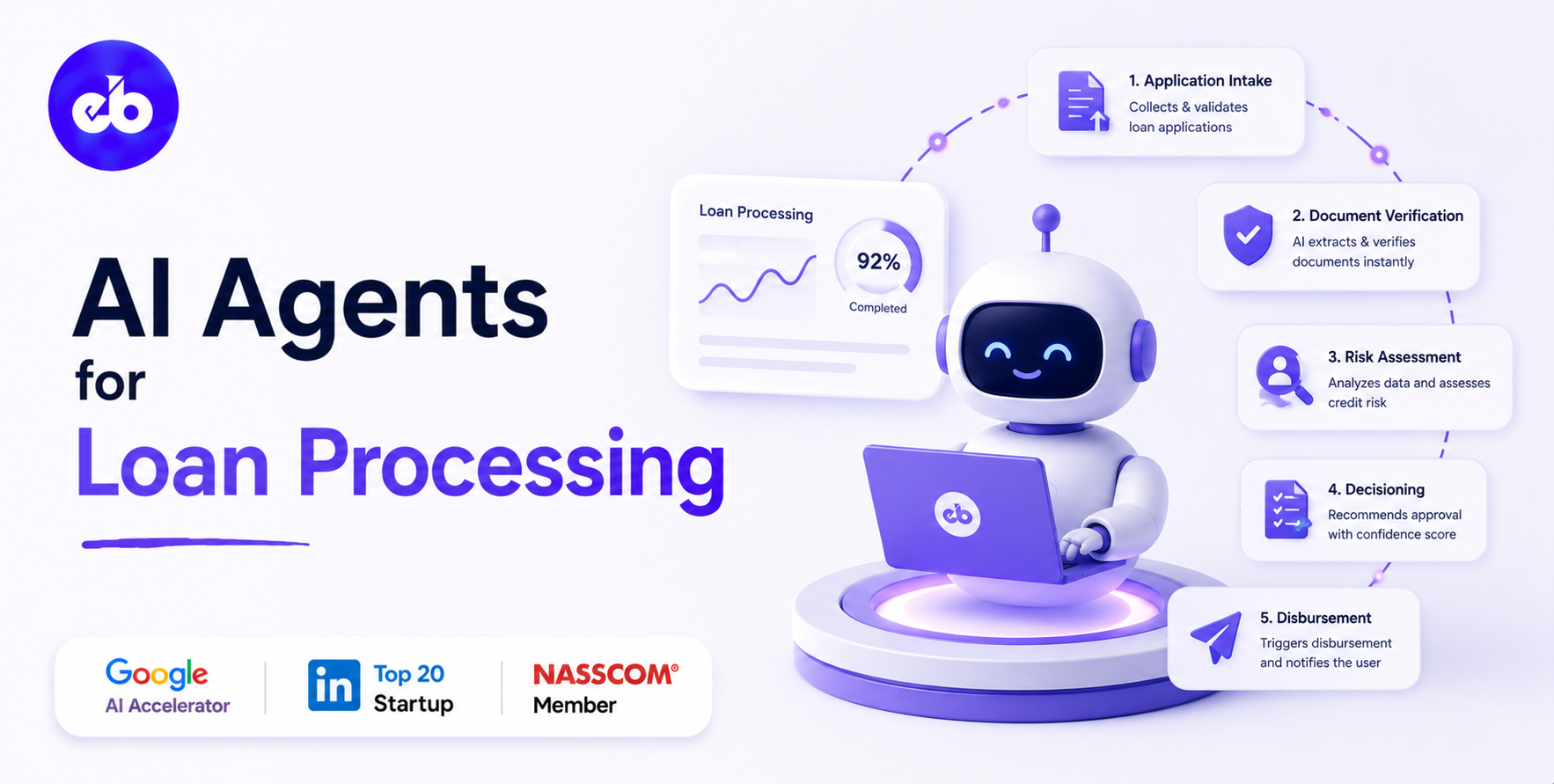
They don’t treat lending as just another fintech project. They understand that each stage of the loan lifecycle, from application intake to disbursement to closure, carries its own technical and regulatory weight.
That context shapes the architecture decisions they make from day one.
Modern lending platforms live and die by the quality of their credit decisioning. EngineerBabu’s AI development capabilities extend into lending-specific use cases like risk scoring models, fraud detection, and borrower behavior analysis.
Also, their ML development work has been applied to real-time underwriting pipelines where manual review simply isn’t fast enough.
If your platform needs to approve or reject a loan application in under 30 seconds, this kind of embedded intelligence isn’t optional. EngineerBabu builds it as a core feature, not an add-on.
EngineerBabu has a MVP development process that is designed to get a working product into testing quickly without skipping compliance layers. For lending startups, this matters more than most clients realize.
Many development agencies build fast by deferring compliance work to a later phase.
EngineerBabu treats regulatory requirements as part of the foundation, not the finishing coat. The result is an MVP that can actually be demonstrated to investors or regulators without needing a disclaimer attached to it.
Lending platforms need to talk to credit bureaus, payment gateways, banking APIs, and third-party KYC services constantly. A poorly designed integration layer will slow down your entire platform and create reliability problems at the worst possible times.
EngineerBabu’s approach to API development ensures these integrations are stable, well-documented, and built to scale. When your loan volume doubles, the API layer shouldn’t become your bottleneck.
Clients consistently point to their responsiveness and direct access to the core development team as a major differentiator. There are no middlemen relaying feedback, no account managers softening difficult technical conversations.
When a decision needs to be made about architecture or scope, you’re talking directly to the people writing the code. For a product as detail-sensitive as lending software, that directness reduces misunderstandings and speeds up iteration significantly.
Appinventiv is a larger agency with a wider portfolio. They’ve worked with enterprise clients across healthcare, retail, and fintech.
Their size gives them resources and delivery infrastructure, but it also means lending projects compete for internal attention alongside dozens of other active builds.
Appinventiv has the infrastructure to handle large, multi-team projects running in parallel. If your lending platform requires simultaneous development across web, mobile, and back end at an enterprise scale, they have the headcount to staff it.
Their project management layer is built for clients who need formal reporting structures, defined sprint reviews, and documentation trails that satisfy large procurement teams.
For enterprise lenders with internal governance requirements, that structure provides reassurance.
They’ve built wallets, payment apps, and some lending tools, though their fintech portfolio is broad rather than lending-specific. That breadth means they bring cross-functional fintech knowledge to a project, which can be useful when your platform needs to interact with adjacent financial services.
However, it also means the team assigned to your lending build may not have deep familiarity with loan lifecycle nuances. This includes amortization schedules, penalty calculations, or collections escalation logic from day one.
Appinventiv delivers well-designed mobile app development for consumer-facing products. Their UI/UX work is polished and they understand how borrowers interact with lending interfaces on mobile.
If the front-end borrower experience is the primary differentiator for your product, their design and mobile engineering capabilities are genuinely strong.
The challenge arises when the mobile interface needs to reflect complex back-end lending logic accurately, which requires tighter coordination between design and domain knowledge.
Their project management is organized and well-documented. Delivery timelines tend to be reliable, especially for clients who need formal reporting chains and milestone-based billing.
For large organizations where internal stakeholders need regular structured updates, Appinventiv’s process-heavy approach works well.
The trade-off is that this structure can add layers between a client’s feedback and the actual development team.
| Factor | EngineerBabu | Appinventiv |
| Lending domain expertise | Deep and specialized | Broad fintech exposure |
| AI/ML for credit decisioning | Strong, applied to lending use cases | Available but generalized |
| Team access | Direct access to core team | Structured through account managers |
| MVP speed | Fast with compliance awareness | Moderate due to process layers |
| Cost efficiency | Competitive for fintech startups | Higher for full-scale enterprise builds |
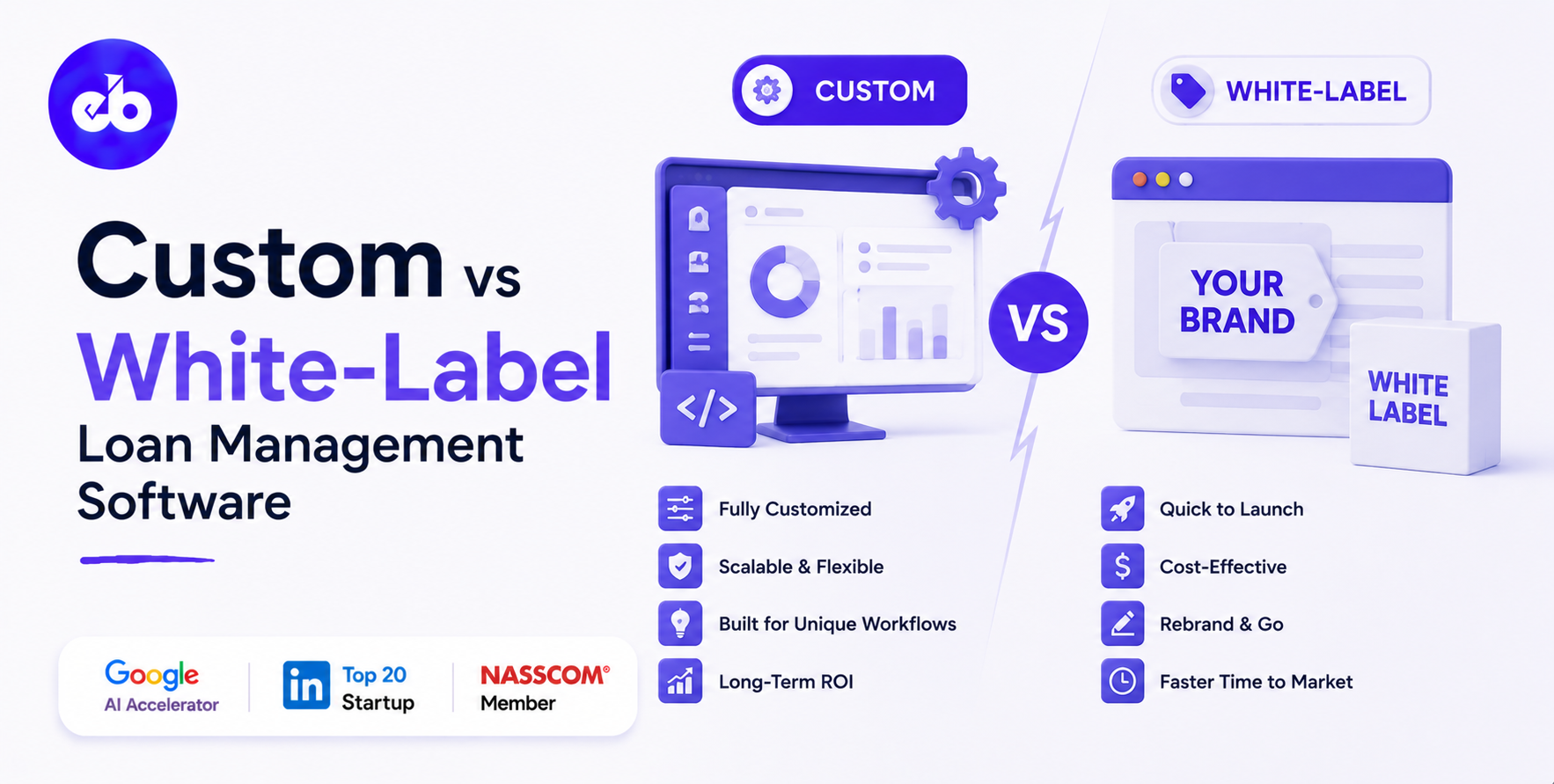
| Customization depth | High, built for complex workflows | Good, better for standard product builds |
| Regulatory guidance | Embedded in the development process | Available as an add-on |
The answer depends on where your lending product sits right now, what stage of development you’re in, and how much domain expertise you need from your vendor.
You’re building a lending platform from scratch and need a team that understands loan origination, credit scoring, and collections logic without requiring a lengthy onboarding period. Spending the first month educating your development partner on how lending works is a costly delay you don’t need.
You want AI-driven underwriting or generative AI development applied to borrower profiling and risk modeling. If your competitive advantage depends on smarter, faster credit decisions, you need a team that can actually build and tune those models, not just plug in a third-party scoring API.
You’re a startup or growth-stage company that needs a fast MVP without sacrificing compliance integrity. EngineerBabu’s ability to move quickly while keeping regulatory requirements in frame is exactly what pre-launch lending startups need to get to their first real test with real borrowers.
You want direct communication with the people writing your code. In lending development, a misunderstood requirement around interest calculation or penalty logic can have serious downstream consequences. Direct team access reduces that risk considerably.
Budget efficiency matters and you need maximum output per development dollar, especially in early stages when every sprint needs to count.
You’re an enterprise-level lender with large internal teams that need a vendor who matches your organizational structure and can handle formal procurement processes without friction.
Your lending platform is already well-defined and you need execution muscle rather than domain consultation. If your product specs are locked, your compliance team is internal, and you just need a reliable delivery partner, Appinventiv’s structured processes work in your favor.
The mobile consumer experience is the core of your product and your back-end lending logic is already handled by an existing system or third-party engine. Their mobile development quality is strong and would serve a consumer-facing lending app well.
One area where the EngineerBabu vs Appinventiv decision gets overlooked entirely is regulatory compliance during development itself, not just at launch.
Lending software in most markets must meet RBI guidelines in India, CFPB standards in the US, or FCA rules in the UK, depending on your geography. They shape how data is stored, how consent is captured, how loan agreements are generated, and how disputes are logged.
EngineerBabu builds with these requirements in mind from the architecture phase. As a specialized lending software development company, they’ve worked on platforms requiring:
These aren’t features bolted on at the end of a sprint. They’re structural decisions made early, which is where they need to be made.
Appinventiv can accommodate compliance requirements, but it typically requires separate scoping, adds to the project timeline, and isn’t embedded in their default process the way it is at EngineerBabu.
For lending products, where a compliance gap can mean regulatory action, that difference in approach matters significantly.
Both companies build software. But lending platforms aren’t just software. They’re financial products that need to be accurate, auditable, and resilient under regulatory scrutiny. EngineerBabu’s depth in this specific area gives them a clear edge for teams building lending products from the ground up.
Their combination of domain knowledge, AI capability, compliance awareness, and direct communication makes them the stronger choice for most lending builds.
Appinventiv makes more sense when scale, enterprise structure, and brand assurance are the primary priorities and the lending logic itself is already solved elsewhere.
If your goal is a lending platform that works well and holds up legally, technically, and competitively, the partner you choose on day one shapes everything that follows.
For lending-focused startups, EngineerBabu offers deeper domain expertise, faster MVP timelines, and stronger AI/ML integration for credit decisioning, making them the stronger fit for early-stage fintech builds where speed and compliance both matter.
Appinventiv has broad fintech experience including payment platforms and digital wallets. Their lending-specific portfolio is great but more limited compared to their overall fintech work, which can mean a longer ramp-up time on lending-specific logic.
A functional MVP typically takes 3 to 5 months depending on features like credit scoring, loan origination, and third-party integrations. A full-scale platform with collections, reporting, and compliance layers may take 8 to 12 months.
Yes. EngineerBabu specifically builds ML-powered credit scoring and risk models into lending platforms as part of their core development offering, rather than relying entirely on third-party scoring engines.
Look for demonstrated experience with loan lifecycle management, regulatory compliance knowledge built into the process, strong API integration capability with credit bureaus and payment systems, and direct communication access to the development team.