How to Build an On-Demand App in 2026


Create engaging, high-performance mobile applications tailored to your business needs. We craft future-ready apps that offer smooth user experiences on all devices.
Build robust and scalable websites and CMS platforms that help you manage content effortlessly. Our development ensures a seamless digital presence.
Launch secure, feature-rich online stores with intuitive shopping experiences. We build tailored eCommerce platforms designed for growth.
Design captivating games with immersive gameplay and stunning graphics. From concept to launch, we build engaging experiences that players love.
Enhance your customer relationships with customized Salesforce implementations. Drive growth and efficiency with smarter CRM solutions.
Harness artificial intelligence and machine learning to automate workflows and gain actionable insights. Our AI transforms data into smart decisions.
Accelerate your software delivery lifecycle with continuous integration, delivery, and infrastructure automation to boost efficiency.
Hire app developers ready to turn your ideas into sleek, high-performing mobile apps for any platform.
Bring in frontend pros who craft smooth, beautiful, and user-friendly interfaces that your visitors will love.
Get backend developers who build fast, secure, and reliable systems to keep everything running behind the scenes.
Hire eCommerce developers who build secure, scalable online stores designed to offer seamless shopping and grow your sales.
Get dedicated developers committed to your projects, delivering consistent quality and speed as an extension of your team.
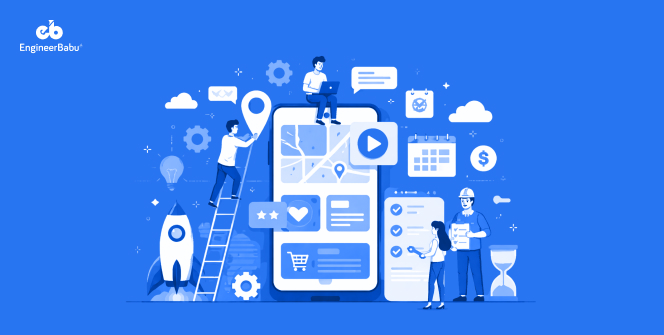
Someone opens their phone, taps three times, and a stranger shows up at their door with dinner, a ride, or a plumber. That’s the entire on-demand economy in one sentence. And it’s only getting bigger.
The global on-demand app market is projected to reach $335 billion by 2025, growing at a CAGR of over 49% (Statista). That kind of growth does not happen by accident. It happens because people built products that removed friction from everyday tasks.
If you’re planning to enter this space, the good news is that the technology is mature and the playbook is clearer than it’s ever been. The challenge is execution. This guide walks you through how to build an on-demand app the right way, without skipping the decisions that actually matter.
Before jumping into development, it’s worth being precise about what you’re actually building. An on-demand app connects a customer who needs something right now with a provider who can deliver it.
That three-sided relationship between customer, provider, and platform is what makes these apps architecturally different from standard e-commerce or booking tools.
You’re not just building a storefront. You’re building a real-time coordination system. Orders need to route instantly. Availability needs to update live. Payments need to clear fast.
If any part of that chain breaks under pressure, users churn and providers lose trust in the platform.
The biggest mistake first-time on-demand founders make is building first and validating second. Don’t do that.
Pick a vertical: food delivery, home services, healthcare, logistics, beauty, pet care, or something else entirely. Then answer three questions before writing a single line of code.
Every on-demand app has three distinct users, and each one needs its own interface and logic.
They need speed and clarity. Browse, order, pay, track. That entire flow should take under two minutes on the first use and under thirty seconds on repeat orders. Complexity is the enemy here.
Providers are your operational backbone. Their app needs to be functional under real working conditions, not just in a quiet office. Think: one-tap accept, clear job details, fast navigation handoff, and reliable payout visibility. If your provider app is frustrating to use, your supply side will dry up.
This is the control layer. Real-time order visibility, provider management, manual override capability, and analytics. In early-stage operations, a single person often manages this. Design accordingly.
Here’s where most product roadmaps go wrong: they list every possible feature without prioritizing the ones that determine whether the app functions at all.
Non-negotiable features for launch:
Features that can wait for v2:
Get the core loop working flawlessly before adding anything to the second list.
The tech stack for an on-demand app has to handle real-time data, high concurrency, and location services simultaneously. These are non-negotiable requirements, not nice-to-haves.
React Native is the standard choice for cross-platform development. You ship one codebase to both iOS and Android without sacrificing performance. For the admin dashboard, a React-based web app works well and gives your ops team browser-based access without needing a dedicated desktop application.
Node.js handles event-driven, real-time workloads efficiently, which is exactly what order management demands. If your team is Python-heavy, Django REST Framework is a solid alternative, especially for complex data models involving provider availability zones and service categories.
PostgreSQL for structured transactional data: orders, payments, user records. MongoDB for flexible, schema-light data like service listings and provider profiles. Redis for caching and session management during peak load.
WebSockets power the live tracking and notification layer. Firebase is a faster option to implement if you’re working with a lean team and tight timelines. Both work. Firebase just gets you there quicker at the cost of some flexibility.
Google Maps API remains the industry standard for routing and geocoding. Mapbox is a cost-effective alternative if your order volume will generate high API call volume.
Stripe for US and European markets. Razorpay if you’re building for India. Both offer solid SDKs, sandbox environments, and strong fraud detection out of the box.
When it comes to how to build an on-demand app, development sequencing matters more than most teams expect. Build in this order:
This gets skipped in technical planning and causes serious operational headaches later.
Provider onboarding in most on-demand categories involves document verification, background checks, service category certification, and payment account setup. All of this needs to happen inside the app, not through a manual email process.
Build a structured onboarding flow with document upload, automated status updates, and admin review capability. A provider who can’t get onboarded in under 48 hours is a provider who signs up with your competitor instead.
A cloud-controlled test environment will not catch the bugs that matter. Your QA process needs to simulate:
Test with real devices on real networks, not just simulators. If you have early access to actual providers and customers, run a closed beta in a single location and treat every bug as critical infrastructure feedback.
A city-wide launch on day one sounds ambitious. It usually produces scattered supply, inconsistent service times, and too much surface area to manage for a small team.
Start with one neighborhood or one service category. Track order completion rate, average fulfillment time, provider acceptance rate, and customer repeat order rate. These four numbers tell you everything about operational health.
When all four are moving in the right direction, expand. When one of them breaks, you’ll know exactly where to focus before it becomes a systemic problem.
Development cost depends heavily on scope and team location, but here are realistic ranges based on what teams actually spend:
| App Tier | Features Included | Estimated Cost |
| MVP | Core ordering, payments, basic tracking | $8,000 to $15,000 |
| Mid-tier | Multi-role apps, live tracking, ratings | $15,000 to $30,000 |
| Full platform | AI matching, analytics, dynamic pricing | $40,000+ |
Timeline runs from four to six months for MVP development and eight to fourteen months for a full-featured platform. Post-launch maintenance typically runs 15 to 20 percent of original build cost per year.
Knowing how to build an on-demand app is only half the equation. The other half is understanding the operational system you’re actually building. The technology enables the service, but the service only works if supply and demand are balanced, providers are reliable, and customers trust what they see on screen.
Get those fundamentals right, and the app becomes the least of your problems. Get them wrong, and no amount of feature work will save the business.
If you’re ready to move from idea to working product, EngineerBabu has helped food-tech, logistics, and service-platform startups build on-demand products that go live and stay live.
Leverage an on-demand app development company that brings both technical depth and operational thinking to every build.
A functional MVP with core ordering, tracking, and payments typically takes four to six months. A full platform with advanced matching and analytics takes eight to fourteen months depending on team size.
Yes. The use cases are too different to force into one app. Customers need a clean ordering experience. Providers need job management and navigation tools. Combining them creates a poor experience for both.
Real-time matching and location sync under load. When orders are coming in from multiple zones simultaneously and provider locations are updating every few seconds, keeping everything in sync without lag requires careful backend architecture.
React Native is the practical choice for most on-demand startups. It cuts development time significantly and performs well for this category of app. Native development makes sense when you’re at a scale where milliseconds of performance difference affect conversion rates.