How to Build an App Like ABHA in India (2026 Guide)


Create engaging, high-performance mobile applications tailored to your business needs. We craft future-ready apps that offer smooth user experiences on all devices.
Build robust and scalable websites and CMS platforms that help you manage content effortlessly. Our development ensures a seamless digital presence.
Launch secure, feature-rich online stores with intuitive shopping experiences. We build tailored eCommerce platforms designed for growth.
Design captivating games with immersive gameplay and stunning graphics. From concept to launch, we build engaging experiences that players love.
Enhance your customer relationships with customized Salesforce implementations. Drive growth and efficiency with smarter CRM solutions.
Harness artificial intelligence and machine learning to automate workflows and gain actionable insights. Our AI transforms data into smart decisions.
Accelerate your software delivery lifecycle with continuous integration, delivery, and infrastructure automation to boost efficiency.

TL;DR
ABHA is not really an app. It is an identity layer that other apps plug into. That single fact is why most founders misread what they are actually asking for.
Deciding to build an app like ABHA forces an early fork in the road. One path connects you to a national network with 93 crore existing identities. The other path means operating your own identity, registry, and consent infrastructure for a closed network.
You use government infrastructure. Your app creates and verifies ABHA numbers, links records, requests consent, and exchanges data through the ABDM gateway.
This is the realistic path for nearly every startup, hospital group, and insurer. You inherit identity, trust, and network reach that would take years to build alone.
Here you build an app like ABHA and the infrastructure underneath it. The registries, the identifier scheme, the consent manager, and the exchange protocol are all yours. This makes sense for a hospital chain, a Gulf or African market without national infrastructure, or an enterprise health network.
Plain note: Route B costs roughly three to four times more and carries ongoing governance obligations most teams are not prepared for.
| Route A | Route B | |
| Identity source | ABDM | You |
| Build effort | Moderate | Heavy |
| Network reach | National, day one | Whatever you recruit |
| Regulatory exposure | Defined by ABDM policy | Entirely yours |
| Typical fit | Startups, clinics, insurers | Hospital groups, new markets |
Four components carry the system, and any plan to build an app like ABHA touches all of them.
The 14-digit ABHA number is the identifier. The ABHA address, which looks like a handle, is what patients actually use to share and receive records. Users confuse the two constantly, so your interface has to separate them clearly.
HFR lists verified facilities and HPR lists verified practitioners. Any app that writes clinical records must tie them to a registered facility and a registered professional. That check is what the whole system rests on.
This is the heart of the design. Consent is granular, time-bound, purpose-limited, and revocable, and your app must honor expiry and revocation without being asked twice.
Requests between information providers and information users route through the ABDM gateway rather than point-to-point. That is why healthcare API integration work here looks different from typical third-party API work.
The network effect already exists. ABDM has crossed 93.95 crore ABHA accounts and over 105 crore linked health records. Its registries now carry 5.33 lakh health facilities and 9.85 lakh healthcare professionals (IBEF).
Those numbers change the math for anyone who wants to build an app like ABHA. Identity adoption is no longer the bottleneck. Differentiation moves to usability, record quality, and what you do once consent is granted.
Scope for teams who build an app like ABHA splits cleanly into identity, records, and consent.
Account creation through Aadhaar, mobile, or driving licence routes, with clean recovery when verification fails. Profile and family management, since one person usually handles records for several relatives.
Record linking from hospitals, labs, and pharmacies, plus a readable timeline. Provider-side teams usually pair this with hospital management system development so admissions and discharge data flows in automatically. Consent requests with plain-language purpose, duration, and scope rather than legal boilerplate.
A consent history screen that shows every active grant and allows one-tap revocation. QR-based sharing at hospital front desks, because that is the actual moment of use.
Finally, an audit log the user can see. Visible history is what turns a government identifier into something people trust enough to use weekly.
Milestone mapping is the first real task when you build an app like ABHA. Create an ABDM sandbox account and decide which milestones your product needs. M1 covers ABHA creation and verification, M2 covers linking and fetching records, and M3 covers acting as a Health Information Provider.
Most consumer apps need M1 and M2. Hospital and diagnostic systems need M3 as well, which is a materially larger scope.
Write your test cases against the published milestone criteria from day one. Teams that build toward a demo rather than the criteria usually fail their first review cycle.
Implement Aadhaar OTP, mobile OTP, and alternative routes, then handle every failure path deliberately. Demographic mismatches, expired OTPs, and duplicate accounts are routine rather than exceptional.
Let users set a memorable ABHA address during onboarding instead of later. Adoption of the readable handle drives all downstream sharing behavior.
Store the minimum you need. Caching Aadhaar data is both unnecessary and a serious liability under current rules.
Support account recovery for users who change phone numbers, which happens often and otherwise strands people outside their own records.
Consent is where most projects to build an app like ABHA fail their first review. Model consent artifacts as first-class objects with purpose, data range, expiry, and status. Do not reduce them to boolean flags on a user record.
Enforce expiry server-side, and delete or lock fetched data when consent lapses. Honoring revocation within the required window is a compliance obligation, not a product preference.
Log every consent event immutably. In any dispute, that log is the only evidence that your system behaved correctly.
Fetch records through the gateway and normalize them into your internal model. Expect inconsistent codes, missing fields, and documents that arrive as unstructured attachments.
Build retries, idempotency, and reconciliation into the pipeline. Duplicate fetches are common, and stacking copies of one discharge summary destroys the timeline fast.
Design this layer for growth from the start, since interoperability in healthcare apps becomes exponentially harder to retrofit after launch.
Surface fetch failures to users honestly. Silent gaps in a medical timeline are far more damaging than an obvious error message.
Run penetration testing, access-control testing, and key rotation drills before your production credentials arrive. Identity systems attract attackers faster than ordinary consumer apps.
Clear your milestone demos with full test coverage, then launch with one hospital or one district. Controlled rollout surfaces verification edge cases while support volume stays manageable.
Track linked records per active user. That number predicts retention better than installs or account creations ever will.
Expand district by district once verification success rates hold steady above your internal threshold for two full months.
Security choices made in week two shape every release when you build an app like ABHA. Health data must stay within India, encrypted in transit and at rest, with strict key management. The Digital Personal Data Protection Act adds consent, purpose limitation, and breach notification duties on top of ABDM policy.
Role-based access, immutable audit trails, and tested incident response are baseline expectations. Treating cloud security as a launch task rather than an architecture input is the most expensive mistake in this category.
| Scope | Timeline | Indicative cost |
| ABHA-enabled consumer app, M1 and M2 | 3 to 5 months | Rs 20 to 40 lakh |
| Provider-side app with M3 and record exchange | 6 to 9 months | Rs 50 lakh to Rs 1 crore |
| Private health ID system, Route B | 10 to 16 months | Rs 1.5 crore and above |
Annual upkeep usually runs 15 to 20% of build cost. Policy and specification updates drive more of that than new features. Factor it into any healthcare app development timeline you show investors.
Worth it: hospital chains wanting portable patient history, insurers reducing claim friction, diagnostic networks delivering reports to linked accounts, and startups building on top of consented records.
Not worth it: wellness apps with no clinical records, single clinics with low volume, and teams hoping identity alone is a product. ABHA integration is a capability, not a business model.
The hard parts of any effort to build an app like ABHA are consent correctness, milestone certification, and security architecture that survives real scrutiny. None of it is visible in the interface.
EngineerBabu works across healthcare software development, ABDM-aligned integration, and secure backend engineering for Indian health platforms. A short technical discovery is usually enough to confirm which route your product actually needs.
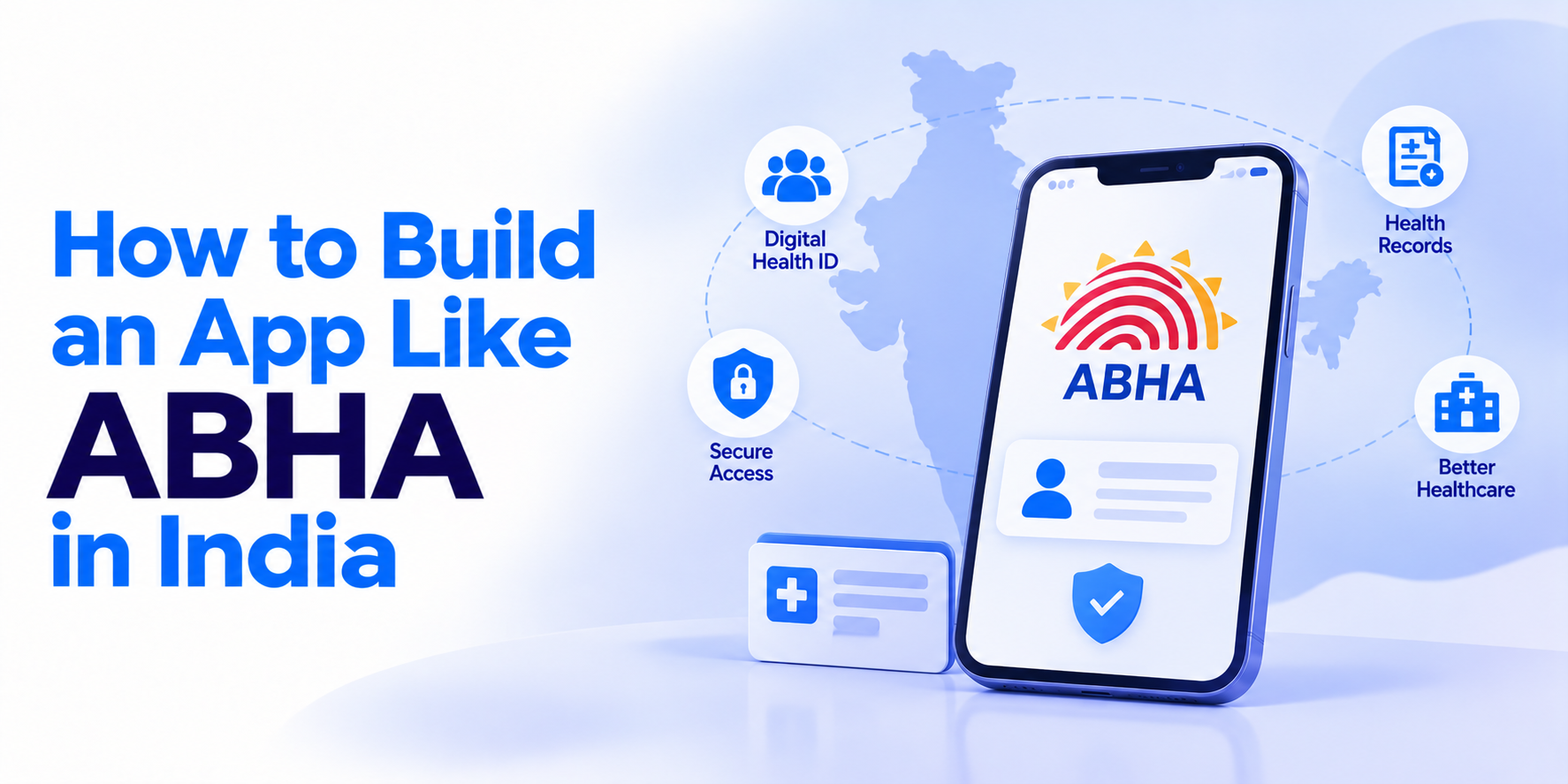
Building an app like ABHA in India requires more than developing a health ID interface. The real work lies in connecting identity systems, enabling secure health record exchange and meeting ABDM compliance requirements.
For most businesses, integrating with the existing ABDM ecosystem is a more practical and scalable approach than building an independent health identity network.
The right architecture, development partner, and milestone planning can help you launch a secure platform without unnecessary infrastructure costs.
Yes, through approved ABDM integration. Your application must clear the relevant sandbox milestones and receive production credentials before it can create or verify accounts for real users on the live network.
No. ABHA is an identifier and consent layer. The records themselves stay with hospitals and labs, and ABHA simply links them so patients can find and share what exists across different providers.
M1 covers ABHA creation and verification. M2 covers linking and fetching records with patient consent. M3 covers acting as a provider that publishes records back into the national network for others to fetch.
Not currently. It is national infrastructure tied directly to Indian identity systems, so products serving overseas markets need their own identity layer or a comparable local equivalent built entirely from scratch.
Price it by milestone scope rather than by screen count. Identity flows, consent handling, and certification work consume far more engineering time than the patient-facing interface ever does in a typical build.