How Much Does Loan Management Software Cost?


Create engaging, high-performance mobile applications tailored to your business needs. We craft future-ready apps that offer smooth user experiences on all devices.
Build robust and scalable websites and CMS platforms that help you manage content effortlessly. Our development ensures a seamless digital presence.
Launch secure, feature-rich online stores with intuitive shopping experiences. We build tailored eCommerce platforms designed for growth.
Design captivating games with immersive gameplay and stunning graphics. From concept to launch, we build engaging experiences that players love.
Enhance your customer relationships with customized Salesforce implementations. Drive growth and efficiency with smarter CRM solutions.
Harness artificial intelligence and machine learning to automate workflows and gain actionable insights. Our AI transforms data into smart decisions.
Accelerate your software delivery lifecycle with continuous integration, delivery, and infrastructure automation to boost efficiency.
Hire app developers ready to turn your ideas into sleek, high-performing mobile apps for any platform.
Bring in frontend pros who craft smooth, beautiful, and user-friendly interfaces that your visitors will love.
Get backend developers who build fast, secure, and reliable systems to keep everything running behind the scenes.
Hire eCommerce developers who build secure, scalable online stores designed to offer seamless shopping and grow your sales.
Get dedicated developers committed to your projects, delivering consistent quality and speed as an extension of your team.
Lenders who still rely on spreadsheets and manual tracking are not just working harder. They are losing money. Missed payment alerts, compliance gaps, and slow loan disbursals are costly problems that the right software solves instantly.
According to a MarketsandMarkets report, the global loan management software market is projected to reach 26.94B by 2030. That kind of growth signals just how quickly lenders are modernizing their operations.
If you are planning to build or buy a loan management system, understanding the loan management software cost upfront will save you from serious budget surprises later.
Before jumping into numbers, it helps to understand what actually shapes the price. Loan management software cost is not a flat figure. It shifts based on what you need, how complex your lending workflows are, and how you plan to scale.
A microfinance company has very different needs than a commercial bank or a mortgage firm. Consumer lending, SME loans, BNPL, and peer-to-peer lending each require specific workflows, repayment structures, and compliance rules. The more specific your lending model, the more customization is involved.
Basic loan tracking costs far less than a platform with automated underwriting, credit scoring integrations, dynamic repayment schedules, and real-time delinquency alerts. Every layer of automation you add increases both development effort and overall cost.
Loan software must often comply with regulations like TILA, RESPA, GDPR, or local financial authority mandates. Building compliance logic, audit trails, and reporting structures into the system adds meaningful cost but protects you from costly legal exposure later.
Cloud-based systems offer lower upfront costs and faster deployment. On-premise solutions give you more control but require hardware, IT infrastructure, and ongoing maintenance costs that are easy to underestimate.
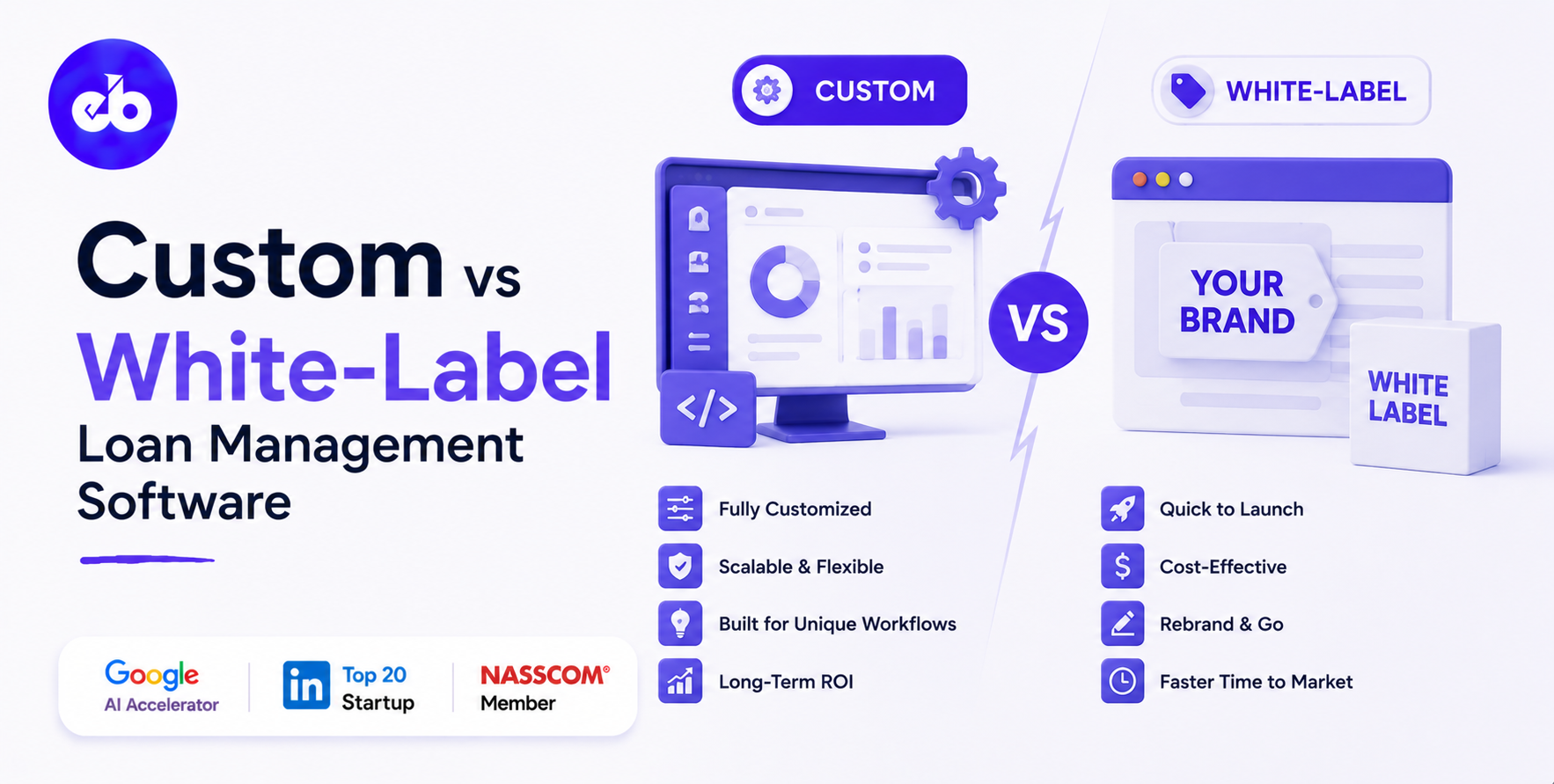
One of the first decisions you will make is whether to build a custom system or purchase an existing one. Both paths come with different cost implications.
Off-the-shelf loan management platforms typically charge on a subscription basis. Pricing usually falls between $200 to $2,000 per month depending on the number of users, loan volume, and features included.
Platforms like BankPoint, TurnKey Lender, or Margill Loan Manager fall into this category. They work well for standard lending operations but may require expensive customizations once your workflow gets more complex.
Custom development gives you full control over features, integrations, and scalability. However, it requires a larger upfront investment. The loan management software cost for a custom-built system typically ranges between:
These ranges depend on the team you hire, the technology stack, and the complexity of the features involved.
When you start mapping features to your platform, the budget becomes much clearer. Here is how individual features contribute to the overall loan management software cost.
This covers online application forms, document upload, KYC verification, and borrower onboarding flows. A clean loan origination software with third-party identity verification integrations can add $8,000 to $20,000 to your development cost.
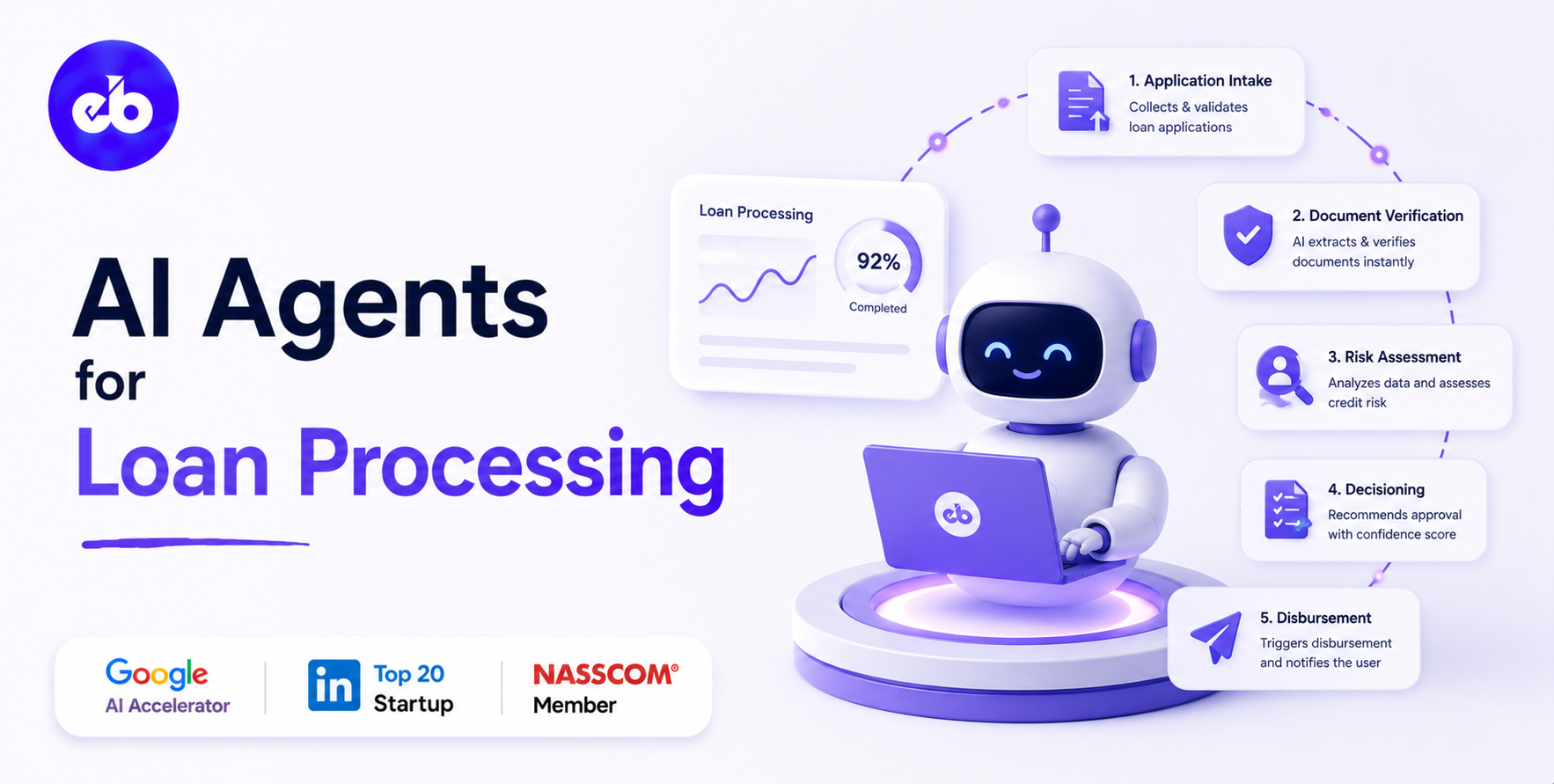
Automated credit decisioning is one of the most valuable and complex features. It involves integrating with credit bureaus, applying risk rules, and generating approval or rejection logic. Depending on how sophisticated the engine needs to be, expect to spend $15,000 to $40,000 on this module alone.
This includes repayment schedule generation, EMI calculations, payment collection tracking, and overdue management. A robust servicing module with automated reminders typically costs $10,000 to $25,000.
Connecting your platform to ACH, NEFT, Stripe, or other payment processors requires careful API development, integration and testing. Each payment gateway adds $3,000 to $8,000 in development cost depending on complexity.
Lenders need real-time dashboards showing portfolio health, delinquency rates, and cash flow projections. A solid reporting layer built on clean data pipelines can range from $8,000 to $20,000.
Branch managers, loan officers, and compliance teams all need different access levels. Building a secure, multi-role admin interface typically adds $5,000 to $15,000 to the project scope.
Automated regulatory reporting, audit logs, and data retention policies are non-negotiable for licensed lenders. These compliance features generally add $6,000 to $18,000 depending on the markets you operate in.
Not every lender needs the same system. Here is a realistic look at loan management software cost broken down by business size and platform type.
At this level, you get core loan origination, a basic servicing module, manual review workflows, and simple payment tracking. It is a strong starting point for validating your lending model before scaling.
This range covers automated underwriting, multi-product loan management, CRM integration, borrower portals, and richer reporting. Most growing fintechs operate in this range.
At enterprise scale, you are looking at high availability architecture, deep third-party integrations, multi-branch support, complex compliance requirements, and custom analytics. This is where loan management software cost reflects serious infrastructure investment.
Many teams budget for development and forget everything that comes after. These are the costs that often catch lenders off guard.
How you staff the project significantly affects the loan management software cost.
Building with an in-house team means hiring remote developers for frontend & backend, a QA specialist, a business analyst, and a project manager. For a mid-sized project, monthly payroll alone can exceed $50,000 to $80,000 in North American markets, with no guarantee of faster delivery.
Partnering with an experienced lending software development company gives you a ready-made, domain-specialized team. You pay for the output, not the overhead. For most lenders outside the enterprise tier, this path offers faster time-to-market and more predictable loan management software cost.
Starting with a focused MVP development is often the smartest move. It lets you test core workflows with real borrowers, collect feedback, and prioritize features before committing to full-scale development.
Prioritize your core lending workflow first. Do not build everything on day one. Identify the three to four features your lenders and borrowers cannot live without and build those well.
Choose a scalable architecture from the start. Rebuilding a poorly planned system costs more than doing it right the first time. Invest in clean data models and modular design early.
Pick a development partner with fintech experience. Teams that have built lending platforms or loan apps before understand regulatory nuances, data sensitivity, and integration complexity. That experience reduces expensive rework.
Plan your compliance requirements before development begins. Adding compliance features retroactively is always more expensive than building them in from the start.
Loan management software cost is not a fixed number. It depends on your lending model, the depth of automation you need, the regulatory environment you operate in, and whether you choose to build, buy, or customize.
A basic system can be production-ready for $30,000 to $60,000. A sophisticated, enterprise-grade platform can exceed $100,000. The key is knowing exactly what your operation needs right now and what you will realistically need in the next two to three years.
Getting that clarity early, and working with professionals like Engineerbabu that understands lending operations, makes the entire investment far more predictable and far more likely to pay off.
It typically ranges from $30,000 for basic systems to $100,000 or more for enterprise-grade platforms, depending on features, integrations, and scale.
Ready-made solutions are faster and cheaper upfront but limit flexibility. Custom builds cost more initially but give you full control over workflows, integrations, and future scalability.
Credit scoring engines, automated underwriting, compliance modules, and real-time analytics dashboards tend to be the most expensive features to build.
A basic MVP can be ready in 3 to 4 months. A full-featured platform for a mid-sized lender typically takes 6 to 10 months.
Plan for maintenance and updates (15 to 20 percent of build cost annually), cloud hosting, third-party API fees, and periodic security audits.