Must-Have Features of Loan Management App in 2026


Create engaging, high-performance mobile applications tailored to your business needs. We craft future-ready apps that offer smooth user experiences on all devices.
Build robust and scalable websites and CMS platforms that help you manage content effortlessly. Our development ensures a seamless digital presence.
Launch secure, feature-rich online stores with intuitive shopping experiences. We build tailored eCommerce platforms designed for growth.
Design captivating games with immersive gameplay and stunning graphics. From concept to launch, we build engaging experiences that players love.
Enhance your customer relationships with customized Salesforce implementations. Drive growth and efficiency with smarter CRM solutions.
Harness artificial intelligence and machine learning to automate workflows and gain actionable insights. Our AI transforms data into smart decisions.
Accelerate your software delivery lifecycle with continuous integration, delivery, and infrastructure automation to boost efficiency.
Hire app developers ready to turn your ideas into sleek, high-performing mobile apps for any platform.
Bring in frontend pros who craft smooth, beautiful, and user-friendly interfaces that your visitors will love.
Get backend developers who build fast, secure, and reliable systems to keep everything running behind the scenes.
Hire eCommerce developers who build secure, scalable online stores designed to offer seamless shopping and grow your sales.
Get dedicated developers committed to your projects, delivering consistent quality and speed as an extension of your team.
A borrower applies for a personal loan on a Monday morning. By Tuesday, they’ve already received three rejection emails, zero explanations, and a burning distrust of digital lending. That’s not a user experience problem. That’s a feature problem.
The lending industry has changed drastically over the last few years, and so have borrower expectations. According to a report by Market Research Future, the global loan management software market is expected to reach a whopping USD 17.49 Billion by 2035.
That kind of growth signals one thing clearly: lenders who invest in the right technology now will dominate the market later.
But investing in a loan management app without the right features is like buying a car without a steering wheel. Functional on paper, dangerous in practice. Here’s a breakdown of the features that actually matter in 2026.
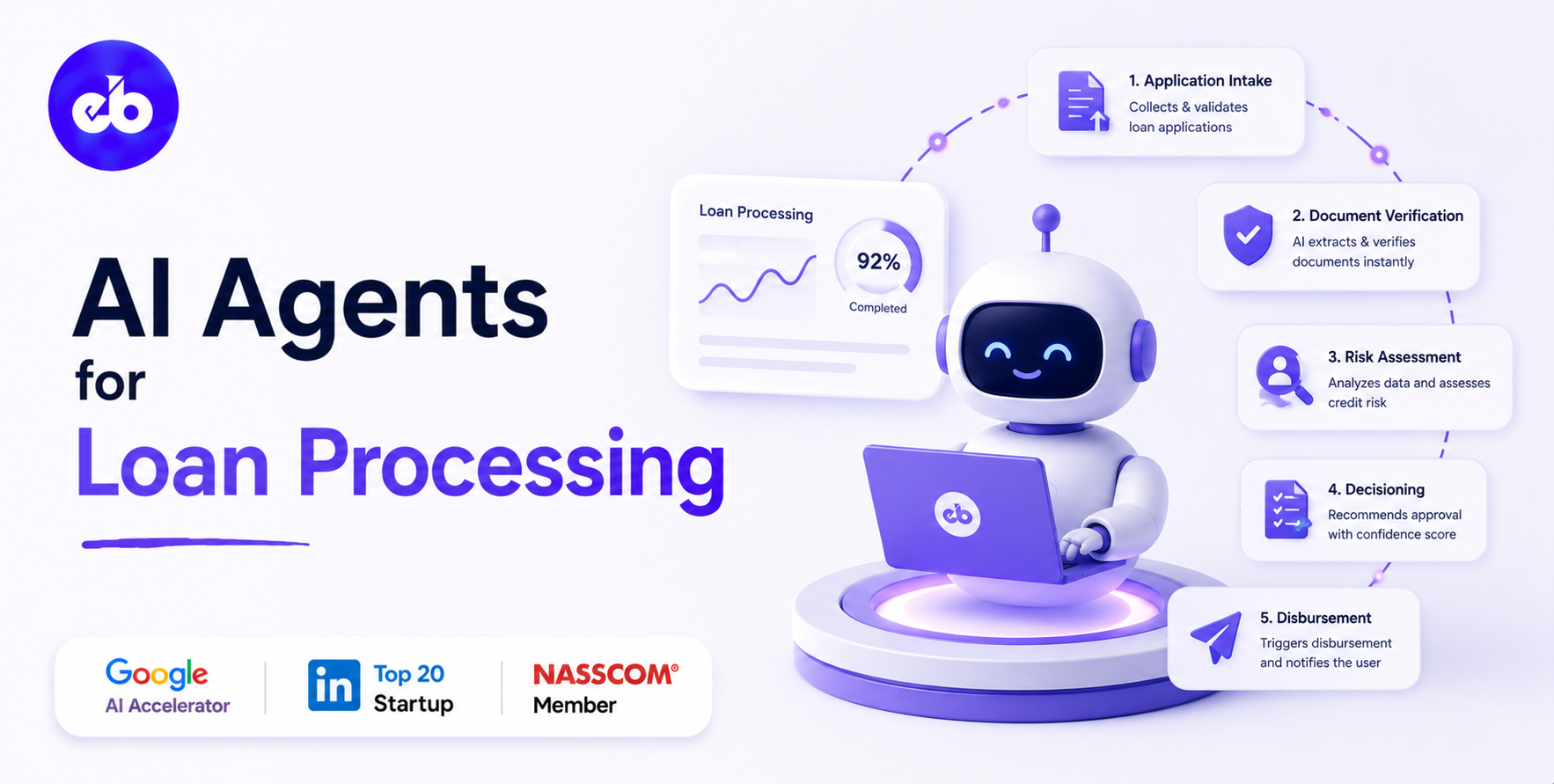
Manual loan processing is slow, error-prone, and expensive. A strong loan management app should automate the entire origination process, from application intake to document collection, eligibility checks, credit scoring, and approval routing.
What makes this particularly valuable is the ability to set custom rule engines. Lenders can define criteria based on credit score thresholds, income ratios, or loan type, and the system handles the rest automatically. This dramatically cuts processing time and reduces human bias in lending decisions.
Static credit checks are no longer enough. Modern loan management apps integrate with credit bureaus and alternative data sources to pull real-time scores and behavioral data. This gives lenders a fuller picture of a borrower’s actual financial health, not just a snapshot from six months ago.
Risk scoring models built into the features of loan management app should also flag high-risk applications, suggest tiered interest rates, and help prevent defaults before they happen.
Borrowers today expect the same convenience from their lender that they get from their bank or e-commerce platforms. A dedicated borrower portal lets users check their loan status, download statements, make repayments, and raise support tickets, all without calling customer support.
This feature alone reduces operational load significantly. Fewer inbound queries, faster resolutions, and a noticeably better borrower experience.
Not all borrowers have the same cash flow. A good loan management app should support multiple repayment structures including EMIs, bullet payments, step-up schedules, and balloon payments. Lenders should be able to configure these without custom development every single time.
The system should also handle prepayments, partial payments, and penalty calculations automatically, without requiring manual intervention from the finance team.
When borrowers miss payments, how a lender responds in the next 48 hours determines whether they recover the loan or write it off. Built-in delinquency management features should trigger automated reminders across SMS, email, and push notifications before a due date arrives.
For accounts that cross into collections territory, the app should support escalation workflows, field agent assignment, and settlement negotiation tools. This keeps recovery rates high without straining your collections team.
Collecting, verifying, and storing borrower documents is one of the most time-consuming parts of lending. A modern loan management app should handle document uploads, OCR-based data extraction, and eKYC verification through integrations with government ID databases.
This is especially important for high-volume lenders. When your team processes hundreds of applications a week, automated document verification isn’t a luxury, it’s a necessity.
A fintech app development company offering personal loans today might expand into MSME loans, vehicle financing, or buy-now-pay-later products next year. The features of loan management app should support multiple loan products within a single platform, each with its own rules, repayment logic, and borrower communication flows.
Building separate systems for each product type is expensive and unsustainable as you scale.
Financial compliance is non-negotiable. Depending on the market you operate in, your app needs to stay aligned with RBI guidelines, GDPR, Fair Lending laws, or other regional regulations.
Built-in compliance features should automate audit trail generation, flag non-compliant transactions, and produce reports in formats accepted by regulators.
This protects your business from penalties and keeps your lending license secure.
In 2026, AI is not a buzzword in lending, it’s a competitive edge. AI-driven decisioning tools analyze thousands of data points in seconds to predict borrower behavior, set dynamic interest rates, and detect fraudulent applications before disbursement.
Pattern recognition built into the fraud detection layer can identify anomalies in application data, device fingerprints, or repayment behavior. Thus, catching fraud early without blocking legitimate borrowers.
Lending decisions should be backed by data, and that data needs to be accessible in real time. A well-designed dashboard gives loan officers, risk managers, and executives a live view of portfolio health, disbursement volumes, NPA rates, and collection efficiency.
Drill-down reporting by geography, loan type, or borrower segment helps teams respond quickly to trends rather than reacting to problems after the fact.
Your loan management app does not operate in isolation. It needs to talk to accounting tools, CRMs, payment gateways, credit bureaus, and banking partners. An API-first architecture development makes these integrations clean, fast, and stable.
This is one of the most overlooked features of loan management app during initial development, but one of the most impactful as the business grows.
Building a loan management platform from scratch requires more than just good developers. It requires a team that understands the nuances of fintech, compliance requirements, and real-world borrower behavior.
EngineerBabu specializes in building custom fintech solutions, including full-featured loan management apps that are scalable, secure, and ready for regulatory environments. From AI-powered credit decisioning to multi-product support and borrower portals, their team builds systems that lenders can actually grow with.
If you’re planning to launch or upgrade your lending platform in 2026, EngineerBabu brings the technical depth and domain expertise to make it happen right the first time.
The difference between a loan management app that performs and one that frustrates comes down entirely to the features baked into it.
Real-time credit scoring, automated workflows, flexible repayments, smart collections, and AI-powered fraud detection are not optional upgrades in 2026. They are baseline expectations.
When you invest in the right features of loan management app from the start, you reduce defaults, improve borrower retention, and build a lending operation that scales without breaking.
The most critical ones include automated loan origination, real-time credit scoring, borrower self-service portals, flexible repayment scheduling, delinquency management, eKYC integration, and AI-based fraud detection.
AI helps automate credit decisions, detect fraudulent applications, set dynamic risk-based pricing, and predict borrower default likelihood, all of which improve portfolio quality and reduce manual workload.
Yes, but only if it’s built with multi-product support in mind. A well-architected platform lets lenders configure different loan types, repayment structures, and eligibility rules under one system.
APIs allow your loan management system to integrate seamlessly with payment gateways, credit bureaus, ERPs, and CRMs. Without strong API support, scaling your lending operations becomes technically expensive and slow.
EngineerBabu builds custom loan management platforms tailored to your lending model, regulatory environment, and growth plans, covering everything from borrower portals to AI-powered decisioning and compliance automation.