EMI Calculator App Development: Complete Guide


Create engaging, high-performance mobile applications tailored to your business needs. We craft future-ready apps that offer smooth user experiences on all devices.
Build robust and scalable websites and CMS platforms that help you manage content effortlessly. Our development ensures a seamless digital presence.
Launch secure, feature-rich online stores with intuitive shopping experiences. We build tailored eCommerce platforms designed for growth.
Design captivating games with immersive gameplay and stunning graphics. From concept to launch, we build engaging experiences that players love.
Enhance your customer relationships with customized Salesforce implementations. Drive growth and efficiency with smarter CRM solutions.
Harness artificial intelligence and machine learning to automate workflows and gain actionable insights. Our AI transforms data into smart decisions.
Accelerate your software delivery lifecycle with continuous integration, delivery, and infrastructure automation to boost efficiency.

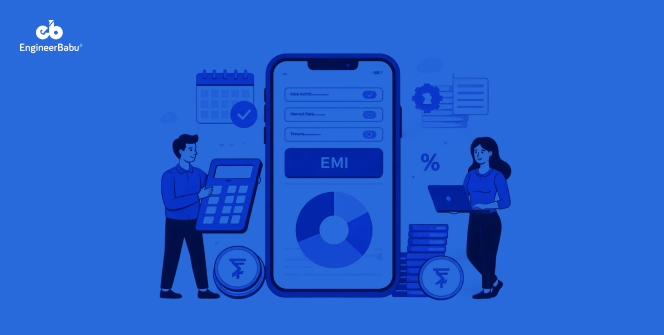
Managing loans can feel overwhelming at times. Whether it’s a home loan, personal loan, or car loan, calculating the monthly installment manually can take a lot of effort and lead to mistakes.
That’s where an EMI calculator app comes in handy.
It simplifies these calculations and helps users plan their finances better. A complete EMI Calculator App Development focuses on creating apps that are accurate, user-friendly, and adaptable to different types of loans.
So, let’s learn more about the development of EMI calculator apps.
An EMI calculator app is a digital tool that helps users determine their monthly loan repayments based on the principal amount, interest rate, and loan tenure. These apps are designed to simplify financial planning, letting users see how different loan amounts or interest rates affect their monthly installments.
Some EMI calculator apps also provide amortization schedules and prepayment options, giving borrowers a clearer picture of their financial commitments.
However, developing such an app often involves core mobile app development expertise. In short, by combining a simple user interface with accurate calculation logic, EMI Calculator App Development ensures that users can plan their loans with confidence.
A well-designed EMI calculator app does more than just compute monthly payments. It simplifies financial planning for users while keeping the experience intuitive and engaging.
From basic calculations to advanced insights, these features make it easier for borrowers to understand their loans and manage finances effectively.
The first step in any EMI calculator app is letting users enter the loan amount. A clear and simple input ensures users don’t get confused while trying to calculate their repayments.
EMI Calculator App Development focuses on creating interfaces where inputting loan details is straightforward and quick, giving users immediate feedback on their financial decisions.
Selecting the correct interest rate and loan tenure is crucial for accurate EMI calculations. Apps often provide sliders or dropdowns for easy selection, helping users visualize how different rates and tenures affect monthly payments.
With proper mobile app development practices, this feature can be smooth and responsive, making EMI Calculator App Development more user-friendly.
Once the inputs are provided, the app calculates the EMI instantly and can generate an amortization schedule showing the breakup of principal and interest over time. Advanced apps might also offer insights into prepayments or early closure.
Using Node.js development services on the backend ensures these calculations are fast and reliable, which is central to EMI Calculator App Development.
Some apps allow users to simulate prepayments or account for late payments. This helps borrowers see how additional payments or delays impact their EMI and total interest. Including such features makes the app practical and empowers users to plan ahead without surprises.
A useful EMI calculator app lets users simulate prepayments or account for late payments. This feature shows how extra payments or delays affect monthly EMIs and total interest over time.
Implementing this requires careful calculation logic, which is central to EMI Calculator App Development. It helps users make informed decisions and plan their loans more efficiently without unexpected surprises.
To make the app relevant for users across different regions, currency and localization options are essential. Users can see EMIs in their local currency and choose regional formats for dates and numbers.
Integrating such flexibility is part of thoughtful EMI Calculator App Development, and it ensures the app is accessible and useful to a wider audience, no matter where they are.
Building an EMI calculator app requires careful planning and execution. From understanding user needs to deploying a fully functional app, each step matters. Following a structured approach ensures the app is accurate, user-friendly, and reliable.
EMI Calculator App Development focuses on delivering a seamless experience while keeping financial calculations precise.
The first step is understanding user needs and analyzing existing apps in the market. Research helps identify essential features and gaps to improve upon.
According to a Statista report, the number of finance app downloads are growing significantly, highlighting the increasing importance of digital finance tools. This research is crucial for effective EMI Calculator App Development.
A simple and intuitive design is crucial. Users should be able to enter loan details and get results quickly without confusion. Clean layouts, responsive design, and easy navigation ensure a smooth experience. Good design enhances usability and makes EMI Calculator App Development feel approachable to all users.
Selecting the right technologies impacts the app’s performance and scalability. Many EMI calculator apps leverage AI development services for predictive features or smart suggestions for users. Choosing the right stack ensures the app is fast, secure, and reliable, forming the foundation of successful EMI Calculator App Development.
This is where the main calculation engine is built. Ensuring that EMI formulas are implemented correctly is crucial, as even small errors can mislead users. Backend systems and frontend logic need to work seamlessly to provide instant and accurate results.
For enhanced functionality, the app may integrate with banking APIs or payment gateways. This allows users to check interest rates in real time or simulate payments securely. Efficient API development ensures smooth communication between systems without compromising speed or accuracy.
Before launch, the app must undergo thorough testing, including unit, functional, and performance checks. Testing ensures EMI calculations are accurate and the app works reliably across devices. After deployment, continuous monitoring helps catch issues early and maintain user trust.
Choosing the right technology stack is crucial for building an EMI calculator app that is fast, reliable, and scalable. The right combination of frontend, backend, and supporting tools ensures smooth calculations and a seamless user experience.
EMI calculator apps benefit from a stack that balances performance with flexibility, making it easier to add features and integrate with external systems.
The frontend determines how users interact with the app. Technologies like React Native or Flutter allow developers to create responsive, visually appealing interfaces that work on both Android and iOS development.
A well-built frontend ensures that EMI Calculator App Development delivers an intuitive experience, making it simple for users to enter loan details and get instant results.
The backend handles the core EMI calculations and data management. Popular choices include Django, Laravel, or Ruby on Rails, which provide stability and speed for complex computations.
Using a robust backend is key for EMI Calculator App Development, as it ensures accuracy and quick responses even with multiple simultaneous users.
Reliable databases store user inputs, calculation history, and loan schedules. Options like Firebase, MySQL, or MongoDB are commonly used, depending on whether you need real-time updates or flexible document storage.
A strong database setup is essential in EMI Calculator App Development to maintain user trust and data integrity.
Supporting tools enhance the app’s functionality. Integrations may include API development for fetching live interest rates or connecting to payment systems. Analytics tools help track user behavior and improve the app over time.
Using these tools thoughtfully ensures that EMI Calculator App Development is practical, accurate, and continuously evolving.
The cost of developing an EMI calculator app depends on several factors, from features and platform choice to selecting the right fintech app development company. Understanding these elements helps businesses plan budgets effectively.
EMI Calculator App Development costs vary based on complexity, integrations, and design, but careful planning ensures you get maximum value without compromising functionality.
Several aspects influence the cost of an EMI calculator app. Feature set, design complexity, backend logic, and integration with APIs all play a role.
Choosing to build an MVP first can reduce initial costs while testing user interest. Using MVP development strategies ensures a functional app is delivered efficiently without overspending.
Whether you develop the app for Android, iOS, or both affects the cost. Cross-platform frameworks like Flutter can reduce development time, while native apps may offer smoother performance.
Thoughtful platform selection is a key part of EMI Calculator App Development planning to balance cost and user experience.
Post-launch costs include bug fixes, updates, and adding new features. Continuous monitoring and support help maintain accuracy in EMI calculations and improve usability.
Planning for ongoing maintenance is essential to keep the app reliable, secure, and useful for users over time.
EMI calculator apps make managing loans simpler and help users plan their finances without stress. From calculating monthly installments to simulating prepayments, these apps provide clarity and convenience.
EMI Calculator App Development focuses on building tools that are accurate, user-friendly, and adaptable to different types of loans, ensuring users can make informed decisions.
For businesses looking to create such apps, partnering with a reliable lending software development company can make the process smoother. Experienced developers handle everything from calculation logic to API integrations, ensuring the app is robust, scalable, and easy to use.
Whether it’s integrating regional currencies, generating amortization schedules, or offering advanced analytics, professional expertise ensures the app meets user expectations and maintains accuracy at all times.
An EMI calculator app is a tool that helps users determine monthly loan payments based on the loan amount, interest rate, and tenure. It can also provide amortization schedules and simulate prepayments to help plan finances better.
Users input the loan amount, interest rate, and repayment period. The app then calculates the EMI using standard formulas and can show a detailed schedule of principal and interest over time.
Yes. Most apps can calculate EMIs for home loans, personal loans, auto loans, and even business loans, making them versatile financial planning tools.
These apps can be developed for Android, iOS, or both. Cross-platform frameworks like Flutter or React Native are popular for faster development without compromising performance.
Cost depends on features, platform, integrations, and design complexity. Simple apps with basic EMI calculations are more affordable, while advanced apps with API integrations and analytics require higher investment.