How Private Lending Apps Work (Complete Beginner’s Guide in 7 Steps)

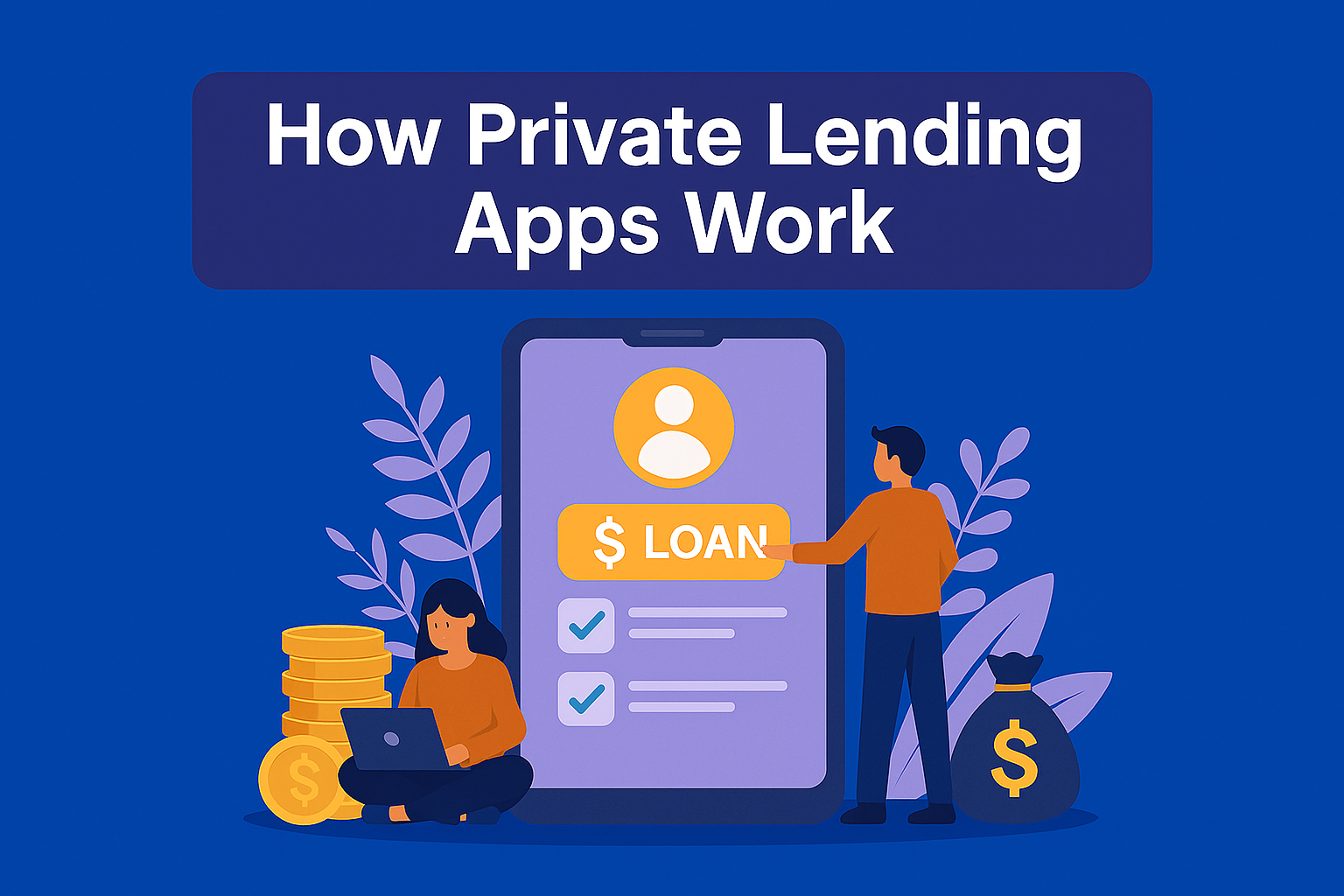
A private lending app can look simple on the surface. You open it, request a loan, and within minutes, the money arrives in your account. Behind that smooth experience is a carefully engineered system that connects borrowers and private lenders, verifies identities, evaluates risk, and automates every step.
For beginners, understanding how these apps actually work can feel confusing, especially since each platform blends finance and technology in its own way, but it is crucial.
The demand for digital lending has grown extremely fast. The global alternative lending market is projected to reach $1.03 trillion by 2028 as more borrowers shift to app-based financing.
Borrowers choose these platforms because they are faster and more flexible than traditional banks. Lenders choose them because digital lending delivers higher transparency and better returns when managed correctly.
So, in this guide, you will learn how private lending apps work from the inside. Each step is explained in simple language so you can understand the real workflow. Let’s jump into it.
Private lending is a funding model where individuals or businesses provide loans directly to borrowers through a digital platform instead of going through a traditional bank. The app acts as the meeting point.
Borrowers come with a financial need, and lenders come with available capital. The platform handles verification, risk checks, loan creation, and repayment so both sides can interact confidently. Now, before learning how private lending apps work, let’s look at how they are different from traditional banking.
A bank relies on long approval cycles, strict criteria, and lengthy paperwork. Private lending apps simplify this experience by using technology to evaluate risk and distribute funds quickly. Banks rely primarily on formal credit scores.
Private lending apps often review additional indicators such as transaction patterns, cash flow behaviour, employment history, mobile data insights, and spending consistency. This gives more people a chance to qualify, including borrowers who are new to credit.
Borrowers
These users might be salaried professionals, freelancers, small business owners, or individuals dealing with unexpected expenses. Many choose private lending because they want faster approval, flexible documentation requirements, and transparent repayment terms.
Lenders
These users can be individual investors, high-net-worth individuals, or companies that want to earn predictable returns. The app allows them to review borrower profiles, diversify their investments, and receive repayments through a structured schedule.
P2P Lending
In this model, money moves directly between borrowers and individual lenders. The app manages identity checks, credit scoring, legal agreements, and repayment tracking. Here’s how you can build a P2P lending app.
Business Lending
These loans target small and medium-sized businesses. The platform reviews sales data, inventory cycles, or invoice history to evaluate whether the business can repay.
Micro Lending
This model focuses on small short-term loans. Borrowers often use them to handle urgent needs or cash flow gaps. The app uses automated scoring to process these requests quickly.
Private lending works because technology reduces friction. Borrowers get faster access to funds. Lenders get better visibility into risks. The app becomes the bridge that makes this exchange safe and organised.
Before we look at features and technology, it helps to walk through what actually happens inside the app. From the moment a user signs up to the final loan closure, each step follows a clear path. This workflow will show you how private lending app works in day-to-day usage.
A new user begins by creating an account with basic details, followed by ID upload and live verification. The platform checks national databases for KYC and AML compliance to confirm authenticity. Secure onboarding protects both borrowers and lenders by eliminating fraudulent profiles and builds the foundation for how private lending apps work in real conditions.
The borrower enters the loan amount they need, the repayment duration, and the purpose. The app instantly reviews these inputs to ensure they match the platform’s lending criteria. This early screening helps filter out risky or mismatched requests and guides the borrower toward options that align with their eligibility profile.
Once the request is submitted, the app evaluates the borrower using AI-driven scoring that studies credit history, banking patterns, income stability, and alternative data. Soft checks provide insights without impacting credit scores, while hard checks are used for final confirmations. Thanks to AI in loan lending apps now, system assigns a risk grade that helps lenders understand the borrower’s repayment strength.
Approved loan requests appear in a dedicated marketplace where lenders can review details such as loan purpose, risk category, and expected returns. Some platforms use algorithms to automatically match borrowers with suitable lenders. Others allow lenders to handpick opportunities. This structure keeps the funding process transparent and efficient for both sides.
After a lender chooses to fund the loan, the platform prepares a digital agreement that both parties accept. Loan app APIs or payment gateways transfer the approved amount directly to the borrower’s account. The entire flow is designed to feel quick and predictable, so users clearly understand how private lending apps work at the moment of disbursement.
Repayments are scheduled into EMIs that the borrower can track within the app. Many platforms support automatic deductions through UPI AutoPay, ACH, or direct bank transfers. If a payment is missed, the system sends reminders and applies penalties when needed. These structured steps help lenders maintain consistent cash flow and reduce collection stress.
Once the borrower completes all repayments, the app issues a digital loan closure certificate. Both borrower and lender can rate each other based on communication and reliability. These ratings strengthen the platform’s overall trust by helping future users identify dependable participants and encouraging responsible borrowing behaviour.
To really understand how private lending apps work, it’s crucial to learn about the technology behind it. The technology stack decides how smooth the experience feels, how safe the data stays, and how quickly your product can scale as users grow. Each layer supports how private lending app works in the real world.
The frontend is everything users see and touch. Most lending apps rely on native Android, native iOS, or cross platform frameworks such as React Native and Flutter development. Clean UI components, intuitive navigation, and responsive screens create trust. An effective frontend explains complex lending flows in a simple way that anyone can follow.
Behind the interface, the backend receives every request, processes business rules, and talks to databases and external services. Frameworks such as Node.js development, Django, Spring Boot, or Laravel help structure this logic. A strong backend handles loan creation, risk checks, disbursement triggers, and repayment updates without delays, even when thousands of users are active together.
A lending app generates structured records such as users, loans, repayments, and KYC info, along with logs and events. Relational databases like PostgreSQL or MySQL are often used for core financial data, while NoSQL systems store logs or analytics. Good schema design keeps queries fast and audits easy, which becomes crucial during compliance checks.
AI and ML in fintech read patterns that humans usually miss. They evaluate credit bureau information, bank statements, transaction histories, and behavioral signals to score each borrower. Over time, these models keep learning from real repayment performance. This layer is central to how private lending apps work at scale while managing portfolio risk responsibly.
Cloud platforms such as AWS, Azure, or Google Cloud host the entire system. They provide servers, storage, load balancers, and security controls that grow with traffic. Auto scaling keeps the app responsive during peak loan requests, while backups and multi-region setups protect data so the service stays reliable even during unexpected incidents.
A modern lending app connects to several external services through APIs. Payment gateways and banking APIs handle disbursement and EMI collection. KYC and AML providers validate identities. Credit bureaus return credit histories. Notification APIs manage SMS, email, and push alerts. These integrations stitch together the complete flow that defines how private lending apps work end to end.
A private lending app succeeds when the experience feels simple on the outside and powerful on the inside. Borrowers get quick access to funds. Lenders get clarity and control. The platform manages onboarding, credit evaluation, loan creation, disbursement, and repayments through a well-orchestrated workflow supported by strong technology.
Understanding how private lending apps work gives you a clear picture of how these platforms scale and why demand continues to rise across global markets.
If you plan to create your own lending platform, you need the right partner who understands fintech, compliance, security, and user behaviour. EngineerBabu has built products for startups and enterprises that want to launch secure and scalable lending solutions. We are regarded as the best lending software development company in India.
It is a digital platform that connects borrowers and private lenders. The app handles verification, loan creation, matching, disbursement, repayment tracking, and compliance. Everything is automated, so both sides can interact safely.
The platform usually earns through processing fees, commissions from lenders, late fee charges, subscription plans, or value added services. Each app sets its own revenue structure based on its model and audience.
A basic MVP development may take 4 to 6 weeks. A fully featured platform with automated credit scoring, multi-lender modules, and integrations usually takes several months. Timelines depend on complexity, features, and compliance requirements.
A strong lending app includes borrower and lender dashboards, automated credit scoring, KYC and AML verification, secure payment integrations, EMI scheduling, notifications, risk management tools, and a dispute resolution system. These features help the app run smoothly while giving users a transparent and trustworthy lending experience.
EngineerBabu specialises in fintech and has experience building custom lending platforms with strong UX, secure architecture, and regulatory alignment. Our team guides you through concept validation, design, development, deployment, and long-term support.