How to Build Marketplace like Alibaba: Complete Development Guide

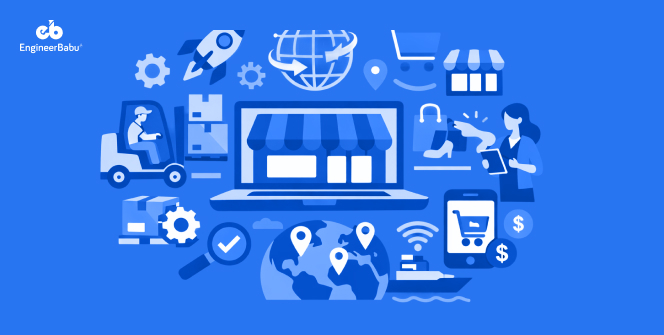
To build marketplace like Alibaba, you need a deep understanding of both technical architecture and business model fundamentals. The Alibaba Group has a market cap of ₹31.316 Trillion, making it the dominant force in business to business commerce worldwide.
Alibaba was founded by Jack Ma, a former English teacher, whose entrepreneurial vision and leadership played a pivotal role in shaping the company’s growth and global strategy.
This guide covers technical development, marketplace business model selection, and implementation strategies for startup founders and enterprises.
Building an Alibaba like marketplace typically requires 8-12 months and $50,000-$500,000 depending on complexity and feature scope. You’ll gain clarity on technical requirements, a development roadmap, accurate cost estimation, and go-to-market strategy.
Alibaba expanded beyond its initial B2B focus to include business-to-consumer (B2C) and consumer-to-consumer (C2C) marketplaces, transforming into a comprehensive global e-commerce platform.
Before building a marketplace like Alibaba, it’s essential to lay a strong foundation through comprehensive market research and competitive analysis. Start by identifying your target audience.
Understanding user expectations, such as preferred product search methods, secure payment options, and the types of sellers they trust, will help you define the key features your platform must offer.
Analyze existing online marketplace competitors to pinpoint gaps and opportunities. Study their business models, including how they generate revenue through transaction fees, subscription fees, and premium services.
Choosing the right revenue structure is crucial if you want to build marketplace like Alibaba with long-term sustainability.
This insight will help you refine your own marketplace idea and select the right marketplace business model for your goals. Evaluate which payment gateways are most popular and trusted in your target markets to ensure seamless and secure transactions.
By aligning your platform’s essential features and revenue streams with market demand, you’ll be better positioned to build marketplace like Alibaba.
Alibaba’s success stems from its multi-layered platform design supporting diverse transaction types. The architecture enables seamless connections between wholesale buyers and Chinese suppliers across global markets.
In addition to B2B and B2C models, Alibaba’s architecture also supports consumer-to-consumer transactions through platforms like Taobao and AliExpress, allowing individuals to buy and sell directly to each other.
This robust ecosystem is further strengthened by the large number of active buyers on Alibaba’s platforms, demonstrating a highly engaged and trustworthy user base.
The multi vendor marketplace architecture supports both business to business and business to consumer transactions simultaneously. Seller dashboard systems handle inventory management, order processing, and performance analytics.
Buyer interfaces incorporate advanced product search, filtering capabilities, and streamlined purchasing workflows. These components work together to create a successful online marketplace experience.
A diversified monetization strategy is essential when planning to build marketplace like Alibaba. Membership fees range from $166 to $1,833 monthly across subscription plans. Commission-based transaction fees capture 5-8% on retail platforms like Tmall.
Premium services, including advertising and featured placement, provide additional monetization. This diversified monetization model ensures platform sustainability.
Moving from architecture to specific requirements, your marketplace platform needs carefully designed functionality for all user types. These essential features determine whether your ecommerce platform can compete effectively.
Building a robust ecommerce business requires careful consideration of these essential features to ensure scalability and competitiveness, especially if you plan to extend your platform with a dedicated eCommerce mobile app.
Advanced search enables users to find products through filters, image recognition, and keyword matching. Bulk ordering systems with quantity-based pricing serve wholesale buyers effectively. Secure payment options including escrow services protect transactions. Integration with popular payment gateways ensures global accessibility.
Product listing tools with inventory management streamline the entire process of catalog creation. Business verification and certification processes build trust with global buyers. Analytics dashboards track sales performance and key metrics. These features help sellers pay attention to growth opportunities.
To effectively build marketplace like Alibaba, you must include: User management with role-based access control to maintain platform security. Transaction monitoring and dispute resolution tools protect both parties. Revenue tracking handles commission management and subscription fees. Trade assurance features reduce fraud risk significantly.
Efficient logistics is non-negotiable if you want to build marketplace like Alibaba. Integrating logistics services directly into your marketplace platform ensures that buyers and sellers enjoy a seamless experience from order placement to delivery.
This requires building strong partnerships with reliable logistics providers who can handle warehousing, shipping, and last-mile delivery.
Alibaba’s approach, exemplified by its Cainiao logistics network, demonstrates the value of centralized management for inventory and distribution. By adopting similar strategies or leveraging custom supply chain management software, you can optimize key metrics such as delivery times, shipping costs, and inventory turnover.
Monitoring these key metrics allows you to identify bottlenecks and continuously improve your logistics operations. Strong logistics infrastructure significantly enhances your ability to build marketplace like Alibaba successfully.
With features defined, selecting the right technology stack and deciding between an MVP or full-scale development approach becomes critical. Your approach determines timeline, budget, and customization possibilities.
Additionally, researching existing large marketplaces and identifying user complaints can help you develop a marketplace idea similar to Alibaba by uncovering gaps and unmet needs in the market.
The minimum viable product approach works best for validating your marketplace idea before major investment, and many founders choose to outsource SaaS product development to accelerate timelines and reduce costs while accessing specialized expertise.
Using an MVP approach reduces risk while testing your strategy to build marketplace like Alibaba efficiently.
Choosing between approaches depends on your business details and resources.
| Approach | Timeline | Cost Range | Customization |
| Custom Development | 12-18 months | $200K-$500K | Full Control |
| Ready-made Solution | 3-6 months | $50K-$150K | Limited |
| Hybrid Approach | 6-12 months | $100K-$300K | Moderate |
Custom development offers complete control but requires significant investment. Ready-made solutions accelerate launch but limit differentiation. The hybrid approach balances flexibility with efficiency for most marketplace ideas similar to Alibaba.
Every founder aiming to build marketplace like Alibaba faces scalability and trust issues. Addressing these proactively prevents costly delays.
Additionally, offering other services such as inspection, order protection, and diverse payment methods can further strengthen your marketplace’s value proposition.
Implement cloud computing services with auto-scaling capabilities from the start. Leading cloud providers for high-compliance applications such as Alibaba Cloud and Google Cloud offer robust infrastructure. CDN integration ensures fast loading for global buyers regardless of location.
Deploy multi-layer verification systems for seller authentication and trade compliance. Payment escrow protects secure transactions between parties. SSL encryption and fraud detection algorithms maintain platform integrity, mirroring the security focus seen when designing a trading app like Zerodha.
Integrate multiple payment gateways to serve diverse markets effectively. PCI DSS compliance ensures secure payment processing standards. Support for various currencies enables cross-border transactions with logistics providers.
In order to build marketplace like Alibaba requires a strategic blend of technology, marketing, and partnerships. Begin with a minimum viable product (MVP) to validate your marketplace idea and gather feedback from initial users.
If mobile is core to your strategy, selecting one of the best cross-platform app frameworks helps you ship faster while maintaining consistent user experiences. This approach allows you to refine your platform based on real-world insights before scaling up.
To attract your target audience, develop a robust marketing strategy that leverages social media campaigns, digital marketing, and referral programs. These channels help build brand awareness and drive user acquisition.
Integrating popular payment gateways and offering secure payment options are crucial for building trust and encouraging transactions from day one.
Strategic partnerships with suppliers, logistics providers, and other stakeholders can accelerate growth and enhance your value proposition.
Once your marketplace is live, ongoing management and growth become your top priorities. Regularly monitor key metrics such as gross merchandise value, user engagement, and the performance of your revenue model to identify opportunities for optimization. Conduct user testing to gather actionable feedback and ensure your platform continues to meet evolving user needs.
Enhance your offering by introducing advanced features and premium services that add value for both buyers and sellers. Leveraging cloud computing services, such as Alibaba Cloud, enables you to scale your infrastructure efficiently and maintain high performance as your user base grows.
Focus on robust user management, strict trade compliance, and secure transactions to build long-term trust.
By continuously refining your platform and expanding your service ecosystem, you can create a resilient online marketplace that thrives in a competitive environment, just like Alibaba.
Building a successful online marketplace like Alibaba requires a commitment to best practices across technology, user experience, and business strategy. Start by selecting the right technology stack and leveraging cloud computing services, such as Google Cloud, to ensure your ecommerce platform is scalable, secure, and reliable.
Custom development enables users to tailor the marketplace idea to their unique requirements, while a minimum viable platform (MVP) approach allows for rapid market testing and iteration.
Integrate essential features such as secure payment options, trade assurance, and logistics services to provide a seamless experience throughout the entire process, from product search to delivery.
Conduct thorough market research to validate your concept and inform your development roadmap. By focusing on these best practices, you can create a successful online marketplace that not only generates revenue but also delivers lasting value to buyers and sellers, following in the footsteps of Alibaba’s comprehensive and innovative approach.
Building a website like Alibaba demands strategic planning, technical expertise, and patient execution. The right marketplace business model combined with robust technology creates sustainable competitive advantage.
Your immediate actions should include:
Consider exploring mobile app development to extend platform reach. Digital marketing through social media campaigns and referral programs drives user acquisition. Strategic partnerships with logistics services providers enhance your value proposition.
These investments compound over time, driving gross merchandise value growth and platform sustainability.
Typically, it takes 8–12 months to build marketplace like Alibaba, depending on feature complexity, integrations, and customization level. An MVP version can be developed in 4–6 months, while a fully scalable multi-vendor platform with advanced logistics, payment gateways, and admin controls may take up to 12–18 months.
The cost to build marketplace like Alibaba usually ranges between $50,000 and $500,000. Ready-made solutions are more affordable but offer limited customization, whereas custom-built platforms require higher investment for full control, scalability, and advanced features like escrow payments and supplier verification systems.
A successful B2B marketplace should include multi-vendor management, bulk ordering systems, advanced product search, secure payment gateways, seller dashboards, analytics tools, and dispute resolution mechanisms. Trust-building features such as business verification and trade assurance are also critical for long-term growth.
Scalable marketplaces typically use cloud-based infrastructure such as AWS, Google Cloud, or Alibaba Cloud. A modern tech stack may include React or Vue for frontend, Node.js or Django for backend, and secure payment integrations with Stripe or PayPal. Auto-scaling and CDN integration are essential for handling global traffic efficiently.
To successfully build marketplace like Alibaba, you should implement multiple revenue streams such as subscription plans, commission on transactions, featured product listings, and advertising services. Diversifying monetization ensures stable revenue while supporting long-term platform sustainability.