The lending industry is undergoing its biggest structural shift in decades.
Rule-based loan systems, manual underwriting, and spreadsheet-driven operations simply cannot keep up with real-time lending, thin-file borrowers, rising NPAs, regulatory pressure, and aggressive digital competitors. According to industry reports, over 70 percent of lending institutions are using AI in some sort to modernize credit decisioning and risk management.
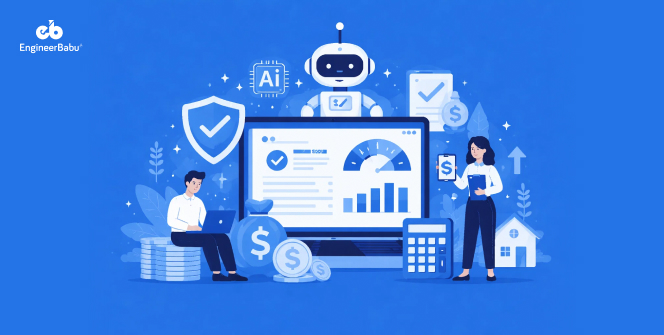
This shift is driving the rise of the AI-powered loan management system. More than just software, it combines core LMS capabilities with intelligent automation to improve underwriting accuracy, detect fraud earlier, optimize collections, and scale operations efficiently.
In this guide, we break down what an AI-powered loan management system really is, how it works, what it costs, and how to build it correctly.
What Is an AI-Powered Loan Management System?
An AI-powered loan management system is a digital lending platform designed to manage the entire loan lifecycle using machine learning, intelligent decision engines, and automation. It supports key lending functions such as loan origination, credit assessment, underwriting, disbursement, repayment tracking, collections, and ongoing risk and compliance monitoring.
Unlike traditional LMS platforms that depend on fixed rules and manual reviews, an AI-powered loan management system continuously learns from borrower behavior, portfolio performance, and historical data.
This allows lenders to improve credit decisions, detect risk earlier, and optimize operations over time. The result is faster approvals, lower default rates, and a lending operation that can scale efficiently without increasing risk exposure.
Why Traditional Loan Management Systems Are Failing
Legacy loan systems were designed for a slower, branch-driven era of lending. As credit demand becomes digital, real-time, and data-intensive, these platforms struggle to keep up. Their architecture limits automation, risk accuracy, and scalability, creating operational bottlenecks and higher default exposure.
-
Static Rules vs AI-Powered Loan Management System
Traditional LMS platforms rely on fixed rule engines that rarely adapt to changing borrower behavior. An AI-powered loan management system continuously refines risk models using live portfolio data, improving approval accuracy and reducing bad loans over time.
-
Manual Credit Review Bottlenecks
Manual underwriting increases turnaround time and operational cost. Human review also creates inconsistencies in decision-making. Automated scoring and AI-assisted underwriting dramatically reduce decision cycles while maintaining audit trails and explainability.
-
Slow Decisions in a Real-Time Lending Market
Digital borrowers expect instant approvals. Legacy systems built on batch processing and layered approvals cannot support real-time lending. An AI-powered loan management system enables instant scoring and automated decisioning without compromising compliance.
-
Weak Fraud Detection Capabilities
Traditional platforms detect fraud only after patterns become obvious. They lack behavioral analytics and anomaly detection. AI models identify synthetic identities, device manipulation, and loan stacking before disbursement, shifting fraud control from reactive to predictive.
-
Reactive Collections Instead of Predictive Risk Management
Most legacy systems respond only after accounts become delinquent. AI-driven systems forecast early delinquency signals, prioritize high-risk accounts, and optimize collection strategies, improving recovery rates and reducing NPAs.
-
High Operational Costs and Limited Scalability
Branch-heavy processes, manual interventions, and static systems increase cost per loan. An AI-powered loan management system automates workflows, reduces dependency on manual teams, and allows lenders to scale volumes without proportional cost growth.
Where AI Fits in the Loan Lifecycle
AI is not a standalone feature or add-on module. It acts as an intelligence layer embedded across the entire lending workflow, enhancing decision quality, speed, and consistency at every stage. From the first borrower interaction to long-term portfolio monitoring, AI enables lenders to move from process-driven lending to decision-centric lending.
1. AI in Loan Origination
AI strengthens loan origination systems by filtering risk before it enters the system. Intelligent form validation reduces data errors, while behavioral and device-level analysis flags suspicious patterns during application submission. AI also identifies duplicate or synthetic applicants and highlights early risk indicators based on incomplete or inconsistent data.
This ensures that low-quality or fraudulent applications are rejected early, reducing processing costs and improving overall approval quality.
2. AI in Credit Scoring
AI-driven credit scoring evaluates borrower risk using a far wider data universe than traditional methods. It analyzes bureau reports, bank statements, cash flow behavior, spending patterns, repayment discipline, and alternative data signals.
This approach enables accurate risk prediction even for thin-file or new-to-credit borrowers. By continuously learning from portfolio performance, AI improves score accuracy over time, making this the core value engine of modern lending systems.
3. AI in Underwriting Decisions
AI enhances underwriting by assisting human decision-makers rather than replacing them. It scores borrower risk in real time, flags anomalies that require deeper review, and recommends approval or rejection thresholds aligned with policy.
Most importantly, it explains the key drivers behind each recommendation. This human and AI collaboration improves decision consistency, reduces bias, and enables faster underwriting without sacrificing regulatory accountability.
4. AI in Fraud Detection
Fraud detection powered by AI goes beyond rule-based red flags. Machine learning models identify synthetic identities, loan stacking attempts, device manipulation, behavioral inconsistencies, and collusion networks across applications.
These models continuously adapt to emerging fraud patterns, allowing lenders to prevent fraud before disbursement rather than reacting after losses occur. This shift from reactive to predictive fraud control significantly reduces financial and reputational risk.
5. AI in Repayment and Collections
AI improves repayment outcomes by optimizing how and when lenders engage borrowers. It predicts delinquency risk early, prioritizes accounts based on recovery probability, and recommends the most effective communication channel, such as SMS, calls, or field agents.
AI also suggests personalized settlement strategies based on borrower behavior. This targeted approach increases collection efficiency, lowers NPAs, and reduces collection costs.
6. AI in Compliance and Risk Monitoring
AI continuously monitors portfolio health and compliance metrics in real time. It tracks risk concentration, early delinquency signals, policy deviations, and regulatory threshold breaches.
By identifying issues before they escalate, AI enables proactive risk management and faster corrective action. This ongoing monitoring also strengthens audit readiness and regulatory reporting, ensuring lenders maintain control as their portfolios scale.
Key Features of an AI-Powered Loan Management System
A production-grade AI LMS goes far beyond basic loan servicing. It combines robust operational capabilities with intelligence embedded into every decision point. The real value comes when AI is designed as core infrastructure, not added as a surface-level feature.
1. Loan Account and Lifecycle Management
The system manages loans from disbursement to closure with complete accuracy. It handles account creation, amortization schedules, interest accruals, penalties, restructures, and closures across multiple products. This ensures operational consistency while supporting scale across different lending models and geographies.
2. Intelligent Credit Scoring Engine
AI-driven credit scoring evaluates borrower risk using historical, behavioral, and alternative data sources. Unlike static scores, models continuously improve based on repayment outcomes, enabling more accurate approvals, better pricing, and controlled portfolio risk.
3. AI-Assisted Underwriting Decisions
Underwriting intelligence helps teams make faster and more consistent decisions. The system flags anomalies, recommends approval thresholds, and explains key risk drivers. This reduces manual effort while maintaining transparency and regulatory defensibility.
4. Advanced Fraud Detection Capabilities
The fraud engine identifies synthetic identities, duplicate applicants, device misuse, and collusion patterns. AI models adapt to evolving fraud behavior, enabling predictive prevention rather than post-disbursement detection.
5. Smart Repayment and Collections Engine
AI optimizes repayment reminders, borrower outreach timing, channel selection, and settlement strategies. By focusing efforts on accounts with the highest recovery probability, lenders improve collection efficiency and reduce NPAs.
6. Portfolio Analytics and Risk Forecasting
Real-time dashboards provide visibility into portfolio performance, delinquency trends, and risk concentration. AI-powered forecasting enables proactive decision-making across credit policy, collections, and capital planning.
7. Compliance, Explainability, and Audit Readiness
Every decision is logged with explainable reasoning, policy references, and audit trails. This ensures regulatory compliance, simplifies reporting, and builds long-term trust with regulators and stakeholders.
AI-Powered LMS vs Traditional LMS
| Aspect |
Traditional LMS |
AI-Powered LMS |
| Credit Decisions |
Rule-based |
Data-driven |
| Risk Prediction |
Static |
Adaptive |
| Fraud Detection |
Reactive |
Predictive |
| Collections |
Manual |
Optimized |
| Scalability |
Limited |
High |
| Compliance Readiness |
Medium |
High (if designed correctly) |
AI LMS is not optional for competitive lenders.
Cost of Building an AI-Powered Loan Management System
The cost of building an AI-powered loan management system depends on depth of intelligence, compliance readiness, and scalability requirements. While MVPs help validate use cases, production-grade systems demand stronger foundations.
AI LMS MVP Cost with India-Led Teams
An MVP typically costs between ₹50L to ₹1Cr. This version includes core loan management workflows, basic credit risk models, a simple decision engine, and limited third-party integrations. It is suitable for pilots, early-stage fintechs, or internal validation. However, MVP builds often lack explainability, advanced fraud controls, and governance required for regulatory audits and scale.
Production-Grade AI LMS Investment
A full-scale AI LMS ranges from ₹1.5Cr to ₹5Cr or more. It includes advanced credit, fraud, and collections models, robust monitoring and governance layers, enterprise-grade security, and scalable cloud infrastructure. These systems are built for high volumes, regulatory scrutiny, and long-term growth. Cheap builds usually fail when exposed to audits, portfolio stress, or rapid scale.
Build vs Buy vs Customize AI LMS
Choosing the right approach depends on how strategic lending technology is to your business. Each option offers different trade-offs between control, speed, cost, and long-term differentiation.
-
Build an AI LMS from Scratch
Building in-house offers full control over data, models, and decision logic. It allows lenders to create proprietary credit intelligence and protect core lending IP. However, this approach requires higher upfront investment, longer timelines, and strong internal tech leadership. It is best suited for large lenders or fintechs where technology is a competitive moat and long-term ownership outweighs initial cost.
Buying a ready-made LMS enables faster go-live with lower initial investment. These platforms handle standard loan workflows well but offer limited AI depth and flexibility. Customization is often restricted, making it difficult to differentiate risk models or collections strategies. Over time, lenders may outgrow these systems as volumes, compliance needs, and competitive pressure increase.
The hybrid approach combines a customizable LMS core with a proprietary AI decision layer. Lenders retain control over credit, fraud, and collections intelligence while accelerating deployment. This balanced model is preferred by most successful NBFCs and fintechs working with an experienced loan software development company, as it supports scalability, compliance, and long-term differentiation without excessive upfront risk.
Final Thoughts
An AI-powered loan management system is not just a technology upgrade. It represents a fundamental business transformation in how credit is assessed, approved, monitored, and recovered. Lenders that succeed with AI invest heavily in strong data foundations, design systems with built-in explainability, and treat AI as core infrastructure rather than an experimental add-on.
They balance automation with human oversight and build platforms that are audit-ready and scalable from day one.
In 2026 and beyond, AI-native lenders will define the future of credit. Technology partners like EngineerBabu help financial institutions design, build, and scale intelligent lending systems that are secure, compliant, and built for long-term growth.
FAQs
1. Is AI-powered loan management safe?
Yes, AI loan management is safe when built with governance, explainability, and continuous monitoring. Features like encrypted data, audit trails, and human-in-the-loop controls ensure compliance and fairness. Partnering with a reliable fintech app development company can make deployment secure and efficient.
2. How long does it take to build AI LMS?
A production-grade AI Loan Management System typically takes 6–12 months. Timelines depend on complexity, integrations, and AI model development. A phased approach ensures smooth delivery from design to deployment.
3. Is India a good place to build AI LoanTech?
Yes, India offers strong fintech, AI, and product engineering talent. Cost-effective development combined with a robust startup ecosystem makes it ideal for building scalable AI lending solutions.
4. Can AI reduce NPAs?
Yes, AI reduces NPAs by predicting defaults, monitoring borrower behavior, and optimizing collections. Predictive analytics and automated workflows strengthen portfolio health and improve recovery rates.
Founder of EngineerBabu and one of the top voices in the startup ecosystem. With over 11 years of experience, he has helped 70+ startups scale globally—30+ of which are funded, and several have made it to Y Combinator. His expertise spans product development, engineering, marketing, and strategic hiring. A trusted advisor to founders, Mayank bridges the gap between visionary ideas and world-class tech execution.