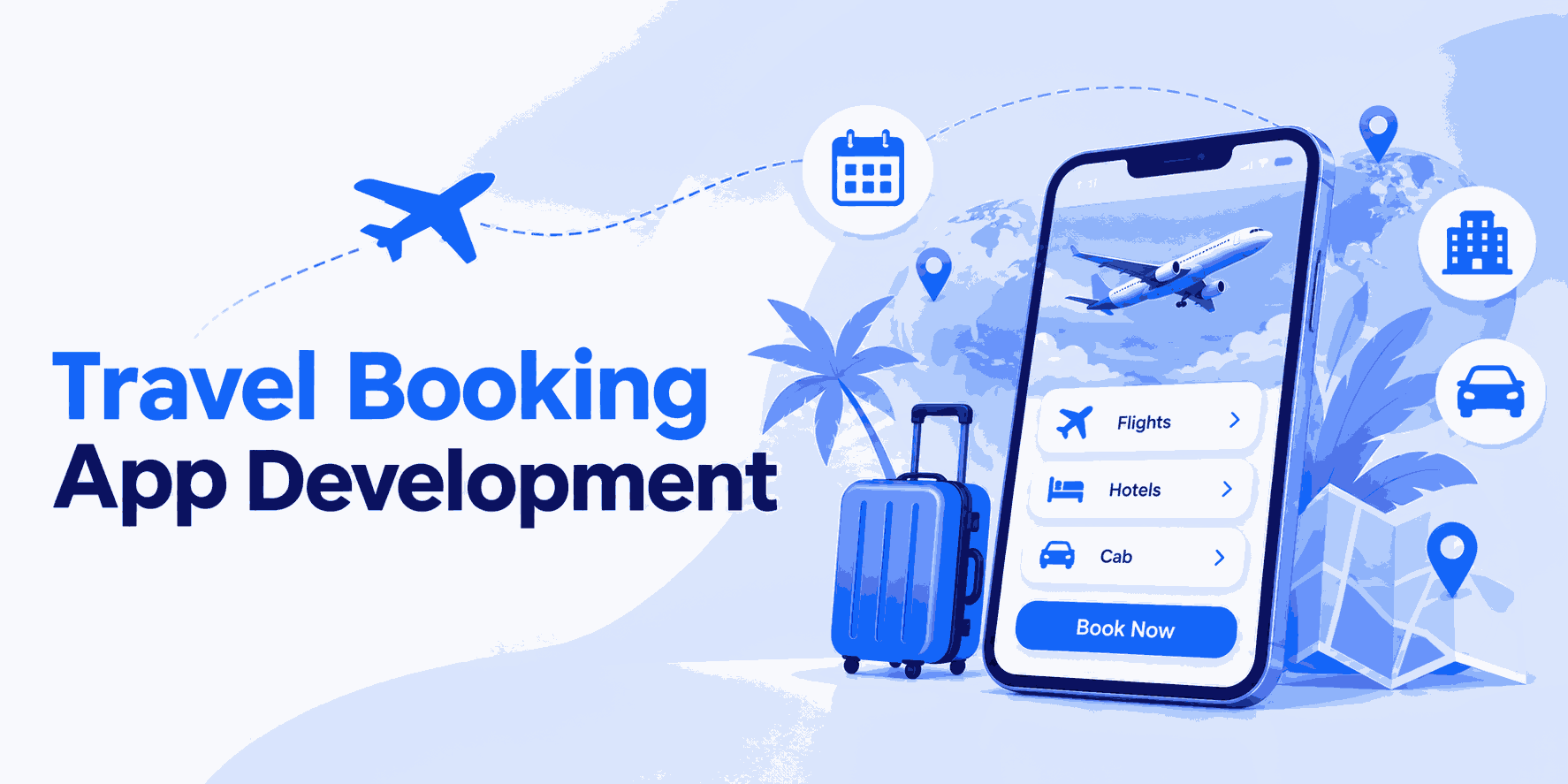
Travel Booking App Development: Features, Cost, Tech Stack


Create engaging, high-performance mobile applications tailored to your business needs. We craft future-ready apps that offer smooth user experiences on all devices.
Build robust and scalable websites and CMS platforms that help you manage content effortlessly. Our development ensures a seamless digital presence.
Launch secure, feature-rich online stores with intuitive shopping experiences. We build tailored eCommerce platforms designed for growth.
Design captivating games with immersive gameplay and stunning graphics. From concept to launch, we build engaging experiences that players love.
Enhance your customer relationships with customized Salesforce implementations. Drive growth and efficiency with smarter CRM solutions.
Harness artificial intelligence and machine learning to automate workflows and gain actionable insights. Our AI transforms data into smart decisions.
Accelerate your software delivery lifecycle with continuous integration, delivery, and infrastructure automation to boost efficiency.
TL;DR
Travel spending is not slowing down. WTTC forecasts that travel and tourism will contribute $12 trillion to global GDP in 2026, growing 3.2% against 2.4% for the wider economy.
That growth is increasingly captured by apps rather than desktop sites, which is why travel booking app development keeps landing on roadmaps at airlines, hotel groups, and startups alike.
The hard part is that building a travel app has very little in common with building a typical consumer app. You do not own the inventory, you do not control pricing, and availability changes while a user is mid-checkout.
Travel booking app development splits into clearly different products, and picking the wrong one wastes months.
| App type | What it does | Hardest part |
| OTA aggregator | Searches many suppliers, sells all of them | Supplier contracts and search speed |
| Single-supplier app | Sells one airline, hotel group, or operator | Loyalty and ancillary upsell |
| Corporate travel app | Books within company policy and budget | Approval workflows and expense sync |
| Niche experience app | Tours, rentals, adventure, rail | Fragmented, non-standard suppliers |
| White-label platform | Resells a ready engine under your brand | Limited differentiation |
An aggregator needs scale before the economics work. A single-supplier app is simpler technically and harder commercially.
Teams building for business travelers should look at corporate travel management software development patterns, since policy enforcement changes the entire data model.
Behind the traveler experience sits the part that decides whether the company survives.
Inventory and rate management, markup rules, and commission tracking all need admin control without a developer.
Supplier reconciliation has to run automatically, because manual matching of bookings against supplier invoices stops being possible past a few thousand transactions a month.
Then there is fraud. Travel is a high-risk category for chargebacks, and payment logic needs rules around high-value bookings, mismatched billing geographies, and last-minute international purchases.
This is where travel booking app development projects succeed or quietly fail.
Flights usually mean a GDS like Amadeus, Sabre, or Travelport, plus direct NDC connections for airlines that want them. Hotels come through bed banks, channel managers, or direct chain APIs. Cars, rail, and activities each bring their own formats, and almost none of them agree on how to describe a cancellation policy.
Your app needs a normalization layer that turns all of it into one internal format. It also needs graceful degradation, so one failing supplier does not blank the whole results page. Solid API development work is the backbone here, and underestimating it is the most common scoping mistake in travel projects.
Cross-platform makes sense for most travel apps. Flutter or React Native covers iOS and Android from one codebase, and travel UIs rarely need deep native capability. Compare options in this rundown of best cross-platform app frameworks before committing.
On the backend, favor something that handles concurrent outbound calls well. Node.js and Go both do. Search results need aggressive caching through Redis or similar, since repeated supplier calls get expensive fast and suppliers enforce rate limits.
Booking traffic is spiky. Holiday weekends and flash sales create load patterns that flat infrastructure cannot absorb, so plan for elastic capacity early. The role of cloud computing in app scalability is worth reading before you size servers.
| Build scope | Range | Timeline |
| MVP, one vertical, one supplier | $45,000 to $80,000 | 4 to 6 months |
| Multi-supplier aggregator | $90,000 to $180,000 | 6 to 10 months |
| Full OTA with loyalty and B2B portal | $200,000+ | 10 to 16 months |
Supplier certification adds calendar time that no amount of engineering speed removes. GDS access requires contracts, test environments, and sign-off cycles that can take six to ten weeks on their own.
Factor that into launch planning rather than discovering it in month four. Regional rates swing these numbers, and the general mobile app development cost picture gives useful comparison points.
EngineerBabu builds booking and marketplace platforms, including the supplier integration, payment, and scaling work that travel projects depend on. The team has shipped products across fintech, logistics, and on-demand categories where real-time inventory and transaction reliability carry the same weight.
Capability spans discovery, cross-platform builds, backend architecture, and post-launch support, delivered through a CMMI Level 5 process. For teams starting from an idea, our travel app development company services cover scoping through launch.
Ready to scope your travel booking app development project? Talk to the EngineerBabu team about your supplier mix and timeline.
Only for flights. Hotels, activities, and rentals can launch through bed banks or direct supplier APIs. Many apps start hotel-only to avoid GDS contracting delays at launch.
Cross-platform suits most travel apps, since the heavy work happens server-side. Choose native only if you need deep device features like advanced offline maps or wallet-level integrations.
Through supplier commissions, markup on net rates, service fees, ancillary sales like insurance and seats, and advertising placements from suppliers wanting visibility in search results.
Yes, when supplier APIs expose cancellation endpoints. Some suppliers still require manual processing, so build a queue for those rather than promising instant refunds everywhere.
Most reach unit-level profitability after 18 to 30 months, depending on acquisition cost and repeat booking rate. Margins per booking are thin, so volume and retention decide outcomes.