Medical Billing Software Development: A Builder's Guide to What Actually Works (and What Kills Projects)


Create engaging, high-performance mobile applications tailored to your business needs. We craft future-ready apps that offer smooth user experiences on all devices.
Build robust and scalable websites and CMS platforms that help you manage content effortlessly. Our development ensures a seamless digital presence.
Launch secure, feature-rich online stores with intuitive shopping experiences. We build tailored eCommerce platforms designed for growth.
Design captivating games with immersive gameplay and stunning graphics. From concept to launch, we build engaging experiences that players love.
Enhance your customer relationships with customized Salesforce implementations. Drive growth and efficiency with smarter CRM solutions.
Harness artificial intelligence and machine learning to automate workflows and gain actionable insights. Our AI transforms data into smart decisions.
Accelerate your software delivery lifecycle with continuous integration, delivery, and infrastructure automation to boost efficiency.
Hire app developers ready to turn your ideas into sleek, high-performing mobile apps for any platform.
Bring in frontend pros who craft smooth, beautiful, and user-friendly interfaces that your visitors will love.
Get backend developers who build fast, secure, and reliable systems to keep everything running behind the scenes.
Hire eCommerce developers who build secure, scalable online stores designed to offer seamless shopping and grow your sales.
Get dedicated developers committed to your projects, delivering consistent quality and speed as an extension of your team.
I recently had a call with a healthtech founder who had already spent $180,000 on a medical billing platform. The product had been “done” twice. Neither version ever went live. When I asked him what went wrong, he said the same thing I hear constantly: “We didn’t realize how complicated the payer side was.”
He wasn’t wrong. But it wasn’t the payer complexity that sank the project. It was that nobody on his team had mapped the compliance requirements before they wrote a single line of code. HIPAA. ICD-10. HL7 FHIR. 837P and 835 transaction sets. They found out about each one after the architecture was already locked.
I’ve been building technology products for 14 years. The EngineerBabu team has delivered 500+ projects across 20+ countries, including some of the more complex fintech stacks in India. When a healthtech client approached us to build a full revenue cycle management system, the first two weeks were entirely research and compliance mapping. No code. That decision saved the client roughly six months of rework later.
This article is what I wish someone had handed that founder before he signed his first development contract.
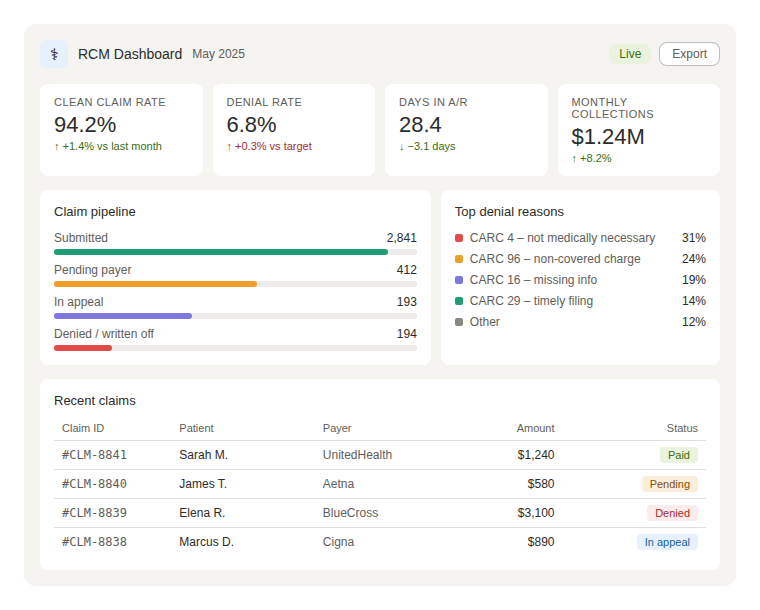
Medical billing software development is the process of designing, building, and deploying systems that handle the end-to-end revenue cycle for healthcare providers. This includes patient registration, insurance eligibility verification, charge capture, claim generation (837P/837I transaction formats), clearinghouse submission, remittance processing (835 files), denial management, and patient payment collection.
The scope is almost always larger than clients initially estimate. A “billing module” sounds like a single feature. In practice it’s 7 to 12 interconnected subsystems, each with its own compliance requirements, third-party integrations, and data security obligations.
According to the National Institute of Health, healthcare administrative transactions — largely claims processing — cost the US healthcare system $12 to $19 per claim. That efficiency gap is exactly where purpose-built billing software creates value.
This is the question every client asks first, and the answer almost no one gives honestly.
Most “cost guides” online will tell you $50,000 to $500,000 and call it a range. That’s not useful. Let me break it down by system scope.
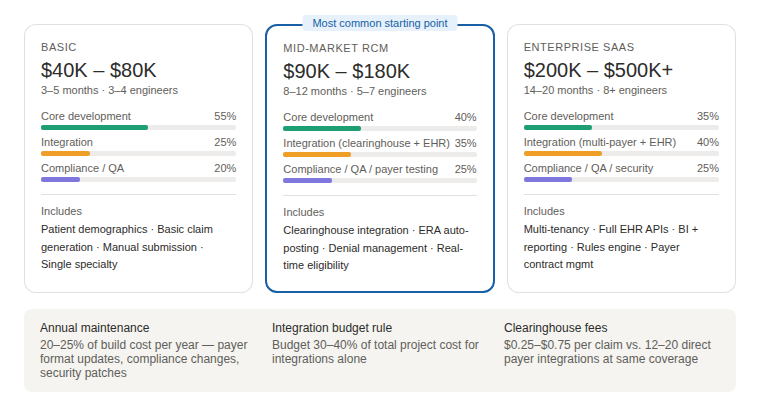
This covers patient demographics, scheduling, basic claim generation, and manual submission. No real-time eligibility verification. No ERA/EFT automation. No clearinghouse integration. Useful for a single-specialty small practice, not scalable.
Adds clearinghouse integration (Availity, Change Healthcare, or Waystar), automated eligibility verification, claim status tracking, basic denial management workflow, and remittance posting. This is where most startup projects should start if they’re building for multi-provider practices.
Full revenue cycle management. Multi-tenant architecture. Payer contract management. Predictive denial prevention. Business intelligence and reporting. Custom rules engine for charge capture. Integration with major EHR systems (Epic, Cerner, Athena). If you’re building a billing SaaS product to sell to hospital networks, this is the range.
These numbers assume a competent development team working full-time. They don’t account for ongoing maintenance, which typically runs 20 to 25% of initial build cost annually.
The thing most CTOs I talk to underestimate is integration cost. Budget 30 to 40% of your total development budget for integrations alone. EHR APIs, clearinghouses, payer portals, payment processors, and credit bureaus are not plug-and-play.
They’re negotiated relationships, and each one has its own data format, authentication protocol, and test environment.
Almost every article on this topic lists the HIPAA rules and calls it done. That’s not engineering guidance. Let me tell you what it actually means to build HIPAA-compliant software.
Patient names, dates of service, diagnosis codes, claim amounts, even IP addresses tied to patient records are all PHI. Your encryption strategy, access control model, and audit logging architecture need to be designed around PHI from day one. Not retrofitted.
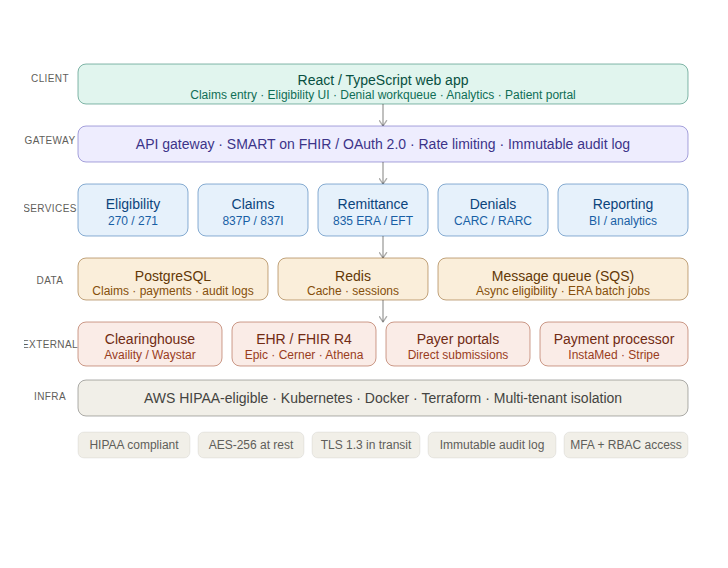
Encryption at rest (AES-256 minimum) and in transit (TLS 1.2 or higher). Role-based access control with the principle of least privilege. Audit logs for every PHI access and modification. These need to be immutable. Automatic session timeouts. Multi-factor authentication for all administrative access.
Every third-party service that touches PHI needs a BAA. Your cloud provider (AWS, GCP, Azure all offer HIPAA-eligible services). Your clearinghouse. Your analytics platform. I’ve seen projects delayed three to four months because someone tried to plug in a standard BI tool mid-development without realizing it didn’t offer BAAs.
HHS OCR settlements for HIPAA violations reached record levels in 2024, with the average settlement for a mid-size provider breach running $1.2 million. Building compliance in from architecture is 10x cheaper than a post-breach remediation.
This is the technical section competitors skip. They list features. I’m going to walk you through the architecture decisions that actually matter.
The entry point for every billing workflow. Eligibility verification needs to happen in real time before the appointment, not after the claim is denied. This requires direct API integration with payer portals or a clearinghouse that provides 270/271 transaction handling.
Design this as an async service with retry logic. Payer APIs fail at surprisingly high rates. A synchronous call that blocks patient check-in for 30 seconds because United Healthcare’s API is slow is a UX disaster. Queue the verification, cache the result with a TTL of 24 hours, and surface a fallback UI.
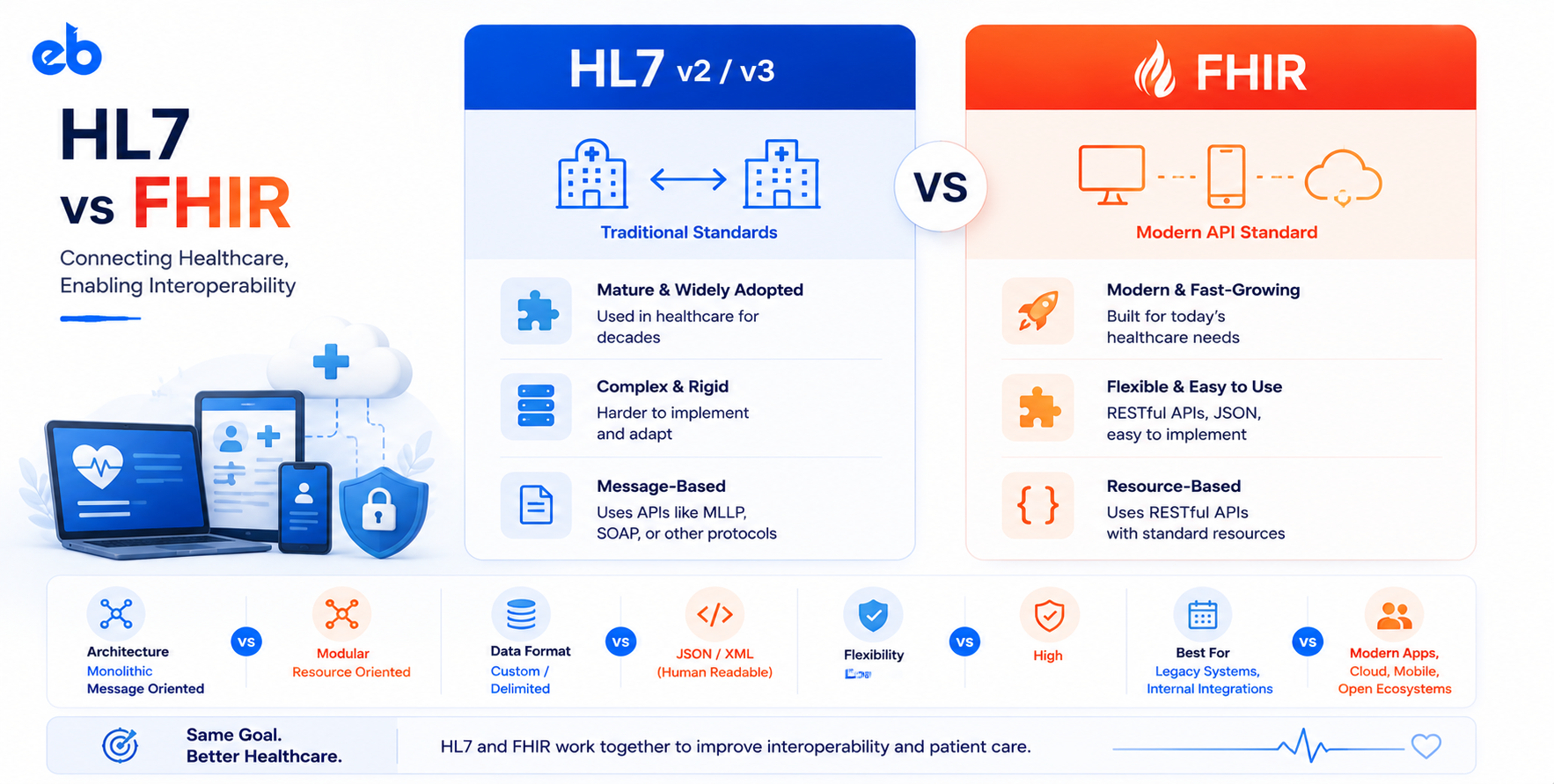
Charge capture is where CPT codes, ICD-10 diagnosis codes, and modifiers are assigned to services rendered. This is where clinical and billing intersect. The most common integration point is with your EHR (HL7 FHIR R4 is now the standard), but for standalone billing software you’ll often need to build a manual charge entry interface with code lookup and validation.
Build a rules engine here. Clinical logic like “procedure code 99213 requires a diagnosis from these ICD-10 categories” can prevent thousands of unnecessary claim rejections. Most teams build this as a static table. That’s fine for version one. In version two you’ll want a configurable, client-managed rules layer.
The 837P (professional) and 837I (institutional) transaction formats are the backbone of claim submission in the United States. These are X12 EDI documents with specific segment structures, loop hierarchies, and element codes that payer systems parse.
Don’t build an X12 generator from scratch. Use a tested library (PHPEdi, Stedi, or similar). The risk isn’t the format itself. The risk is payer-specific requirements on top of the standard. Certain payers require custom NPI taxonomies, specific claim frequency codes, or proprietary loop extensions. Test against each payer’s sandbox individually.
Clearinghouse integration is almost always the right call over direct payer submission for anything beyond a single large health system. Availity, Waystar, and Change Healthcare each cover 95%+ of commercial payer volume.
The tradeoff is clearinghouse fees (roughly $0.25 to $0.75 per claim) versus direct payer integration complexity (12 to 20 separate payer API integrations to reach the same coverage).
Electronic Remittance Advice (835 files) is how payers tell you what they paid and why. Electronic Funds Transfer is how they actually pay. Automating the reconciliation of 835 remittance data against your claim records is where billing software creates immediate ROI.
This module needs to handle partial payments, contractual adjustments, recoupments, and denial reason codes. Build a parser for the 835 file format that maps CARC/RARC codes to actionable workflow steps. A denial for CARC 4 (the service is inconsistent with the patient’s history) should automatically route to a clinical review queue. A denial for CARC 96 (non-covered charge) should trigger a patient billing workflow.
This is the module most underinvested in early-stage products. Denial rates industry-wide run 5 to 10% of submitted claims. In a $5M revenue practice, that’s $250,000 to $500,000 at risk. A proper denial management workflow tracks denial reason, calculates appeal deadlines by payer, routes to the right staff role, and tracks resolution.
Build this with a state machine, not a status field. “Denied” is not a state. “Denied, eligible for appeal, appeal due in 30 days, assigned to coder review” is a state. The difference is whether you recover the revenue or write it off.
I’ll give you the ranges based on what I’ve actually seen, not what vendors quote to win the deal.
I’ve reviewed the architecture of at least 12 billing platforms in the last 3 years. Here is the pattern I see in the ones that fail.
There are excellent off-the-shelf billing systems: Kareo, AdvancedMD, DrChrono, Waystar’s practice management tools. For a standard single-specialty practice that wants to start billing tomorrow, a SaaS billing platform is almost always the right answer.
Custom development makes sense when:
The business model requires white-labeling. You’re building a billing SaaS to resell, not consuming one.
The specialty has unusual billing logic. Behavioral health, home health, durable medical equipment, and long-term care all have claim structures and compliance requirements that standard platforms handle poorly.
You need deep EHR integration. A custom billing engine that sits inside your proprietary EHR or care management platform needs to be built, not bolted on.
You’re building for scale. If you’re processing 100,000+ claims per month across 500+ providers, the per-claim fees on SaaS platforms become a significant cost line. Custom infrastructure at scale often beats SaaS unit economics above a certain volume threshold.
| Factor | Use SaaS | Build Custom |
| Time to launch | Weeks | 6 to 18 months |
| Upfront cost | Low ($500/mo to $5K/mo) | $80K to $500K |
| Scale economics | Higher per-claim cost | Lower at volume |
| Specialty complexity | Standard specialties | Complex/unusual billing |
| White-label needs | Not possible | Core use case |
| EHR integration depth | Limited | Full control |
When we built the lending stack for EarlySalary, now processing over ₹10,000 crore in disbursements, the core lesson was the same one that applies to healthcare: compliance and integration are not features you add. They’re constraints that shape every architectural decision from database schema to deployment model.
The teams that ship successful medical billing systems share a few traits. They map the compliance requirements before the first sprint. They budget honestly for integration complexity. They build the boring parts (remittance automation, denial tracking, audit logging) with the same care as the visible features. And they test against real payer environments, not just their own mocks.
The teams that fail ship a beautiful claims entry interface, discover that their architecture can’t handle ERA automation without a rebuild, realize they forgot to design for multi-tenancy, and run out of money before they ever go live.
You don’t have to repeat those mistakes.
If you’re planning a medical billing software development project and want to talk through the architecture decisions before you commit to a team or a scope, I’m the one on those calls at EngineerBabu.
We take 20 projects a year. Every client comes from referral. If this article gave you useful signal, that’s already a better conversation than most vendor introductions.
Mayank Pratap Co-founder, EngineerBabu 14 years building technology products. Google AI Accelerator Top 20 (2024). CMMI Level 5 certified. 500+ projects across 20+ countries. Harvard Innovation Labs participant.
EngineerBabu is a CMMI Level 5 certified product engineering company. We’ve built 200+ VC-funded products, including 75 YC-selected products and 4 unicorn-backed platforms.
For a functional mid-market platform with clearinghouse integration, eligibility verification, and denial management, plan for 8 to 12 months. Simple practice billing modules can be built in 3 to 5 months. Enterprise RCM systems with full EHR integration and multi-tenancy run 14 to 20 months. The long tail is almost always integration testing, not feature development.
Technical safeguards include AES-256 encryption at rest and TLS 1.2+ in transit, role-based access control, immutable audit logs covering all PHI access, automatic session timeouts, and MFA for administrative users. All third-party services touching PHI require signed Business Associate Agreements. Your cloud infrastructure must use HIPAA-eligible service configurations.
Basic billing modules start at $40,000 to $80,000. Mid-market RCM platforms run $90,000 to $180,000. Enterprise systems range from $200,000 to $500,000+. Budget 30 to 40% of total cost for integrations (clearinghouses, EHRs, payer portals, payment processors), and 20 to 25% annually for ongoing maintenance.
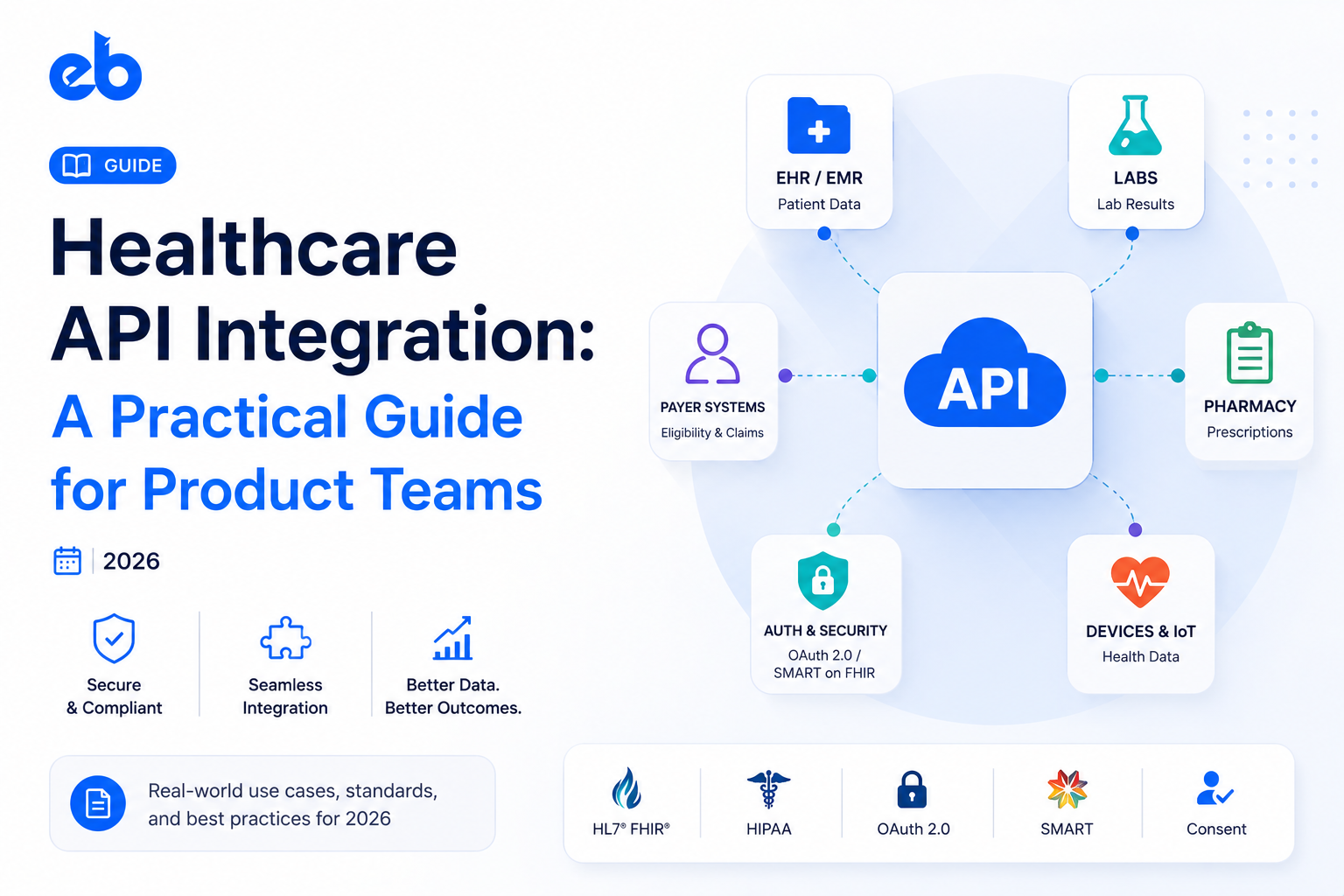
At minimum: one clearinghouse (Availity, Waystar, or Change Healthcare) for claim submission and remittance. Real-time eligibility verification (270/271 transactions). A payment processor (Stripe, Square, or healthcare-specific like InstaMed). If clinical data is involved, an EHR integration via HL7 FHIR R4. Larger systems add payer portals for appeals, credit bureau reporting for collections, and BI tools for analytics.
837P is the professional claim format used by individual physicians and outpatient facilities. 837I is the institutional claim format used by hospitals and inpatient facilities. Both are X12 EDI transaction sets, but they have different loops, segments, and data requirements. Your claim generation module needs to support both if you’re building for mixed provider types.