How to Create an App Like Apollo 24/7


Create engaging, high-performance mobile applications tailored to your business needs. We craft future-ready apps that offer smooth user experiences on all devices.
Build robust and scalable websites and CMS platforms that help you manage content effortlessly. Our development ensures a seamless digital presence.
Launch secure, feature-rich online stores with intuitive shopping experiences. We build tailored eCommerce platforms designed for growth.
Design captivating games with immersive gameplay and stunning graphics. From concept to launch, we build engaging experiences that players love.
Enhance your customer relationships with customized Salesforce implementations. Drive growth and efficiency with smarter CRM solutions.
Harness artificial intelligence and machine learning to automate workflows and gain actionable insights. Our AI transforms data into smart decisions.
Accelerate your software delivery lifecycle with continuous integration, delivery, and infrastructure automation to boost efficiency.
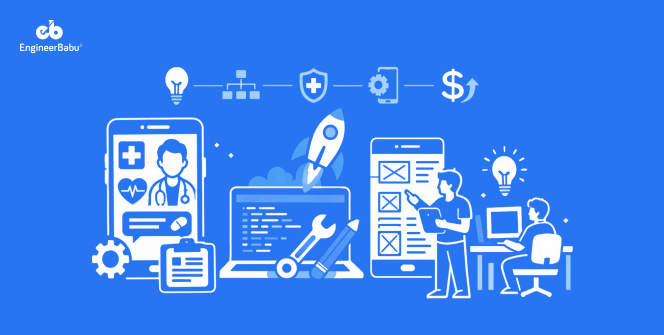
Imagine needing a doctor consultation or medicine delivery without stepping out of your home. That convenience is exactly what apps like Apollo 24/7 offer.
Over the past few years, digital healthcare has grown rapidly, with a report showing that the global telemedicine market is expected to reach 185 billion dollars by 2026. It is no wonder that more entrepreneurs are thinking about creating their own healthcare apps.
If you are wondering how to create an app like Apollo, you are not alone. Many startups and businesses are exploring ways to provide instant access to healthcare services, from online doctor consultations to medicine deliveries.
In this guide, I will walk you through the essential steps, features, and strategies to build a digital healthcare app that can match the convenience and reliability of Apollo 24/7.
Before diving into building your own healthcare app, it helps to understand what makes Apollo 24/7 so popular. At its core, it offers online doctor consultations, medicine deliveries, lab test bookings, and easy access to health records.
Users can chat with doctors, schedule appointments, order medicines, and track deliveries all in one place.
From a tech perspective, Apollo 24/7 combines a clean user interface with a robust backend that handles real-time appointments and secure medical data. The app’s convenience and reliability are what keep users coming back.
If you are thinking about how to create an app like Apollo, focusing on these core services and smooth user experience is key. Your goal should be to make healthcare as accessible and stress-free as possible for your users.
To build a successful healthcare app, you need to focus on features that users and admins rely on the most. If you are wondering how to create an app like Apollo, these functionalities will form the backbone of your app’s usability and appeal.
These are the core services your users will interact with every day.
Admins need tools to manage operations efficiently.
These can set your app apart from competitors.
Including these features thoughtfully is essential if you want to create a seamless experience. Focusing on both user convenience and admin control is key when planning how to create an app like Apollo.
Choosing the right technology stack is crucial if you want your app to be fast, reliable, and scalable. The stack you pick affects everything from performance to ease of updates, so it’s worth planning carefully.
If you are thinking about how to create an app like Apollo, using proven technologies can save time and ensure your app runs smoothly.
For cross-platform apps, React Native or Flutter are popular choices. They allow you to build one codebase that works on both iOS and Android, which speeds up development.
A clean and responsive frontend ensures users can book appointments, chat with doctors, and track medicine deliveries without any frustration.
The backend handles all the app’s heavy lifting, including storing health records, managing appointments, and processing transactions. Technologies like Node.js, Python, or Ruby on Rails are reliable options.
They offer scalability, flexibility, and strong support for integrating APIs, which is essential for a healthcare app.
Your database stores sensitive user and medical information, so it needs to be secure and fast. MongoDB or PostgreSQL are great choices depending on your needs.
They provide robust data handling, smooth querying, and help maintain compliance with healthcare regulations.
To provide a complete experience, integrate payment gateways, video consultation APIs, and pharmacy delivery APIs.
These integrations save development time and make your app fully functional. Cloud hosting services also ensure your app can handle high traffic without downtime.
Creating a healthcare app requires a structured approach to avoid mistakes and ensure a smooth launch.
If you are wondering how to create an app like Apollo, following a step-by-step process will help you manage complexity and deliver a functional, user-friendly product.
Start by defining your app’s purpose, target audience, and core features. Sketch out user journeys and decide which functionalities are essential for MVP development. Research competitors to understand what works and what doesn’t.
Planning ensures your development team stays focused, avoids unnecessary features, and builds a product aligned with real user needs, which is key when learning how to create an app like Apollo.
Design your app’s interface with simplicity and accessibility in mind. Focus on intuitive navigation, readable fonts, and clear call-to-actions. Wireframes and mockups help visualize the user experience before coding begins.
This stage also includes considering color schemes and layout for both mobile and tablet screens. Thus, ensuring your app is visually appealing and easy to use. Good design minimizes confusion and encourages users to return regularly.
Here, your app’s interface comes to life. Developers use frameworks like React Native or Flutter to build responsive, interactive screens. Every button, form, and page is coded to match the wireframes.
Frontend development is crucial for user satisfaction because this is where people interact with your app. A polished frontend ensures smooth consultations, appointment booking, and medicine tracking, all essential features when creating an app like Apollo.
The backend powers your app’s logic, database, and server interactions. It handles tasks like user authentication, appointment scheduling, and storing health records securely. Using robust frameworks like Node.js or Python ensures scalability and performance.
APIs for payments, video calls, and pharmacy integration are also connected at this stage. A strong backend makes your app reliable, fast, and capable of handling multiple users without crashes.
Testing ensures your app works as expected and is free from bugs. Conduct functional, usability, performance, and security testing. Beta testing with real users can highlight issues early.
Testing is critical in healthcare apps because errors can directly affect user trust and safety. Regular feedback loops at this stage help refine the app, improve stability, and make it ready for a confident public launch.
Once testing is complete, deploy your app to the App Store and Google Play. Set up cloud hosting for seamless access and scalability.
Make sure all integrations work in the live environment, including payment gateways, video consultation APIs, and medicine delivery tracking. Deployment also involves setting up monitoring tools to track app performance and crashes so you can fix issues quickly.
After launch, collect user feedback and analyze app usage to identify areas for improvement. Regular updates with bug fixes, feature enhancements, and UX improvements keep users engaged.
Monitoring analytics helps you optimize performance and plan new features. Post-launch iteration is vital to maintain user trust and satisfaction, especially in healthcare, and ensures your app continues to grow after its initial release.
Building a healthcare app can be a big investment, so understanding costs upfront is essential. If you are exploring how to create an app like Apollo, knowing what drives expenses helps plan your budget wisely.
You can generate revenue through subscription plans, paid consultations, or commissions from pharmacies. Another option is offering premium features or personalized health plans.
Choosing the right model depends on your target audience and service scope. A clear monetization plan ensures your app is not just useful but also sustainable.
Turning your idea into a full-fledged healthcare app can be challenging without the right team. That’s where EngineerBabu comes in.
With years of experience in mobile app development and a deep understanding of digital healthcare, our developers can help you design, develop, and launch an app that rivals Apollo 24/7 in functionality and user experience.
Whether it’s integrating video consultations, managing prescriptions, or building a secure database, we handle it all with precision and care. Don’t leave your app to chance, partner with a trusted healthcare app development company and bring your vision to life.
Get in touch with EngineerBabu today and start building your healthcare app that users will love.
Creating a healthcare app like Apollo 24/7 might seem overwhelming at first, but breaking it down into steps makes it manageable.
From understanding core features and choosing the right technology stack to designing a user-friendly interface and planning monetization, each stage plays a key role in your app’s success.
If you follow a structured approach and focus on user convenience, you can build a reliable, scalable app that brings real value to patients and doctors alike. Remember, partnering with experienced developers can make the journey smoother and faster.
The cost depends on platform choice, complexity of features, and third-party integrations. A basic MVP can start from $20,000 to $40,000, while a full-featured app may exceed $80,000.
For frontend, React Native or Flutter works well for cross-platform apps. Backend options include Node.js, Python, or Ruby on Rails. Databases like MongoDB or PostgreSQL ensure secure and efficient data handling.
On average, an MVP can take 3-5 months, while a fully-featured app may take 6-9 months, including design, development, testing, and deployment.
Core features include user registration, doctor consultations via video/audio/chat, appointment booking, medicine delivery, and health record management. Admin panels and optional AI symptom checkers enhance functionality.
Yes. Partnering with a trusted healthcare app development company like EngineerBabu ensures your app is secure, scalable, and user-friendly, saving time and reducing development risks.