Credit Scoring App Development: Complete Guide


Create engaging, high-performance mobile applications tailored to your business needs. We craft future-ready apps that offer smooth user experiences on all devices.
Build robust and scalable websites and CMS platforms that help you manage content effortlessly. Our development ensures a seamless digital presence.
Launch secure, feature-rich online stores with intuitive shopping experiences. We build tailored eCommerce platforms designed for growth.
Design captivating games with immersive gameplay and stunning graphics. From concept to launch, we build engaging experiences that players love.
Enhance your customer relationships with customized Salesforce implementations. Drive growth and efficiency with smarter CRM solutions.
Harness artificial intelligence and machine learning to automate workflows and gain actionable insights. Our AI transforms data into smart decisions.
Accelerate your software delivery lifecycle with continuous integration, delivery, and infrastructure automation to boost efficiency.
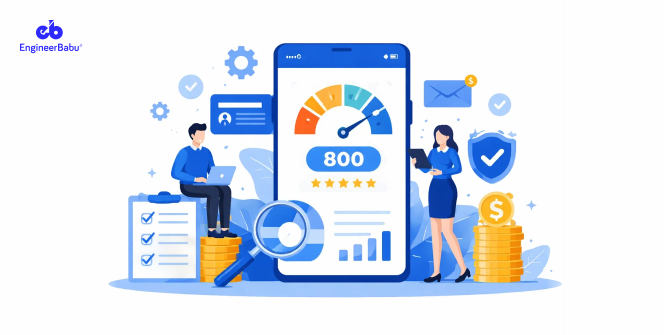
Not long ago, checking someone’s creditworthiness meant paperwork and long waiting periods. Today, lending decisions can happen in minutes. That shift is largely powered by Credit Scoring App Development.
Digital lending is expanding rapidly. Reports suggest the global digital lending market will exceed hundreds of billions of dollars in the coming years as more borrowers move online. With rising application volumes, lenders cannot rely on manual underwriting alone. They need automated systems that evaluate risk instantly and consistently.
Credit Scoring App Development focuses on building applications that collect financial and behavioral data, analyze it using intelligent models, and generate accurate credit scores in real time. Many modern platforms rely on structured AI Development Services to improve prediction accuracy while maintaining transparency.
In simple terms, credit scoring apps are no longer optional. They are becoming the backbone of scalable and data-driven lending operations.
A credit scoring app is a digital system designed to evaluate a borrower’s creditworthiness based on data rather than manual judgment. Instead of relying on lengthy paperwork or subjective reviews, the app analyzes predefined inputs and produces a credit score that reflects the risk level of an applicant.
At a basic level, these apps collect borrower information such as financial history, repayment behavior, and transactional patterns. This data is then processed using scoring logic or models to assess how likely a borrower is to repay a loan.
The final output helps lenders decide whether to approve, reject, or price a loan differently.
In the context of Credit Scoring App Development, the goal is to create applications that deliver consistent, fast, and unbiased decisions. For lenders, this means fewer errors and faster approvals. For borrowers, it results in quicker responses and a smoother lending experience.
Not all credit scores are created the same way. The logic behind a credit scoring app depends on the type of model it uses. During Credit Scoring App Development, choosing the right model is crucial because it directly impacts accuracy, fairness, and decision speed.
Rule-based models work on predefined conditions set by lenders. For example, minimum income, credit history length, or repayment patterns. These models are easy to understand and control, which makes them suitable for early-stage platforms. However, they can feel rigid and may miss risk signals that fall outside fixed rules.
Statistical models use historical data to predict borrower behavior. Logistic regression is a common example. These models bring more consistency than manual rules and are widely trusted in regulated environments. In many Credit Scoring App Development projects, statistical models act as a strong baseline before moving toward more advanced approaches.
Machine learning models learn patterns from large datasets and adapt over time. They are especially useful when handling complex or non-traditional data sources. Teams often rely on structured and expert Machine Learning development services to train, test, and refine these models while keeping outcomes explainable for audits.
Hybrid models combine rules, statistical logic, and machine learning. This approach balances control with flexibility. It is commonly used in mature Credit Scoring App Development setups where lenders want both regulatory clarity and smarter risk assessment without overcomplicating decisions.
A well-designed credit scoring app is more than just a score generator. It is a complete decision-support system that helps lenders evaluate, monitor, and manage borrower risk efficiently. During Credit Scoring App Development, these core features define how reliable and scalable the application will be.
The first step is smooth onboarding. The app should securely collect user information, verify identity, and validate documents without friction. A clear and simple flow improves completion rates while ensuring compliance. Strong onboarding lays the groundwork for accurate scoring and reduces fraudulent applications from the start.
This is the heart of the application. The scoring engine processes collected data and applies rules or models to generate a risk score. In Credit Scoring App Development, this engine must be fast, consistent, and capable of handling large volumes of applications without performance issues.
Beyond a single score, lenders often need deeper insights. Risk profiling groups borrowers into categories such as low, medium, or high risk. Segmentation helps lenders personalize loan offers, interest rates, or credit limits based on data-backed risk levels rather than guesswork.
A transparent report builds trust. The app should generate clear summaries explaining how the score was derived. This is especially important in regulated markets where explainability matters. During Credit Scoring App Development, report clarity often becomes as important as model accuracy.
Lenders need visibility. A real-time dashboard allows teams to track applications, approval rates, default trends, and model performance. Ongoing monitoring ensures the system remains reliable as data patterns evolve over time.
The success of a credit scoring platform depends heavily on the technology behind it. During Credit Scoring App Development, selecting the right stack ensures performance, security, and long-term scalability. The goal is simple: build something reliable today that can grow with your lending business tomorrow.
The frontend defines how users and internal teams interact with the app. Clean dashboards, fast forms, and intuitive workflows are essential. For borrower-facing products, teams often combine web interfaces with Mobile App Development to create seamless digital experiences across devices without compromising usability.
The backend handles data processing, scoring logic, and integrations. It must be secure and capable of handling high request volumes. Many financial platforms rely on architectures built with Node.js Development Services because of their efficiency in managing real-time requests and scalable APIs.
Credit scoring apps deal with structured and unstructured data. Relational databases help manage transactional records, while data warehouses support analytics and model training. A well-planned data layer ensures quick retrieval, strong security, and accurate scoring outcomes.
Scoring models require proper infrastructure for training, validation, and deployment. During Credit Scoring App Development, teams often build dedicated environments to test model performance and maintain version control, ensuring consistent and explainable decision-making over time.
Cloud infrastructure enables scalability and reliability. Automated deployment pipelines, monitoring tools, and backup systems ensure the application remains stable even during traffic spikes. A strong DevOps foundation keeps updates smooth and minimizes downtime.
Building a reliable credit scoring system is not a one-shot task. It is a structured process where business logic, data accuracy, and technology move together. A clear development flow helps reduce risk, control costs, and ensure the app delivers consistent results from day one.
The process starts by understanding lending goals, risk policies, and regulatory expectations. Teams define what data will be used, how scores should be interpreted, and where decisions will apply. In Credit Scoring App Development, this step sets boundaries so the product solves real underwriting problems instead of adding unnecessary complexity.
Once requirements are clear, attention shifts to user journeys and data movement. Designers focus on dashboards, reports, and workflows used by credit teams. At the same time, architects map how data flows from input to score output. Clear design reduces errors and helps teams trust the system’s decisions.
This phase focuses on building scoring logic and testing it with historical data. Models are trained, validated, and adjusted to avoid bias or instability. During Credit Scoring App Development, strong validation ensures scores remain consistent across different borrower segments and changing market conditions.
Now the app comes together. Developers build the core system, connect databases, and integrate third-party services. Clean integrations through structured API Development help the app exchange data securely with KYC tools, bureaus, and internal platforms without slowing down performance.
Before launch, the system is tested for accuracy, performance, and edge cases. Once deployed, continuous monitoring tracks score behavior and system health. Many teams start with a controlled rollout or MVP Development approach to gather feedback before scaling fully.
Understanding the cost is often the first practical question lenders ask. The investment in Credit Scoring App Development depends on scope, complexity, compliance needs, and the level of automation required.
A basic scoring tool will cost significantly less than an enterprise-grade, AI-driven decision engine integrated with multiple data sources.
Several elements directly impact pricing. These include model complexity, number of integrations, regulatory requirements, security layers, and reporting capabilities. Custom dashboards, real-time analytics, and scalable infrastructure also add to the overall cost.
In Credit Scoring App Development, accuracy and compliance usually carry more weight than just speed of delivery.
An MVP focuses on core scoring logic, limited integrations, and controlled rollout. It is ideal for startups testing lending models.
An enterprise solution, however, includes advanced models, automated workflows, audit trails, and performance monitoring. The choice depends on business maturity, loan volume, and long-term scaling plans.
Credit Scoring App Development is not just about generating a number. It is about building a reliable decision system that balances speed, risk control, and regulatory alignment.
As lending becomes increasingly digital, having a scalable and intelligent scoring platform can directly impact approval rates, default ratios, and operational efficiency.
If you are planning to build or modernize your credit infrastructure, working with an experienced lending software development company can help you design a solution that fits both your risk strategy and growth ambitions.
The timeline depends on complexity. A basic MVP with core scoring logic can take a few months, while a full-scale enterprise solution with multiple integrations, compliance layers, and advanced models may take six months or more. Clear requirements and clean data significantly speed up the process.
Yes, modern systems often use alternative data such as transaction behavior or digital footprints alongside traditional bureau data. This helps lenders assess thin-file or new-to-credit borrowers more accurately while expanding financial inclusion.
AI is not mandatory, but it improves prediction accuracy when large and complex datasets are involved. Many platforms start with statistical models and gradually introduce machine learning as data volume and business needs grow.
Compliance is handled through audit trails, explainable scoring logic, data encryption, and consent management. Proper documentation and model validation are critical to meet regulatory expectations in financial services.
Banks, NBFCs, fintech startups, BNPL platforms, and digital lenders can benefit from it. Any organization that needs faster, consistent, and data-driven credit decisions should consider building or upgrading its scoring system.