Modern Tech Stack for Building a Digital Lending Platform

Building a digital lending platform today is not just about launching faster. It is about security, scalability, compliance, and trust. Choosing the right Tech Stack for Building a Digital Lending Platform directly impacts loan approvals, risk assessment, and customer experience.
According to a report by McKinsey, digital lending platforms can reduce loan processing costs by up to 40 percent while improving approval speed and compliance readiness. This makes technology choices critical for lenders aiming to scale efficiently.
In this blog, we explore why the Tech Stack for Building a Digital Lending Platform matters, what technologies work best, essential tools, common mistakes, and a guide to choosing the right partner.
The Importance of the Right Tech Stack for a Digital Lending Platform
A digital lending platform handles sensitive financial data, credit decisions, regulatory checks, and real-time transactions. Unlike standard applications, lending systems require precision and audit-ready architecture.
The right Tech Stack for Building a Digital Lending Platform ensures faster underwriting, secure data handling, seamless integrations, and long-term scalability. Poor stack decisions can lead to security vulnerabilities, compliance risks, and performance bottlenecks.
For Example:
A traditional lending system often relies on on-premise servers, manual credit checks, and batch processing, resulting in slow approvals and limited scalability.
In contrast, a modern Tech Stack for Building a Digital Lending Platform uses cloud infrastructure, AI-based credit scoring, and real-time API integrations to approve loans within minutes.
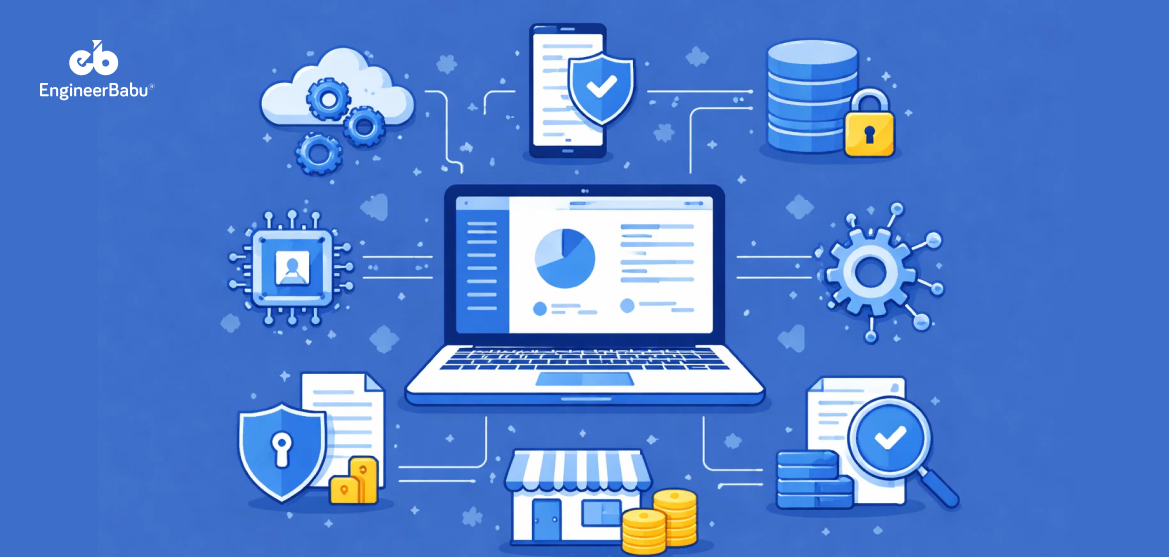
A well-structured Tech Stack for Building a Digital Lending Platform determines how efficiently loans are processed, secured, and scaled. Below are the core technologies and tools layers modern lenders can rely on:
The backend powers all core lending operations, including credit checks, eligibility rules, repayment schedules, and integrations. It must support high transaction volumes while maintaining accuracy and consistency. A strong backend ensures business logic remains flexible as lending products evolve.
Technologies: Java with Spring Boot, Node.js, Python
Example: Many NBFCs rely on Spring Boot to securely manage loan origination workflows, interest calculations, and repayment schedules at scale.
Borrower-facing interfaces directly impact trust, engagement, and conversion rates. Fintech users expect fast, intuitive, and transparent dashboards for managing loans. Modern UI frameworks ensure consistent experiences across devices.
Technologies: React, Angular, Flutter
Example: A React-based borrower portal enables users to view loan status, repayment history, and documents in real-time, improving transparency and retention.
Digital lending platforms handle massive volumes of sensitive financial and customer data. The data layer must balance performance, reliability, and flexibility. Choosing the right mix of databases strengthens the overall Tech Stack for Building a Digital Lending Platform.
Technologies: PostgreSQL, MongoDB, Redis
Example: PostgreSQL stores structured loan records while MongoDB manages unstructured KYC documents and customer profiles efficiently.
Core lending tools automate the complete loan lifecycle from disbursal to closure. These systems minimize manual intervention, reduce errors, and improve operational efficiency. They form the backbone of scalable digital lending operations.
Tools: Custom Loan management software, workflow engines
Example: Automated EMI scheduling, penalty calculation, and repayment tracking ensure accuracy and improve borrower trust.
APIs are a critical layer of any Tech Stack for building a Digital Lending Platform. APIs enable seamless connectivity with external financial systems and data providers. Real-time integrations are essential for instant decision-making and smooth user journeys.
Technologies: REST APIs, Open Banking APIs
Example: Credit bureau APIs allow instant credit score checks during loan approval, reducing turnaround time significantly.
Cloud infrastructure ensures high availability, scalability, and cost efficiency for lending platforms. DevOps services enable faster releases and system reliability under peak loads. This setup supports rapid growth without performance bottlenecks.
Technologies: AWS, Azure, Docker, Kubernetes
Example: Auto-scaling cloud environments handle traffic spikes during festive loan campaigns or promotional offers seamlessly.
Security and regulatory compliance are non-negotiable in digital lending. Platforms must protect sensitive borrower data while meeting audit and reporting requirements. Strong security architecture reduces risk and builds institutional trust.
Technologies: Data encryption, IAM tools, audit logs
Example: End-to-end encryption and role-based access controls ensure compliance with financial regulations and protect user data.
Advanced analytics improve credit decisions, fraud detection, and portfolio performance. AI-driven insights help lenders move from reactive to predictive lending strategies. This layer enhances the intelligence of the Tech Stack for Building a Digital Lending Platform.
Technologies: AI models, BI dashboards
Example: AI-based risk engines analyze repayment behavior to predict default risks and optimize lending decisions.
Many digital lending platforms fail not because of poor ideas, but due to avoidable technical and architectural mistakes. Here are the areas you are lacking:
Overlooking audit trails, regulatory reporting, and data retention can cause legal and operational risks later. The Tech Stack for Building a Digital Lending Platform must support compliance from day one.
When compliance is added later, teams often struggle with expensive rewrites and delayed approvals from regulators and financial partners.
Selecting tools only because they are popular often leads to performance issues. Lending platforms need stability, long-term support, and scalability rather than hype driven decisions.
A trendy framework may lack enterprise support or fail under high transaction loads common in digital lending systems.
Adding unnecessary frameworks or services increases development and maintenance costs. A balanced and modular approach works best for lending use cases.
Simpler architectures are easier to audit, scale, and troubleshoot, especially when financial operations are involved.
Underestimating integrations with credit bureaus, KYC providers, and payment gateways can slow down approvals and disrupt workflows.
Weak integration planning often results in broken loan journeys and manual workarounds that affect user experience.
Designing for current traffic only can limit growth. A future-ready Tech Stack for Building a Digital Lending Platform should scale with user demand and loan volumes.
Without scalability, platforms struggle during peak periods such as marketing campaigns or seasonal lending surges.
Confused about how to choose your tech stack partner for digital lending? Here are a few points that help you select the most suitable partner:
Choosing the right Tech Stack for Building a Digital Lending Platform defines how secure, scalable, and competitive your solution will be. From backend frameworks and cloud infrastructure to AI-driven analytics, every component plays a vital role.
By avoiding common mistakes and partnering with an experienced development team, businesses can launch digital lending platforms that inspire trust, ensure compliance, and scale confidently in a competitive fintech landscape. Reach out to build your digital lending application with the right tech stack, designed for security, scalability, and long-term growth.
A modern stack includes secure backend frameworks, cloud infrastructure, APIs, and analytics tools.
Cloud enables scalability, data security, and cost efficiency for growing lending operations.
Yes, AI enhances credit scoring, fraud detection, and repayment predictions.
Typically three to six months, depending on features, integrations, and compliance needs.
Expert teams like Engineer Babu reduce risks, ensure compliance, and build scalable platforms faster.