Role of AI in Inventory Management: Benefits, Use Cases & Development

A few years ago, managing inventory mostly meant spreadsheets, manual tracking, and a fair bit of guesswork. If you’ve ever dealt with stock mismatches or last-minute shortages, you already know how frustrating that can be.
The real challenge is not just keeping track of items, but predicting what customers will need before they even ask for it.
That’s where things are changing fast. Businesses today are dealing with unpredictable demand, faster delivery expectations, and increasingly complex supply chains. According to industry reports, companies that use AI-driven inventory systems can improve forecasting accuracy by up to 30%.
This shift highlights the growing role of AI in inventory management, where decisions are no longer based on assumptions but on data-driven insights.
Therefore, in this article, we’ll break down how AI is reshaping inventory management, where it’s being used, and what goes into building such systems.
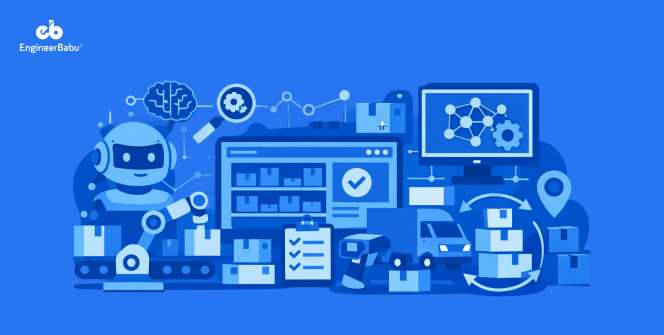
AI in inventory management refers to the use of intelligent algorithms and data-driven systems to automate, predict, and optimize how stock is handled across a business. Instead of relying on fixed rules or manual inputs, AI systems continuously learn from historical data, sales patterns, and external factors to make smarter decisions.
At its core, it combines technologies like machine learning, predictive analytics, and automation to improve accuracy and efficiency. For example, it can forecast demand, suggest reorder points, and even detect anomalies in stock levels without constant human intervention.
The Role of AI in Inventory Management becomes clear when compared to traditional systems. Older methods react to changes after they happen, while AI anticipates demand and adjusts in real time.
This shift helps businesses stay ahead, reduce waste, and maintain optimal inventory levels with minimal effort.
Once you start looking closely, the impact of AI on inventory is not just about automation. It actually changes how decisions are made on a daily basis. From predicting demand to reducing waste, the improvements are practical and easy to notice over time.
One of the biggest advantages is how accurately AI can predict demand. Instead of relying on past averages, it looks at trends, seasonality, and even sudden market shifts. This means fewer surprises and better planning. The role of AI in Inventory Management becomes very clear here, as businesses can prepare for demand before it actually happens.
Keeping too much stock or too little is a constant struggle. AI helps strike the right balance by suggesting optimal stock levels based on real-time data. Over time, this reduces holding costs and prevents unnecessary overstocking, which is something many businesses struggle with.
AI-powered systems can track inventory across warehouses and locations in real time. This kind of visibility makes it much easier to manage operations without constantly checking systems manually. You always have a clear picture of what is available and where.
Manual processes often lead to small mistakes that turn into bigger issues later. AI reduces this risk by automating repetitive tasks like data entry and stock updates. It keeps things consistent, which saves both time and effort in the long run.
When inventory is managed well, costs naturally come down. AI helps reduce waste, avoid unnecessary purchases, and improve overall efficiency. The role of AI in Inventory Management here is more about doing more with fewer resources while maintaining accuracy.
At the end of the day, better inventory management leads to happier customers. Products are available when needed, deliveries are faster, and there are fewer disappointments. This is where the role of AI in Inventory Management directly connects with business growth and customer trust.
Once you move beyond theory, AI integration starts to show its real value in everyday operations. Different industries are already using it in practical ways to solve common inventory challenges.
These use cases make it easier to understand how AI fits into real workflows rather than just being a buzzword.
Retailers often deal with unpredictable buying patterns, especially during sales or seasonal shifts. AI analyzes customer behavior, past purchases, and trends to forecast demand more accurately. This helps avoid both overstocking and stockouts.
The role of AI in Inventory Management becomes especially visible here, as businesses can plan inventory based on actual insights instead of assumptions.
Reordering stock manually can be time-consuming and prone to delays. AI-powered systems automate this by triggering replenishment when stock reaches a certain threshold.
What makes it smarter is that these thresholds are not fixed but adapt based on demand patterns. This ensures that inventory flows smoothly without constant monitoring.
In modern warehouses, AI is often combined with robotics to handle picking, packing, and sorting. These systems can identify products, optimize storage locations, and speed up operations. It reduces manual effort and improves accuracy, especially in high-volume environments where even small delays can cause bottlenecks.
Instead of manually counting items, AI-powered cameras and computer vision systems can scan shelves and track inventory automatically. This makes auditing faster and far more accurate. The role of AI in Inventory Management here is about replacing tedious processes with efficient, real-time monitoring that reduces discrepancies.
AI helps businesses look beyond their own inventory and optimize the entire supply chain. It can predict delays, suggest alternative suppliers, and improve logistics planning. This level of coordination ensures that inventory moves efficiently from source to customer without unnecessary disruptions.
Inventory losses are not always accidental. AI can detect unusual patterns, such as sudden stock discrepancies or suspicious transactions, and flag them early. The role of AI in Inventory Management in this case goes beyond efficiency and adds a layer of security, helping businesses protect their assets more effectively.
Once you understand the benefits and use cases, the next question is obvious, how does all of this actually work behind the scenes?
From collecting data to continuously improving decisions, each step plays a role in making inventory smarter and more responsive over time.
Everything starts with data. AI systems gather information from multiple sources like sales history, supplier timelines, customer demand patterns, and even external factors such as seasonal trends. In some setups, IoT sensors also track real-time stock movement inside warehouses.
The idea is simple, the more relevant data the system has, the better it understands what’s happening. This strong data foundation is essential for unlocking the true role of AI in Inventory Management.
Raw data is rarely perfect. It often contains duplicates, missing values, or inconsistencies that can affect decision-making. AI systems first clean and organize this data to make it usable. This step ensures that the insights generated later are accurate and reliable.
Without proper data processing, even the most advanced models can produce misleading results, which is why this stage quietly plays a critical role in the entire workflow.
Once the data is ready, machine learning models step in to do the heavy lifting. These models analyze patterns, predict future demand, classify inventory behavior, and even detect unusual activities like sudden stock drops.
Over time, they get better as they learn from new data. This is where the role of AI in Inventory Management becomes more visible, as decisions shift from guesswork to predictive intelligence.
Insights alone are not enough, action is what makes the difference. Decision engines take the outputs from AI models and turn them into automated actions.
This could mean triggering stock replenishment, adjusting inventory levels, or sending alerts when something seems off. Instead of waiting for manual intervention, the system responds instantly, helping businesses stay proactive rather than reactive in their inventory operations.
One of the most powerful aspects of AI systems is that they don’t stay static. They continuously learn from new data, feedback, and outcomes. If a prediction was slightly off, the system adjusts itself to improve next time.
This ongoing refinement keeps the system relevant even as business conditions change. Over time, this adaptability strengthens the overall role of AI in Inventory Management, making it more accurate and dependable.
Role of AI in inventory management is not powered by a single tool but a combination of technologies working together. Understanding this tech stack makes it easier to see how businesses actually implement AI in real-world inventory systems.
Machine learning and deep learning form the core of most AI-driven inventory systems. These technologies analyze historical data, identify patterns, and make accurate predictions about future demand.
Over time, they keep improving without needing constant reprogramming. Businesses often rely on machine learning development to build custom models tailored to their inventory needs, making operations more adaptive and data-driven.
Predictive analytics helps businesses move from reactive to proactive planning. By analyzing past trends and current data, it forecasts demand, identifies potential stock shortages, and suggests optimal inventory levels.
This reduces uncertainty and improves decision-making. When combined with AI, predictive analytics becomes more dynamic, allowing businesses to respond quickly to changing market conditions without relying on manual estimations.
Computer vision brings automation to physical inventory tracking. Using cameras and AI models, it can scan shelves, identify products, and monitor stock levels in real time. This reduces the need for manual counting and minimizes errors.
In warehouses and retail stores, it speeds up auditing processes and provides accurate, up-to-date inventory visibility without interrupting daily operations.
Natural Language Processing helps systems understand and respond to human language. In inventory management, it can be used for supplier communication, processing purchase orders, or even handling customer queries.
For example, AI systems can read emails, extract key details, and trigger actions automatically. Many businesses leverage AI development services to integrate NLP features that streamline communication and reduce manual workload.
IoT devices and smart sensors add a real-time layer to inventory tracking. They monitor stock movement, storage conditions, and location data continuously. This is especially useful for industries dealing with perishable goods or sensitive materials.
With constant data flow, businesses can respond instantly to changes, avoid losses, and maintain better control over inventory across multiple locations.
Cloud computing provides the infrastructure needed to store, process, and access large volumes of inventory data. It allows systems to scale easily as the business grows.
API development, on the other hand, enables seamless integration between different platforms like ERP systems, warehouses, and eCommerce stores. Together, they ensure that AI-powered inventory systems remain flexible, connected, and accessible from anywhere.
Building an AI-powered inventory system is about implementing it in a way that actually solves real business problems. That’s where having the right development partner makes a difference.
Every business has different inventory challenges, and a one-size-fits-all approach rarely works. EngineerBabu focuses on building tailored AI solutions that align with your specific workflows, industry needs, and growth plans.
Whether it’s demand forecasting or warehouse automation, their team ensures the solution fits naturally into your existing operations.
From initial consultation to deployment and ongoing support, EngineerBabu handles the entire development lifecycle. This means you don’t have to juggle multiple vendors or worry about integration issues. As an experienced inventory software development company, they ensure your system is not only functional but also scalable and future-ready.
What sets EngineerBabu apart is their focus on building solutions that actually work in real-world scenarios. Instead of overcomplicating things, they prioritize usability, performance, and measurable outcomes.
This ensures that your AI-powered inventory system delivers real value, whether it’s reducing costs, improving accuracy, or enhancing overall efficiency.
The development process is collaborative and transparent. With regular updates, feedback loops, and agile methodologies, you stay involved at every stage. This reduces risks, speeds up delivery, and ensures the final product meets your expectations without unnecessary delays or surprises.
EngineerBabu has worked with startups as well as established enterprises, delivering high-quality software solutions across industries. Their experience allows them to quickly understand business challenges and recommend the right approach, helping you adopt AI in inventory management with confidence.
The role of AI in inventory management is transforming how businesses handle stock, forecast demand, and streamline operations.
By leveraging technologies like machine learning, predictive analytics, and IoT, companies can reduce costs, improve accuracy, and respond to customer needs faster than ever.
From real-time tracking to automated replenishment, AI shifts inventory management from reactive guesswork to proactive, data-driven decision-making.
Partnering with the right team, like EngineerBabu, ensures these solutions are tailored, scalable, and effective for your business.
AI helps businesses predict demand, optimize stock levels, automate replenishment, and track inventory in real time, making operations more efficient and data-driven.
AI analyzes historical sales, seasonal trends, and external factors to predict future demand accurately, reducing overstocking and stockouts.
Yes, AI solutions can be scaled to fit small businesses, helping them streamline operations without requiring large investments in infrastructure.
Key technologies include machine learning, deep learning, predictive analytics, computer vision, NLP, IoT sensors, and cloud-based platforms.
Look for an experienced inventory software development company like EngineerBabu that offers end-to-end support, custom solutions, and proven expertise in AI implementation.