Phone Application Development Companies: Top Picks, Costs & How to Choose

Featured Image
In 2026, global app downloads surpassed 250 billion, with the mobile app development services market valued at over $100 billion. Whether you’re a startup founder with a breakthrough app idea or an enterprise leader looking to streamline operations through digital transformation, finding the right phone application development company can make or break your project.
The challenge? There are thousands of mobile app development companies worldwide, each promising world-class results. Some deliver. Many don’t. It’s crucial to evaluate the experience and expertise of each app developer to ensure they align with your project requirements.
This guide cuts through the noise. You’ll learn exactly what these companies do, discover the top mobile app developers in 2026, understand realistic costs and timelines, and walk away with a clear framework for choosing a partner that fits your business goals. While the market is global, working with a company in the usa offers advantages in communication, quality, and security.
If you need a fast answer, here are the leading phone application development companies recognized as top app developers in the industry for quality, reliability, and proven track records heading into 2026.
These companies collectively cover native iOS, native Android, and cross-platform development using frameworks like Flutter and React Native. Each brings different strengths depending on your industry, budget, and project complexity.
A phone application development company is an agency that designs, builds, tests, launches, and maintains apps for smartphones running iOS and Android, as well as other mobile devices such as tablets and wearables. Many also extend their development services to companion web apps.

Here’s what you’re actually paying for when you hire one:
Look for companies that understand your business model first, not just your feature list.
Partnering with a top app development company offers a wealth of advantages for businesses aiming to launch high quality mobile apps that stand out in today’s competitive digital landscape. Whether you’re a startup with a bold app idea or an established enterprise seeking to streamline operations, the right mobile app development partner can be a game-changer.
Access to Technical Expertise and InnovationTop app development companies employ experienced mobile app developers who are fluent in the latest programming languages, frameworks, and emerging technologies. Their deep understanding of mobile app development ensures your project benefits from best practices in UI/UX design, robust backend systems, and secure solutions. This technical expertise is crucial for building innovative digital solutions that drive user engagement and deliver measurable business results.
Streamlined Operations and Faster Time-to-MarketBy outsourcing your app development project to a reputable app development company, you free up internal resources and allow your team to focus on core business activities. These development companies have established processes and project management methodologies that accelerate the app development process, reduce costly delays, and help you launch on iOS and Android platforms faster. The result is improved efficiency, lower development costs, and higher client satisfaction.
Custom Software Development and Tailored SolutionsEvery business has unique challenges. Top app development companies specialize in custom software development, creating bespoke mobile applications and web solutions that address your specific needs. Whether you require complex projects with advanced integrations, scalable web app development, or hybrid app development for cross platform apps, these companies deliver custom software solutions that align with your business goals.
Leverage Emerging Technologies for Competitive AdvantageStaying ahead in the digital age means embracing innovation. Leading app development agencies integrate advanced technologies like machine learning, artificial intelligence, and IoT into mobile apps, unlocking new possibilities for user engagement and mobile innovation. Their ability to develop apps with cutting-edge features ensures your business remains at the forefront of your industry.
Seamless Integration and ScalabilityTop mobile app development companies have a deep understanding of complex business processes and can integrate new mobile applications with your existing systems and infrastructure. Their expertise in building robust backend systems and scalable apps means your digital solutions can grow alongside your business, supporting everything from app store submissions to ongoing updates and maintenance.
Comprehensive App Development ServicesFrom initial app idea generation and technical feasibility studies to prototype development, app store submissions, and post-launch support, the best app development companies offer end-to-end development services. This comprehensive approach ensures your mobile app is not only launched successfully but also maintained and improved over time for optimal performance and user satisfaction.
Proven Track Record and Local ExpertiseMany of the best app development companies in the USA, including those featured in the DesignRush Agency Directory and leading firms in Los Angeles, have a history of delivering high quality mobile apps across diverse industries. Their portfolios showcase successful mobile app development projects, custom software, and web development that consistently meet client expectations for security, scalability, and innovation.
Why It MattersBy hiring a top app development company, you gain a strategic partner with the technical expertise, innovative solutions, and proven processes needed to develop apps that achieve your business objectives. Whether you’re building custom mobile apps, integrating complex business processes, or seeking to enhance user engagement, these development companies provide the digital solutions and support necessary to succeed in today’s fast-paced mobile ecosystem.
In summary, investing in a top app development company empowers your business to create secure, scalable, and innovative mobile applications that deliver real value—helping you stay ahead of the competition and achieve lasting digital transformation.
The United States remains home to many of the world’s top app development companies, with established firms offering everything from startup MVP builds to complex enterprise solutions. These leaders are recognized for delivering the best mobile app development, consistently setting industry standards for quality, innovation, and client satisfaction. Here’s a closer look at leading options.
EngineerBabu is a CMMI Level 5 certified mobile application development company recognized as a LinkedIn Top 10 company for two consecutive years. With 75 apps selected into Y Combinator, they are trusted by startups and enterprises alike for delivering high-quality, scalable apps. EngineerBabu offers comprehensive mobile app development services that combine technical expertise with innovative solutions, making them an excellent choice for businesses seeking reliable and advanced mobile innovation. Typical projects range from $30,000 to $150,000+.
ScienceSoft has been in mobile development since 2005, completing 350+ projects across healthcare, finance, retail, and manufacturing. They excel at complex B2B apps requiring integrations with legacy systems and robust backend systems. ScienceSoft is also highly experienced in upgrading or integrating with an existing mobile application, helping clients modernize and enhance their current solutions. Their technical expertise spans native and hybrid app development with strong compliance capabilities for regulated industries.
Chop Dawg has shipped over 500 apps since 2009, positioning themselves as a long-term partnership agency rather than a vendor. They work primarily with startups and growth-stage companies, offering product strategy alongside development. Known for transparent communication and helping clients through app store submissions and beyond.
Naked Development focuses on startup clients, having built 327+ apps with a specialty in helping founders secure funding. Their portfolio includes consumer apps, on-demand marketplaces, and SaaS products. They offer end-to-end services from concept validation through launch.
Trango Tech operates hybrid teams across the US and Pakistan with 200+ developers, allowing competitive pricing without sacrificing quality. They handle everything from simple utility apps to complex enterprise software, with particular strength in e-commerce and logistics apps.
Zco Corporation based in New Hampshire stands out for mobile gaming, AR/VR applications, and animation. They’ve worked with major entertainment brands and bring specialized technical expertise for graphics-intensive and emerging technologies projects.
Designli is a US-based boutique studio with founder-level involvement on every project. They focus on custom mobile apps and web development for startups and mid-market companies, emphasizing clean code and scalable architecture. Projects typically range from $50,000 to $250,000.
App Maisters operates from Houston with a focus on enterprise digital transformation. As digital solutions providers, they build custom software development solutions for large organizations, including mobile applications that integrate with complex business processes and existing systems.
Lounge Lizard offers full web and mobile development plus digital marketing under one roof, making them suitable for companies wanting unified brand experiences across all channels. They are also recognized as a web development company, delivering custom digital solutions for clients in finance, healthcare, and consumer products.
Swenson He was founded by MIT alumni and emphasizes high-end product strategy alongside engineering. They work with well-funded startups and enterprises on innovative digital solutions that require both strategic thinking and technical excellence.
Top mobile app development companies cluster in specific tech hubs worldwide while increasingly operating through distributed remote teams.

The type of company you choose affects cost, communication style, and project management approach significantly.
Your choice of vendor affects budget, timeline, quality, and long-term ROI more than almost any individual technical decision you’ll make. Getting this right matters.
The selection process should combine objective criteria—portfolio, pricing, tech stack—with subjective fit factors like communication style, transparency, and cultural alignment. Plan to evaluate at least 3-5 qualified vendors before deciding.
Years in business and number of shipped apps matter because experienced firms have navigated app store rejections, handled scaling issues, and conducted security audits countless times before.
Look for mobile app development companies with 10+ years in mobile and 100-500+ apps delivered—these firms generally have hardened processes that reduce your risk. Case studies with metrics tell you more than generic portfolio items: “tripled active users in 6 months” or “reduced operational costs by 40%” indicates real business impact.
Prioritize development companies that have delivered apps in your industry or adjacent verticals. A firm experienced in healthcare apps understands HIPAA compliance; one with fintech experience knows payment integrations and security requirements.
Younger firms can still deliver excellent results, but they require deeper vetting. Check leadership backgrounds, review their best work in detail, and consider starting with a smaller engagement.
Phone apps fall into distinct categories, each with different development requirements:
App Type | Typical Complexity | Key Considerations |
|---|---|---|
Consumer B2C apps | Medium-High | User engagement, scalability, UI polish |
Enterprise internal tools | Medium | Security, integrations, user management |
On-demand marketplaces | High | Real-time features, payments, mapping |
SaaS/Subscription apps | Medium | Billing, analytics, cross-platform parity |
Gaming apps | High | Performance, graphics, monetization |
AR/VR applications | Very High | Specialized skills, emerging technologies |
For mobile platforms, you’ll choose between native iOS development (Swift/SwiftUI), native Android development (Kotlin/Java), or cross platform apps using Flutter or React Native.
Native development delivers best performance and platform-specific UX. Cross-platform reduces costs by 40-60% when you need identical experiences on iOS and Android.
Confirm your vendor has shipped production apps in the exact tech stack they propose. Ask specifically: “Show me a Flutter app you built that has 100k+ users on both iOS and Android.”
The best phone application development companies start by understanding your business model, not just your feature list.
Before design begins, strong partners will help you define success metrics: weekly active users for consumer apps, monthly recurring revenue for SaaS products, compliance and adherence rates for healthcare applications. These metrics should drive every product decision.
Look for companies that run discovery workshops, conduct user interviews, and perform market research before jumping into coding. This upfront investment typically saves significant money downstream by validating assumptions early.
A genuine strategic partner will sometimes propose cutting features to hit deadlines and budgets without sacrificing core value. If a vendor agrees to everything without pushback, they may lack the deep understanding needed to guide your project effectively.
After launch, mobile apps require continuous attention:
Ask potential vendors about SLAs for response time and bug fixes. Many app development services offer monthly maintenance packages with fixed hours for updates and improvements.
Clarify ownership explicitly: who controls the source code repositories (GitHub/GitLab), the app store accounts, and the cloud infrastructure? You need full control for long-term independence, regardless of your vendor relationship.
Successful mobile applications often run through continuous improvement cycles for 3-7+ years. Plan for this reality when evaluating partners.
Here are realistic 2026 price ranges for phone app development:
Project Type | Typical Cost Range | Timeline |
|---|---|---|
Simple MVP | $25,000 – $40,000 | 2-3 months |
Mid-complexity app | $60,000 – $150,000 | 4-8 months |
Complex multi-platform | $150,000 – $400,000+ | 9-15+ months |
Common pricing models include:
When comparing proposals, look beyond headline costs. What’s included? Discovery workshops, UI UX design, QA testing, deployment, documentation, and post-launch support should all be specified.
Collect at least 3 detailed proposals to understand market pricing for your specific app type. Significant variation often indicates different interpretations of your requirements.
Physical location matters less than reliable communication and overlapping working hours, especially in 2026’s remote-first environment.
Region | Typical Hourly Rate | Time Zone Fit (for US clients) |
|---|---|---|
US/Canada | $80 – $180 | Excellent |
Western Europe/UK | $70 – $150 | Moderate |
Eastern Europe | $35 – $80 | Moderate |
Latin America | $40 – $90 | Excellent |
India/Southeast Asia | $20 – $60 | Challenging |
Ensure at least 2-4 hours of daily overlap with your vendor’s team. Establish clear agreements on meeting cadence, communication tools (Slack, Teams, Jira), and reporting frequency before signing contracts.
Evaluate English proficiency through live calls with the actual project team, not just sales representatives. Some companies offer mixed teams with US-based project management and offshore developers as a cost-effective compromise.
Poor communication is the most common reason app development projects fail or exceed budgets.
Ask vendors to describe their methodology. Over 70% of development teams now use Agile approaches with iterative sprints, daily standups, and regular demos. This approach typically reduces time-to-market by 25-50% compared to traditional waterfall methods.
Require access to project tools—Jira, Trello, Asana, Git repositories—so you can see progress and blockers in real time. Documentation practices matter too: user stories, acceptance criteria, architectural diagrams, and test plans should all be standard deliverables.
Consider a small, paid discovery or prototype engagement to test communication before committing to full development.
Modern, well-supported technologies prevent legacy lock-in and ensure your app remains maintainable. Avoid vendors proposing outdated frameworks or obscure libraries.
Security basics every vendor should follow:
Compliance requirements vary by sector:
Industry | Key Compliance | Implications |
|---|---|---|
Healthcare (US) | HIPAA | Strict data handling, encryption, access controls |
EU markets | GDPR | User consent, data portability, privacy by design |
Payments | PCI-DSS | Cardholder data protection, secure transactions |
Enterprise | SOC 2 | Security controls, availability, confidentiality |
Ask about automated testing, CI/CD pipelines, and production monitoring tools. For apps using machine learning, AR, or IoT, request live shipped examples rather than just R&D demos.
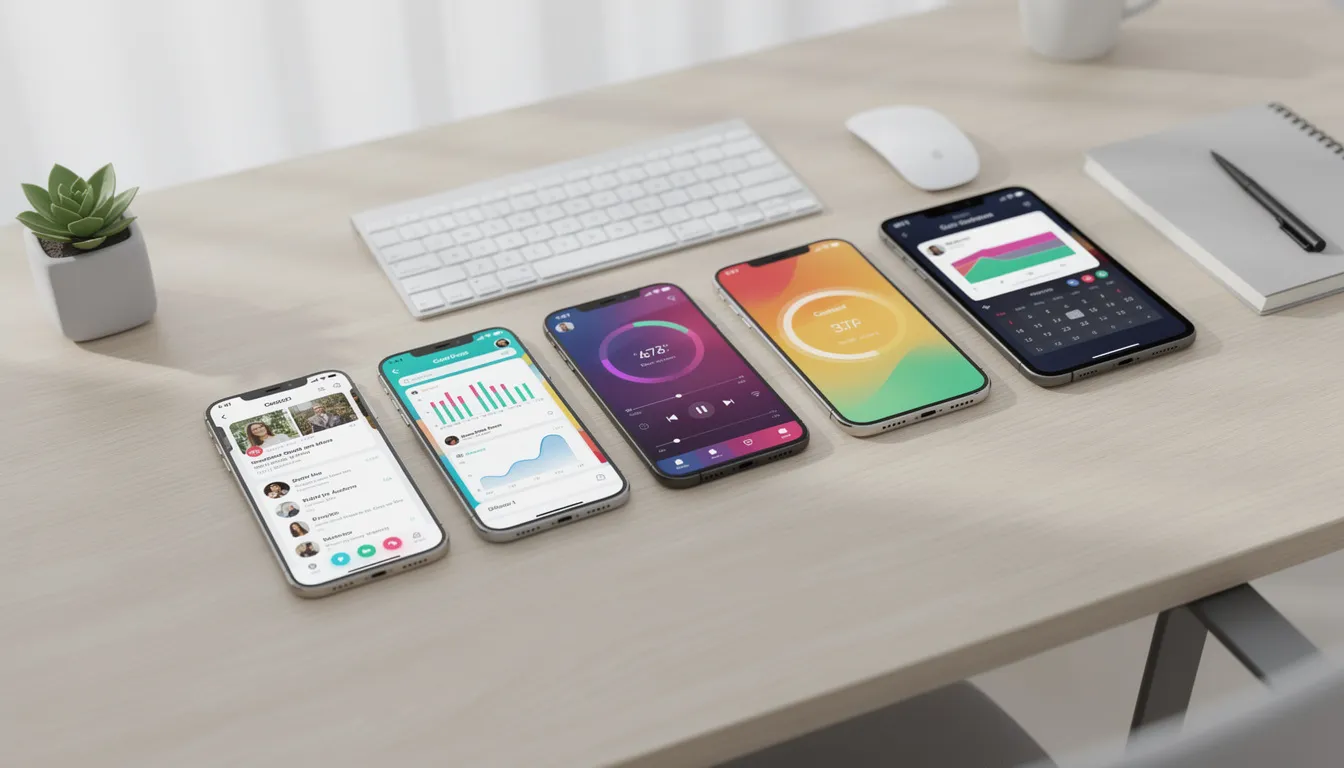
Modern mobile applications primarily target iOS and Android while often integrating with wearables, smart TVs, and web backends.
These figures represent indicative averages as of 2025-2026, with specifics varying by region, complexity, and vendor.
Cost ranges by complexity:
Hourly rates by location:
Timeline expectations:
Main drivers of cost and timeline include: number of user roles, third-party integrations (payments, maps, APIs), custom UI and animations, offline functionality, and security/compliance requirements.
To control costs, build a feature prioritization list organized as “must-have / nice-to-have / later.” This helps companies propose phased roadmaps that reduce initial investment while maintaining a path to your complete vision.
Portfolios and case studies are often the most reliable indicators of real-world capability. Here’s how to assess them effectively:
Apps that haven’t been updated in 12+ months may indicate either project abandonment or clients who didn’t continue with that vendor.
What exactly does a phone application development company do? A phone app development company handles the complete lifecycle of creating mobile applications—from initial strategy and design through development, testing, app store submissions, and ongoing maintenance. They typically employ cross-functional teams including designers, developers, QA specialists, and project managers who work together to build apps for iOS and Android platforms.
How is pricing typically structured for app development? Most mobile app development companies offer three pricing models: fixed-price contracts for well-defined projects, time-and-materials billing for flexible engagements, and dedicated team arrangements for ongoing development. Simple apps typically start around $25,000-$40,000, while complex applications with multiple integrations and custom features can exceed $150,000-$400,000.
What deliverables should I expect from an app development project? Standard deliverables include discovery documentation, wireframes and design files, source code with documentation, compiled applications for iOS and Android, deployment to app stores, and training materials. Ensure contracts specify ownership of all assets transfers to you upon payment.
How do revenue models like ads, subscriptions, and in-app purchases get implemented? App developers integrate monetization through platform-specific SDKs and payment APIs. Subscription models use Apple’s StoreKit and Google Play Billing; in-app purchases follow similar patterns. Ad monetization typically involves integrating networks like AdMob or Facebook Audience Network. Your development partner should advise which models fit your business goals and implement them securely.
How long does it take to build an app from idea to app store? Timeline depends heavily on complexity. A focused MVP can launch in 2-3 months. Mid-complexity apps typically require 4-8 months. Large-scale applications with extensive features, integrations, and regulatory requirements often take 9-15+ months. Agile methodology can reduce time-to-market by 25-50% compared to traditional approaches.
Should I choose freelancers or an agency? Agencies offer cross-functional teams, established processes, and accountability—better for complex projects requiring coordinated efforts. Freelancers can be cost-effective for smaller, well-defined projects with clear specifications. For custom mobile apps that will evolve over time, agencies typically provide more sustainable partnerships.
Who owns the code and intellectual property? This must be explicitly stated in your contract. Ensure agreements clearly give you full rights to source code, design assets, and any custom components upon payment. You should control your own app store accounts and code repositories regardless of your development partner.
Selecting the right phone application development company is a strategic decision that will affect your cost, time-to-market, and long-term business outcomes more than any individual feature choice.
The companies profiled here—from BuildFire and ScienceSoft to Designli and App Maisters—represent proven options across different price points, specializations, and regions. But the best choice depends entirely on your specific situation.
Your next steps:
Consider starting with a discovery workshop or clickable prototype before committing to full development. This validates both your app idea and your partnership fit with manageable risk.
With the right partner, a realistic budget, and aligned expectations, you can move from concept to a live iOS and Android app within months—joining the billions of mobile apps that drive modern business every day.