How to Create an App Like 1mg – Online Pharmacy + Lab Tests

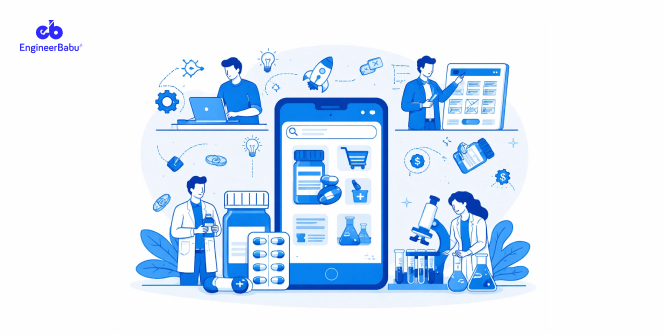
Digital healthcare has rapidly become a core part of how people in India access medicines and diagnostic services. According to the National Institute of Health (NIH), the Indian e-pharmacy market is growing at a CAGR of over 12 percent. That is because of rising smartphone adoption and demand for convenient healthcare access.
Platforms like 1mg have played a major role in this shift by combining online medicine delivery with lab test booking and digital health records in a single ecosystem.
The success of such platforms has created strong interest among healthcare startups looking to enter the space. However, building a solution that mirrors this model requires a clear understanding of pharmacy operations and scalable technology architecture.
So, exploring how to create an app like 1mg involves evaluating not just features, but also the trust, reliability, and data security users expect from healthcare applications.
This article breaks down the functional, technical, and business aspects involved in building an online pharmacy and lab test platform. So, let’s jump right into it.
1mg has established itself as one of India’s leading digital healthcare platforms by combining online pharmacy services with lab tests and health information in a seamless ecosystem. Its success lies in providing convenience, trust, and comprehensive healthcare access all in one place.
Users can order prescription and over-the-counter medicines, schedule lab tests, and receive digital health records without visiting multiple locations.
The platform focuses on building credibility through:
Moreover, timely delivery, transparent pricing, and prescription validation are key elements that create user confidence. 1mg also leverages technology to personalize the user experience, recommending medicines and tests based on past orders and health records.
Understanding these core strengths is essential for anyone exploring how to create an app like 1mg, as replicating such trust and convenience requires both operational planning and robust technical infrastructure.
When you think about how to create an app like 1mg, it’s not just about adding a bunch of features. The magic is in designing a smooth experience for users, partners, and admins so that everything works like a well-oiled machine.
At the heart of any online pharmacy plus lab test platform are three main components: the user app, the partner portals, and the admin dashboard.
For users, the app needs to make finding medicines and booking lab tests effortless. Features like easy search, prescription upload, lab test scheduling, in-app payments, and order tracking are non-negotiable. Bonus points if the app can suggest medicines or tests based on previous orders, making the experience feel personal and smart.
For pharmacies and labs, the platform should simplify operations. Partner portals allow labs to manage test bookings, update reports, and track collections, while pharmacies can handle medicine stock, prescription verification, and delivery status updates without headaches.
The admin dashboard is the brain of the operation. It helps monitor users, partners, and transactions, manage pricing, and ensure compliance with healthcare regulations. Analytics, reporting, and communication tools are key to keeping everything on track.
Building these components is the real challenge when you plan how to create an app like 1mg, because each feature must not only function well but also feel trustworthy and easy to use. A great user experience, combined with strong backend support, is what separates a good healthcare app from a platform people rely on daily.
Building a reliable, scalable, and secure online pharmacy and lab test app requires the right combination of technologies. At EngineerBabu, we help businesses select and implement a technology stack that matches both their current needs and long-term growth goals.
The frontend is what your users interact with, and it needs to be fast, intuitive, and responsive. For an app like 1mg, technologies such as React Native or Flutter allow development of both Android and iOS apps with consistent performance.
On the web side, React.js or Angular development ensures smooth browsing, easy navigation, and quick access to medicine catalogs and lab test options. A polished frontend creates trust and keeps users coming back.
The backend powers all app operations, from medicine inventory management to lab report delivery. Popular choices include Node.js, Python with Django, or Ruby on Rails development, which handle high volumes of transactions efficiently.
Robust backend architecture ensures that prescription uploads, order tracking, and partner management run seamlessly. When thinking about how to create an app like 1mg, a strong backend is critical for reliability.
Healthcare apps generate large amounts of sensitive data, including prescriptions, lab results, and user profiles. Databases such as PostgreSQL, MongoDB, or MySQL, combined with cloud storage like AWS S3, provide secure, scalable storage.
Encryption and access controls protect patient data and help maintain compliance with regulations. Choosing the right database setup is essential when planning how to create an app like 1mg.
Integrations with payment gateways, SMS services, mapping APIs, and lab management systems are crucial. APIs allow smooth communication between the user app, lab partners, and pharmacies.
This ensures timely order updates, report delivery, and notifications. A well-integrated system is a key aspect of creating a healthcare app, enabling the platform to function as a unified ecosystem.
Security is non-negotiable in healthcare apps. Implementing SSL encryption, secure authentication, and role-based access ensures patient data stays safe. Compliance with regulations like the Drug and Cosmetics Act and digital health standards is essential.
A secure, compliant platform reassures users and partners alike. At EngineerBabu, we focus on building apps that meet both technical standards and healthcare compliance.
Developing a healthcare platform that combines online pharmacy and lab test services requires careful planning and execution. Breaking the process into clear stages ensures the final product is user-friendly, secure, and scalable.
At EngineerBabu, we guide businesses through each step, turning complex ideas into a fully functional app that meets user expectations and regulatory requirements.
Understanding your target audience, competitors, and market trends is the first step. This phase involves analyzing how existing platforms operate, identifying user pain points, and defining the features your app will offer. Clear requirement gathering ensures the app meets real needs and sets a strong foundation for development, from medicine ordering to lab test management.
An intuitive and visually appealing interface improves engagement and trust. Wireframes and prototypes help map user journeys, while UX considerations like simple navigation, easy prescription uploads, and clear lab test booking enhance usability. Thoughtful design ensures users can interact with the app effortlessly and keeps them coming back for their healthcare needs.
Selecting the right frontend, backend, database, and integrations is critical for scalability and reliability. Technologies like Flutter or React Native for mobile, Node.js or Django for backend, and cloud solutions for storage ensure seamless operations. This step is essential in how to create an app like 1mg, providing a robust technical foundation for the platform.
This phase includes building the user app, partner portals, and admin dashboard. Functionalities like prescription upload, lab test booking, medicine catalog, payments, and notifications are implemented here. Smooth backend integration ensures data flows correctly between users, pharmacies, and labs, creating a reliable ecosystem that delivers value consistently.
Integrating payment gateways, SMS notifications, mapping services, and lab systems allows the app to function as a unified platform. API development also enables seamless communication between different modules, ensuring real-time updates on orders, lab reports, and deliveries. Proper integration is a crucial part of how to create an app like 1mg, enabling end-to-end efficiency.
Rigorous testing is vital to ensure the app is secure, compliant, and bug-free. Functional testing, performance checks, and security audits verify that all features work as intended. This step guarantees that users have a smooth experience and that pharmacies and labs can operate without disruptions.
Once testing is complete, the app is deployed to app stores and web platforms. Post-launch support and monitoring help fix issues quickly and collect user feedback. Planning the launch strategy carefully ensures a successful introduction to the market and positions the platform for early adoption.
Ongoing updates, performance optimization, and feature enhancements are essential for growth. Scaling infrastructure to handle increasing users and transactions ensures smooth operations. Continuous improvement based on feedback ensures long-term success and user satisfaction, making this the final but crucial step in how to create an app like 1mg.
Building a healthcare platform that combines online pharmacy services with lab tests can be complex, but with the right strategy, technology, and expertise, it is entirely achievable. From understanding user needs to designing a secure, scalable app, every phase matters.
At EngineerBabu, we specialize in healthcare app development that delivers convenience, reliability, and compliance. If you are looking to bring your idea to life, get in touch with us today to discuss how to create an app like 1mg and transform your digital healthcare vision into reality.
An app like 1mg requires features such as prescription uploads, medicine ordering, lab test booking, digital report delivery, in-app payments, and notifications. Additionally, partner portals for pharmacies and labs and a centralized admin dashboard are critical for smooth operations.
The development timeline depends on app complexity, number of features, and integrations. A basic MVP can take 4–6 months, while a fully-featured, scalable platform may take 8–12 months. At EngineerBabu, we focus on delivering efficiently without compromising quality.
A combination of Flutter or React Native for mobile apps, Node.js or Django for backend, PostgreSQL or MongoDB for databases, and cloud storage solutions ensures scalability and performance. Security and regulatory compliance are also considered from the start.
Compliance with the Drug and Cosmetics Act, digital health standards, and secure handling of patient data is essential. EngineerBabu ensures all apps meet regulatory requirements while delivering a seamless user experience.
Yes. Beyond development, EngineerBabu provides ongoing maintenance, performance optimization, feature updates, and infrastructure scaling to ensure long-term success and reliability of healthcare apps.