Fintech App Design: Why Designing Financial Apps Is More Complex

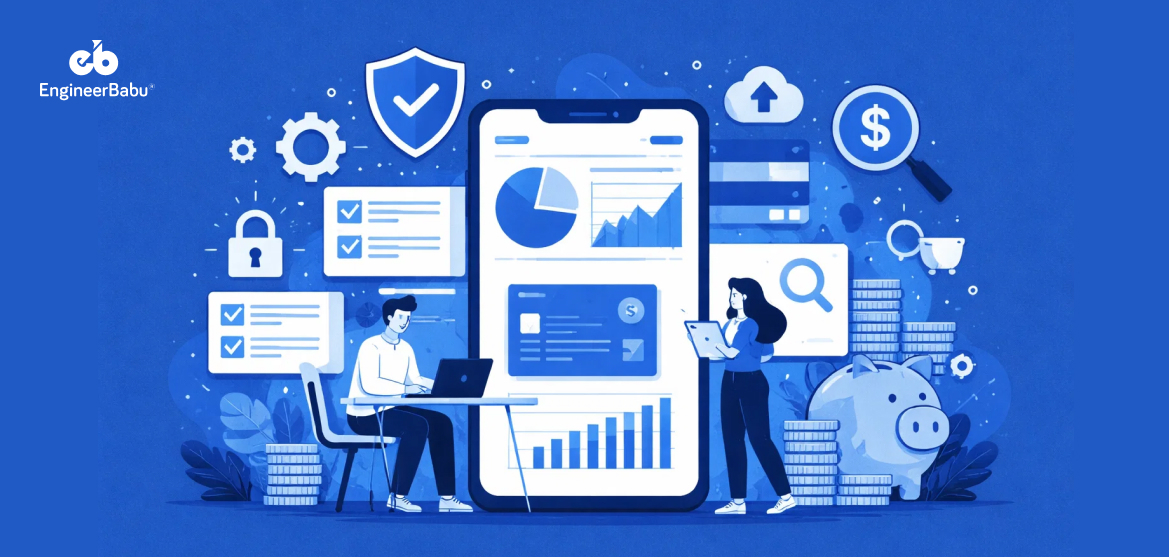
Fintech app design is significantly more challenging than building most other digital products. Unlike social, ecommerce, or content-based platforms, fintech applications deal directly with money, sensitive personal data, and strict regulations. This is why designing a fintech app demands a higher level of precision, responsibility, and long-term planning.
According to a report by CB Insights, regulatory and compliance-related issues are among the top reasons fintech startups fail globally.
Additionally, IBM’s Cost of a Data Breach report highlights that financial services face some of the highest breach costs due to sensitive data exposure.
In this blog, we will explore why fintech app design is more complex than traditional apps, the key challenges involved, and how businesses can build secure, scalable financial systems with the right strategy and partners.
When comparing fintech vs traditional app development, the complexity of fintech products comes from responsibility, regulation, and risk. Below are the reasons explaining why fintech app design and development are more challenging.
Fintech users trust apps with their money, identity, and financial decisions. Every design element, from onboarding to transaction confirmation, must clearly communicate safety and reliability.
Even minor UX inconsistencies can cause hesitation or abandonment, making trust-centric design a core fintech app development challenge.
Unlike normal apps, fintech platforms must comply with strict regulations such as KYC, AML, and data protection laws. These requirements directly shape screen flows, disclosures, and consent mechanisms, increasing fintech software development complexity from the design stage itself.
In fintech software vs normal software development, security influences user experience deeply. Features like multi-factor authentication, session timeouts, masked data, and device verification must be integrated seamlessly into the design without frustrating users.
Fintech apps manage payments, investments, loans, settlements, and refunds. These workflows are multi-step and high-risk, requiring clear feedback, confirmations, and fallback states. Designing such journeys is one of the biggest challenges in building fintech applications.
Fintech platforms rely on fintech API integrations with banks, payment gateways, and verification pr oviders. Designers must account for latency, failures, and partial success states, which significantly increase fintech app design complexity.
Every action in a fintech app must be traceable and auditable. Transaction histories, timestamps, downloadable statements, and logs are mandatory, making fintech design far more structured than consumer apps.
Fintech systems must perform reliably during peak periods such as salary days, disbursals, or market volatility. Designing dashboards and flows that remain usable under high load adds to fintech software development challenges.
Unlike lifestyle apps that evolve rapidly, fintech products must remain stable over long periods. Design decisions must support backward compatibility, regulatory changes, and scalable growth, increasing fintech app design responsibility.
Designing fintech products is not just about visuals. It involves managing fintech tools, compliance flows, and operational clarity. Here are the Fintech app design best practices to follow:
At EngineerBabu, we approach fintech app design as a system-building exercise, not just a design project. Our team combines product thinking, compliance awareness, and technical expertise to handle fintech software development complexity effectively.
If you are looking to hire fintech developers, our team acts as a CTO office, ensuring long-term product stability and growth.
Fintech app design is not just about creating interfaces. It is about building trust, ensuring compliance, and supporting complex financial operations. When you compare fintech vs traditional app development, fintech demands deeper planning, stronger security, and audit-ready systems.
If you want to build a fintech product that scales securely and earns user confidence, it is essential to follow proven design principles, regulatory best practices, and robust technical foundations that support long-term growth and reliability.
Fintech app development is complex because fintech apps handle money, personal data, and regulations, making design decisions more sensitive and structured.
Regulatory Compliance, trustworthiness, security, complex user flows, API dependencies, and audit requirements.
Yes, it is best to hire fintech developers who understand regulated systems and financial workflows for strong app development.
It totally depends on compliance needs, integrations, and feature complexity, but fintech projects generally take longer than standard apps.
Yes, Fintech app design typically costs more due to security requirements, compliance implementation, third-party integrations, and extensive testing.