Cloud vs On-Premise LMS: The Ultimate Choice NBFCs Must Make

Modern NBFCs are not just lenders. They are digital-first institutions managing complex workflows, regulatory compliance, risk assessment and collections. But handling all of this via manual processes or outdated tools often leads to delayed disbursements and compromised customer experience.
That is where a robust loan management system (LMS) becomes essential.
A 2025 survey shows that digital lending originated nearly 63 per cent of personal loans in the U.S., reflecting how core digital infrastructure has become, as per Coinlaw.
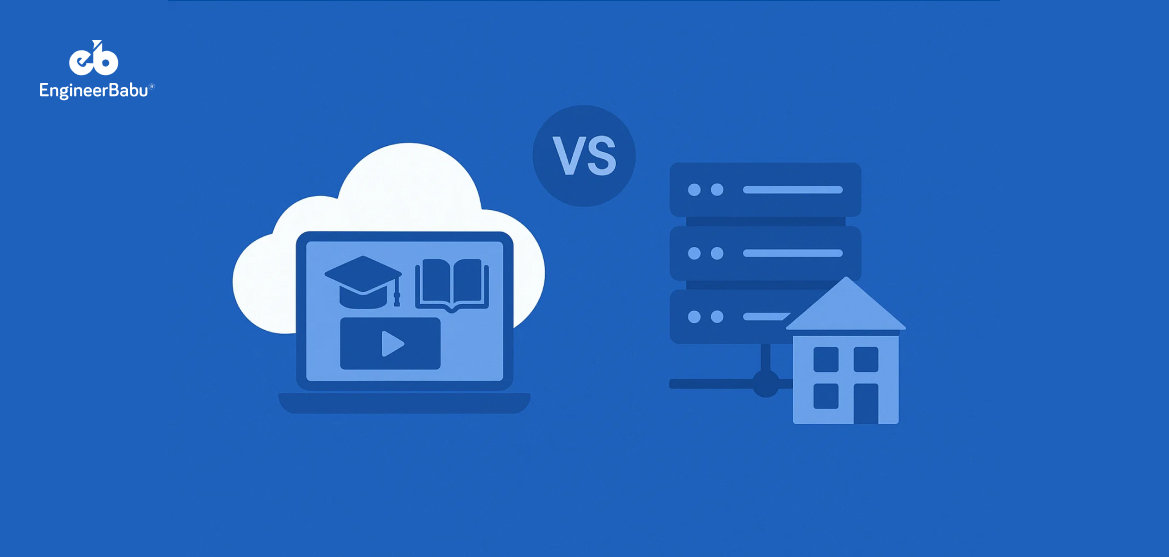
However, the real decision for NBFCs is not whether to invest in an LMS, but which model to choose. Should you go for a cloud-based solution built for flexibility, or an on-premise system that offers tighter control?
The answer depends on how your business operates today, your growth trajectory and how you manage risk, data and compliance. Therefore, in this article, we will compare cloud vs on premise LMS for NBFCs and help you choose the model that fits your operations.
Selecting the right system starts with understanding how each model works. Both Cloud and On-Premise LMS serve the same purpose, but the difference lies in ownership, accessibility, control, and long-term suitability.
Here is how they compare in the context of NBFC operations and compliance.
A Cloud LMS (Loan Management System) is hosted online and managed by the service provider. It does not require installation, server setup, or in-house IT management. NBFCs access it through a secure web browser or mobile app using login credentials, making it ideal for distributed teams, DSAs, and field agents.
It works on a subscription-based model, where features and pricing depend on usage, number of users, or modules. Automatic updates, data backups, and security patches are handled by the vendor. Users can log in anytime and track loan applications, approvals, customer history, and compliance documents from any location.
An On-Premise LMS is installed locally on the organisation’s own servers. The NBFC owns the software, controls the data, and manages the entire infrastructure. It supports deeper customisation and can align fully with internal loan workflows, underwriting policies, and security protocols.
However, it requires investment in hardware, IT resources, maintenance, and periodic upgrades. Since all loan data is stored internally, NBFCs get complete control over security, but also full responsibility for protecting it.
Both models support digital lending operations, but their suitability depends on budget, regulatory needs, scale, and security expectations. In the next section, we will compare cloud vs on premise LMS specifically for NBFC use cases.
Cloud-based systems are becoming popular among NBFCs because they offer faster implementation, easy access, and lower technical effort. Before comparing cloud vs on premise LMSfurther, it is important to understand how cloud platforms support loan processing, compliance tracking, and operational efficiency.
Cloud-based loan systems do not require heavy infrastructure or hardware. NBFCs can get started in weeks instead of months, which is a major benefit when comparing cloud vs on premise LMS options. The subscription model helps reduce upfront expenses, making it suitable for growing NBFCs that want full functionality without large capital investments.
Cloud LMS platforms allow NBFC teams, agents, and collection partners to access loan data securely from anywhere. They scale smoothly as operations expand to new cities or partner networks. When evaluating cloud vs on premise LMS, cloud solutions clearly offer better flexibility for NBFCs that operate with distributed teams, field executives, or franchise lending models.
A cloud LMS automatically receives feature upgrades, compliance rules, and security patches provided by the vendor. NBFCs do not need dedicated IT teams to manage updates or keep track of regulatory changes. This ensures loan operations stay aligned with RBI norms, KYC updates, data reporting, and audit requirements without manual intervention.
Cloud systems are mobile-responsive, making loan tracking, customer verification, and EMI monitoring accessible through mobile apps. Built-in analytics dashboards help NBFCs analyse borrower behaviour, risk patterns, default trends, and approval performance. This improves decision-making, collection strategies, and customer experience, all essential for digital lending and modern financial operations.
Cloud LMS platforms usually come with predefined modules and standard loan processing structures. While they support general lending operations, NBFCs that require unique underwriting logic, multi-layer approval flows, or regional compliance workflows may find these systems restrictive. When evaluating cloud vs on premise LMS, on-premise systems tend to offer deeper customisation and better alignment with internal lending policies.
For highly regulated NBFCs, storing sensitive loan data, financial records and borrower documents on external servers can raise compliance concerns. Regulators may require data to be stored within specific geographic boundaries. In the cloud vs on premise LMS comparison, on-premise solutions provide more control over data ownership, but cloud systems are improving with dedicated regional hosting and stronger encryption features.
On-Premise LMS solutions give NBFCs complete control over their loan operations, security, and data infrastructure. They are often preferred by institutions that handle sensitive loan records, investor data, or multi-layer approval systems. Let us examine the advantages and limitations to understand how they compare with modern cloud options.
On-premise LMS gives NBFCs full control over infrastructure, data security, integrations, and lending workflows. This allows organizations to build highly customized loan processes, including risk scoring, collateral checks, and internal approval hierarchies. When evaluating cloud vs on premise LMS, this model offers deeper governance, stronger internal control and better alignment with internal policies.
NBFCs that manage personal borrower data, loan agreements, financial records, and KYC documents often choose on-premise systems for enhanced security. Since data stays within internal servers, companies can implement stricter access rules, firewalls, and encryption protocols. Cloud vs on premise LMS comparisons frequently highlight that on-premise setups provide higher control over data confidentiality and compliance.
On-premise systems allow integration with legacy CRM, accounting, underwriting, and risk management tools. NBFCs can modify workflows to match their credit policies, approval structures, and audit formats. Features like portfolio classification, hybrid underwriting models, and regional compliance rules become easier to configure, making them ideal for established NBFCs with unique operational models.
The biggest limitation of an on-premise LMS is the need for ongoing maintenance, IT staff, hardware upgrades, and monitoring expenses. Initial setup costs are significantly higher compared to cloud platforms, and scaling the system requires additional investment. These overheads make it less suitable for fast-growing or smaller NBFCs that prefer pay-as-you-grow models.
Choosing the right model requires more than just comparing features. NBFCs need to evaluate how each system supports loan operations, regulatory obligations, data ownership, scalability, and long-term efficiency. Below is a simplified comparison that helps decision-makers understand practical differences.
| Criteria | Cloud LMS | On-Premise LMS |
| Deployment | Fast, online setup | Longer, manual installation |
| Cost Model | Subscription or pay-as-you-use | Upfront capital investment |
| Scalability | Highly scalable on demand | Limited by in-house infrastructure |
| Data Storage | Managed on vendor servers | Stored internally with full control |
| Security Management | Vendor-managed | Handled by internal IT |
| Customization | Standard to moderate | Highly customizable |
| Remote Access | Accessible on mobile and web | Limited unless specially enabled |
| Compliance Updates | Automatic, vendor-managed | Manual updates by IT team |
Understanding this comparison helps NBFCs decide whether flexibility, speed, and remote access matter more or whether strict control and internal data governance are the priority.
Choosing between cloud and on-premise LMS comes down to your NBFC’s operating style, growth plans, compliance expectations, and technical readiness. Cloud systems offer speed, flexibility, and effortless scalability, making them ideal for NBFCs expanding across cities, partners, or digital lending channels.
On the other hand, on-premise solutions provide deeper control, stronger customisation, and dedicated data ownership for institutions that prioritise internal governance and security.
The right decision is not just about features. It is about aligning technology with how you want to serve customers, manage risk, and build long-term lending efficiency. Whether you want remote access, automated workflows, or complete control over sensitive loan data, your LMS should support both operational goals and regulatory confidence.
If you are looking to build a secure, compliant, and fully tailored loan management solution, EngineerBabu can help. As a lending software development company, we design LMS platforms that fit your workflow, integrate with existing systems, and support your digital lending vision.
Small and mid-sized NBFCs often choose cloud LMS because it has lower upfront costs, faster deployment and requires no internal IT setup. It works well for teams spread across locations and supports digital lending operations without heavy maintenance.
An on-premise LMS gives complete control over data storage, access, and security tools, which is preferred by NBFCs with strict compliance or internal policy needs. However, many cloud LMS platforms now also offer strong encryption, regional data hosting, and secure access.
Yes. Both cloud and on-premise LMS systems can integrate with CRMs, loan origination platforms, credit bureaus, accounting software, and payment gateways. Custom development can automate workflows like KYC verification, loan approvals, EMI tracking, and customer communication from a single dashboard.
Cloud LMS solutions can be deployed within weeks, while on-premise models may take a few months due to setup, customization, hardware, and training. The timeline depends on required features, integrations, branch-level access, and internal team readiness.
Yes, many NBFCs begin with an on-premise setup for control and later migrate to cloud systems to support digital lending expansion, remote operations, and scalability. With proper data migration planning, both models can be transitioned smoothly.