Cloud-Based vs On-Premise Inventory Software: Which One to Choose?

Managing inventory can feel like juggling too many balls at once. If you’ve ever lost track of stock or had a last-minute scramble to fulfill orders, you know the stress it brings.
In fact, studies show that around 43 percent of small businesses still need to actively monitor their inventories. Choosing the right inventory software can make a world of difference, saving time and avoiding costly mistakes.
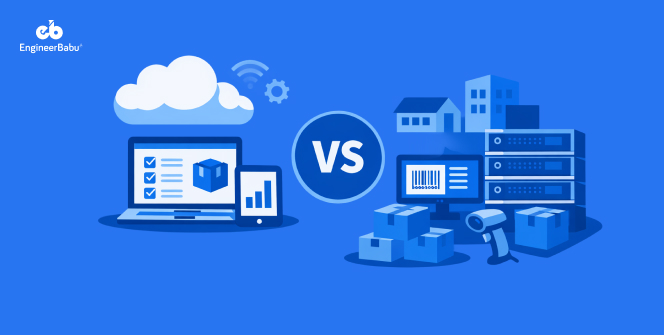
When it comes to deciding between Cloud-Based vs On-Premise Inventory Software, the choice isn’t always straightforward. Each option has its own strengths, and what works for one business might not work for another.
In this article, we’ll break down the differences, advantages, and scenarios where each type shines, so you can make an informed decision that fits your business.
Cloud-based inventory software is a system that stores your inventory data on remote servers, letting you access it from anywhere with an internet connection. Unlike traditional setups, you don’t need to worry about installing or maintaining heavy software on your computers.
It offers real-time updates, automatic backups, and the ability to scale as your business grows. Many teams love it because multiple users can track stock, process orders, and generate reports at the same time, even from different locations.
When considering Cloud-Based vs On-Premise Inventory Software, the cloud solution often appeals to businesses looking for flexibility, lower upfront costs, and minimal IT management.
For tech-driven projects, it can easily integrate with API Development or services that require real-time data handling, making operations smoother and more efficient.
On-premise inventory software is installed directly on your company’s servers and computers, giving you full control over your data and systems. Unlike cloud solutions, updates and maintenance are handled in-house, which can be a plus for businesses with strict security or regulatory requirements.
Many organizations prefer this approach for its high customization options, allowing them to tailor workflows and reports exactly to their needs.
In the debate of Cloud-Based vs On-Premise Inventory Software, on-premise solutions often appeal to companies with established IT infrastructure and teams capable of managing software internally.
They can also integrate with more complex systems, such as internal enterprise tools or custom solutions. Thus, offering a tightly controlled, reliable environment for critical inventory operations.
Deciding between Cloud-Based vs On-Premise Inventory Software isn’t just about cost, it’s about how each solution fits your daily operations. Here’s a closer look at the areas that can make a big difference for your business.
Cloud-based software gives you access from anywhere, so checking stock or updating inventory on the go is effortless. On-premise software keeps everything on-site, meaning you usually need to be at the office to make changes.
For teams that work remotely or across locations, cloud solutions offer flexibility, while on-premise can suit companies that prefer everything centralized under one roof.
Cloud-based inventory software usually follows a subscription model, which spreads out costs and avoids big upfront expenses. On-premise requires a larger initial investment for licenses and hardware, but long-term maintenance may cost less if your IT team is ready to handle updates.
Choosing between the two often comes down to whether your business prefers predictable monthly payments or a one-time capital expense.
With cloud software, updates, patches, and backups happen automatically behind the scenes. This reduces the burden on internal IT teams and keeps the system current without interruptions.
On-premise software puts the responsibility on your in-house IT staff, meaning updates can be scheduled on your terms, but it also requires more planning, manpower, and oversight to keep the system secure and running smoothly.
Scaling cloud-based inventory software is simple, adding users, storage, or new features usually takes minutes. On-premise systems depend on your existing hardware, so growing often means buying new servers or upgrading infrastructure, which can be costly and time-consuming.
If your business expects frequent growth or seasonal spikes, cloud solutions often make scaling seamless without major disruption.
Cloud systems offer built-in encryption and managed security, which works well for most businesses but depends on trusting the provider. On-premise software gives full control over sensitive data and compliance protocols.
Thus, making it ideal for industries with strict regulations. Both approaches can be secure, but the difference lies in whether you want the control yourself or prefer vendor-managed protections.
On-premise solutions let you deeply customize workflows, reports, and dashboards to match exact business needs. Cloud-based options are generally more standardized, though many can still connect with external tools or other integrated platforms.
Your choice depends on whether you prioritize flexibility and control or convenience and quick setup for everyday inventory management.
| Feature | Cloud-Based Inventory Software | On-Premise Inventory Software |
| Deployment & Accessibility | Access from anywhere with internet; ideal for remote teams | Installed locally; access usually limited to office or network |
| Cost Structure | Subscription-based; lower upfront cost, predictable monthly fees | Large upfront license and hardware cost; long-term maintenance costs |
| Maintenance & Updates | Vendor handles updates, backups, and patches automatically | In-house IT manages updates and system maintenance |
| Scalability | Easy to scale by adding users or storage online | Limited by existing hardware; scaling requires infrastructure upgrades |
| Security & Compliance | Managed encryption and security by vendor; depends on provider | Full control over data and compliance; suited for strict regulations |
| Customization & Integration | Moderate customization; can integrate with APIs and cloud tools | High customization potential; can be tailored to complex workflows |
| Ideal for | Growing businesses, remote teams, and fast deployment | Companies with strong IT infrastructure, strict compliance, or need full control |
Choosing between Cloud-Based vs On-Premise Inventory Software depends largely on your business size, growth plans, and workflow needs. Small businesses or startups often benefit from cloud solutions because of lower upfront costs, easy scaling, and remote accessibility.
Enterprises with established IT infrastructure might lean toward on-premise software for full control, security, and deep customization.
Some companies adopt a hybrid approach, using cloud software for day-to-day inventory management while keeping critical or sensitive data on-premise. This setup combines flexibility with security, especially for growing businesses that want the best of both worlds.
Quick Visualization
| Business Type | Recommended Approach | Why |
| Small / Startup | Cloud-Based | Low upfront cost, easy setup, remote access |
| Enterprise | On-Premise | Full control, security, and customization |
| Growing / Hybrid Needs | Combination | Flexibility plus secure control for sensitive data |
Ultimately, the best choice aligns with your budget, team structure, and operational priorities. For tech-driven workflows, leveraging ai development services and integrating ai tools can further enhance efficiency, regardless of the software type.
Choosing between Cloud-Based vs On-Premise Inventory Software doesn’t have to be overwhelming. It really comes down to how your team works, your growth plans, and the level of control or flexibility you need.
Cloud solutions are great for remote teams and fast growth, while on-premise gives full control and security. Some businesses even adopt a hybrid approach to get the best of both worlds.
If you’re looking for tailored solutions, inventory software development services from professionals can help design a system that fits your exact needs and workflow. Partnering with experts like engineerbabu ensures your inventory operations stay smooth, scalable, and efficient.
Cloud-based software is hosted online and accessible from anywhere, while on-premise software is installed locally and managed in-house.
Small businesses often benefit from cloud solutions due to lower upfront costs, easy setup, and remote accessibility.
Yes, many systems allow migration, but it requires planning and data integration support to ensure a smooth transition.
Yes, reputable cloud systems use encryption and regular backups, though sensitive data may require additional compliance measures.
Absolutely. Whether cloud or on-premise, most inventory software can integrate with APIs, accounting tools, or other custom solutions for seamless workflows.