Auto-Underwriting for Loan Apps: How Algorithms Decide Approval

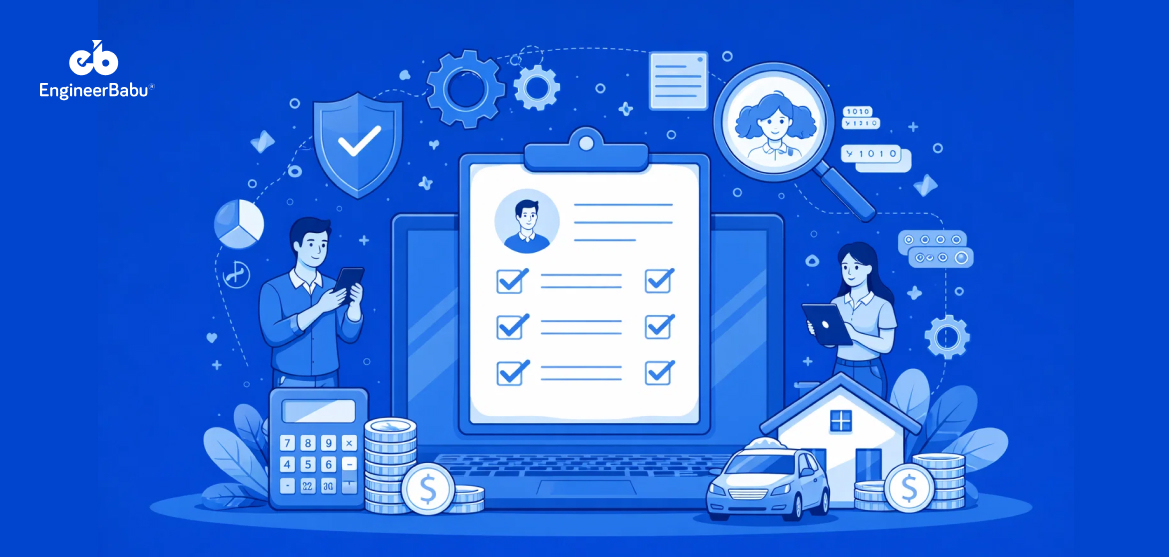
Imagine a borrower opening your app, completing basic formalities, and receiving loan approval within minutes. No paperwork delays. No manual reviews. No endless follow-ups, just the right Auto Underwriting for Loan Apps feature. Under this, intelligent systems assess eligibility and approve loans automatically.
According to McKinsey, lenders using automated underwriting can reduce loan processing time by up to 70 percent while improving credit decision accuracy. This shift is redefining how digital lenders, NBFCs, and home loan app providers operate at scale.
In this blog, we explore how auto-underwriting works, why it matters, and how fintech companies can implement it effectively without compliance or risk gaps.
Auto Underwriting for Loan Apps refers to the automated evaluation of borrower eligibility using predefined rules, real-time data, and intelligent risk models. Instead of manual credit officers reviewing applications for days, the system analyzes applicant data instantly and delivers consistent lending decisions.
This automation not only speeds up approvals but also reduces human bias and operational errors common in manual underwriting. By applying the same rules uniformly across every application, lenders ensure fair decision-making while cutting processing costs.
For fintech and lending businesses, automation is not only about speed but also about accuracy and scale.
A home loan app using auto-underwriting can pre-approve applicants by analyzing income, employment history, and liabilities within seconds. This reduces operational costs and improves customer satisfaction while maintaining audit-ready decision trails.
Meanwhile, the Leading lending app development companies use auto-underwriting to support expansion into new geographies, products, and borrower segments without increasing manual overhead.
Let us look at an example, in a traditional loan process, applicants may wait several days while income proofs, bank statements, and credit scores are manually verified.
With auto-underwriting, the same checks are completed within minutes by integrating banking data, credit bureaus, and risk engines. This dramatically reduces approval time, lowers operational effort, and improves customer satisfaction by eliminating uncertainty and delays.
Auto Underwriting for Loan Apps operates as an intelligent decision engine that replaces slow, manual credit reviews with real-time, rule-based automation. Here is a guide that helps you understand how:
Auto Underwriting for Loan Apps begins by gathering borrower information from multiple verified sources. This includes application forms, bank statement integrations, credit bureaus, income verification tools, and KYC systems.
Automated data collection removes dependency on manual uploads and repetitive checks. This not only speeds up the underwriting process but also ensures data accuracy, which is critical for reliable loan decisions.
Once data is collected, Auto Underwriting for Loan Apps applies predefined lending rules aligned with internal credit policies. These rules assess factors such as minimum income thresholds, acceptable credit scores, employment stability, and loan eligibility limits.
Unlike traditional underwriting, where decisions may vary across credit officers, rule-based evaluation ensures every applicant is assessed uniformly. This improves fairness, reduces bias, and increases operational efficiency.
Auto Underwriting for Loan Apps uses advanced risk models to calculate the probability of default. These models analyze historical repayment data, credit behavior, transaction patterns, and financial stability indicators.
By leveraging both traditional and alternative data, lenders gain deeper risk insights. This allows approval of creditworthy borrowers who may be overlooked by conventional underwriting methods.
The decision engine is the core of Auto Underwriting for Loan Apps. Based on rule outcomes and risk scores, the system automatically approves, rejects, or flags applications for manual review.
Most decisions are delivered within seconds, even during high application volumes. This dramatically improves turnaround time and enhances borrower satisfaction compared to traditional multi-day approval cycles.
Every decision made through Auto Underwriting for Loan Apps is logged with full traceability. This includes data inputs, applied rules, risk scores, and final outcomes.
These audit logs ensure transparency and make regulatory reviews easier. They also help lenders explain decisions to customers, reducing disputes and strengthening trust.
Implementing auto-underwriting is not just a technical upgrade but a foundational shift in how lending decisions are made. For Auto Underwriting for Loan Apps to deliver speed, accuracy, and compliance, certain core requirements must be addressed at the architecture, data, and policy levels.
High-quality data is the backbone of any auto-underwriting system. Auto-Underwriting for Loan Apps relies on verified borrower information sourced from banks, credit bureaus, KYC providers, and transaction histories. If the incoming data is inconsistent or incomplete, even the most advanced models can produce unreliable decisions.
In addition, lenders must establish data validation, normalization, and refresh mechanisms. Continuous data updates help underwriting engines reflect real-time borrower behavior, reducing approval errors and improving long-term portfolio health.
Underwriting policies define the risk appetite of a lending business. These policies must be clearly documented and converted into machine-readable rules that the underwriting engine can execute without ambiguity. Income thresholds, credit score cutoffs, repayment capacity checks, and exception handling should all be rule-driven.
Well-structured policy logic ensures fairness and consistency across applications. It also allows lenders to adjust underwriting strategies quickly in response to market changes without rewriting core systems, which is critical for scalable lending operations.
Auto-underwriting systems must handle fluctuating demand, especially during seasonal campaigns, festive lending periods, or sudden market shifts. A scalable architecture ensures the platform can process thousands of applications simultaneously without delays or failures.
Cloud-based infrastructure, distributed processing, and asynchronous workflows help maintain performance under peak loads. This scalability directly impacts user experience and lender credibility, especially when instant decisions are a core value proposition.
Regulatory readiness is non-negotiable in digital lending. Auto Underwriting for Loan Apps must include built-in compliance controls such as audit logs, decision explainability, and data access tracking. Regulators often require lenders to justify why a loan was approved or rejected.
Transparent decision trails and secure data handling not only reduce regulatory risk but also build trust with partners and borrowers. Compliance-by-design ensures faster audits, smoother approvals, and long-term sustainability of the lending platform.
Auto-underwriting systems rely on accurate borrower data. Poor data inputs can cause incorrect approvals or rejections. Ensuring data validation and reliability is critical.
In auto underwriting for loan apps, data often comes from multiple sources such as bank statements, transaction histories, and third-party aggregators. If this data is outdated, inconsistent, or incomplete, decision accuracy drops significantly. Lenders must implement strong data validation rules, fallback checks, and continuous monitoring to maintain underwriting integrity at scale.
Financial regulations require transparent and explainable decisions. Automated systems must maintain audit trails for approvals or rejections. Meeting compliance standards adds system design complexity.
Auto underwriting for loan apps must align with evolving lending regulations across regions, including explainability requirements and borrower grievance handling. Regulators increasingly expect lenders to justify automated decisions clearly. This forces businesses to invest in rule transparency, decision logs, and compliance-ready reporting frameworks from the early development stages.
Auto underwriting for loan apps requires integration with credit bureaus and KYC providers. Different fintech APIs and data formats increase technical complexity. Poor integrations can slow decisions and affect reliability.
Beyond initial setup, integrations must remain stable during high application volumes and API changes from third-party providers. Even minor downtime or mismatched data fields can disrupt underwriting flows. Robust error handling, retry mechanisms, and integration testing are essential to ensure uninterrupted loan processing.
Automated underwriting models may unintentionally reflect historical biases present in training data. This can result in unfair rejection of certain borrower groups or overexposure to specific risk segments.
In auto underwriting for loan apps, unchecked bias can lead to compliance issues and reputational damage. Businesses must regularly audit models, apply bias detection techniques, and introduce human oversight for edge cases to maintain ethical and fair lending practices.
Shifting from manual underwriting to automation impacts internal teams and workflows. Staff may struggle to trust or adapt to automated decisions without proper training.
Successful auto underwriting for loan apps requires change management strategies, including team onboarding, process redefinition, and clear escalation paths. Without internal alignment, even a technically strong underwriting system can face resistance and underutilization.
At EngineerBabu, auto-underwriting systems are designed with compliance, scalability, and transparency at the core. Our teams work closely with fintech businesses to map underwriting policies, integrate reliable data sources, and build secure decision engines.
By combining domain expertise with proven fintech app design and development, we help lenders avoid common automation pitfalls while accelerating go-to-market timelines. With us, auto-underwriting becomes a growth enabler, not a compliance risk.
Auto Underwriting for Loan Apps is reshaping digital lending by enabling faster approvals, consistent credit decisions, and scalable operations. When implemented correctly, it improves borrower experience while strengthening risk controls and regulatory readiness.
For fintech companies aiming to compete in a high-speed lending environment, auto-underwriting is no longer optional. It is the foundation of modern, top lending platforms for a better future.
Auto-underwriting automates borrower evaluation using rules, data, and risk models to approve or reject loans instantly.
Yes, many home loan app platforms use auto-underwriting for pre-approvals and eligibility checks.
It can, if built with audit trails, explainability, and regulatory controls.
Yes, scalable architectures allow startups to adopt automation gradually.
Timelines depend on complexity but typically range from a few weeks to a few months.