Credit scoring is the foundation of every lending business.
For decades, lenders relied on static scorecards, bureau scores, and rigid rules to decide who gets credit and at what price. While these systems worked in a low-volume, branch-led world, they fail in today’s environment of digital lending, embedded finance, and real-time credit decisions.
Research from the World Bank found that combining traditional credit bureau data with transaction or alternative data can improve predictive power by up to 25% for thin-file borrowers. A big reason AI in scoring is accelerating in modern lending. In 2026, modern lenders use AI in credit scoring systems to:
-
Predict default risk more accurately
-
Expand credit access to thin-file borrowers
-
Reduce NPAs and fraud
-
Automate underwriting decisions
-
Comply with fair lending regulations at scale
Therefore, this guide explains how AI credit scoring actually works, the models used, data requirements, costs, risks, and how lenders should build production-grade, compliant systems.
What Is AI in Credit Scoring?
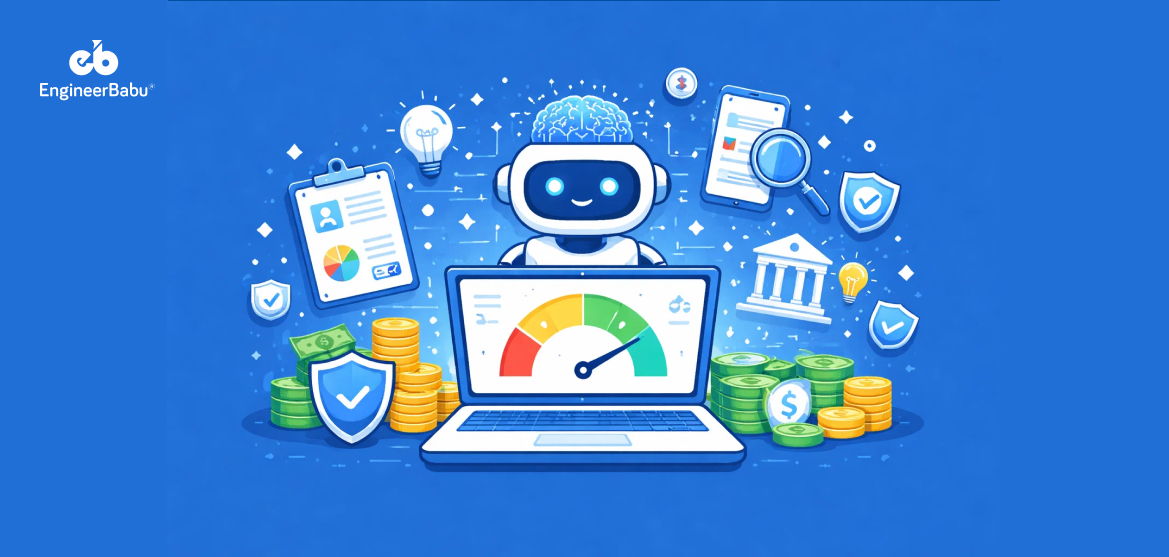
AI in credit scoring refers to the use of machine learning, statistical modelling, and advanced analytics to evaluate a borrower’s creditworthiness more accurately than traditional methods. Instead of relying on static rules or single bureau scores, AI-driven credit scoring systems analyse large volumes of structured and unstructured data to predict default risk in real time.
Modern AI credit scoring models learn from historical repayment behaviour, transaction patterns, income signals, and behavioural data to uncover complex, non-linear risk relationships. As more data flows into the system, these models continuously improve their predictions without manual rule changes.
In practice, AI in credit scoring is embedded directly into digital lending workflows such as loan origination systems (LOS) and loan management systems (LMS).
This allows lenders to automate underwriting decisions, dynamically adjust credit limits or pricing, and respond instantly to changing borrower behaviour. Unlike legacy scorecards, AI credit scoring is adaptive, scalable, and designed for high-volume, real-time lending environments common in 2026.
Why Traditional Credit Scoring Is No Longer Enough
Traditional credit scoring models were designed for a slower, branch-led lending environment where decisions were made periodically and borrower profiles were relatively stable. In today’s digital-first ecosystem, these models struggle to keep up.
Most legacy scorecards depend heavily on bureau data, fixed rules, and static thresholds that do not reflect real-time financial behavior.
As lending volumes increase and borrower segments diversify, these limitations become more visible. Traditional systems often exclude thin-file or new-to-credit users, fail to adjust quickly during economic shifts, and require frequent manual recalibration.
This results in higher default rates, missed low-risk borrowers, and rising operational costs.
AI in credit scoring addresses these gaps by replacing rigid logic with dynamic, data-driven decision-making. AI models continuously learn from new data, adapt to changing risk patterns, and evaluate borrowers more holistically.
For lenders operating at scale in 2026, relying solely on traditional credit scoring is no longer sustainable, it creates competitive and risk management disadvantages.
Core Benefits of AI in Credit Scoring
Lenders adopt AI-driven approaches because they directly address the structural weaknesses of legacy credit assessment systems. At scale, these benefits translate into stronger portfolios, faster growth, and improved customer experience without compromising risk control.
AI models improve accuracy by learning from large historical datasets and identifying risk signals that traditional scorecards miss. They capture non-linear relationships like how income volatility interacts with repayment timing or spending spikes, so lenders can estimate the probability of default more precisely, price loans correctly, and reduce approval errors across segments.
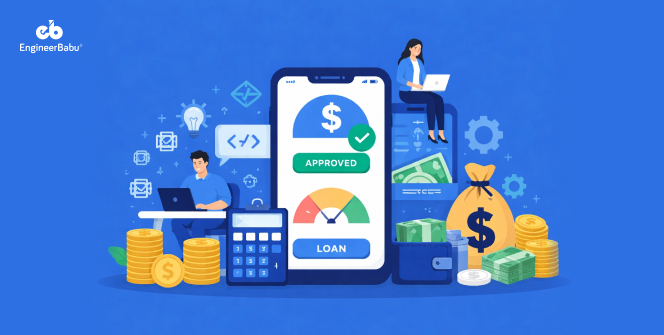
Real-time scoring streamlines underwriting by automating routine checks and producing instant risk outcomes. This reduces human bottlenecks, shortens turnaround time from days to minutes, and supports embedded finance journeys where customers expect immediate approvals. Faster decisions also lower operational workload and allow teams to focus on exceptions and edge cases.
Many borrowers lack a long credit history, which makes them invisible to bureau-only systems. AI in credit scoring can safely use permitted alternative data such as cash-flow patterns, transaction behaviour, and stability indicators to evaluate thin-file applicants. This enables responsible approvals, better limits, and fairer pricing for underserved customers without relaxing risk standards.
AI-driven monitoring can detect early warning signs before loans become delinquent. Signals like declining cash balances, rising expense pressure, late-payment patterns, or sudden behaviour changes can trigger proactive actions, limit adjustments, verification steps, or collection prioritisation. This reduces credit losses, improves recovery efficiency, and supports healthier portfolio performance over time.
When implemented correctly, these benefits allow lenders to improve profitability while maintaining disciplined risk management.
How AI in Credit Scoring Works (Step-by-Step)
AI-based credit evaluation follows a structured pipeline that transforms raw borrower data into compliant, real-time lending decisions. Each step is critical—weakness in any layer directly impacts accuracy, fairness, and regulatory acceptance.
1. Data Collection
AI in credit scoring systems ingest data from multiple internal and external sources to build a holistic borrower profile. This includes traditional inputs like credit bureau reports, bank statements, and transaction history, along with employment data, device signals, and behavioral indicators. Where regulations permit, alternative data can further enrich risk assessment. Data quality, completeness, and freshness are the single biggest success factors—poor inputs lead to unreliable outputs, regardless of model sophistication.
2. Feature Engineering
Raw data is transformed into predictive variables that models can learn from. These features may include income stability metrics, cash-flow volatility, repayment consistency, spending-to-income ratios, and time-based behavioral trends. Effective feature engineering captures borrower intent and financial resilience, often contributing more to model performance than the choice of algorithm itself. This step also helps reduce noise and improve explainability.
3. Model Training
Machine learning models are trained on historical loan performance data to predict probability of default, segment borrowers by risk, and recommend pricing or credit limits. Common validation techniques include holdout datasets, cross-validation, and industry-standard metrics such as AUC, KS, and Gini. Proper training ensures the AI credit scoring system generalizes well and avoids overfitting.
4. Decision Scoring
Once deployed, the model generates a risk score for each application. This score feeds directly into underwriting workflows, approval or rejection logic, loan pricing, and credit limit assignment. In regulated lending environments, this stage must be fully explainable, producing clear reason codes and decision rationales for customers, auditors, and regulators.
5. Continuous Learning & Monitoring
AI in credit scoring models are continuously monitored for performance drift, data drift, emerging bias patterns, and macroeconomic changes. Regular retraining and governance reviews ensure predictions remain accurate and fair over time. Without ongoing monitoring, even high-performing models degrade and introduce risk into the lending process.
Common AI Models Used in Credit Scoring
Modern lending platforms rely on multiple modeling techniques to balance accuracy, explainability, and regulatory compliance. There is no single “best” algorithm, successful implementations combine models based on risk, scale, and use case.
-
Logistic Regression (Baseline)
Logistic regression remains a foundational model in credit risk assessment, especially in regulated environments. It is simple to implement, highly interpretable, and produces clear reason codes that regulators and auditors understand. Many lenders continue to use it as a benchmark or challenger model alongside advanced AI in credit scoring systems.
-
Tree-Based Models (Most Common)
Tree-based models such as Random Forest and Gradient Boosting (XGBoost, LightGBM) are widely adopted due to their strong performance. They handle non-linear relationships, interactions between variables, and missing data effectively. These models offer a practical balance between predictive accuracy and explainability when combined with XAI techniques.
Neural networks deliver high predictive power by learning complex patterns across large datasets. However, they are harder to explain and validate, which limits their use in regulated lending. They are typically applied selectively in high-volume portfolios where governance controls are mature.
Ensemble approaches combine outputs from multiple models to improve stability, reduce variance, and enhance accuracy. They are common in production-grade AI in credit scoring systems, where reliability is critical. Most lenders deploy model ensembles rather than relying on a single algorithm.
AI in Credit Scoring vs Traditional Scorecards
| Aspect |
Traditional Scoring |
AI Credit Scoring |
| Decision Logic |
Rule-based |
Data-driven |
| Adaptability |
Low |
High |
| Thin-File Support |
Poor |
Strong |
| Accuracy |
Medium |
High |
| Explainability |
High |
Medium–High (with XAI) |
| Scalability |
Limited |
High |
AI does not replace traditional scoring, it augments and improves it.
Explainable AI in Credit Scoring (XAI)
Explainability isn’t optional in lending, it’s a requirement. If a lender can’t justify why a decision happened, the model becomes a liability, no matter how accurate it is. That’s why AI in credit scoring must be paired with strong explainability from day one.
What AI credit scoring must be able to explain
Lenders should be able to generate clear, audit-ready answers for:
-
Why the borrower was approved or rejected
-
Which factors influenced the decision most (and in what direction)
-
What would need to change to improve the outcome (e.g., lower utilisation, higher income stability)
Common XAI techniques used in lending
Most production systems rely on a mix of explainability methods:
-
Feature importance: shows which variables matter most overall
-
SHAP values: explain impact at the individual borrower level
-
Reason codes: standardised, customer-friendly explanations
-
Local explanations: clarify a single decision without exposing the full model
Without an explainability layer, AI credit scoring models often fail regulatory reviews, increase dispute rates, and create unnecessary compliance risk.
Compliance Requirements for AI Credit Scoring
Compliance is not a checklist item, it’s a design constraint. In lending, even a high-performing model can be unusable if it fails regulatory expectations. That’s why AI in credit scoring must be built with governance, documentation, and explainability embedded into the workflow from the start.
Regulations AI in credit scoring must comply with
Depending on geography and lender type, AI credit scoring systems typically need to align with:
-
Fair lending laws (anti-discrimination and equal treatment)
-
Consumer protection regulations (adverse action notices, transparency)
-
Data privacy regulations (consent, purpose limitation, retention rules)
-
Model risk management guidelines (validation, monitoring, controls)
What regulators and auditors expect in practice
Most regulators look for operational proof—not claims. Common expectations include:
-
Transparent decision logic with clear reason codes
-
Audit-ready documentation (data sources, training approach, validation results)
-
Governance processes (approvals, versioning, change control, escalation paths)
-
Human oversight for exceptions, disputes, and high-impact decisions
Compliance must be engineered into the system architecture. Retrofitting it later is expensive, and one of the fastest ways AI credit scoring initiatives fail in regulated
Cost of Building AI in Credit Scoring Systems
The cost of building AI-driven lending systems varies widely based on scale, compliance depth, and production readiness. Many projects fail not because of model quality, but because budgets underestimate governance, monitoring, and regulatory requirements. In 2026, serious lenders treat AI in credit scoring as core infrastructure, not an experiment.
-
AI Credit Scoring MVP (India-led Team)
An MVP typically costs ₹30L–₹70L ($35k–$85k) and is suitable for pilots or early-stage validation. These builds usually include basic risk models, limited data sources, simple explainability layers, and initial dashboards for internal use. While useful for learning, MVPs are rarely audit-ready and should not be deployed for large-scale regulated lending without upgrades.
-
Production-Grade AI Credit Scoring
A fully compliant, scalable system costs ₹1Cr–₹3Cr+ ($120k–$350k+). This includes multiple models, robust governance and monitoring, bias detection frameworks, regulatory reporting, and resilient infrastructure. Low-cost builds often fail audits, struggle to scale, and create long-term operational risk.
Build vs Buy AI in Credit Scoring
Choosing between building and buying depends on how central credit decisioning is to a lender’s business. For most institutions, the decision isn’t binary. AI in credit scoring is often implemented using a hybrid approach that balances speed, control, and compliance.
1. Build (In-House Models)
Building in-house provides full control over data, models, and decision logic. It is ideal when credit scoring is core intellectual property and a competitive advantage. However, it requires higher upfront investment, strong data science capability, and ongoing governance to meet regulatory expectations.
2. Buy (Third-Party APIs)
Buying ready-made APIs enables faster setup and lower initial cost. This approach works for experimentation or low-risk use cases but offers limited transparency into model logic. In regulated lending, relying entirely on black-box vendors can create audit, explainability, and compliance risks.
3. Hybrid (Most Common Approach)
Most serious lenders build core models internally while integrating external data sources or enrichment APIs. This preserves governance and explainability while accelerating development. Hybrid models offer the best balance for scalable, compliant credit decisioning.
Who Should Use AI Credit Scoring?
AI-driven decisioning is most effective where lending is digital, data-rich, and high volume. In such environments, AI in credit scoring delivers meaningful gains in speed, accuracy, and risk control that manual or rule-based systems cannot match.
Ideal users of AI credit scoring
AI in credit scoring is particularly well suited for:
-
NBFCs managing diverse borrower segments and large portfolios
-
Digital lenders operating real-time or instant approval workflows
-
Fintech startups building scalable, automated credit products
-
Embedded finance platforms offering credit within non-financial journeys
-
Neo-banks that rely on data-driven underwriting rather than branch processes
These organizations benefit from continuous learning models, alternative data usage, and automated decisioning at scale.
Where AI credit scoring may not fit
AI-based systems are less suitable for very low-volume lenders, heavily manual underwriting models, or environments with poor data availability. In such cases, simpler scorecards may remain more practical and cost-effective.
Future of AI in Credit Scoring (2026–2030)
The next phase of lending innovation will be defined by how intelligently risk is measured and managed. Between 2026 and 2030, AI in credit scoring will shift from a competitive advantage to a baseline capability for modern lenders.
Key trends shaping the future
Several trends are already influencing how credit systems evolve:
-
Explainable AI becoming mandatory as regulators demand clearer decision transparency
-
Real-time risk pricing, where interest rates and limits adjust dynamically to borrower behavior
-
Alternative data normalization to ensure consistency, fairness, and auditability
-
Regulator-approved AI frameworks that standardize governance and validation
-
AI-native lenders outperforming incumbents due to faster adaptation and lower cost structures
As these trends mature, credit scoring will move away from static, point-in-time scores toward continuous risk intelligence. Lenders that embrace this shift will manage risk more proactively, price credit more accurately, and respond faster to economic change while those that delay adoption risk falling behind.
Final Thoughts
AI in credit scoring is not about automation alone. It is about making better, fairer, and faster lending decisions at scale. Lenders that succeed:
-
Invest in data foundations
-
Balance accuracy with explainability
-
Embed compliance into system design
-
Treat AI as core lending infrastructure
-
Continuously monitor and improve models
In 2026, AI-driven credit scoring will define who wins and who defaults.
FAQs
Is AI credit scoring legal?
Yes, AI credit scoring is legal in most markets when it follows applicable lending laws and regulations. The key requirements are explainability, fairness testing, data privacy compliance, and strong model governance. Lenders should also be able to provide clear reason codes for adverse decisions and maintain audit-ready documentation.
Can AI replace credit bureaus?
No. AI does not eliminate the need for bureau data in most lending models. Instead, it augments bureau inputs with additional signals like cash-flow patterns, transaction behavior, and stability indicators. For many lenders, bureau data remains a core reference point, especially for regulated underwriting.
Is AI credit scoring accurate?
It can be significantly more accurate than traditional scorecards when trained on clean, representative data and monitored continuously. Accuracy improves when models are validated properly, retrained for drift, and paired with explainability and bias controls, otherwise performance can degrade over time.
Can startups use AI credit scoring?
Yes, but they should start with narrow, compliant use cases, such as pre-qualification, limit assignment, or risk-based pricing before scaling. Startups must prioritize data quality, governance, and regulatory readiness early to avoid rebuilding the system later.