AI development company: services, costs, and timelines (quick overview)

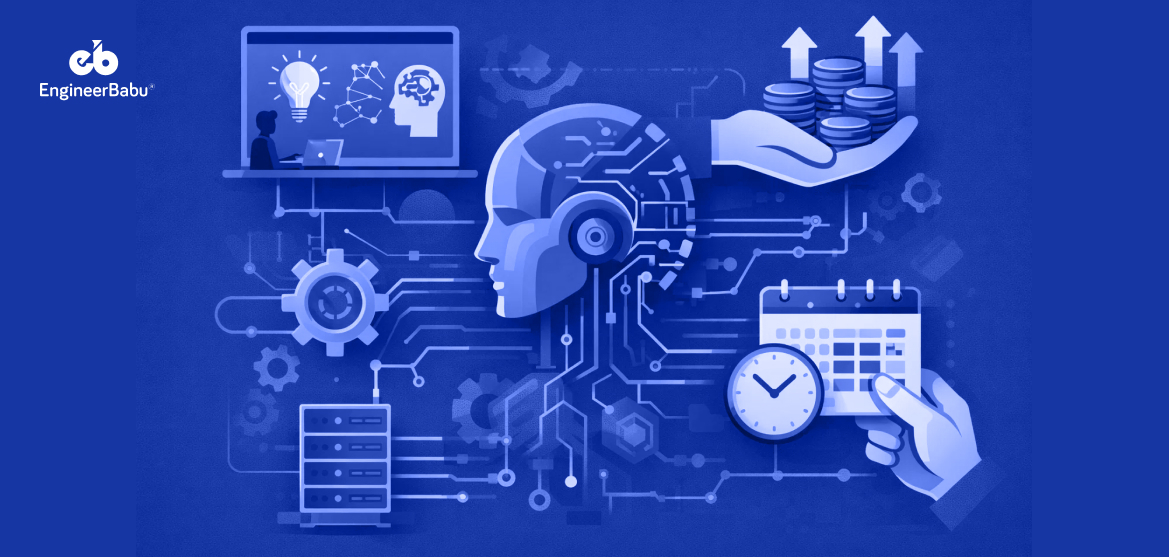
An AI development company builds, deploys, and maintains artificial intelligence solutions tailored to your business needs. These firms range from boutique software houses with deep machine learning expertise to global consultancies running enterprise-scale AI programs. In addition to core AI solutions, they offer comprehensive ai app development services, providing end-to-end development using advanced AI technologies such as machine learning, deep learning, NLP, and computer vision to create innovative AI-powered applications. In 2025, the race to adopt AI has intensified—McKinsey’s latest survey shows AI adopters reporting 2.5x higher revenue growth from generative applications compared to laggards.
Here’s what you can expect to budget for AI projects in 2025:
Typical timelines look like this:
|
Project Type |
Timeline |
|---|---|
|
Clickable prototype |
4–8 weeks |
|
First production release |
3–6 months |
|
Large multi-phase programs |
9–18 months |
Reputable AI vendors follow a structured delivery process: discovery workshop to define goals and constraints, a focused PoC to validate feasibility, an MVP to gather real user feedback, full production rollout with security hardening, and ongoing optimization to keep models performing. These companies are recognized for delivering the best ai development services, offering high-quality, tailored solutions that leverage advanced AI technologies to meet specific business needs. They employ ai experts who guide clients through every stage of strategy, development, and integration, ensuring project success.
How to get started now: Decide on 1–3 use cases where AI could move the needle, prepare sample data that represents your actual business scenarios, then book a consultation with an ai development company. This approach keeps your first engagement focused and lowers risk.

Enterprises in the US, UK, and EU increasingly partner with AI development companies rather than building everything in-house. The reasons are practical: finding and retaining ai engineers with deep learning and LLM expertise is difficult, timelines are unpredictable when you’re learning on the job, and the risk of stalled projects is high—roughly 80% of AI initiatives fail to reach production without proper delivery discipline.
Working with a leading ai development company typically delivers:
In addition, ai development solutions enable business transformation by driving intelligent automation and providing predictive insights that add measurable value to your organization.
Top vendors commonly have 50–300 AI/ML engineers and 10+ years of data and ML delivery experience. They serve industries like healthcare, banking, insurance, retail, manufacturing, logistics, and SaaS—each with its own compliance requirements. These teams are highly proficient in data science, leveraging advanced techniques to enhance their AI capabilities and deliver successful projects across various industries.
A strong AI development company bring multi-layered security, compliance certifications (GDPR, HIPAA, SOC 2, ISO 27001), and mature MLOps practices that keep your AI system reliable after launch.
This section gives you a catalog overview of what artificial intelligence software development services typically include, such as predictive analytics and AI-driven platforms. Think of it as a menu—most projects combine several of these offerings based on your specific needs.
Frame these services in terms of outcomes: “automate claims review,” “cut support tickets by 40%,” “reduce stockouts by 20%.” That’s what matters for business growth.
A business needs an AI development company when they’re at an early stage with AI, when ROI is unclear, or when they have multiple disconnected initiatives competing for resources. Good consultants help you avoid the trap of building AI for its own sake.
Key activities include:
Deliverables you should expect:
Good AI consultants don’t just hand you a slide deck—they help you make trade-offs and build internal buy-in.
Custom ai solutions go beyond off-the-shelf tools like ChatGPT, Jasper, or generic OCR APIs. When your use case requires integration with proprietary data, specific workflows, or domain expertise, you need custom ai development.
Common application types:
Modern custom ai applications typically combine LLMs with vector databases (Pinecone, Chroma, pgvector) and orchestration frameworks (LangChain, LangGraph, LlamaIndex). On the development side, you’ll see stacks like React or Next.js for front-ends, Python with FastAPI for back-ends, and Kubernetes for container orchestration.
Agentic AI has become a dominant theme in 2024–2025. Enterprises care about it because ai agents can automate multi-step tasks that previously required human judgment and coordination across systems.
An AI agent is a system that can plan, call external tools and APIs, and act autonomously within defined guardrails. Unlike simple chatbots that respond to single queries, agents can execute sequences of actions.
Common use cases:
Development often leverages tools like LangGraph, OpenAI Assistants API, or custom multi-agent frameworks. The key challenge isn’t building the agent—it’s making it safe and auditable. Robust monitoring, logging, and human approval workflows are essential so agents don’t go off-script in production.
LLM work now sits at the core of what an artificial intelligence development company offers. Whether you’re building a chatbot, a document analyzer, or a code assistant, you’ll likely be working with large language models.
There are three main approaches:
Fine-tuning makes sense when your domain has specialized vocabulary (legal, medical, technical), when you need consistent output formats, or when safety constraints require tighter control over model behavior.
In 2024–2025, the most commonly used model families include:
|
Model Family |
Provider |
Typical Use Case |
|---|---|---|
|
GPT-4.1, GPT-o3 |
OpenAI |
General-purpose, multimodal |
|
Claude 3.5 |
Anthropic |
Safety-critical, enterprise |
|
Llama 3 |
Meta |
Open-source, fine-tuning |
|
Mistral |
Mistral AI |
Efficient, multilingual |
|
Gemma |
|
Lightweight, on-device |
Observability is critical for production LLM systems. You need to track hallucination rates, latency, token costs, and user satisfaction. Tools like LangSmith, Weights & Biases, or custom dashboards help teams monitor and improve model performance over time.
Chatbots have evolved from simple FAQ responders to sophisticated virtual assistants that handle text, voice, and sometimes even vision inputs. Modern conversational ai can understand context, maintain memory across sessions, and integrate with enterprise systems.
Target use cases include:
Modern chatbot development services support enterprise-grade security: SSO, SAML, OAuth for authentication, role-based access control, and integration with CRMs like Salesforce and ticketing systems like Zendesk or ServiceNow.
Example (2024): An e-commerce brand deployed a support bot that handled 70% of incoming inquiries without human intervention, cutting email volume by 35% and reducing average resolution time from 24 hours to 3 minutes.
The development process typically follows this flow:
Companies typically start with a 4–6 week PoC before committing to a full chatbot program. This reduces risk by validating technical feasibility and user acceptance before major investment.
A focused PoC usually includes:
Success metrics to track:
|
Metric |
What It Measures |
|---|---|
|
First-contact resolution rate |
% of issues resolved without escalation |
|
Containment rate |
% of conversations handled entirely by bot |
|
CSAT |
Customer satisfaction scores |
|
Handle time impact |
Reduction in average resolution time |
PoC costs are typically lower—$10,000–$30,000 depending on complexity—compared with full production deployments. The goal is to learn fast and make a go/no-go decision with real data.

Machine learning models degrade over time. Customer behavior changes, market conditions shift, and the data your model was trained on becomes stale. This phenomenon—called data drift—means ai models require ongoing care to maintain performance.
Typical long-term ai development services include:
MLOps stacks commonly include MLflow, Kubeflow, SageMaker, or Vertex AI for model lifecycle management, plus CI/CD pipelines that automate testing and deployment.
Support models vary based on criticality:
Example: A subscription SaaS development company implemented a churn prediction model in 2023. By updating it quarterly with new customer behavior data through 2024–2025, they maintained 85%+ prediction accuracy and prevented an estimated $2M in annual churn.
The same core techniques—natural language processing nlp, computer vision, predictive analytics—get adapted for industry-specific challenges. Compliance and domain knowledge matter as much as model accuracy.
Finance: Fraud detection, credit risk scoring, automated compliance checks, customer service automation. A regional bank deployed real-time fraud detection in 2024, reducing false positives by 45% while catching 30% more actual fraud.
Healthcare: Clinical decision support, medical imaging analysis, patient triage chatbots, administrative automation. Compliance with HIPAA is non-negotiable; vendors need proven healthcare experience.
Retail & E-commerce: Product recommendations, demand forecasting, dynamic pricing, inventory optimization. A mid-market retailer reduced stockouts by 20% in 2023 using ML-powered demand forecasting.
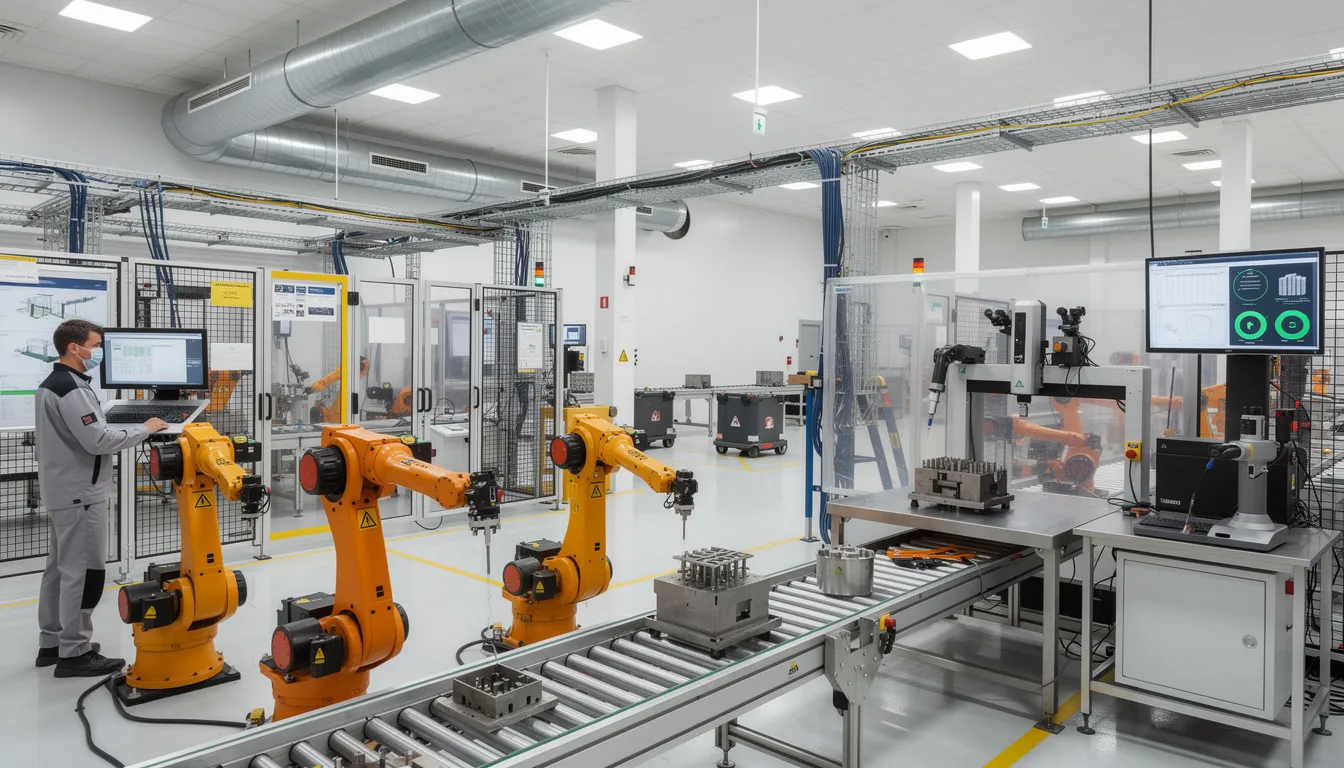
Manufacturing: Predictive maintenance, quality inspection via computer vision, production scheduling, supply chain optimization. Deep learning models analyzing sensor data can predict equipment failures 2–3 weeks in advance.
Logistics: Route optimization, warehouse automation, delivery time prediction, fleet management. Real-time optimization algorithms can reduce fuel costs by 10–15%.
Telecom: Network optimization, churn prediction, customer service automation, fraud detection. AI-powered churn models help retention teams prioritize high-risk customers.
Education: Personalized learning paths, automated grading, student engagement analytics, administrative chatbots.
Generative ai moved from experiments in 2023 to production systems in 2024–2025. As an experienced ai development company, we specialize in generative ai development for building advanced multimodal AI systems based on leading models like GPT, Llama, and more. Companies are now deploying these technologies for tangible business operations—not just demos. We deliver next gen ai solutions by leveraging the latest technologies such as NLP, computer vision, and deep learning frameworks to create innovative AI applications across industries.
Current production use cases include:
Common model families in production: GPT-4.1 and GPT-o3 for text, Claude 3.5 Sonnet for safety-critical applications, DALL·E 3 and Imagen for image generation.
Production generative AI requires guardrails:
Example: A legal services firm deployed a contract review assistant that summarizes 100-page agreements into 1-page briefs, highlighting key obligations, deadlines, and potential risks. Attorneys reduced initial review time by 70%.
While LLMs dominate headlines, computer vision and predictive analytics remain core ai technology capabilities that drive measurable business outcomes.
Computer vision applications:
Predictive analytics applications:
Development typically uses frameworks like PyTorch, TensorFlow, and OpenCV, along with cloud vision APIs from AWS, Azure, and GCP. The key is translating technical capabilities into measurable KPIs:
|
Application |
Measurable Outcome |
|---|---|
|
Predictive maintenance |
40% fewer unplanned outages |
|
Quality inspection |
25% lower scrap rates |
|
Demand forecasting |
15% improvement in forecast accuracy |
|
Safety monitoring |
50% reduction in safety incidents |
Successful AI vendors use a repeatable delivery framework rather than ad-hoc project management. This predictability reduces risk for both sides and keeps ai projects on track.
High-level phases:
|
Phase |
Duration (mid-size project) |
Key Activities |
|---|---|---|
|
Discovery |
2–4 weeks |
Goals, data inventory, constraints |
|
Design |
2–3 weeks |
Architecture, tech stack decisions |
|
PoC / Prototype |
4–8 weeks |
Validate feasibility |
|
Architecture & Build |
3–4 months |
Full development, integrations |
|
Deployment |
2–4 weeks |
Staged rollout, security review |
|
Continuous Optimization |
Ongoing |
Monitoring, retraining, scaling |
Stakeholder involvement matters at every milestone: product owners define requirements, domain experts validate outputs, security teams review architecture, legal ensures compliance, and data teams confirm data quality and governance.
Engagements typically start with a structured workshop that aligns all stakeholders before any code is written.
A typical agenda covers:
Artifacts produced:
Workshops can be remote or on-site, ranging from 1 day to 2 weeks of effort depending on complexity.
Example (2025): A US healthcare group ran a week-long workshop with an ai development partner to identify safe AI use cases under HIPAA. They emerged with three prioritized initiatives—clinical documentation assistance, patient scheduling optimization, and claims processing automation—each with defined guardrails and compliance checkpoints.
This is where teams validate feasibility fast before major investment. The goal is learning, not perfection.
Typical PoC steps:
PoC constraints to set expectations:
Decision criteria for moving forward:
Budget typically ranges from $15,000–$40,000, with duration of 4–8 weeks.
Once a PoC validates the concept, the focus shifts to building a secure, scalable production system. This is where most of the ai development project budget gets spent.
Architecture decisions:
Development work:
Deployment approach:
Enablement:
The “operate and improve” phase can last months or years. Shipping the first version is just the beginning.
Ongoing activities:
KPIs to track continuously:
|
Metric |
Why It Matters |
|---|---|
|
Model accuracy |
Core performance indicator |
|
Latency |
User experience impact |
|
Adoption rate |
Business value realization |
|
ROI |
Executive justification |
|
User satisfaction |
Long-term sustainability |
Mature programs often expand from 1–2 initial use cases to a portfolio of 10–30 ai initiatives by 2026. This scaling requires governance frameworks, shared infrastructure, and internal AI literacy.
Optional services: 24/7 support for critical systems, incident response, and periodic architecture reviews to identify optimization opportunities.
The market is crowded, and not all vendors claiming AI expertise have real delivery experience. Some are rebranding basic software development; others have only built demos, never production systems.
Selection criteria:
Due diligence steps:
Pricing models:
|
Model |
Best For |
|---|---|
|
Fixed-price |
PoCs and well-defined small projects |
|
Time-and-materials |
Evolving requirements, ongoing work |
|
Dedicated team |
Long-term programs needing consistent capacity |
|
Outcome-based |
Pilot projects with clear success metrics |
5-question vendor checklist:

What does an AI development company actually do day to day?
An artificial intelligence development company designs, builds, deploys, and maintains ai software that solves specific business problems. Day-to-day work includes data engineering and preparation, training and fine-tuning machine learning models, building APIs and user interfaces, integrating with existing systems, monitoring production performance, and iterating based on user feedback. Teams typically include data scientists, ML engineers, software developers, and project managers working together across discovery, development, and ongoing optimization phases.
How much does it cost to build an AI solution in 2025?
Costs vary widely based on complexity. A focused PoC or simple AI app typically runs $15,000–$40,000. Mid-size production projects with integrations and custom models usually cost $50,000–$150,000. Complex enterprise platforms involving multiple ai models, extensive data pipelines, and sophisticated orchestration can exceed $200,000, sometimes reaching $500,000 or more for multi-year programs. Infrastructure costs (cloud compute, API usage, storage) add 10–30% on top of development costs.
How long does it take to see value from AI?
Initial value can emerge quickly—a well-scoped PoC in 4–8 weeks can demonstrate feasibility and directional value. First production releases typically take 3–6 months, at which point you can measure real business outcomes. Full ROI realization often takes 9–18 months as the system gets refined, adoption grows, and you expand to additional use cases. Setting realistic expectations upfront prevents disappointment; AI is an investment, not magic.
Can AI be integrated into our existing software stack?
Yes, seamless integration with existing systems is a core capability of any reputable ai development partner. Modern AI solutions connect via APIs, webhooks, and standard protocols to CRMs (Salesforce, HubSpot), ERPs (SAP, Oracle), communication tools (Slack, Teams), databases, and custom applications. The discovery phase should map all integration points and identify any legacy system constraints. Well-architected ai solutions enhance your current stack rather than requiring wholesale replacement.
How do you keep AI systems secure and compliant?
Enterprise ai services must address data privacy, model security, and regulatory compliance. This includes data encryption in transit and at rest, role-based access control, audit logging for all model interactions, and regular security assessments. For regulated industries, vendors should demonstrate HIPAA, PCI DSS, GDPR, or SOC 2 compliance as relevant. Best ai development companies also implement guardrails against common AI risks: hallucination detection, bias monitoring, PII redaction, and human-in-the-loop workflows for high-stakes decisions.
What’s the difference between using off-the-shelf AI tools and hiring a custom AI partner?
Off-the-shelf tools (like ChatGPT, Jasper, or generic vision APIs) work well for standard use cases and quick experiments. However, they can’t be customized for your specific domain, trained on your proprietary data, or deeply integrated with your systems. A custom ai development company builds tailored ai solutions that match your exact requirements, connect to your data sources, meet your security standards, and evolve with your business. The trade-off is higher upfront investment for significantly better fit and competitive differentiation.
What are the main risks with AI projects, and how are they mitigated?
Common risks include data privacy breaches (mitigated through encryption, access controls, and compliance frameworks), model hallucinations (addressed via retrieval-augmented generation, output validation, and human review), bias in outputs (monitored through fairness testing and diverse training data), and vendor lock-in (avoided through open standards, portable architectures, and clear IP ownership). A proven track record of delivering production AI systems is the best indicator that a vendor knows how to navigate these challenges.
How do I get started with an AI development company?
First, schedule a discovery call to discuss your goals, challenges, and potential use cases. After signing an NDA, share sample data that represents your actual business scenarios—this helps the vendor assess feasibility and propose realistic solutions. Together, define a focused pilot project with clear success criteria. Starting small, validating results, and scaling what works is the proven path to successful enterprise ai development.
Finding the right ai development partner is about more than comparing proposals and hourly rates. You need a team that understands both the technology and your business reality—one that can improve operational efficiency while navigating the complexities of enterprise ai development.
The best ai development company should have a proven track record of delivering innovative ai solutions that generate valuable insights and drive real business efficiency. They’ll help you scale ai initiatives from initial experiments to production systems that transform business processes.
Start with a focused PoC, measure results against clear KPIs, and scale what works. The organizations winning with AI in 2025 aren’t the ones who invested the most—they’re the ones who executed disciplined, outcome-focused programs with the right partners.
Ready to explore what AI can do for your evolving business? Identify 1–3 high-impact use cases, gather sample data, and reach out to a shortlisted vendor for a discovery conversation. The path from idea to production is shorter than you think when you have the right ai development partner by your side.
Seamless integration is at the heart of successful AI adoption. A leading AI development company doesn’t just build standalone models—they ensure your custom AI solutions work harmoniously with your existing systems, from CRMs and ERPs to data warehouses and cloud platforms. This interoperability is essential for maximizing the value of AI technology and driving real business efficiency.
Robotic Process Automation (RPA) has evolved from simple rule-based bots to intelligent automation powered by AI and machine learning. Today’s AI development services enable businesses to automate not just repetitive tasks, but also complex processes that require decision-making, data analysis, and adaptation.
AI for IT operations, or AIOps, is transforming how organizations manage and optimize their technology infrastructure. By leveraging machine learning models, data analysis, and intelligent systems, AIOps platforms deliver proactive, automated management of complex IT environments.
As AI becomes integral to business operations, security and safety are non-negotiable. A reputable AI development company embeds robust security and compliance measures throughout the AI development lifecycle, ensuring your AI solutions are trustworthy, resilient, and aligned with regulatory requirements.
The true value of partnering with a leading AI development company is measured in real-world results. Here are a few examples of how custom AI solutions have transformed business operations across industries:
1. Insurance claims automation:A major insurer collaborated with an AI software development company to automate claims review using computer vision and NLP. The result: 50% faster claims processing, 30% reduction in manual errors, and improved customer satisfaction.
2. Retail demand forecasting:A mid-sized retailer implemented a machine learning-powered demand forecasting system. By integrating AI models with their ERP and POS data, they reduced inventory costs by 18% and increased on-shelf availability.
3. Manufacturing predictive maintenance:A global manufacturer deployed deep learning models for predictive maintenance on critical equipment. The AI system predicted failures weeks in advance, cutting unplanned downtime by 35% and saving millions in lost production.
4. Financial fraud detection:A regional bank used custom AI algorithms to enhance fraud detection. The solution identified 25% more fraudulent transactions while reducing false positives, streamlining compliance and protecting customer assets.
5. HR virtual assistant:A technology company launched an AI-powered HR assistant to handle employee queries and onboarding. The virtual assistant resolved 70% of requests autonomously, freeing HR staff for strategic initiatives.
These success stories highlight the tangible business growth, operational efficiency, and valuable insights delivered by the best AI development companies. Whether you’re looking to automate processes, enhance customer experience, or unlock new revenue streams, the right AI development partner can turn your vision into measurable impact.