How to Build an LMS: Step-by-Step Guide for 2026


Create engaging, high-performance mobile applications tailored to your business needs. We craft future-ready apps that offer smooth user experiences on all devices.
Build robust and scalable websites and CMS platforms that help you manage content effortlessly. Our development ensures a seamless digital presence.
Launch secure, feature-rich online stores with intuitive shopping experiences. We build tailored eCommerce platforms designed for growth.
Design captivating games with immersive gameplay and stunning graphics. From concept to launch, we build engaging experiences that players love.
Enhance your customer relationships with customized Salesforce implementations. Drive growth and efficiency with smarter CRM solutions.
Harness artificial intelligence and machine learning to automate workflows and gain actionable insights. Our AI transforms data into smart decisions.
Accelerate your software delivery lifecycle with continuous integration, delivery, and infrastructure automation to boost efficiency.
Hire app developers ready to turn your ideas into sleek, high-performing mobile apps for any platform.
Bring in frontend pros who craft smooth, beautiful, and user-friendly interfaces that your visitors will love.
Get backend developers who build fast, secure, and reliable systems to keep everything running behind the scenes.
Hire eCommerce developers who build secure, scalable online stores designed to offer seamless shopping and grow your sales.
Get dedicated developers committed to your projects, delivering consistent quality and speed as an extension of your team.
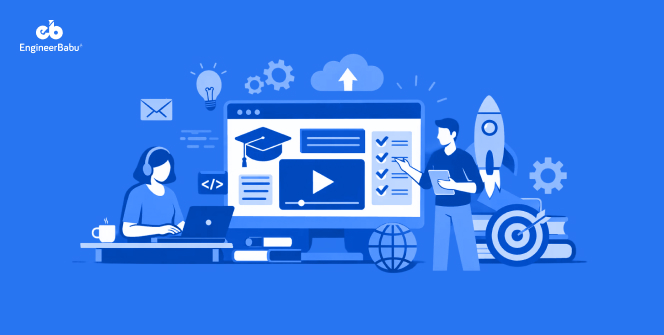
If you have ever tried managing courses on spreadsheets, email threads, and shared drives, you already know how messy learning operations can get. That chaos is exactly why more organizations are building their own LMS platforms today.
In fact, as per Devlin Peck, over 70 percent of organizations now use some form of online learning to train employees and students, and that number continues to grow steadily in 2026.
Whether you are launching an EdTech startup, building a cohort-based course platform, or digitizing corporate training, the real question is not whether you need an LMS. It is how to build an LMS that is scalable, engaging, and future-ready.
In this guide, we will break down how to build an LMS step by step, so you can move from idea to launch with clarity and confidence.
Before getting into how to build an LMS, it is important to understand what it actually does.
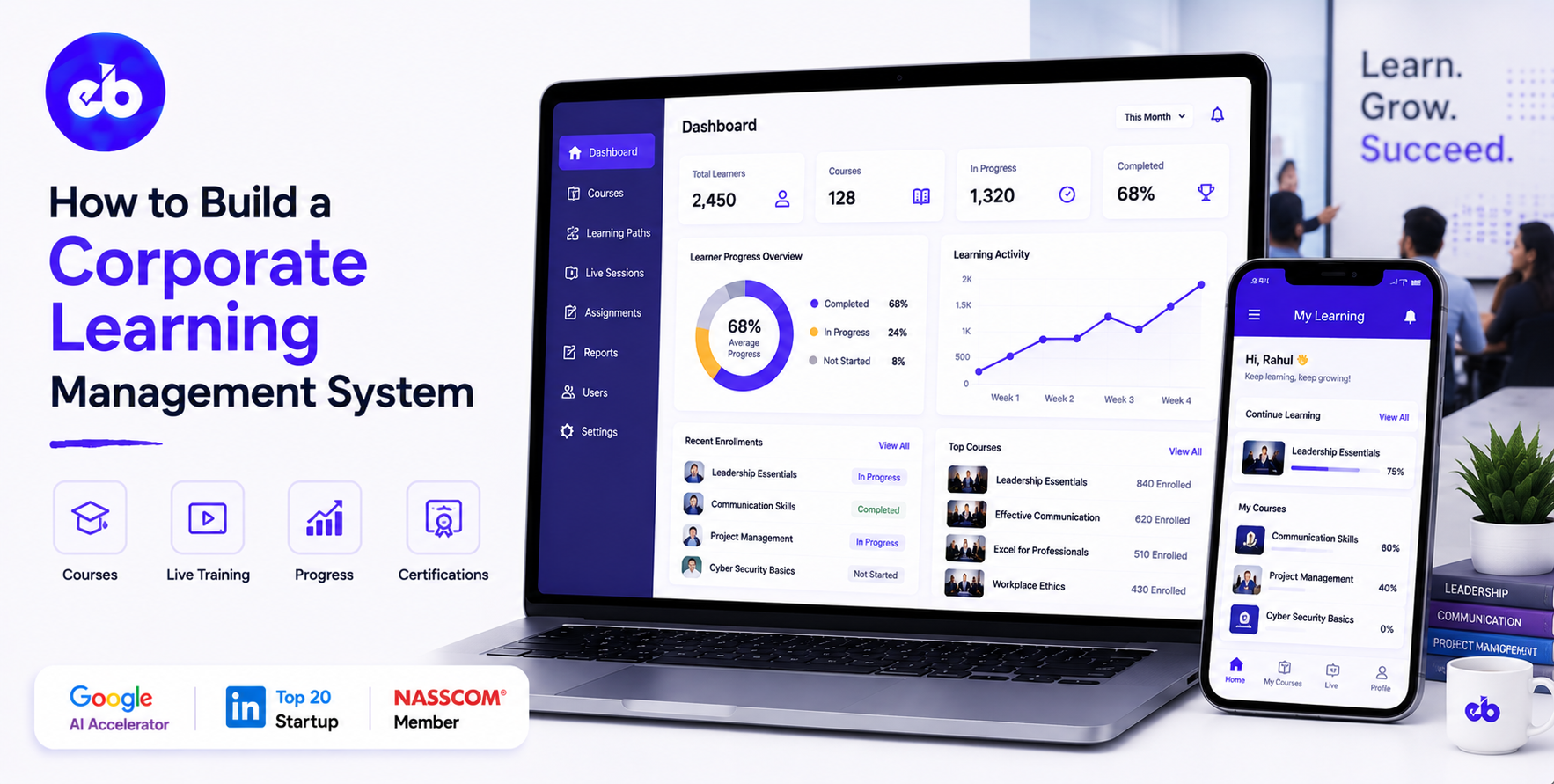
A Learning Management System, or LMS, is a software platform that helps you create, manage, deliver, and track online learning. It acts as a central hub where instructors upload courses, learners access content, and administrators monitor performance and progress.
There are different types of LMS platforms depending on the use case. Academic LMS platforms are used by schools and universities for structured curriculum delivery. Corporate LMS platforms focus on employee training, compliance programs, and skill development.
Marketplace LMS platforms allow multiple instructors to sell courses under one ecosystem, similar to platforms like Udemy. Some businesses also build hybrid LMS products that combine training, community, and content monetization in one system.
Understanding your LMS type early makes every future decision easier, from feature planning to technology selection.
Building an LMS is not just about coding features. It is about making the right decisions in the right order.
From defining your business model to designing user experience, each step directly impacts scalability, cost, and long-term success. Below is a practical breakdown you can follow.
Before you think about features or tech, clarify who your LMS is for and how it will generate revenue. When planning how to build an LMS, this is where most founders either gain clarity or create confusion.
Start by choosing between B2B and B2C. A B2B LMS focuses on companies and institutions, while B2C targets individual learners. Next, decide your revenue model. Subscription works well for recurring learning platforms.
Licensing fits enterprise solutions. If you plan to allow multiple instructors to sell courses, a marketplace model makes sense. A single-organization LMS is more controlled and simpler to manage.
Now it is time to define what your LMS must do on day one. Avoid feature overload. Focus on essentials that make the platform usable and valuable.
Start with user roles. Typically, you will need Admin, Instructor, and Learner dashboards with clearly defined permissions. Course management is the backbone, allowing instructors to upload videos, documents, and structured modules.
When thinking about how to build an LMS effectively, prioritizing these core features ensures your first version solves real problems instead of trying to impress with complexity.
Technology decisions determine whether your LMS will scale smoothly or struggle under growth. This is a critical phase in how to build an LMS that performs well long term.
For the frontend, frameworks like React or Next.js help create responsive, dynamic interfaces. On the backend, scalable environments such as those built with Node.js Development Services are commonly used for handling concurrent users and real-time updates.
Cloud hosting through AWS, Azure, or Google Cloud ensures reliability and scalability. For video streaming, use optimized storage to prevent buffering issues. If AI-based recommendations or automation are planned, structured API Development becomes essential to connect services seamlessly.
Even the most powerful LMS can fail if users find it confusing. Design is not decoration. It directly affects engagement, completion rates, and retention.
A mobile-first approach is critical since many learners access content through smartphones. If you plan native experiences, aligning your LMS roadmap with broader Mobile App Development strategies ensures consistency across devices.
Gamification elements like badges, streaks, and leaderboards can increase motivation. So, when evaluating how to build an LMS that learners actually enjoy using, thoughtful UI and engagement-focused design make all the difference.
Once the foundation is clear, focus on building a Minimum Viable Product. Instead of launching with every possible feature, prioritize essentials like user onboarding, course delivery, assessments, and basic analytics.
This is where many teams explore structured MVP Development to validate ideas before scaling.
An MVP typically takes a few months depending on scope and complexity. The goal is simple. Launch fast, gather real user feedback, improve continuously, and avoid wasting resources on assumptions.
After validating your core platform, you can introduce advanced capabilities. AI-powered course recommendations, adaptive learning paths, and automated grading are becoming standard expectations.
Many platforms now integrate predictive analytics and personalization using structured AI Development Services to improve engagement.
You can also add live classes, discussion communities, advanced dashboards, and even immersive AR or VR modules where relevant. These enhancements should support learning outcomes, not just add complexity.
Before launch, rigorous testing is non-negotiable. Performance testing ensures your LMS can handle concurrent users without slowing down. Security checks protect user data, payment information, and course content.
Device compatibility testing guarantees smooth access across browsers, tablets, and smartphones.
Load testing is especially important if you expect large enrollments during launches. A stable, secure platform builds trust and reduces churn significantly in the early growth phase.
Deployment is just the beginning. Once live, monitor user behavior, performance metrics, and feedback closely. Cloud optimization helps manage costs while maintaining speed and reliability.
As your user base grows, continue improving features and expanding capabilities. Many organizations partner with an experienced LMS software development company to support long-term scaling, integrations, and architectural upgrades without disrupting existing learners.
These are the steps you need to know about how to build an LMS.
Once you understand how everything fits together, the next big decision is whether to build from scratch or use an existing platform. There is no universal answer here. It depends on your goals, budget, timeline, and long-term vision. Let’s break it down simply.
A custom LMS gives you full control over features, scalability, branding, and integrations. If you are serious about how to build an LMS that supports unique workflows or monetization models, custom development makes sense.
You are not restricted by third-party limitations, but it does require higher upfront investment and a clear product roadmap.
Ready-made platforms like Moodle or other SaaS tools are faster to launch and cheaper initially. They work well for standard training needs with minimal customization.
However, if you later decide to expand or rethink how to build an LMS around a unique product vision, you may face technical and scalability limitations.
The real difference shows up over time. Ready-made solutions reduce early risk, but custom platforms offer flexibility and stronger competitive advantage.
If you are thinking long term about how to build an LMS that evolves with your business, ownership and scalability often outweigh short-term convenience.
Cost is usually the first practical concern after understanding the development process. The investment varies based on features, scalability, integrations, design complexity and expertise of LMS software development company.
If you are seriously evaluating how to build an LMS, having a realistic budget range early helps avoid surprises later.
A basic LMS with core features like user roles, course management, quizzes, and progress tracking typically costs between $15,000 to $30,000.
This is ideal if you are validating an idea and testing market demand. At this stage, how to build an LMS is about launching quickly with essential functionality rather than building a fully loaded platform.
A mid-level LMS with payment integration, live classes, advanced dashboards, mobile optimization, and stronger UI/UX usually ranges from $30,000 to $60,000.
Here, how to build an LMS shifts toward scalability and engagement. More integrations and performance enhancements increase both development time and cost.
An enterprise LMS supporting AI features, automation, advanced analytics, and large user bases can cost $60,000 to $150,000 or more, depending on complexity.
If you are exploring how to build an LMS for corporations or institutions at scale, infrastructure, security, and long-term maintainability become major cost factors.
Building an LMS is not just a technical project. It is a product decision that affects engagement, scalability, and long-term growth. The right development partner can make that journey structured instead of overwhelming.
Over the years, EngineerBabu has worked with startups, enterprises, and education-focused businesses building scalable digital products. This practical exposure helps in anticipating real challenges such as performance bottlenecks, learner retention issues, and integration complexity before they become problems.
LMS platforms evolve continuously. An agile approach ensures faster iterations, transparent communication, and room for feedback after every milestone. Instead of long development cycles with delayed validation, you move step by step with clarity.
A focused team that understands your product vision makes a significant difference. Designers, developers, and product strategists collaborate closely, ensuring your LMS is aligned with both technical best practices and business goals.
From day one, the platform is structured for growth. Whether you plan to onboard hundreds or thousands of learners, the architecture supports performance, security, and future integrations without requiring a complete rebuild.
If you are planning to build a modern LMS in 2026, starting with a clear roadmap and an experienced team can save months of rework and unnecessary costs.
Building an LMS in 2026 is no longer just about putting courses online. It is about creating structured learning experiences, tracking real progress, and building a scalable digital ecosystem that grows with your users.
If you take the time to define your model, prioritize the right features, choose a scalable tech stack, and validate with an MVP, the process becomes far more predictable. The key is clarity before complexity.
Whether you are launching an EdTech startup or modernizing corporate training, the real advantage comes from building with long-term vision. If you are looking for an experienced education app development company, EngineerBabu can help you turn that vision into a structured, scalable LMS.
A basic LMS or MVP typically takes 3 to 4 months. A mid-level platform may take 4 to 6 months, while an enterprise-grade LMS with AI and advanced integrations can take 6 to 9 months depending on scope and complexity.
The first step is defining your business model and target audience. You need clarity on whether you are building for B2B or B2C, and how you plan to monetize the platform before starting development.
Yes. Modern LMS platforms often include AI-driven course recommendations, automated grading, predictive analytics, and adaptive learning paths to improve engagement and learning outcomes.
If you need flexibility, scalability, and long-term control, a custom LMS is usually better. Ready-made platforms are faster to launch but may limit customization and future expansion.
Core features include user roles, course management, video hosting, quizzes, certificates, progress tracking, payment integration, and analytics. These form the foundation before adding advanced capabilities.