Virtual Classroom Software Development Guide for EdTech Startups


Create engaging, high-performance mobile applications tailored to your business needs. We craft future-ready apps that offer smooth user experiences on all devices.
Build robust and scalable websites and CMS platforms that help you manage content effortlessly. Our development ensures a seamless digital presence.
Launch secure, feature-rich online stores with intuitive shopping experiences. We build tailored eCommerce platforms designed for growth.
Design captivating games with immersive gameplay and stunning graphics. From concept to launch, we build engaging experiences that players love.
Enhance your customer relationships with customized Salesforce implementations. Drive growth and efficiency with smarter CRM solutions.
Harness artificial intelligence and machine learning to automate workflows and gain actionable insights. Our AI transforms data into smart decisions.
Accelerate your software delivery lifecycle with continuous integration, delivery, and infrastructure automation to boost efficiency.
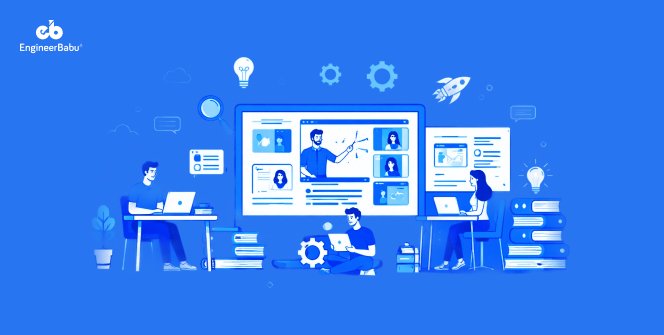
The scope of virtual classrooms is growing rapidly across schools, colleges, coaching institutes, and corporate training sectors. Hybrid learning and remote education are no longer optional; they are becoming the standard model worldwide. Institutions are increasingly investing in Virtual Classroom Software Development to stay competitive and future-ready.
According to UNESCO, over 1.6 billion learners were affected by school closures globally, accelerating digital education adoption. Additionally, Statista reports that the global e-learning market is projected to surpass $400 billion by 2026. This rapid expansion is driving demand for Virtual Classroom Software Development across educational sectors.
This blog explains the importance, cost, process, benefits, and challenges of Virtual Classroom Software Development, along with a practical step-by-step guide for institutions planning to build their own platform.
Education is no longer restricted to physical classrooms. Institutions, coaching centers, and corporate training programs are steadily shifting toward scalable edtech app development to meet modern learner expectations.
Virtual Classroom Software Development plays a crucial role in enabling this transformation by integrating live video classes, real-time interaction tools, attendance tracking systems, assignment management modules, and recorded lecture access within a single unified platform.
Irrespective of geography, institutions can now deliver high-quality education to students worldwide without infrastructure limitations. Whether it is a rural school expanding its reach or an international coaching institute targeting global learners, Virtual Classroom Software Development makes education more accessible, flexible, and scalable for the future.
Let’s understand Virtual Class Room Software Development with an Example
Consider a mid-sized coaching institute in India that struggled with classroom capacity limitations. After investing in Virtual Classroom Software Development, they introduced live streaming, recorded sessions, and online test modules.
Within one year, student enrollment increased by 3x, operational costs reduced by 30%, and revenue doubled through subscription-based online batches.
Real-World Example:
Platforms like Udemy generate significant revenue by offering structured online courses and live classes. Their model proves how powerful Virtual Classroom Software Development can be when monetization features such as subscriptions, course purchases, and certification programs are integrated.
Similarly, BYJU’S scaled massively by investing in technology-driven education delivery systems. These companies demonstrate how strategic Virtual Classroom Software Development creates long-term profitability.
If you are an institution planning Virtual Classroom Software Development, following a structured and strategic approach ensures smooth execution, cost efficiency, and long-term scalability.
The first and most critical step in Virtual Classroom Software Development is choosing the right technology partner. Work with a company that has proven expertise in e-learning platform development, like Engineer Babu, LMS development services, and custom education app solutions.
An experienced EdTech partner understands performance optimization, user engagement strategies, scalability planning, and compliance requirements such as data privacy and student security standards.
Before development begins, clearly define your objectives and expectations. Identify your target audience, whether it is schools, colleges, coaching institutes, or corporate training programs.
Outline essential features such as live video streaming, interactive chat, whiteboard tools, assessment modules, and progress tracking systems. Additionally, decide on your monetization model, whether subscription-based, course-based, or institutional licensing.
Establishing clarity at this stage prevents unnecessary revisions and unexpected cost increases during Virtual Classroom Software Development.
Budget planning is a crucial component of Virtual Classroom Software Development. A basic platform typically ranges between $30,000 and $50,000, while a medium-complexity system may cost between $50,000 and $90,000. Advanced full-fledged platforms with AI features and scalability can exceed $100,000.
In terms of timeline, an MVP generally takes around 3 to 4 months to develop, whereas a complete product with advanced integrations may require 5 to 7 months. Transparent discussions around cost and timeline ensure smooth project execution.
User experience plays a major role in the success of any educational platform. During Virtual Classroom Software Development, ensure that the interface is clean, intuitive, and easy to navigate.
Teachers should be able to schedule and conduct classes effortlessly, while students should find it simple to join sessions, access materials, and submit assignments. A well-designed UI/UX directly impacts engagement and retention.
Instead of building a fully featured system at once, begin with a Minimum Viable Product (MVP). The MVP should include core functionalities such as live video integration, chat support, attendance tracking, and content upload capabilities.
Launching an MVP allows institutions to validate the platform with real users and gather feedback before expanding the full Virtual Classroom Software Development roadmap.
Thorough testing is essential before launching the platform publicly. Conduct beta testing with teachers and students to evaluate video streaming quality, server performance, user interface responsiveness, and data security. Identifying and resolving technical issues early ensures stability and reliability in your Virtual Classroom Software Development project.
Once the MVP proves successful, gradually integrate advanced features such as AI-based analytics, automated grading systems, multi-language support, performance dashboards, and third-party integrations. Scaling strategically ensures sustainable growth while maintaining platform performance. A phased approach to Virtual Classroom Software Development reduces risks and improves long-term success.
Investing in Virtual Classroom Software Development offers long-term strategic advantages for educational institutions, coaching centers, and corporate training providers. Here is how:
One of the biggest benefits of Virtual Classroom Software Development is the ability to scale without investing in additional classrooms, furniture, or campus expansion.
Institutions can onboard thousands of students simultaneously through a well-built digital platform. This scalability is especially beneficial for organizations focusing on e-learning platform development to reach broader markets.
Traditional education models require significant expenses for utilities, maintenance, and physical infrastructure. With Virtual Classroom Software Development, institutions reduce recurring operational costs such as electricity, printed materials, and venue management. Over time, this significantly improves profitability.
A digital classroom removes geographical limitations. Through effective Virtual Classroom Software Development, institutions can offer courses to students worldwide, increasing enrollment potential and brand recognition. Global accessibility also strengthens the institution’s reputation in competitive education markets.
Modern platforms developed through Virtual Classroom Software Development include analytics dashboards that track student engagement, attendance, and performance metrics. These insights help educators personalize learning experiences and improve course effectiveness using advanced LMS development services.
Subscription-based courses, certification programs, and premium learning modules create sustainable income streams. With the right monetization strategy integrated into Virtual Classroom Software Development, institutions can generate consistent recurring revenue rather than relying solely on one-time enrollments.
While the advantages are substantial, institutions must also understand the challenges associated with Virtual Classroom Software Development to ensure long-term success.
Live video streaming and real-time interaction require stable internet connectivity. In regions with limited bandwidth, users may experience lag or disconnections. Optimizing streaming quality and using adaptive bitrate technologies can reduce such issues during Virtual Classroom Software Development.
Educational platforms handle sensitive student data, payment details, and academic records. Without strong security frameworks, privacy risks increase. Institutions must ensure compliance with data protection regulations while implementing encryption during Virtual Classroom Software Development.
Maintaining engagement in a virtual environment can be challenging. Students may lose focus without interactive tools. Poorly designed interfaces during Virtual Classroom Software Development can negatively impact participation and retention rates.
Regular updates, bug fixes, and server monitoring require continuous investment. Institutions must plan the overall cost of Edtech development and ongoing maintenance to sustain performance and security in their Virtual Classroom Software Development initiatives.
If the system architecture is not designed properly from the beginning, scaling later can become expensive and complex. Careful infrastructure planning is crucial during the early stages of Virtual Classroom Software Development.
Proactive planning and strategic technical implementation can significantly improve Virtual Classroom Software Development outcomes. Here is how:
Adopting cloud-based infrastructure ensures high availability, scalability, and seamless performance. Cloud composting allows the platform to automatically adjust resources during peak usage, such as live exam sessions or large webinars.
This prevents server crashes and ensures uninterrupted learning experiences. For institutions investing in e-learning platform development, cloud solutions also reduce hardware dependency and long-term infrastructure costs.
Security must be integrated from the earliest phase of Virtual Classroom Software Development. End-to-end encryption protects live video sessions, messaging systems, and student data from unauthorized access.
Multi-factor authentication, secure login systems, and encrypted payment gateways further strengthen platform security. A secure system builds trust among students, parents, and educators.
Student engagement is critical in virtual learning environments. Integrating interactive features such as live polls, quizzes, breakout rooms, gamification elements, and collaborative whiteboards enhances participation. These tools make digital classrooms dynamic rather than passive. Well-planned engagement features significantly increase retention rates and learning outcomes.
Regular vulnerability assessments and penetration testing help identify potential threats before they become major issues. Periodic audits ensure compliance with data protection regulations and maintain system reliability. Continuous monitoring and updates are essential for sustaining long-term success in Virtual Classroom Software Development.
Building a modular and flexible architecture allows easy integration of new features in the future. Whether adding AI-based analytics, multilingual support, or advanced reporting dashboards, scalable design reduces redevelopment costs. Planning scalability at the beginning of Virtual Classroom Software Development ensures smooth upgrades and long-term sustainability.
The education industry is rapidly transforming, and institutions that adopt Virtual Classroom Software Development gain a strong competitive advantage. From scalability to monetization, digital classrooms provide long-term growth opportunities.
If you are planning to build a custom virtual learning platform, EngineerBabu specializes in scalable and secure Virtual Classroom Software Development solutions tailored to your institution’s needs. Schedule a meeting with our team to discuss your App Development requirements and turn your vision into reality.
The virtual classroom software development cost typically ranges from $30,000 to $100,000+, depending on features and scalability.
An MVP takes around 3–4 months, while a full product may require 5–7 months.
Live streaming, chat, attendance, whiteboard tools, and recording capabilities are essential.
Yes, starting with an MVP reduces initial costs and allows gradual scaling.
Custom Virtual Classroom Software Development offers better scalability and branding compared to off-the-shelf LMS solutions.