How to create an app like Calm – sleep, meditation, relaxation programs


Create engaging, high-performance mobile applications tailored to your business needs. We craft future-ready apps that offer smooth user experiences on all devices.
Build robust and scalable websites and CMS platforms that help you manage content effortlessly. Our development ensures a seamless digital presence.
Launch secure, feature-rich online stores with intuitive shopping experiences. We build tailored eCommerce platforms designed for growth.
Design captivating games with immersive gameplay and stunning graphics. From concept to launch, we build engaging experiences that players love.
Enhance your customer relationships with customized Salesforce implementations. Drive growth and efficiency with smarter CRM solutions.
Harness artificial intelligence and machine learning to automate workflows and gain actionable insights. Our AI transforms data into smart decisions.
Accelerate your software delivery lifecycle with continuous integration, delivery, and infrastructure automation to boost efficiency.
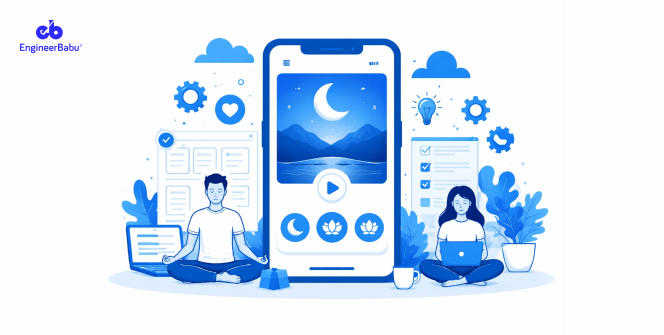
In today’s fast-paced world, finding a few minutes of calm can feel impossible. That’s why meditation apps have exploded in popularity, helping people manage stress, improve sleep, and boost focus, all from their phones.
In fact, the global meditation app market is expected to reach USD 360.61 million by 2031, as per cognitive market research. This shows just how much demand there is for guided mindfulness.
If you’ve ever wondered how to create a meditation app like Calm, this guide will walk you through the features, technology, and development steps needed to build a product that users love.
Before building features or designing the UI, it helps to understand why Calm works so well. The app is more than just a collection of meditations; it creates a daily habit around mindfulness, sleep, and mental wellness.
Understanding this ecosystem is key for anyone thinking about how to create a meditation app like Calm that users actually stick with.
Guided sessions are the core of the Calm experience. Users can choose from stress relief, focus, or sleep meditations, making the app feel personalized and supportive. When planning how to create a meditation app like Calm, offering high-quality, structured sessions is essential to keep people engaged day after day.
Calm’s sleep stories and ambient music are what make it unique. They help users relax and unwind, even if they struggle with insomnia or stress. Including similar features is crucial when learning how to create a meditation app like Calm that feels holistic, not just functional.
Tracking progress and habits is subtle but powerful. By showing streaks, minutes meditated, or mood patterns, the app reinforces positive behavior. Integrating these tracking features is a must if you want users to feel rewarded and motivated while building a Calm-like meditation app.
Features are what turn a meditation app from a simple timer into a daily companion. When thinking about how to create a meditation app like Calm, it’s important to focus on both engagement and personalization.
These key features ensure users feel supported, motivated, and rewarded on their mindfulness journey.
A seamless onboarding and personalized experience are critical. Users should be able to set meditation goals, track their progress, and customize reminders.
Including daily streaks and progress charts is essential when figuring out how to create a meditation app like Calm that keeps users coming back consistently.
Content is the heart of the app. Guided sessions, ambient music, and themed meditation courses help users relax, focus, or sleep better.
When planning how to create a meditation app like Calm, offering diverse, high-quality content ensures it appeals to both beginners and advanced practitioners.
Keeping users motivated requires smart engagement features. Push notifications, achievement badges, and community challenges encourage consistency.
These retention strategies are crucial when learning how to create a meditation app like Calm that becomes part of someone’s daily routine rather than a one-time download.
Choosing the right technology is what makes a meditation app smooth, scalable, and reliable.
When thinking about how to create a meditation app like Calm, the stack determines how well your sessions stream, how personalization works, and how the app performs across devices. Here’s a practical look at the tech behind a successful mindfulness app.
The frontend defines what users see and interact with daily. Cross-platform frameworks or native development ensure smooth performance, especially for audio streaming and interactive elements. iOS app development and Android app development practices help deliver a responsive, visually calming interface, which is crucial when building an app like Calm that users rely on for daily mindfulness.
The backend powers all app functions, from session scheduling to user progress tracking. Node.js development services are often used for fast, scalable performance. Secure API development connects mobile apps, content management, and analytics seamlessly, helping your meditation app deliver a smooth experience while scaling with users.
Personalization is what makes a Calm-like app feel human. Efficient Machine learning development services can help your app analyze meditation habits and preferences to recommend sessions that resonate with users. AI-driven suggestions keep engagement high and help when learning how to create a meditation app like Calm that feels tailored to each user.
Cloud storage ensures audio and meditation content is delivered reliably. Integrations with payment gateways, analytics platforms, and wearable devices keep the app functional and connected. This infrastructure is essential for building a meditation app like Calm that can scale smoothly without frustrating users with downtime or slow performance.
Developing a meditation app can feel overwhelming, but breaking it down into steps makes it manageable. When thinking about how to create a meditation app like Calm, careful planning ensures the app is both engaging and technically sound.
Each step focuses on building a foundation that users will return to day after day.
Understanding the market is the first step. Research what meditation apps offer, what users love, and where they feel disappointed. Insights from competitors help shape features, UX, and engagement strategies. This is a key step when planning how to create a meditation app like Calm that stands out in a crowded space.
Start with a minimum viable product that includes essential guided meditations, music, and tracking. MVP development services can help prioritize features, ensuring the app delivers value without unnecessary complexity. This approach allows you to test the concept, gather feedback, and iterate efficiently. Defining the MVP is crucial when learning how to create a meditation app like Calm that users actually use.
A calming, intuitive interface is a must. Colors, typography, and micro-interactions all contribute to the user’s sense of peace. Content planning ensures a mix of guided sessions, music, and progress tracking. Thoughtful UI/UX design is essential when figuring out how to create a meditation app like Calm that users find relaxing and easy to navigate.
Building in iterations lets you adapt based on feedback. Regular testing for performance, audio quality, and user experience ensures the app feels polished. Agile development also makes adding new content or features smoother. Staying flexible is key to creating a meditation app like Calm that keeps evolving with user needs.
Launching isn’t the end; it’s just the start of user engagement. Plan app store optimization, onboarding flows, and initial content updates. Post-launch support ensures bugs are fixed and the app runs smoothly. Continuous improvement helps your app become a daily habit, which is essential when learning how to create a meditation app like Calm.
The cost depends on platforms, features, design, AI personalization, and backend complexity. A basic MVP with essential guided sessions, tracking, and notifications will cost less than a full-featured app with AI-driven recommendations, music streaming, and offline support.
Cloud infrastructure, content licensing, and ongoing maintenance also add to the budget.
Planning carefully and leveraging development expertise like end-to-end mobile app development can help optimize costs while delivering a high-quality meditation app.
Even with a solid plan, creating a meditation app comes with its own set of challenges. When thinking about how to create a meditation app like Calm, anticipating these obstacles can save time, cost, and frustration. Here are the most common hurdles startups face.
Meditation apps risk users dropping off after a few sessions. Keeping users engaged requires a mix of personalized content, reminders, and streak tracking.
When building an app like Calm, it’s important to make mindfulness a daily habit, not a one-off experiment. Motivation features and gamified progress can help sustain engagement over months.
High-quality meditation sessions, music, and sleep stories are expensive and time-consuming to produce. Licensing existing content or hiring experts is often necessary.
Ensuring diverse, culturally sensitive, and professionally guided sessions is key when thinking about how to create a meditation app like Calm that appeals to a global audience.
Streaming guided meditations and music without interruptions can be technically challenging. Users also expect offline access for sessions during travel or low connectivity.
Balancing seamless streaming, caching, and storage is crucial when planning how to create a meditation app like Calm that works anytime, anywhere.
Meditation apps collect sensitive user data, like mood logs or health insights. Ensuring compliance with regulations and implementing strong security practices is essential.
Protecting user trust is non-negotiable when creating an app like Calm, as any data breach can damage credibility instantly.
Building a meditation app is about more than coding, it’s about creating a daily ritual that helps users feel calmer, focused, and more mindful.
From guided sessions to sleep stories and personalized recommendations, every detail matters when thinking about how to create a meditation app like Calm.
Careful planning, the right technology, and engaging content make the difference between an app users try once and one they keep.
If you’re ready to turn your meditation app idea into reality, EngineerBabu can assist with healthcare software development services, helping you build a scalable, secure, and user-friendly app.
The timeline depends on features, platform choice, and AI development services. An MVP can take 4–6 months, while a full-featured app with streaming and personalization may take 8–12 months. Agile development can help speed up iterations without compromising quality.
Most meditation apps launch on both iOS and Android to reach a wider audience. Native development or cross-platform frameworks ensure smooth audio streaming and responsive UX. Mobile app development decisions should consider scalability and device compatibility.
AI/ML isn’t mandatory but greatly enhances engagement. Personalized session recommendations, adaptive meditation plans, and content suggestions keep users motivated. Using AI or machine learning can automate personalization effectively.
Daily streaks, push notifications, reminders, and gamification help form a habit. Personalized content, progress tracking, and community challenges also encourage long-term usage. These features are essential when thinking about how to create a meditation app like Calm that becomes part of daily life.
Cost depends on features, platforms, AI/ML personalization, and content library. An MVP with basic guided sessions and tracking is more budget-friendly, while full-featured apps with audio streaming, offline access, and personalization require higher investment. Cloud storage and ongoing maintenance also add to the budget.