Your next financial advisor might not have a desk. It might be an algorithm running quietly inside an investing app, rebalancing your portfolio while you sleep.
That shift is already well underway. The global robo-advisory market is set to grow from $14.25 billion in 2025 to $18.7 billion in 2026, and could reach $54.74 billion by 2030, according to The Business Research Company.
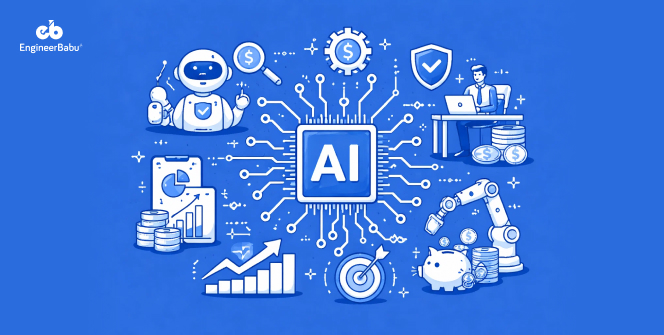
AI in WealthTech is the use of machine learning, optimization algorithms, and automation to manage portfolios, profile risk, and personalize investment advice. It helps wealth platforms serve more investors at a lower cost, with advice that stays consistent and compliant.
For decades, wealth management was human-led, expensive to scale, and mostly reserved for high-net-worth clients. Today’s investors want personalization, transparency, and lower fees. Firms want to grow without adding advisors at the same pace. This guide breaks down where AI actually helps, what it costs to build, and how to stay on the right side of regulators. So, let’s jump right into it.
TL;DR
- AI in WealthTech uses machine learning and automation to build, monitor, and rebalance portfolios at scale.
- The use cases that deliver real value are robo-advisory, portfolio optimization, risk profiling, personalized recommendations, and advisor support.
- An MVP costs about ₹40L to ₹90L, while a production-grade AI in WealthTech platform starts at around ₹1.2Cr.
- EngineerBabu helps fintech founders build compliant, explainable AI wealth platforms that hold up in audits and market swings.
What Does AI in WealthTech Really Mean?
It isn’t chatbots picking stocks or black-box systems making unchecked calls. At its core, it means using machine learning, statistics, and automation to support wealth management. This covers portfolio construction, asset allocation, risk profiling, and investment recommendations.
These systems work in high-stakes settings. Every output has to be financially sound, explainable to clients and regulators, and reliable across market cycles.
A bad recommendation in a streaming app wastes an evening. In a wealth platform, it can mean real financial loss, a compliance breach, or a client who never comes back. That’s why production-grade systems put risk awareness and governance ahead of aggressive prediction.
The same principle runs through AI in fintech software development as a whole. Any machine learning development for money-related products has to prove it’s accurate and auditable before it ships.
Why AI Has Become Critical in WealthTech
Wealth management didn’t wake up one day needing AI. Pressure built for years through rising costs, changing investor expectations, and digital-first competitors. For most teams building wealth management software, AI is now a requirement rather than an experiment.
-
High Advisor Costs Limit Growth
Traditional advisory depends on people, so every new client adds time and cost. AI in WealthTech lets firms support more clients without growing advisory teams at the same pace. Margins stay realistic, and service quality holds up.
-
Personalization Was Never Truly Scalable
Every investor wants advice that feels tailored, but manual personalization only works for a small book of clients. Most people ended up in generic model portfolios. AI adjusts allocations and risk levels continuously, using live data science models instead of static profiles.
-
Manual Portfolio Management Breaks at Scale
Rebalancing and monitoring hundreds of portfolios by hand leads to missed drifts and uneven follow-through. AI-driven systems handle these tasks around the clock. Portfolios stay aligned with goals as markets move and client situations change.
-
Inconsistent Advice Creates Risk
Two advisors can give different advice to nearly identical clients, which creates trust and compliance problems. AI in WealthTech applies the same rules and risk frameworks to everyone. Human advisors still step in where judgment and context matter most.
Traditional Wealth Management vs AI-Powered WealthTech
Here’s how the two models compare on what investors and regulators care about most.
| Aspect |
Traditional Wealth Management |
AI-Powered WealthTech |
| Cost per client |
High |
Low at scale |
| Personalization |
Manual and limited |
Continuous and data-driven |
| Rebalancing |
Periodic, done by hand |
Automatic when allocations drift |
| Consistency |
Varies by advisor |
Same rules for every client |
| Minimum investment |
Often high |
Low entry points |
| Compliance records |
Manual notes |
Automated audit logs |
In practice, AI handles the repetitive work, which frees advisors to focus on planning and client relationships.
Core AI Use Cases in WealthTech (That Actually Work)
Plenty of platforms claim to use AI. Far fewer use it where it counts. These five AI in WealthTech use cases consistently deliver measurable value when they’re built with discipline.
-
Robo-Advisory and Automated Investing
This is the most visible application. Robo-advisors assess an investor’s goals, risk tolerance, and time horizon, then build and manage a portfolio automatically. They rebalance when allocations drift and can harvest tax losses where rules allow. The real strength is structured portfolio logic backed by strict risk controls. Most teams start here when planning investment software development, because it proves value to users quickly.
-
AI-Based Portfolio Optimization
Modern optimization goes beyond classic mean-variance models. Systems track correlations, volatility trends, and shifting market regimes to adjust allocations. Some add time-series forecasting and scenario simulations to stress-test portfolios. In AI in WealthTech, optimization focuses on managing downside risk across market conditions rather than squeezing out extra returns.
-
Risk Profiling and Suitability
Risk profiling is foundational and often underrated. Instead of relying on one static questionnaire, AI combines behavioral signals, transaction history, and how clients react to market dips. Risk scores sharpen over time, and misclassification drops. In regulated markets, every recommendation must tie back to a documented, defensible risk profile.
-
Personalized Investment Recommendations
AI scans portfolio gaps, client behavior, and market data to suggest targeted moves. These might be rebalancing alerts, new asset classes, or shifts tied to long-term goals. Context is everything here. Suggestions should fit the client’s plan and never read like random product pushes. Done right, this lifts engagement and retention.
-
Advisor Support and Operations
AI works behind the scenes too. It drafts portfolio summaries, explains risk in plain language, runs compliance checks, and surfaces client insights for advisors. Much of this runs on generative AI and large language models, wrapped in strong guardrails and validation layers. Teams that already know how to build an AI chatbot for clients often extend the same stack into advisor copilots.
Cost of Building AI in WealthTech
Cost is the most misunderstood part of building AI in WealthTech. You’re paying for more than models. You’re paying for reliability, governance, and a platform that survives market stress and regulatory reviews.
| Tier |
Cost (India-led team) |
Approx. USD |
What’s Included |
Best For |
| MVP |
₹40L to ₹90L |
~$45K to $100K |
Basic portfolio models, initial risk profiling, market data integrations, internal dashboards |
Pilots, early users, fundraising |
| Production-grade platform |
₹1.2Cr to ₹4Cr+ |
~$135K to $450K+ |
Advanced optimization, recommendation engine, real-time monitoring, governance and compliance tooling, scalable infrastructure |
Live assets, audits, scale |
WealthTech AI MVP
An MVP is built to validate your core logic with a small group of users. It usually covers basic portfolio construction, early risk profiling, market data feeds through API development, and simple internal dashboards. It’s a strong fit for pilots and investor conversations. This guide to MVP development for startups shows how to scope this stage without overbuilding.
Production-Grade WealthTech AI Platform
A full platform adds advanced optimization, personalized recommendations, real-time monitoring, governance layers, and compliance tooling. At this level, AI in WealthTech becomes explainable and audit-ready. Rigorous performance testing matters too, since markets punish platforms that slow down during volatility. Cheap builds may launch faster, but they rarely survive a market shock or a regulatory review.
Compliance and Regulatory Risks in WealthTech AI
Compliance is the one area where shortcuts get expensive fast. Every AI in WealthTech system must operate inside clear financial and legal boundaries. Otherwise, the long-term risk outweighs any efficiency gain.
Know Your Regulators
The rules depend on where your investors live. Plan for these from day one:
- India: SEBI’s investment adviser regulations and its growing focus on responsible AI use in securities markets.
- United States: SEC fiduciary duties for registered investment advisers, plus Regulation Best Interest and FINRA rules for broker-dealers.
- European Union: MiFID II suitability requirements, along with obligations under the EU AI Act.
Investment Suitability and Disclosure
Every recommendation must match a documented risk profile and investment goal. That calls for clear suitability logic instead of vague scoring. Assumptions, limits, and risk factors should be shown to users plainly, never buried in technical outputs.
Explainability and Audit Trails
Regulators expect explainable recommendations, transparent assumptions, and audit-ready logs. Every portfolio change should trace back to a rule or model decision. Tools built through compliance automation software development can handle much of this logging. Human oversight still matters, because black-box systems rarely survive regulatory review.
Build vs Buy AI in WealthTech
Every founder hits this question eventually. Should you build your own AI stack or plug into an existing robo engine? The answer depends on how central portfolio logic is to what makes you different.
Build
Building in-house gives you full ownership of your core IP. You control portfolio construction, optimization rules, and risk frameworks. It’s the right call if investment intelligence is your main selling point. The tradeoff is higher upfront cost, longer timelines, and a need for strong data and compliance talent. Weighing in-house vs agency app development helps you decide who should build it.
Buy (Third-Party Robo Engines)
A ready-made engine gets you to market faster with tested models and prebuilt infrastructure. The catch is limited customization and possible vendor lock-in. Your flexibility can shrink as your product vision outgrows what the provider supports.
Hybrid (Most Effective)
Most serious platforms mix both. They build core portfolio logic and suitability frameworks in-house, then use vendors for market data, infrastructure, or supporting analytics. This balances speed with control and keeps governance over critical decisions in your hands. For long-term resilience, hybrid is usually the strongest path.
Future of AI in WealthTech (2027 to 2030)
Over the next few years, AI in WealthTech will fade into the background as core infrastructure. Portfolios will adjust in near real time to goals, risk signals, and market conditions. Advisors will work alongside AI copilots that handle analysis, explanations, and compliance checks, leaving more time for strategic conversations.
Regulators are also moving toward clearer AI frameworks, which will reward disciplined builders over experimental ones. A mature lending software development company puts risk and governance before growth. AI-native wealth firms that follow the same playbook will steadily pull ahead of traditional incumbents.
Final Thoughts
AI in WealthTech is about building investment systems people can trust through every market cycle. The platforms that win respect risk before chasing returns, design for explainability from day one, and treat AI as long-term infrastructure.
Strong WealthTech companies invest in compliance early and earn trust over time. As the industry matures, reliability will matter far more than novelty. Over the next few years, AI-native platforms will shape how people invest.
Looking to Build a Production-Grade WealthTech AI Platform?
EngineerBabu helps fintech founders design and build compliant, scalable AI systems for wealth management. From robo-advisory engines to advisor copilots, you can hire fintech developers who understand regulated financial products. Tell us what you’re building, and we’ll help you plan the right path.
FAQs
-
Is AI in WealthTech safe?
Yes, when it’s built with explainability, governance, and compliance from the start. Safe platforms log every decision, tie recommendations to documented risk profiles, and keep humans in the loop for judgment calls.
-
Can AI replace human advisors?
No. AI takes over repetitive work like rebalancing, monitoring, and reporting. Human advisors remain essential for complex planning, major life events, and building client trust.
-
How much does it cost to build an AI WealthTech platform?
An MVP typically costs ₹40L to ₹90L (about $45K to $100K) and helps validate core portfolio logic. A production-grade platform with compliance tooling and real-time monitoring starts around ₹1.2Cr and can exceed ₹4Cr.
-
What is the difference between a robo-advisor and AI in WealthTech?
A robo-advisor is one application of AI in WealthTech. The broader field also covers risk profiling, portfolio optimization, personalized recommendations, advisor copilots, and compliance automation.
-
Is India a good place to build WealthTech AI?
Yes. India offers deep fintech app development and AI engineering talent at scale, often at a lower cost than US teams. This breakdown of US developers vs offshore developers covers the cost, quality, and collaboration tradeoffs.