Create engaging, high-performance mobile applications tailored to your business needs. We craft future-ready apps that offer smooth user experiences on all devices.
If you’ve ever scrolled through your phone at 8 PM wondering what to eat, you already know the power of a good food delivery app. These applications have transformed from simple ordering tools into full-service ecosystems handling everything from restaurant meals to groceries delivered straight to your door.
However, small restaurants may struggle to get noticed among high-value partners on large food delivery platforms, making it harder for them to compete with more prominent listings.
This guide breaks down what you need to know about using food delivery apps in 2025—covering availability, data practices, features, pricing, and how to choose the right app for your situation.
About this app
This is a 2025 overview of a typical food delivery app, similar to platforms like Uber Eats, DoorDash, and Grubhub food delivery app. Whether you want to order food from local restaurants, get groceries delivered, or grab snacks for a late night, these apps follow a common pattern worth understanding.
Availability varies significantly by country and region. Most major apps operate across the US, UK, Canada, India, and parts of the EU as of 2025, but coverage can be inconsistent outside metro areas.
Latest major update: Typically around mid-November 2025, with minor bug-fix updates rolling out weekly in high-demand cities like New York, London, and Toronto.
Geographic coverage: Apps depend on local partnerships with restaurants and courier networks—small towns often see fewer options than large cities.
Platform reach: Leading apps now operate in over 11,500 cities worldwide across 30-45 countries, though depth of service varies. For restaurant owners, selecting the right delivery site is crucial for improving visibility and operational efficiency.
Food deliveries app competition: With numerous food delivery apps available, it’s essential to find the one that fits your needs best.
Before downloading: Always verify App Store or Google Play regional availability and check which cities are supported before subscribing to any membership.
User penetration: Over 65% of Americans are expected to use food delivery services by 2025, with similar adoption in Canada (56%) and Australia (48%).
Data safety
Food delivery apps follow common 2025 privacy patterns similar to Uber Eats and Instacart, but specific policies depend on your region. GDPR applies in the EU, CCPA in California, and various other frameworks elsewhere. Always review the privacy policy for your location before signing up.
When you create an account, the app collects data to process your orders and improve the service. Here’s what typically happens with your information:
What data is collected:
Personal details: name, email, phone number, and delivery address
Payment information: credit/debit card details or digital wallet connections
Location data: GPS and IP-based tracking to find nearby restaurants and calculate delivery times in cities like Chicago, Berlin, and Sydney
How data is used:
Processing orders and payments through secure gateways
Real-time order tracking and estimated delivery calculations
Personalized restaurant recommendations based on your order history
Marketing communications (usually opt-in or easy to disable)
Marketing tools may receive data for targeted promotions
Data is typically encrypted in transit using HTTPS/TLS 1.2+
User controls:
Request data deletion from Privacy or Account settings
Download a copy of your personal data
Manage marketing communication preferences
Contact support via in-app chat for specific requests
Send a message to your delivery driver or shopper for real-time updates or instructions
Food deliveries app convenience: Many food deliveries apps now allow you to reorder favorites quickly, enhancing the user experience.
Common customer concerns: Delivery delays, incorrect orders, and mixed reviews on customer support responsiveness remain frequent complaints—especially during peak times like Friday night or major events. Clear in-app messaging is important for resolving issues quickly, such as missing items, delays, or refund requests.
What’s new
A fresh batch of updates has just arrived, designed to satisfy your cravings for a smoother, more rewarding food deliveries app experience.
The latest 2025 release focuses on speed, reliability, and transparency. Here’s a changelog-style summary of recent improvements:
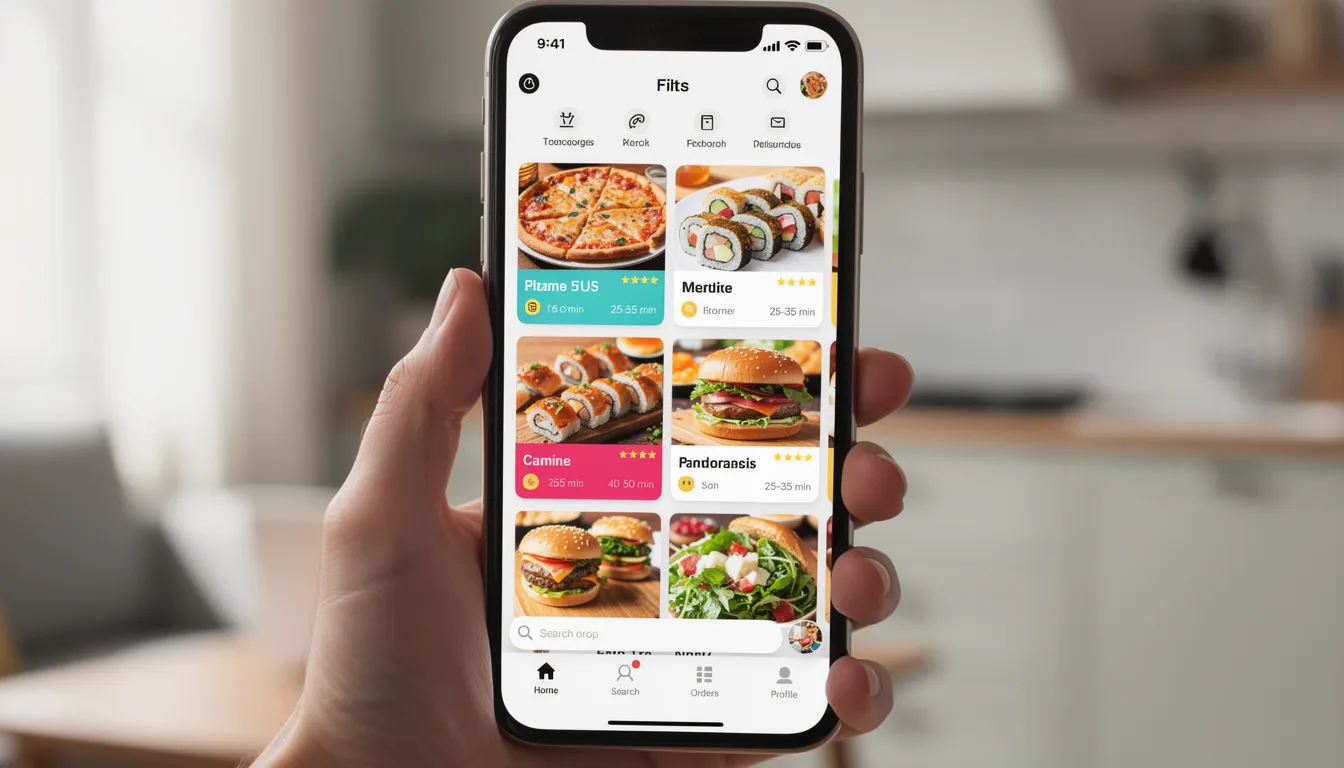
Faster restaurant search: Improved algorithms help you find food more quickly, with results loading in under two seconds even for large metro areas.
More accurate ETAs: Advanced real-time tracking now factors in kitchen prep, traffic, and weather to provide even more precise delivery time estimates, along with real-time traffic, restaurant prep times, and courier availability.
Upgraded tracking maps: Enhanced GPS accuracy in cities like Los Angeles, Mumbai, and Berlin shows courier movement with 30-second refresh rates.
Stability fixes: Reduced app crashes on Android 15 and iOS 18 devices, plus smoother checkout flows on all platforms.
Menu loading improvements: Restaurant menus with hundreds of items now load significantly faster, reducing the wait when browsing.
Clearer fee breakdowns: Delivery fees, service fees, and small order fees now display with explanations before you reach checkout.
Better tip selection: Redesigned tip screens make it easier to adjust amounts or add a custom tip for your driver.
Improved issue reporting: If orders are late or missing items, the refund request flow is now streamlined for faster resolution.
To further satisfy loyal users, promotions and loyalty programs now provide discounts and rewards for frequent use of the food deliveries app.
Restaurant Takeout & Grocery Delivery
Modern food delivery apps have evolved far beyond pizza orders. Today’s platforms allow users to order food and groceries from various restaurants and stores, combining restaurant meals, grocery delivery, and convenience items like paper towels, snacks, and drinks—all in one interface. Many food delivery apps now partner with a wide range of retailers, including supermarkets, pharmacies, alcohol stores, and other retail goods providers, to offer expanded delivery options. You can eat a delicious meal from your favorite spot, then restock your fridge or shop for essentials without opening a separate app.
The rise of food delivery apps is a testament to how technology has reshaped our dining habits.
Restaurant selection: Choose from thousands of local restaurants and national chains (McDonald’s, KFC, Subway, Chipotle) with upfront delivery and service fees shown before checkout.
Ordering options: Delivery to your door, contactless “leave at door” drop-off, or pickup orders from the restaurant—typical delivery times range from 20-60 minutes in major cities.
Real-time tracking: Follow your order on a map with push notifications for each status change: order confirmed, food prepared, courier en route, and delivered.
Grocery and convenience: Order from supermarkets and local stores (Tesco, Walmart, Carrefour, local liquor shops) with specific time windows like 30-minute or one-hour slots. Many apps now make shopping even more convenient by letting you communicate with personal shoppers, set specific instructions, and manage your orders in real time. Instacart, for example, specializes in same-day grocery delivery from retailers such as Costco and Whole Foods, connecting users with personal shoppers who shop and deliver orders from local stores.
Payment methods: Credit/debit cards, digital wallets (Apple Pay, Google Pay), and regional options like Paytm in India or iDEAL in the Netherlands.
Smart recommendations: Apps suggest restaurants based on your previous orders, showing ratings, photos, and estimated delivery times to help you decide.
Takeout flexibility: Even if you don’t want delivery, most apps let you place takeout orders for pickup, often with reduced fees.
Data shows that average order values through delivery apps run about 32% higher than regular dine-in transactions—partly because browsing a menu on your couch encourages adding that extra side dish.
Food Delivery App Membership & Pricing
Many food delivery apps now offer monthly subscription plans similar to Grubhub+, Uber One, and DashPass. For frequent users, these subscription services are a solution to save on delivery and service fees, making food delivery more cost-effective. About 62% of all food delivery app users pay for some form of premium subscription, with Uber Eats leading at around 61% subscriber adoption.
Choosing a food delivery app can make a significant difference in meal satisfaction.
Here’s how pricing typically works in 2025:
Membership cost: Subscription models such as DashPass, Uber One, and Grubhub+ provide $0 delivery fees and reduced service charges for about $9.99/month in the US (£7.99 in the UK, similar equivalents elsewhere) on eligible orders above a minimum—usually $15 or $20.
Non-member fees: Per-order delivery fees start around $2.99–$5.99 depending on distance, demand, and time of day. Weekend evenings typically carry higher fees.
Service fees: Usually 5-15% of your order subtotal, applied on top of delivery fees regardless of membership status.
Small order fees: Orders under about $10–$15 often incur an additional $2–$3 charge to cover operational costs.
Late-night premiums: Orders placed after 10 PM may see elevated fees in some markets.
A reliable food delivery app is essential for those who value convenience and variety in their meals.
When membership makes sense: If you order more than 3-4 times per month, the math usually favors subscribing—you’ll save on delivery fees and often receive exclusive discounts.
Promotional offers: New customers frequently see 30-day free trials or 50% off the first three orders, especially in cities where apps launched in 2025.
Cancellation: Most subscriptions let you cancel anytime from your account settings with no penalty.
Food deliveries app rewards: Many food delivery apps offer loyalty programs that can enhance user satisfaction.
Platform Requirements & Age Rating
Before you download, it helps to verify that your device supports the app and that you meet age requirements for certain features.
Android requirements: Android 10 or later recommended for optimal performance; older devices may experience slower menu loading and occasional lag.
iOS requirements: iOS 16 or later provides the best experience, though some apps still support iOS 15 with reduced functionality.
Age rating: Generally rated for teens and adults (13+) due to user-generated content in reviews and references to alcohol in some menus.
Alcohol restrictions: Delivery of alcohol requires age verification—21+ in most US states, 18+ in most EU countries. The app may request ID verification upon delivery.
Required permissions: Location (for delivery address and finding nearby restaurants), notifications, camera (for scanning payment cards or QR codes), and sometimes contacts for referral programs. Some food delivery apps also allow you to invite friends for referral bonuses or to place shared orders together.
Voice assistant support: Many food delivery apps let users place orders using voice assistants like Alexa, Google Assistant, or Siri.
Parental controls: Parents can use built-in device controls (Screen Time on iOS, Family Link on Android) to manage app access for younger family members.
Restaurant & Courier Experience
Food delivery apps serve three distinct groups: customers, restaurants, and couriers. Each interacts with the platform differently, and understanding this helps explain why service quality can vary.
For restaurant owners and staff:
Restaurants partner with delivery platforms like DoorDash, Uber Eats, and Grubhub to expand their reach, enhance branding, and integrate operations.
The food delivery process involves a customer app for ordering, a restaurant app to manage and communicate order details, and a driver app for delivery, all designed to streamline the process.
Orders appear on dedicated dashboards (tablets or web portals) with audio alerts for new requests
Managing the line of customer orders efficiently is crucial for smooth restaurant operations and customer satisfaction.
Integration with existing POS systems where available, reducing manual entry
Real-time control to update menus, prices, prep times, and mark items unavailable
Access to data and analytics showing sales trends, peak hours, and customer preferences
Delivery apps often provide marketing tools to help restaurants reach more customers in the digital marketplace.
Commission fees typically range from 15-30% per order, impacting restaurant profitability, though some apps offer commission-free solutions for restaurants managing their own drivers.
Grubhub charges restaurant partners a commission of 5%-20% on pickup orders and deliveries, and $40/month for marketing services.
Restaurants partnering with delivery apps see an average incremental revenue increase of 42% in the first year—though commission costs and operational complexity can offset some gains.
For drivers and couriers:
Separate companion app to receive delivery requests, view pickup/drop-off locations, and navigate via GPS
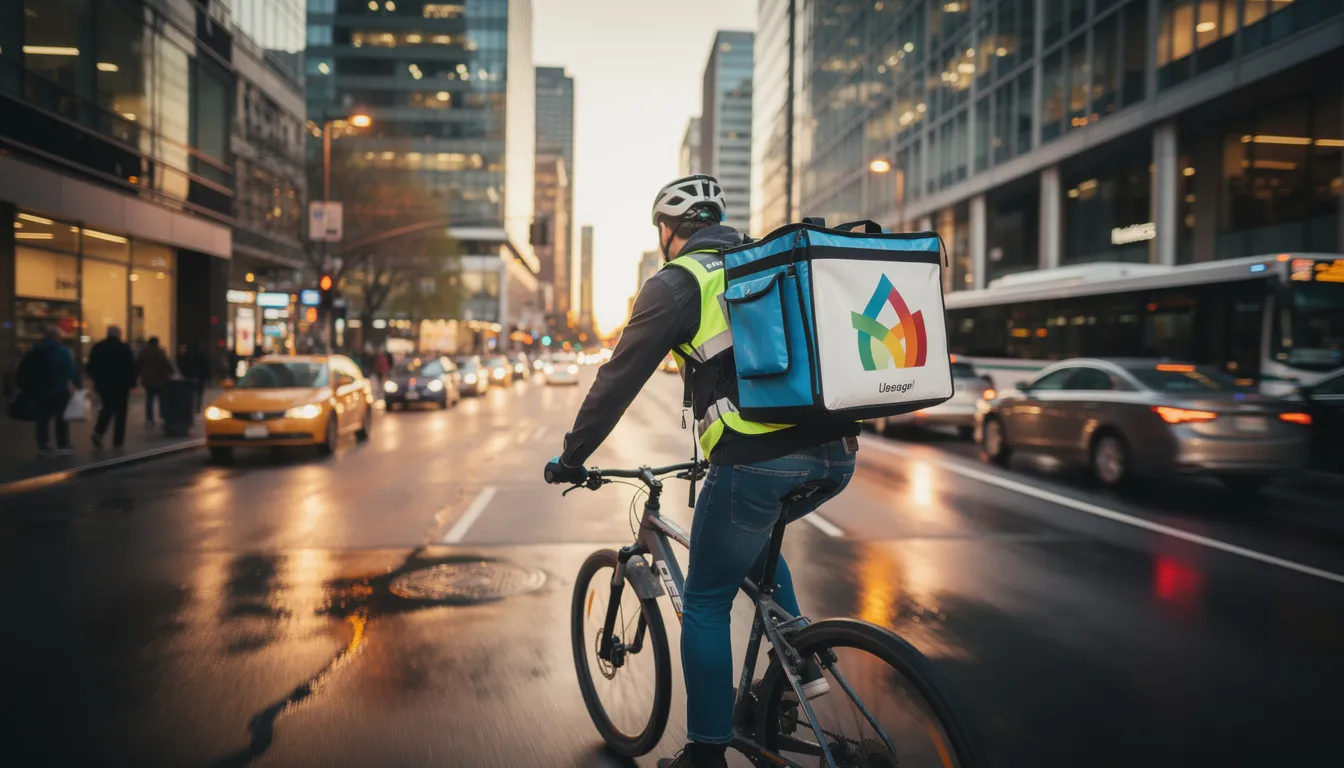
Earnings vary by distance, city, and demand—surge periods like weekend nights or events (Super Bowl Sunday, major concerts) offer higher pay
Flexibility to set schedules and accept or decline individual delivery requests
Some platforms let restaurants use their own delivery staff while receiving orders through the app, which changes fee structures
For new customers on all sides:
By using a food delivery app, users can explore a diverse range of cuisines from the comfort of their homes.
Apps increasingly use marketing tools to attract new customers for restaurants and recruit couriers in underserved areas
Grubhub partners with restaurants to offer promotional visibility
Driver referral bonuses happen regularly in expanding cities
Choosing the Best Food Delivery App for You
With multiple platforms competing for your business, the best choice depends on your location, habits, and what you value most. Here’s how to make a concrete decision:
Compare restaurant coverage: Check which app has your favorite local restaurants and chains available at your address. Coverage varies significantly by ZIP code.
Test delivery times: Place test orders from two competing apps (e.g., Uber Eats vs. DoorDash, or a local app vs. a global option) and track how long each takes for similar orders.
Verify fee transparency: Before completing any purchase, confirm that delivery, service, and small order fees are clearly broken down—no hidden surcharges at the final checkout screen. Most food delivery apps provide upfront information about delivery fees before you place an order.
Read recent reviews: Filter for reviews from 2024-2025 in your city to understand current reliability, not outdated complaints from years ago.
Calculate membership value: If you order 4+ times a month, subscriptions usually pay for themselves. Occasional users can rely on one-off discounts and coupon codes.
Try the apps side-by-side: Add the same meal to your cart in both apps and compare the total price including all fees—sometimes one platform runs promotions the other doesn’t match.
Save payment methods securely: Use digital wallets where possible, and review your saved cards periodically from the website or app settings. Most food delivery apps let you pay with various payment methods, including credit cards and digital wallets.
Manage notification preferences: Turn off marketing messages if they’re overwhelming, but keep order status notifications active so you know when to meet your courier.
Review privacy settings regularly: Check what data the app collects and adjust sharing preferences in your account at least once a year.
Minimize hassle: Choose a food delivery app that minimizes hassle by offering clear customer support, easy refunds, and reliable delivery.
Track your order: Many food delivery apps let you track your order in real time, so you know exactly when to expect your food.
Customize your order: Look for apps that allow you to customize your order according to your preferences, such as adding or removing ingredients.
The real test of any food delivery service happens when something goes wrong. Check how easy it is to report an issue and request a refund through in-app chat before you count on that platform long-term.
Key Takeaways
Food delivery apps have matured into comprehensive platforms handling meals, grocery delivery, and convenience items in one interface.
Data collection follows standard patterns, but users can manage privacy settings and request deletions.
Monthly memberships at around $9.99/month make sense for frequent users ordering 4+ times monthly.
Restaurants pay commissions of 5-30% and gain access to new customers and incremental revenue averaging 42% increases.
Couriers work flexibly with variable earnings based on location, time, and demand.
Always compare at least two apps for your specific address before committing to a subscription.
The food delivery market continues to grow, with projections showing the industry expanding from roughly $288 billion in 2024 toward $505+ billion by 2026. Over 70% of orders now happen via mobile apps rather than desktop or phone—making your choice of platform increasingly important to your dining experience.
The evolution of food delivery apps reflects our changing lifestyles and the growing demand for convenience.
Start by downloading two competing apps this week, placing a similar order through each, and tracking the results. Pay attention to delivery time, food temperature, fee transparency, and how easy it is to respond to any issues that happen. That real-world comparison will tell you more than any guide ever could.
Moreover, if you’re a restaurant owner or building a delivery platform, success increasingly depends on visibility for smaller partners, transparent pricing, and smooth operations across customer, restaurant, and courier workflows. For teams looking to build or improve these experiences, explore app development services with EngineerBabu to plan the right feature set, scalability, and privacy-first data practices from day one.
Mayank Pratap Singh
Founder & CEO of Engineerbabu
Mayank Pratap is the Co-founder of EngineerBabu, a CMMI Level 5 product engineering company that has delivered 500+ products across 20+ countries, including 200+ VC-funded builds and 75 Y Combinator-selected products. EngineerBabu was selected into the Google AI Accelerator's top 20 globally in 2024, is backed by Vijay Shekhar Sharma (founder of Paytm), participates in the Harvard Innovation Labs ecosystem, and is a NASSCOM member recognized as one of LinkedIn's Top 20 Startups in India. Mayank has been building technology products for 14 years and leads every client engagement personally. EngineerBabu takes 20 projects a year, all founder-led, all from referrals.