App Development Professionals


Create engaging, high-performance mobile applications tailored to your business needs. We craft future-ready apps that offer smooth user experiences on all devices.
Build robust and scalable websites and CMS platforms that help you manage content effortlessly. Our development ensures a seamless digital presence.
Launch secure, feature-rich online stores with intuitive shopping experiences. We build tailored eCommerce platforms designed for growth.
Design captivating games with immersive gameplay and stunning graphics. From concept to launch, we build engaging experiences that players love.
Enhance your customer relationships with customized Salesforce implementations. Drive growth and efficiency with smarter CRM solutions.
Harness artificial intelligence and machine learning to automate workflows and gain actionable insights. Our AI transforms data into smart decisions.
Accelerate your software delivery lifecycle with continuous integration, delivery, and infrastructure automation to boost efficiency.
Hire app developers ready to turn your ideas into sleek, high-performing mobile apps for any platform.
Bring in frontend pros who craft smooth, beautiful, and user-friendly interfaces that your visitors will love.
Get backend developers who build fast, secure, and reliable systems to keep everything running behind the scenes.
Hire eCommerce developers who build secure, scalable online stores designed to offer seamless shopping and grow your sales.
Get dedicated developers committed to your projects, delivering consistent quality and speed as an extension of your team.

The global app economy is on a trajectory that shows no signs of slowing. With projections suggesting app revenue will surpass $600 billion by 2030, businesses of every size are racing to build mobile apps that capture user attention and drive growth. Behind every successful app—whether it’s a streamlined appointment booker or a complex on-demand marketplace—stands a team of app development professionals who bring ideas to life through code, design, and strategy.
App development professionals encompass far more than just the engineers writing Swift or Kotlin. The term covers everyone directly involved in the app development process: product managers who define what gets built, UI/UX designers who craft intuitive experiences, mobile developers who write the code, QA specialists who ensure quality assurance, and DevOps engineers who manage deployment pipelines. A mobile application developer is a key role in this process, and the market demand for skilled professionals in this position continues to rise.
These professionals work across native iOS and Android, web, desktop, and cross-platform apps built with frameworks like React Native, Flutter, or .NET MAUI. For android app and android app development, platform-specific expertise is essential, and experienced android developers are crucial for ensuring the quality, performance, and scalability of the final product. Increasingly, they’re also integrating emerging technologies such as AI, AR/VR, and blockchain into mobile applications. When it comes to programming languages, for Android, Java and Kotlin are the main programming languages used by developers, while for iOS, Swift and Objective-C are primary.
This guide answers the questions businesses ask most often: How much does app development cost? How long does the development process take? Where can I find reliable mobile app development professionals? And how do I choose between freelancers, agencies, and in-house teams?
Whether you’re a startup founder with an app idea or an enterprise leader looking to streamline operations with custom mobile apps, understanding how to work with app developers is the first step toward a successful mobile app project.
Mobile app development delivers a wide array of benefits that can transform the way businesses operate and interact with their customers. By investing in custom mobile apps, companies can significantly boost brand awareness, making it easier for users to recognize and engage with their services on mobile devices. Mobile apps offer a direct channel for communication, allowing businesses to send personalized notifications, gather feedback, and foster deeper customer engagement.
Beyond marketing advantages, mobile app development can streamline internal operations, automate routine tasks, and reduce operational costs. For example, integrating mobile apps with existing services can improve workflow efficiency and enable real-time data access for employees and customers alike. As more consumers rely on smartphones and tablets, having a dedicated mobile app is essential for staying competitive and reaching target audiences where they spend most of their time.
Mobile app development companies specialize in building high-quality, user-friendly mobile apps tailored to specific business needs. Whether you’re looking to enhance customer loyalty, open new revenue streams, or simply provide a more convenient experience, a well-executed app development project can deliver measurable results and long-term value.
Not all app development professionals operate the same way. Choosing the right type depends on your budget, timeline, project complexity, and long-term goals. Here’s a breakdown of the main categories you’ll encounter when hiring app developers.
When choosing between these app development professionals, consider your context. Building mobile apps for a regulated industry like healthcare? A boutique studio or established app development agency with compliance experience reduces risk. Testing an early-stage app idea? A freelance app developer or small agency offers cost-effective validation. Planning a multi-year digital transformation? An in-house team or long-term agency partnership provides consistency.
Strong app development professionals blend technical expertise with product thinking and communication skills. The best mobile app developers don’t just write code—they understand business objectives, collaborate with designers, and anticipate user needs.

A compelling user interface (UI) is at the heart of every successful app development project. The UI shapes how users interact with your mobile app, influencing everything from first impressions to long-term engagement. Mobile app development professionals and top development companies understand that intuitive navigation, clear layouts, and visually appealing design are essential for keeping users satisfied and reducing abandonment rates.
Investing in a thoughtful user interface goes beyond aesthetics—it ensures that your app is easy to use, accessible, and aligned with your brand identity. Elements such as button placement, color schemes, typography, and interactive feedback all contribute to a seamless user experience. A well-designed UI not only differentiates your app from competitors but also encourages users to explore features, complete desired actions, and return regularly.
Leading mobile app developers prioritize UI design from the earliest stages of the app development process, collaborating closely with clients to create custom solutions that reflect business goals and user expectations. By focusing on user interface excellence, businesses can increase engagement, drive conversions, and maximize the impact of their mobile apps.
Freelance mobile app developers play a pivotal role in the app development landscape, especially for startups, small businesses, or organizations with specific project needs. Hiring a freelance mobile app developer offers flexibility and cost savings, allowing businesses to scale resources up or down as their app development process evolves. Freelancers often bring specialized technical skills and fresh perspectives, which can be invaluable for innovative or niche projects.
Working with freelance app development professionals enables companies to access a global talent pool without the long-term commitment of hiring full-time staff. This approach is particularly effective for MVPs, prototypes, or feature enhancements where agility and speed are priorities. However, successful collaboration requires clear communication, well-defined project requirements, and regular check-ins to ensure alignment throughout the development process.
When engaging a freelance mobile app developer, it’s important to review their portfolio, verify technical expertise, and establish transparent expectations regarding deliverables and timelines. By leveraging the strengths of freelance mobile app developers, businesses can achieve high-quality results while maintaining control over project scope and budget.
The app development landscape includes thousands of companies, from global consultancies to specialized studios. This section profiles notable organizations known for employing skilled app development professionals. Many leading companies also employ specialized android developers and offer dedicated android app development services to ensure high performance and scalability for clients targeting the Android platform. Each company brings distinct strengths, and the right choice depends on your project scope, industry, and budget.
EngineerBabu is a specialized app development company led by a CTO with 17 years of experience, including a tenure as the CTO of Wishfin, a unicorn startup in India. With a proven track record, EngineerBabu has successfully delivered over 30 leading landing apps for clients worldwide. Recognized for excellence, the company is listed among LinkedIn’s top 10 app development firms and is part of the Google AI Accelerator batch. Their expertise spans mobile app development, software development, and innovative solutions tailored to boost engagement and deliver high-quality apps across platforms, including extensive experience in Android app development for clients seeking robust Android solutions.
Slashdev.io
Slashdev.io operates as a curated network connecting companies with vetted remote app development professionals across North America, Europe, and other regions. Their focus is on placing developers with 5–10+ years of production experience in mobile and web app projects, spanning fintech, SaaS, and marketplace applications.
The platform offers flexible engagement models—part-time, full-time, and project-based contracts—making it attractive for startups and scaleups needing fast ramp-up. Their professionals typically specialize in modern stacks such as React Native, Flutter, Node.js, and Python backends. For businesses seeking pre-screened talent without the overhead of traditional recruiting, Slashdev.io offers a streamlined path to development services.
Trango Tech functions as a full-service development company employing over 200 app development professionals across US and international offices. Since the early 2010s, they’ve handled mobile, web, and backend development with teams experienced in digital transformation projects.
Their portfolio includes eCommerce platforms, logistics systems, and on-demand services where mobile apps integrate with complex back-office systems. Trango Tech suits companies seeking a long-term development partner with 24/7 coverage via blended onshore/offshore teams. Their app development services span iOS and Android apps alongside custom software solutions. They have a dedicated team of experienced android developers who leverage platform-specific tools, frameworks, and languages like Java and Kotlin to deliver high-quality Android applications.
NMG Technologies is a global firm with over a decade of experience and 150+ app development professionals specializing in mobile apps and complex B2B platforms. They emphasize discovery workshops, product strategy, and design thinking before engineers start coding—an approach that reduces costly rework.
Their professionals frequently build multi-tier systems combining native mobile apps, web dashboards, and cloud-based APIs. NMG Technologies has strong expertise in android app development, with skilled android developers who leverage frameworks and tools specific to the Android platform to deliver scalable and high-performance Android solutions. For established SMEs and enterprises seeking structured delivery with defined phases and ongoing maintenance agreements, NMG Technologies provides a methodical approach to platform development.
Designli operates as a US-based studio where app development professionals work in small, dedicated squads for each client. They specialize in guiding non-technical founders through ideation, prototyping, MVP builds, and iterative scaling.
Their professionals emphasize transparent communication, regular demos, and agile ceremonies. They also have strong experience in android app development, making them a solid choice for startups seeking to launch on the Android platform. For startups needing both product strategy and hands-on app development expertise, Designli combines consulting with execution. They’re particularly effective for founders who need to develop apps while simultaneously validating product-market fit.
Several other development companies deserve mention for their specialized approaches:
Skilled app development professionals concentrate in specific global hubs, though remote work has dramatically expanded hiring options since 2020. Understanding regional strengths helps businesses make informed decisions about where to source talent—and what to expect in terms of rates, communication, and collaboration patterns.
San Francisco Bay Area, New York City, Austin, and Los Angeles remain primary hubs with high concentrations of senior app development professionals and product-focused engineers. These markets attract top talent, particularly in specialized domains like health tech, fintech, and enterprise SaaS.
US-based professionals typically charge $80–$180/hour depending on experience and specialization. While costs are higher, they often bring deep domain experience and familiarity with US market dynamics. For heavily regulated industries or products requiring tight legal and compliance alignment, US professionals reduce communication friction.
The rise of remote-first culture has expanded access to talent in cities like Denver, Seattle, Atlanta, and Miami. Many top mobile developers now work remotely for companies regardless of headquarters location.
London remains the main UK hub, with clusters of app development professionals also in Manchester, Birmingham, Leeds, and Edinburgh. UK-based professionals frequently work with both European and North American clients, offering overlapping time zones for real-time collaboration with either region.
Common sectors include fintech, proptech, media, and government digital services. Representative rate ranges run £60–£140/hour for experienced contractors. Engagement models vary from agency partnerships to direct contractor relationships to permanent hires through web development company structures.
Bengaluru, Hyderabad, Pune, and the Delhi NCR region serve as major centers with large populations of app development professionals. India offers competitive hourly rates—typically $20–$60/hour for mid to senior-level professionals—combined with broad experience serving global clients.
Strengths include Android development, cross platform apps, full-stack web development, and QA/test automation. To coordinate effectively, plan for 2–4 hours of overlap with US or European business days. Clear documentation, defined SLAs, and structured communication routines help bridge time zone gaps.
Countries like Ukraine, Poland, Romania, and Bulgaria have strong engineering education systems producing many senior professionals in mobile and backend development. Common hourly ranges fall between $35–$90/hour, making these regions attractive for other development companies seeking to balance quality with cost.
Industries served include logistics, gaming, enterprise software, and fintech. English proficiency is generally high, particularly among senior developers.
For US clients, Latin America offers nearshore advantages. Mexico, Brazil, Argentina, and Colombia are growing hubs with time zone overlap that enables real-time collaboration. Many app development professionals speak English and Spanish or Portuguese, and remote-first agencies have proliferated across the region.
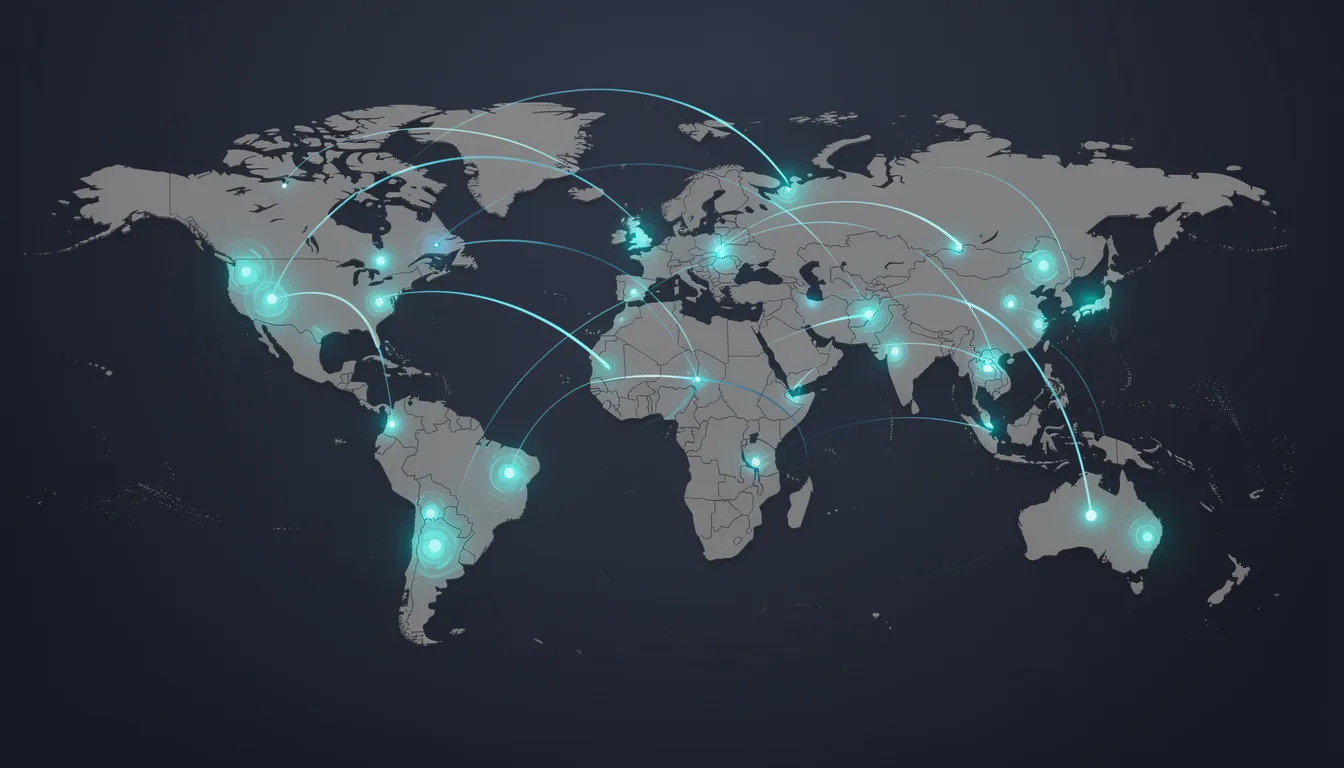
App development costs vary significantly based on region, experience level, engagement type, and application complexity. Understanding pricing structures helps you budget accurately and avoid surprises during your mobile app development project.
Common engagement models include:
Updated cost ranges for 2024–2025 based on app complexity:
|
App Type |
Typical Cost Range |
Examples |
|---|---|---|
|
Simple MVP |
$25,000–$60,000 |
Basic appointment booking, single-feature utility apps |
|
Mid-complexity apps |
$60,000–$200,000 |
eCommerce with payments, social features, multi-user systems |
|
Complex platforms |
$200,000–$500,000+ |
Ridesharing with real-time geolocation, marketplace with payments, enterprise systems |
Seniority significantly affects hourly rates. Junior developers might bill $25–$50/hour, mid-level professionals $50–$100/hour, and senior or lead architects $100–$180/hour or more in premium markets. Team composition—mixing experience levels—helps balance cost with capability.
Before committing, obtain quotes from 3–5 mobile app development companies. Use cost calculators offered by some agencies, and be specific about features to get comparable estimates.
Selecting the right professionals can make or break your project’s ROI. Studies suggest that poorly planned app development projects fail at rates exceeding 70%, often due to misaligned expectations, unclear scope, or inadequate technical vetting. A structured selection process reduces these risks.
Follow this decision process:
Portfolio relevance matters enormously. If you’re building a HIPAA-compliant telehealth app, prioritize professionals with healthcare experience. For an on-demand delivery platform, seek teams who’ve handled real-time geolocation and payment integration.
Evaluate code quality and architecture by asking about testing strategies, CI/CD practices, and security measures. The best app development companies plan for scalability from day one rather than retrofitting later.
Check references thoroughly. Review live apps in stores—look at ratings, update history, and user reviews. Contact previous clients and ask about communication, deadline adherence, and handling of challenges.
Before signing contracts, align on communication cadence (weekly calls, bi-weekly demos) and tooling (Jira, Trello, Slack, GitHub, Figma). Clear expectations prevent friction later.
During interviews or RFP processes, ask these questions to evaluate candidates:
Evaluate answers not only for technical depth but also clarity and transparency. Professionals who communicate clearly during sales conversations typically communicate well during project management.
Avoid these frequent pitfalls when hiring:
Most engagements with app development professionals follow predictable phases: discovery, design, development, testing, launch, and iteration. Understanding this flow helps you plan resources and set realistic expectations for your app project.
Typical timelines for mid-complexity apps:
Professionals typically recommend agile methodologies—Scrum or Kanban—with 1–2 week sprints. Each sprint ends with a review where stakeholders see working software and provide client feedback. Retrospectives help teams continuously improve processes.
Early prototypes and clickable wireframes validate user flows before production code is written. This approach catches usability issues when changes are cheap to make.
Post-launch, professionals monitor crash reports, performance logs, and analytics data. Plan for at least one minor update within 4–6 weeks of initial launch to address real-world feedback and any issues discovered by app users.
Discovery workshops bring together stakeholders, designers, and technical leads to align on project goals. During these sessions, app development professionals conduct:
Deliverables from discovery typically include product requirement documents (PRDs), user stories, low-fidelity wireframes, and a user interface design system. This documentation becomes the foundation for development.
For example, a retail brand building a loyalty app might define core features during discovery: rewards tracking, push notifications for promotions, and a store locator. The mobile app design phase translates these requirements into visual mockups that stakeholders approve before coding begins.
Involving both business stakeholders and technical leads in discovery reduces expensive rework later. Decisions made collaboratively stick better than those handed down from isolated teams.
During development, professionals break work into sprints and maintain prioritized backlogs. Regular demos—typically every 1–2 weeks—keep stakeholders informed and enable course corrections.
Testing practices include:
Professionals also prepare app store assets: screenshots, descriptions, privacy labels, and compliance documentation. Navigating Apple and Google review processes requires experience—rejections delay launches and frustrate teams.
Stable teams plan at least one update within 4–6 weeks after initial launch. This update addresses issues discovered in production and incorporates early user feedback. The mobile app development project doesn’t end at launch—it transitions to an iteration phase.

Successfully delivering complex app development projects demands robust project management, clear communication, and a commitment to quality assurance. Mobile app development companies with experience in complex projects excel at breaking down large initiatives into manageable phases, assigning responsibilities, and setting realistic milestones. This structured approach ensures that every aspect of the app development process is tracked and aligned with business objectives.
Effective project management involves regular status updates, proactive risk identification, and the flexibility to adapt to changing requirements. Mobile app development companies often use agile methodologies to facilitate collaboration between developers, designers, and stakeholders, ensuring that feedback is incorporated quickly and efficiently. Quality assurance is integrated throughout the development process, with ongoing testing to catch issues early and maintain high standards.
By partnering with experienced mobile app development companies, businesses can navigate the challenges of complex projects, from integrating multiple systems to meeting strict regulatory requirements. Transparent communication, detailed documentation, and a focus on continuous improvement are key to delivering successful, high-quality mobile apps that meet both user and business needs.
Launching a mobile app is just the beginning of its lifecycle—ongoing support is essential to ensure continued success and user satisfaction. Mobile app development companies that offer comprehensive post-launch support help businesses maintain app stability, security, and relevance in a rapidly evolving market. Ongoing support includes regular updates to address bugs, compatibility with new operating systems, and the addition of new features based on user feedback.
Continuous monitoring and performance optimization are critical for identifying and resolving issues before they impact app users. By analyzing user data and app analytics, businesses can make informed decisions to enhance functionality and boost engagement. Ongoing support also involves timely security patches to protect sensitive data and maintain compliance with industry standards.
Investing in ongoing support from a trusted app development company maximizes the return on your app development investment. It ensures that your mobile app remains competitive, adapts to changing user expectations, and continues to deliver value long after the initial launch. By prioritizing ongoing support, businesses can build lasting relationships with their users and drive sustained growth through their mobile apps.
Rapid technological change continues reshaping what businesses expect from app development professionals. Staying current with these trends helps you evaluate whether potential partners are investing in their own growth.
Generative AI tools: Mobile developers increasingly use AI-powered code suggestions, automated test generation, and content creation tools. These accelerate development but require judgment to ensure quality. Look for professionals who leverage AI as a productivity multiplier without compromising code standards.
Cross-platform maturity: React Native and Flutter have reached production maturity, shifting demand from purely native specialists toward multi-stack professionals. Many top app developers now maintain skills across multiple platforms, enabling faster delivery for organizations targeting iOS and Android simultaneously through cross platform frameworks.
PWAs and hybrid approaches: Progressive Web Apps and hybrid app architectures offer deployment flexibility for certain use cases. While native apps remain essential for performance-intensive applications, PWAs provide cost-effective alternatives for content-heavy experiences.
Vertical specialization: Healthcare telemedicine apps, fintech super-apps, on-demand logistics platforms, and enterprise mobility suites drive demand for domain-specific expertise. The best app development companies develop vertical expertise that translates to faster delivery and fewer compliance issues.
Continuous learning: The top app developers invest in certifications, contribute to open-source projects, and present at conferences. When evaluating professionals, ask about their learning practices—teams that stagnate technically deliver outdated solutions.
Working effectively with app development professionals requires clarity, careful selection, and commitment to collaboration. The investment in finding the right partners pays dividends throughout your product’s lifecycle—from initial launch through years of updates and feature additions.
Start with clear goals. Define what success looks like before contacting any development company. Know your target mobile devices, understand your users, and prioritize features ruthlessly. This clarity enables accurate estimates and prevents scope creep during development.
Choose carefully based on relevant experience, not just price. Run technical evaluations, check references, and review live apps in the app store. Consider starting with a small discovery phase or limited-scope project to validate fit before committing to a larger app development project.
Maintain ongoing relationships with trusted professionals. Mobile apps require continuous investment—OS updates, security patches, new features, and performance optimization. The team that built your app understands its architecture and can support updates far more efficiently than a new team starting from scratch.
Before reaching out to any app development agency or freelance mobile app developer, prepare a one-page project brief. Document your business objectives, target users, must-have features, rough budget, and desired timeline. This brief accelerates conversations, helps you compare proposals, and signals that you’re a serious client worth their best effort.
The app development professionals you choose today will shape the product you ship tomorrow. Invest the time to find the right partners, establish clear communication routines, and build relationships that extend beyond a single project. That’s how the best app development companies help businesses succeed.