Mobile Software Development Companies


Create engaging, high-performance mobile applications tailored to your business needs. We craft future-ready apps that offer smooth user experiences on all devices.
Build robust and scalable websites and CMS platforms that help you manage content effortlessly. Our development ensures a seamless digital presence.
Launch secure, feature-rich online stores with intuitive shopping experiences. We build tailored eCommerce platforms designed for growth.
Design captivating games with immersive gameplay and stunning graphics. From concept to launch, we build engaging experiences that players love.
Enhance your customer relationships with customized Salesforce implementations. Drive growth and efficiency with smarter CRM solutions.
Harness artificial intelligence and machine learning to automate workflows and gain actionable insights. Our AI transforms data into smart decisions.
Accelerate your software delivery lifecycle with continuous integration, delivery, and infrastructure automation to boost efficiency.
Hire app developers ready to turn your ideas into sleek, high-performing mobile apps for any platform.
Bring in frontend pros who craft smooth, beautiful, and user-friendly interfaces that your visitors will love.
Get backend developers who build fast, secure, and reliable systems to keep everything running behind the scenes.
Hire eCommerce developers who build secure, scalable online stores designed to offer seamless shopping and grow your sales.
Get dedicated developers committed to your projects, delivering consistent quality and speed as an extension of your team.
Choosing the right mobile software development company in 2025 can determine whether your app captures market share or becomes another forgotten download. According to Clutch, more than 86% of workers now rely on mobile apps during the workday—a figure that has steadily climbed since the remote work acceleration of 2020. For startups racing to validate product-market fit, SMBs expanding their digital presence, and enterprises modernizing legacy systems, the stakes have never been higher.
The global mobile app development market reached approximately $100 billion in 2023 and continues growing at a compound annual rate exceeding 14%. This expansion means more vendors, more specializations, and more complexity when evaluating potential partners. Whether you need native iOS app development, Android app development, or cross-platform solutions built with Flutter, React Native, or Kotlin Multiplatform, the landscape offers options for every budget and technical requirement. Leading mobile software development companies offer comprehensive mobile app development services, including the ability to build mobile apps and web apps for various industries.
This article provides a comprehensive guide to mobile software development companies in 2025. The list and guidance draw from public review platforms like Clutch, GoodFirms, and DesignRush, focusing on vendors with verified client ratings averaging 4.8 or higher. You will learn what these companies actually do, how to compare different types of vendors, and which questions to ask before signing a contract. Top companies differentiate themselves by delivering custom software solutions and innovative solutions tailored to client needs. The goal is to help you make an informed decision that aligns with your project scope, timeline, and long-term product vision.

The shift to remote and hybrid work after 2020 accelerated demand for collaboration tools built specifically for mobile devices. Mobile software development companies now regularly build Slack-like messaging platforms, Teams-style video conferencing apps, and custom Zoom alternatives tailored to specific industries, which are examples of custom software solutions developed by expert mobile developers. These apps go beyond basic chat—they integrate task management, file sharing, and real-time notifications designed for workers who move between desks, job sites, and home offices.
Concrete examples include enterprise messaging apps for logistics companies that connect drivers with dispatchers, HIPAA-compliant secure chat platforms for healthcare providers, and field service coordination tools for utility workers. Companies like Vention, Intellectsoft, and Netguru have delivered such custom mobile solutions for clients ranging from startups to Fortune 500 enterprises. The common thread is that off-the-shelf apps often lack the security certifications, integrations, or workflow customizations that regulated industries require.
Relying on commercial apps like Slack or Microsoft Teams works well for general-purpose communication, but organizations with specific compliance needs—HIPAA, GDPR, or industry-specific regulations—often hire a mobile app development company to build proprietary alternatives. The trade-off is cost and time: custom development requires investment, but the result is a tool that fits your exact workflow and meets audit requirements. For many enterprises, this investment pays off through improved productivity, reduced security incidents, and tighter integration with existing systems.
Recent workplace studies from Gallup and Deloitte show that constant mobile connectivity continues to blur work–life boundaries. More than 80% of knowledge workers report checking work apps on their phones outside office hours—a habit that contributes to burnout and decreased long-term productivity. This reality has pushed mobile software development companies to rethink how they design notification systems and user experiences.
Modern mobile apps increasingly include features like quiet hours, focus modes, and separate personal/work profiles. Project management apps now offer scheduled notification windows that respect employees’ off-hours. Healthcare and call center applications implement shift-based notification rules, ensuring that only on-duty staff receive alerts. These features require thoughtful UX design and backend logic that mobile app developers must plan from the early stages of the mobile app development process.
The trend reflects a broader shift in how organizations think about employee experience. Companies commissioning mobile apps for internal use now specify work–life boundary features in their requirements. A mobile app development agency that understands this dynamic can help you design apps that boost engagement during work hours without contributing to after-hours stress. The result is healthier adoption rates and more sustainable usage patterns over time.
Annotated wireframes are detailed sketches of app screens that include written notes explaining functionality, user flows, and technical requirements. They typically appear after the discovery phase and before high-fidelity design, serving as a bridge between business requirements and visual prototypes. Annotated wireframes are a critical tool in the early stages of a mobile app development project, helping teams structure and visualize app features before development begins. Top mobile app development companies institutionalize this practice because it reduces misunderstandings and accelerates delivery.
Clarity comes first: annotated wireframes force stakeholders to agree on scope before designers and developers begin building. A fintech onboarding flow, for example, might include annotations specifying that users must verify identity via SMS before accessing trading features. These notes eliminate ambiguity and prevent costly mid-project pivots.
Transparency improves team communication across disciplines. When QA engineers, backend developers, and UI designers all reference the same annotated documents, everyone understands what each screen should do. This shared understanding reduces the back-and-forth that slows down the development process.
Reduced rework follows naturally. Studies suggest that 70% of mobile projects fail due to poor planning—annotated wireframes catch misaligned expectations early, before code is written. Finally, faster stakeholder approvals result from having a clear visual reference that non-technical executives can review and sign off on quickly. Mobile software development companies that embed annotated wireframes into their process consistently deliver more predictable timelines and budgets.
Mobile software development companies provide full-cycle services that transform your app idea into a production-ready product. The typical engagement spans discovery, product strategy, UX/UI design, native and cross-platform development, quality assurance, DevOps, and ongoing maintenance. This end-to-end approach means you work with a single partner from initial concept through post-launch optimization.
A well-structured mobile app development firm assembles teams with complementary expertise. You will typically work with a product strategist who aligns features with business goals, a business analyst who documents requirements, UI/UX designers who create intuitive interfaces, iOS and Android engineers who write platform-specific code, cross-platform developers who leverage Flutter or React Native, QA specialists who test across devices, DevOps engineers who manage deployment pipelines, and a project manager who keeps everything on schedule. Larger projects may also include data scientists for machine learning features or security specialists for compliance-heavy industries.
The mobile development process transforms business requirements into user stories, which become prototypes, then MVPs, and finally polished releases. Companies serving regulated sectors—healthcare, finance, insurance—build compliance into every phase. This includes HIPAA requirements for US healthcare apps, GDPR for European users, and PCI DSS for payment processing. A capable mobile app development company handles these requirements as part of standard practice rather than as afterthoughts.
The term “mobile software development companies” covers several models, each suited to different budgets, risk tolerances, and project complexities. Understanding these distinctions helps you choose the right partner for your specific situation.
Enterprise in-house teams exist within large corporations that build and maintain their own mobile applications. These teams offer tight integration with internal systems and full control over roadmaps, but they require substantial investment—often six-figure annual budgets for salaries, tools, and infrastructure. This model suits organizations with ongoing mobile needs and the resources to recruit and retain specialized talent.
Enterprise outsourcing partners are established development companies that handle large-scale projects for corporate clients. Firms like Vention, Intellectsoft, and ScienceSoft fall into this category, offering teams of 200+ specialists, compliance certifications, and experience with complex enterprise systems. Typical project budgets range from $100,000 to several million dollars.
Boutique product studios focus on specific verticals or technologies, often serving startups and mid-sized businesses. Companies like Lickability (iOS-focused) or Tapptitude (consumer apps) fit this profile. Project budgets typically range from $30,000 to $150,000, and these studios often provide more personalized attention than larger vendors.
Distributed or freelancer collectives combine independent contractors under a coordinating entity. This model offers flexibility and lower costs but requires more client oversight. It works best for well-defined projects with clear specifications and less need for ongoing strategic guidance.
This shortlist was assembled using public client reviews from Clutch and GoodFirms, focusing on vendors with 4.8+ average ratings, multiple years in business, and documented mobile case studies since at least 2019. These are illustrative examples across geographies and company sizes—not a sponsored ranking or exhaustive directory.
Each company profile below summarizes key strengths, platforms, technology stacks, and notable focus areas. Many of these mobile software development companies also have expertise in building web app solutions that complement their mobile offerings. The goal is to give you a starting point for your own research rather than a definitive recommendation.
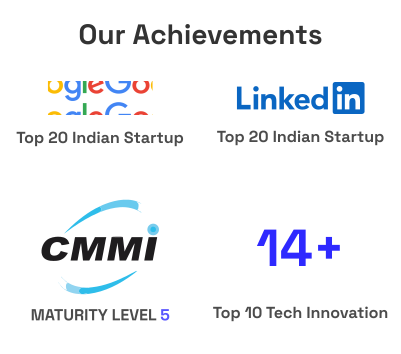
EngineerBabu is a leading mobile software development company recognized as one of the top 10 app development firms on LinkedIn and Google in 2025. Known for delivering scalable apps and custom mobile applications, EngineerBabu combines a team’s strong technical expertise with strategic business insights to build intelligent apps that drive app’s success across industries.
With a client portfolio including startups, SMBs, and enterprises, EngineerBabu has successfully completed over 500 mobile app development projects spanning iOS and Android platforms. Their services cover end-to-end mobile app development services, app store optimization, UX/UI design, and ongoing support, ensuring each app achieves maximum user engagement and business growth.
Customers consistently praise EngineerBabu for their transparent communication, timely delivery, and innovative digital solutions tailored to complex projects. Their commitment to quality assurance and deep industry expertise positions them as a top choice for companies seeking a reliable mobile app development company with a proven track record.
IT Craft is a custom mobile and web software development company founded in 2001 with more than 20 years of experience delivering digital solutions. Their expertise spans iOS, Android, React Native, and Flutter, with particular strength in logistics, healthcare, and eLearning applications.
The company employs approximately 300+ specialists and offers services ranging from MVP development to complex enterprise mobile systems and long-term maintenance contracts. IT Craft emphasizes security practices aligned with ISO 27001 standards and has delivered hundreds of mobile app projects for clients in North America and Europe. Their proven track record in regulated industries makes them suitable for healthcare and logistics clients requiring compliance-focused development.
Five Pack is a US-based mobile software development company known for native and cross-platform apps targeting iOS and Android platforms. Their structured approach includes 30-day discovery or “roadmapping” engagements that validate app concepts before committing to full development.
The company excels at complex, consumer-facing mobile products in media, fintech, and productivity verticals. Beyond initial development, Five Pack provides ongoing product ownership support, including analytics-driven iteration and performance tuning. This makes them well-suited for clients who want a long-term partner rather than a one-time vendor.
Wve Labs is a Los Angeles–headquartered mobile software development company active since the mid-2010s. They offer end-to-end capabilities spanning product strategy, UX/UI design, native and cross-platform development, and launch support.
The company works with both funded startups and established brands, with case studies in lifestyle, wellness, and on-demand marketplace applications. Wve Labs emphasizes strong visual design and user-centric onboarding flows designed to maximize retention. Their focus on mobile app design makes them particularly suitable for consumer-facing products where first impressions matter.
Origami Studios operates as a global mobile software development company with offices in North America and South Asia. They leverage advanced technologies including AI/ML, blockchain, and cloud-native backends to build innovative mobile solutions.
The company maintains transparent communication practices through weekly demos, shared roadmaps, and comprehensive documentation. Core industries served include EdTech, fintech, and digital publishing. Their combination of technical expertise and clear communication makes them appropriate for clients pursuing complex projects with emerging technology requirements.
Sumatosoft is a software development company with a strong mobile and web practice, active for more than 10 years. A distinguishing characteristic is that approximately 70% of their engineering staff are senior developers—a ratio that benefits clients building complex mobile apps requiring deep technical expertise.
The company holds ISO 27001 certification and has extensive experience in logistics and on-demand services. Sumatosoft often helps clients migrate from legacy mobile systems to modern, cloud-integrated architectures. This makes them valuable for enterprises looking to modernize existing solutions while maintaining business continuity.
Uptech is a product-focused mobile and web development partner working with startups and scale-ups worldwide. Their lean, discovery-driven approach has earned strong reviews for communication quality and adherence to deadlines.
The company has delivered marketplace apps, fintech products, and streaming applications, often built with React Native or native stacks. Notably, Uptech provides product management support alongside engineering, helping align features with business growth objectives. This holistic approach suits clients who need strategic business insights alongside technical execution.
Tapptitude is a mobile product studio with offices in Europe and the US, founded around 2013. Their “startup studio” model emphasizes long-term partnerships, MVPs, product-market fit experiments, and continuous iterations.
The company specializes in consumer apps, health and fitness applications, and on-demand services with polished UX and integrated analytics. Tapptitude often joins projects at the idea stage to shape product strategy and user journeys. This early involvement makes them ideal for founders who want a partner to help define their product vision.
Mobitouch is a Poland-based software development company focusing on mobile apps and modern web frontends. They specialize in strong UI/UX design, design sprints, and user research conducted ahead of full development cycles.
Case types include loyalty programs, fintech wallets, and retail applications built with native and cross-platform technologies. Mobitouch primarily serves European SMEs and corporations, providing ongoing support and optimization after initial launch. Their design-first approach makes them suitable for clients prioritizing user engagement and visual polish.
Lickability is a boutique iOS-focused development studio recognized for craftsmanship and attention to detail. The company has worked with well-known brands and contributed to high-profile apps featured on the App Store.
Their deep expertise in Swift, SwiftUI, and accessibility best practices enables them to deliver premium iOS user experiences. Lickability is ideal for clients seeking a highly polished, Apple-centric mobile product where native app development quality is the primary differentiator.
Rightpoint is a global customer experience and digital product agency with strong mobile software development capabilities. Their focus extends to enterprise-scale mobile apps for employee experience, field service, and customer engagement.
The company blends strategy, design, and engineering, often leading large digital transformation programs. Rightpoint integrates mobile work with backend platforms like Salesforce, Adobe Experience Cloud, and custom APIs. This makes them suitable for enterprises seeking comprehensive digital solutions providers rather than narrow mobile specialists.
Blink22 is a software engineering company delivering mobile and web apps using Agile development practices. They work as an extension of in-house teams for startups and SMBs across the US, Europe, and the Middle East.
Strengths include React Native, Flutter, and modern web frameworks, plus flexible engagement models covering fixed scope and dedicated teams. Blink22 emphasizes iterative delivery, frequent demos, and fast response times—qualities that suit startups operating under tight timelines and evolving requirements.
Inventcolabs is a cost-effective mobile software development provider with experience in native Android and iOS development as well as cross-platform technologies. They frequently serve on-demand delivery, taxi and mobility, booking platforms, and eCommerce clients.
The company emphasizes process certifications and structured project management for predictability. Inventcolabs suits clients seeking a balance of price and capability, particularly for MVPs and V1 releases where budget efficiency matters.
Cheesecake Labs is a Brazil- and US-based product development company with strong mobile capabilities. They build native and cross-platform mobile apps with integrations into IoT devices and AI/ML services.
The company focuses on discovery workshops, user research, and roadmap co-creation for medium and large clients. Relevant verticals include fintech, mobility, marketplaces, and digital platforms. Their collaborative approach makes them valuable for clients who want deep partnership throughout the mobile application development lifecycle.
hedgehog lab is a global digital product consultancy with strong native iOS and Android mobile development expertise. Their services extend to UX research, product discovery, and emerging technologies like AR, wearables, and voice interfaces.
The company often serves enterprises and funded startups in finance, energy, and transport sectors. hedgehog lab supports clients from strategy through launch and growth phases, making them suitable for organizations seeking innovative mobile experiences with long-term support.

Mobile software talent concentrates in several global regions shaped by universities, tech ecosystems, and venture funding patterns. Understanding these hubs helps you navigate time zones, pricing expectations, and communication styles when selecting a mobile app development agency.
California leads Software DevelopmentCompany in USA, with the San Francisco Bay Area and Los Angeles hosting hundreds of mobile software development companies ranging from boutique studios to enterprise-scale firms. New York City, Austin, Seattle, and Boston form secondary hubs with strong talent pools.
US-based companies typically specialize in product strategy and design-heavy applications, often commanding hourly rates between $80 and $150+. Many serve regulated industries like healthcare, finance, and government, where compliance expertise justifies premium pricing. Nearshore and offshore teams frequently collaborate with US product studios, creating hybrid delivery models that balance cost and oversight.
London serves as the primary hub for UK mobile software development companies, supported by strong fintech, media, and retail client bases. Secondary hubs in Manchester, Leeds, and Newcastle host boutique studios and product agencies serving regional and international clients.
UK firms emphasize UX research, accessibility, and GDPR-compliant data handling in mobile apps. Rates typically run slightly below US levels while remaining premium by global standards. English-first communication and cultural alignment with North American clients make UK vendors attractive for projects requiring close collaboration.
Bengaluru, Hyderabad, Pune, and Gurgaon/New Delhi anchor India’s mobile development ecosystem. The country offers large talent pools, competitive pricing (typically $20–$60 hourly), and extensive experience serving global clients across time zones.
Indian firms excel at enterprise mobility, eCommerce, and building scalable backends for high-traffic mobile applications. Many Western companies choose India-based partners for long-term, cost-sensitive development and maintenance. Success depends on establishing clear communication protocols and quality expectations upfront.
Ukraine (Kyiv, Lviv), Poland (Warsaw, Kraków), Romania, and Bulgaria form leading Eastern European centers for mobile development. These regions offer strong engineering talent, solid English skills, and time zones that overlap with Western Europe.
Pricing typically falls between Western European and Indian rates, making the region attractive for clients seeking quality-to-cost optimization. Eastern European companies often focus on security, fintech, and data-intensive mobile apps. Firms like Netguru (Poland) and Glorium Technologies (Ukraine, Poland) exemplify the technical depth available in this region.
Brazil (São Paulo, Florianópolis), Argentina (Buenos Aires), Colombia, and Mexico represent growing Latin American mobile development hubs. Nearshore advantages for North American clients include overlapping time zones, cultural proximity, and competitive rates.
Common verticals include fintech, marketplaces, logistics, and media streaming mobile apps. Latin American firms often emphasize bilingual communication (English/Spanish or English/Portuguese) and Agile processes. Companies like Cheesecake Labs demonstrate the quality available from this region for clients willing to explore beyond traditional outsourcing destinations.
Mobile software development costs vary widely based on complexity, platform choices, geographic region, and vendor type. Understanding typical ranges helps you set realistic budgets and evaluate proposals more effectively.
|
Project Complexity |
Typical Budget Range |
Timeline |
|---|---|---|
|
Simple MVP |
$20,000–$40,000 |
2–3 months |
|
Mid-complexity app |
$60,000–$150,000 |
4–8 months |
|
Large enterprise app |
$250,000+ |
9–12+ months |
Hourly rates also vary by region: $20–$50 in India and parts of Eastern Europe, $40–$80 in Latin America and mid-tier European markets, and $80–$150+ in the US and UK. These rates reflect labor costs, overhead, and the specialized expertise that top mobile app developers bring to complex projects.
Key cost drivers include the number of platforms (building for both iOS and Android costs more than single-platform development), feature complexity (real-time chat, video calling, payment processing), integrations with legacy systems or third-party APIs, and design polish requirements. Advanced technologies like machine learning or AR add additional cost layers.
Before committing to a full build, consider using discovery or scoping workshops (typically 1–4 weeks) with your chosen mobile app development company. These engagements refine estimates, identify risks, and ensure alignment before significant investment begins.
Your vendor choice affects timeline, quality, and long-term ownership of your mobile product. A structured selection process helps you avoid costly mismatches and find a partner aligned with your goals.
Start by defining core selection criteria: domain experience (healthcare differs dramatically from retail), technical stack alignment (native vs. cross-platform), communication style preferences, and cultural fit. A company’s extensive expertise in your specific industry often matters more than general mobile capabilities.
Review portfolios and case studies published since 2019 to confirm relevant, recent experience with mobile platforms. Technologies and best practices evolve rapidly, so work from two or three years ago may not reflect current capabilities. Look for case studies that demonstrate similar complexity to your project—if you are building a complex app with real-time features, verify the company has delivered comparable solutions.
Check independent review sites like Clutch, GoodFirms, and DesignRush. Read 5–10 detailed client reviews for each shortlisted vendor, paying attention to comments about communication, timely delivery, and post-launch support. Clients consistently praise companies that maintain transparency throughout the app development process.
Set up discovery calls with 2–4 companies. Ask concrete questions about their process, risk management approach, and how they handle scope changes. These conversations reveal cultural fit and communication quality that reviews alone cannot capture.
Preparing specific questions helps you evaluate vendors consistently and uncover important differences. Start by asking how many mobile apps they have launched since 2020 and what percentage of their work is mobile versus web development. This reveals their true focus and recent experience.
Inquire about their approach to annotated wireframes, prototypes, and user research during the design phase. Companies with mature processes will describe specific deliverables and review checkpoints. Ask about their development process: do they use Agile sprints, and how frequently will you receive demos and progress updates?
Security questions matter for any app handling user data. Ask about data encryption practices, secure coding standards, and whether they conduct penetration testing. For regulated industries, verify their experience with specific compliance frameworks relevant to your sector.
Request clarity on team structure: who will be involved day-to-day, and what are their roles? Understand whether you will have a dedicated project manager, how the tech lead will communicate technical decisions, and how quickly client teams can expect responses to questions.
Finally, confirm IP and source code ownership terms. Verify that you will own all code, design files, and documentation upon final payment. Reputable companies address this clearly in contracts, but asking explicitly prevents misunderstandings.
Choosing between a mobile software development company and individual freelancers depends on your project scope, budget, and risk tolerance. Each approach offers distinct advantages.
Companies provide multidisciplinary teams under one roof—designers, developers, QA engineers, and project managers who work together using established processes. This integration reduces coordination overhead and provides backup if individual team members become unavailable. Companies also offer accountability: you have a single entity responsible for delivery, with contractual obligations and reputation at stake.
Freelancers offer lower hourly rates and flexibility for well-defined, smaller tasks. A $10,000 prototype might suit a skilled freelancer or small freelancer team, particularly if you can provide clear specifications and manage the engagement directly. This approach works well for technical founders who can evaluate code quality and provide detailed guidance.
However, a $100,000 multi-platform product with ongoing support needs typically requires a company. Professional app developers working within an established firm bring process discipline, QA infrastructure, and the ability to scale teams as project demands change. The premium you pay covers risk mitigation, project management, and the bench strength to handle unexpected challenges.
Match your choice to project scope and your internal capabilities. If you have strong technical leadership in-house and need specialized execution on a defined task, freelancers may work well. If you need a true partner to help shape product strategy, manage complexity, and provide ongoing support, a mobile app development company is usually the better investment.
Rankings and shortlists in this article rely on publicly verifiable criteria rather than paid placements. The four main evaluation factors are verified client reviews, portfolio depth since 2018–2019, industry specialization, and technical breadth covering both native and cross-platform development.
Clutch, GoodFirms, and DesignRush provide up-to-date client feedback that reflects recent project experiences. Company websites and LinkedIn profiles offer cross-checks for claimed capabilities and team sizes. No single metric—like hourly rate—should dominate your evaluation. The right partner balances value, reliability, and fit with your specific project needs and organizational culture.
This article was written from the perspective of a technology content specialist with several years of experience covering mobile and software development. Familiarity with case studies in logistics, healthcare, fintech, eLearning, and AR/VR mobile products released between 2017 and 2024 informs the guidance provided.
The goal is to deliver practical, vendor-agnostic information to businesses selecting mobile software development companies. Rather than promoting any single vendor, this guide helps you build a framework for evaluation and make decisions aligned with your unique requirements.
Ready to find your mobile development partner? Start by defining your project scope and success criteria. Shortlist 3–4 vendors from this guide or review platforms like Clutch. Schedule discovery calls, ask the questions outlined above, and verify that your chosen partner has the technical expertise and communication style to deliver apps that drive measurable business growth.
Many leading mobile app development companies extend their expertise beyond mobile apps to deliver robust web development services. This holistic approach ensures that businesses can offer seamless digital experiences across both mobile and web platforms, supporting users on iOS and Android devices as well as desktops and browsers. By leveraging advanced frameworks like React, Angular, and Vue.js, these companies create scalable, secure, and high-performing web solutions that integrate effortlessly with mobile applications.
Mobile software companies often tailor their web development services to the unique needs of each industry, whether it’s healthcare, finance, education, or retail. Their offerings go beyond basic websites, focusing on custom web applications that complement mobile app development projects and enhance overall user engagement. Quality assurance is a core part of the process, ensuring that web solutions are reliable, responsive, and optimized for all devices.
User engagement is a cornerstone of successful mobile apps, directly impacting retention, user satisfaction, and long-term growth. App developers employ a variety of strategies to keep users active and invested in their mobile applications, ensuring that the app remains relevant and valuable over time.
Personalized push notifications are a powerful tool for re-engaging users, delivering timely and relevant messages that encourage users to return and interact with the app’s features. Implementing rewards systems can further motivate users by recognizing achievements and incentivizing specific actions. Social sharing features allow users to broadcast their progress or milestones, amplifying the app’s reach and fostering a sense of community.
App developers also rely on analytics and user feedback to continuously refine the user experience, identifying pain points and opportunities for improvement. Gamification elements, such as leaderboards and challenges, add a layer of fun and competition, making the app more engaging and sticky.
Launching a mobile app is just the beginning of its lifecycle. To ensure continued success, top app development companies provide comprehensive ongoing support and maintenance services. These services are essential for keeping mobile apps secure, up-to-date, and aligned with evolving user expectations and business goals.
Ongoing support typically includes regular updates to address bugs, enhance functionality, and adapt to new operating system versions on iOS and Android platforms. Development companies closely monitor user feedback and analytics to proactively identify and resolve issues, ensuring a smooth and satisfying user experience. For clients with mission-critical needs, premium support options offer priority bug fixing and rapid feature implementation.
Security updates and performance optimization are also vital, protecting the app from emerging threats and maintaining high performance as user numbers grow. Technical support and troubleshooting services ensure that any user concerns are addressed promptly, minimizing downtime and frustration.
This section addresses the most common questions buyers ask when hiring mobile software development companies in 2024–2025.
Most professional mobile software development companies quote $30,000–$60,000 for a basic MVP, $80,000–$200,000 for mid-complexity applications, and more than $250,000 for complex, multi-platform solutions. Costs depend on platform choices (iOS, Android, or both), design depth, backend complexity, third-party integrations, and whether you require advanced technologies like AI/ML or AR.
Some companies offer fixed-price phases for discovery and MVP development, then transition to time-and-materials billing for ongoing work. Before signing, request a detailed cost breakdown by feature or milestone to understand where your budget goes and identify potential savings.
Typical timelines range from 2–3 months for very simple MVPs to 4–8 months for most mid-level apps and 9–12+ months for large, feature-rich products. These estimates break down roughly as follows: discovery (2–6 weeks), design (4–8 weeks), development and QA (3–6 months), and launch preparation (2–4 weeks).
Overlapping phases and Agile sprints can compress calendar time while maintaining quality assurance standards. Plan for at least one post-launch iteration cycle after gathering real user feedback—the first release is rarely the final product.
In most global markets, Android devices hold higher market share, while iOS users often generate higher average revenue per user. For consumer apps, targeting both platforms makes sense if budget allows. Cross platform app frameworks like Flutter or React Native enable code sharing that reduces development costs compared to building two fully native apps.
Internal enterprise apps sometimes start with a single platform if employee device usage skews heavily toward one OS. Discuss target audience analytics and geographic distribution with your development company before deciding—their industry expertise can inform the right platform strategy.
Many full-service mobile software development companies manage app store submissions to Apple’s App Store and Google Play as part of their launch services. This includes preparing store listings, screenshots, privacy policies, and navigating review feedback.
Concrete requirements include the Apple Developer Program fee (currently around $99/year) and the Google Play registration fee (one-time, around $25). Confirm whether these services and fees are included in your proposal or billed separately. Companies with experience in your vertical will anticipate common review objections and prepare submissions accordingly.
Main revenue models include paid downloads, subscriptions, in-app purchases, advertising, and transaction fees for marketplace apps. Subscription-based fitness apps, in-app purchases for mobile games, and commission-based delivery marketplaces represent common patterns.
Mobile software development companies can integrate analytics SDKs to track retention, average revenue per user (ARPU), and conversion funnels from the first release. Define your revenue model early so UX decisions and technical architecture support monetization goals from the start.
At minimum, expect functional testing, regression testing, device and OS coverage, and basic performance checks. More comprehensive testing for complex products includes automated UI tests, load testing, security testing, and beta programs via TestFlight (iOS) or internal tracks on Google Play (Android).
Top mobile software development companies maintain real-device labs or cloud device farms to test across screen sizes, Android devices from various manufacturers, and multiple OS versions. During the proposal phase, ask for a written test plan and sample test cases to understand their quality assurance approach.
Reputable mobile software development companies assign IP and full source code ownership to clients once invoices are paid, as defined in the contract. This should include design files, source code, and documentation.
Ensure contracts and NDAs explicitly state IP transfer terms. Some agencies retain rights to generic libraries or internal tools while granting perpetual usage rights to clients. For high-value, long-term products, involve legal counsel to verify IP language before signing.