10 Ways AI Detects Healthcare Cyber Threats

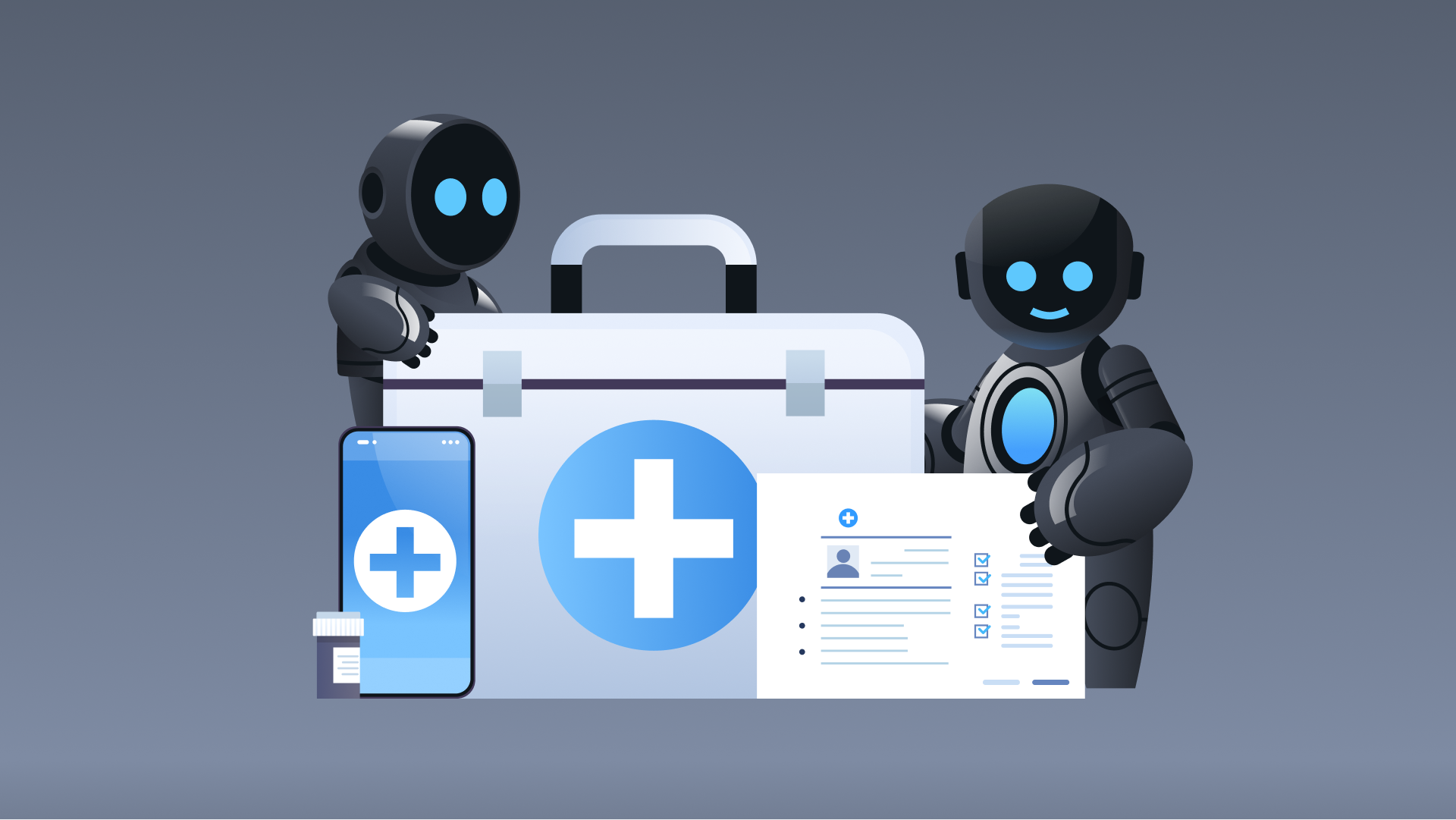
From patient records to real-time monitoring systems, healthcare organizations store some of the most sensitive data on the planet. This is why they’re also among the top targets for cybercriminals—and why AI detects healthcare cyber threats by continuously monitoring systems, identifying anomalies, and preventing attacks before critical data is compromised.
In fact, healthcare experienced more data breaches than any other industry in 2023, with the average breach costing upwards of $10 million. Traditional cybersecurity tools alone can’t keep up with today’s rapidly evolving threat landscape.
That’s where Artificial Intelligence (AI) comes in. Far from being a buzzword, AI is now a frontline defender in healthcare cybersecurity. It’s helping detect threats before they cause damage, flagging suspicious behavior in real time, and learning from every attempted breach to improve future resilience.
In this blog, we’ll explore 10 powerful ways AI is transforming how healthcare systems detect and prevent cyber threats—and why now is the time to adopt a more intelligent approach to cybersecurity.
AI spots threats while they happen, which is the biggest win for any HealthTech app handling sensitive patient data.
Traditional security systems often rely on preset rules. They only react when a known pattern is found. But cybercriminals don’t always follow known patterns. They change tactics. AI uses machine learning to understand normal behavior in your system. It can flag it immediately when something unusual happens like a sudden spike in traffic or someone accessing files they shouldn’t.
For HealthTech developers, the app can detect ransomware, unauthorized access, or data breaches as they begin not after the damage. Real-time alerts help your team act fast, reducing downtime and protecting user trust.
AI doesn’t just look at what’s happening now, it guesses what might happen next. Predictive analytics lets your app spot weak points before hackers do. By analyzing past incidents and system behavior, AI can predict where future attacks might hit.
HealthTech developers can use this to prioritize patching, strengthen specific app parts, or tighten access controls. This helps reduce risk even before a real threat shows up.
AI doesn’t wait for humans to react, it acts. When a threat is detected, AI can automatically isolate infected systems, block malicious IPs, or shut down unauthorized access without waiting for manual input.
In a Health Tech setting, where patient data is sensitive and apps often connect to hospital networks, acting fast is everything. Automated response tools keep the damage contained and the trust intact.
When considering the capabilities of AI, it’s essential to understand how AI detects healthcare cyber threats through behavioral analysis and real-time monitoring.
AI learns what every day looks like and calls out anything that doesn’t fit. This is key in spotting insider threats or compromised accounts. If a user who usually logs in from the U.S. suddenly logs in from another country and starts downloading medical records, AI picks that up instantly.
Behavioral analysis helps HealthTech apps catch sneaky threats that bypass standard security rules, like phishing attacks that trick employees into giving up credentials.
Phishing attacks are common in healthcare and AI is good at catching them. It analyzes email content, sender behavior, and link patterns to spot suspicious messages before users click them.
This is key protection for apps that connect to email or messaging systems inside hospitals or clinics. It also trains itself on new hacker tactics, keeping one step ahead.
AI knows what malware looks like even new versions. Traditional antivirus tools look for known signatures. But AI looks at behavior. If a file acts like ransomware, AI can catch it even if it’s never seen.
That’s important for HealthTech apps that store or transmit files, reports, or scans. AI-powered detection systems can flag and quarantine harmful files before they spread across devices or networks.
Every device that connects to your app is a possible weak spot. Laptops, phones, and tablets used by doctors or patients all carry risk. AI helps secure these endpoints by watching for odd behavior like an app running in the background that shouldn’t be.
Endpoint security is critical, and AI detects healthcare cyber threats by monitoring each device’s behavior, ensuring that vulnerabilities are addressed proactively.
This helps HealthTech companies protect user data beyond the app, extending security to the entire ecosystem.
By employing AI, healthcare organizations can effectively ensure that AI detects healthcare cyber threats, particularly in file access and data movement.
AI helps stop sensitive data from leaving the system. It monitors file access, user activity, and data movement to detect signs of data theft. For example, AI can block the transfer if someone tries to email a large batch of patient records or upload them to an external server.
This is essential in healthcare, where HIPAA and other regulations require strict data protection.
AI brings all your security tools together and makes them work as one. This is called orchestration. Instead of your firewall, antivirus, and monitoring tools working in silos, AI helps them communicate. That means quicker threat detection and faster response.
For HealthTech companies juggling multiple tools and cloud systems, orchestration makes the security setup smarter and more efficient.
Hackers change tactics all the time, including AI k and eps learning. Machine learning models don’t just get set up once and left alone; they evolve. With each new threat or user behavior, the AI becomes more accurate.
This continuous adaptation is key for HealthTech developers. It means your security doesn’t age or become outdated, it keeps improving with time and use.
The continuous evolution of AI technology means that AI detects healthcare cyber threats with increasing accuracy and efficiency over time.
1. Milton Keynes University Hospital’s Implementation of Darktrace’s AI System
This case study exemplifies how AI detects healthcare cyber threats effectively, showcasing its proactive capabilities.
In response to the increasing sophistication of cyberattacks, Milton Keynes University Hospital NHS Foundation Trust collaborated with Darktrace, a UK-based cybersecurity firm. Darktrace’s Enterprise Immune System employs unsupervised machine learning to analyze standard patterns within the hospital’s digital environment, encompassing cloud services, email, and IoT devices. By continuously monitoring data flows and learning from daily operations, the system can identify and neutralize cyber threats before they escalate. This proactive approach enhances patient care by reducing digital downtime and allowing hospital staff to focus more on patient needs.
2. AI-Powered Ransomware Attack on an Indian Healthcare Provider
In late 2024, a prominent Indian healthcare provider experienced a severe ransomware attack powered by artificial intelligence. The attack began with a phishing email targeting a hospital administrator, leading to the deployment of AI-enabled ransomware within the hospital’s network. The malware utilized AI capabilities to study the hospital’s IT infrastructure, prioritizing the encryption of critical systems such as electronic health records and billing departments. This strategic targeting resulted in significant operational disruption, data security concerns, and financial loss. The incident underscored the urgent need for robust cybersecurity measures in the healthcare sector to combat increasingly sophisticated cyber threats.
3. Palo Alto Networks’ Medical IoT Security Solution
As we explore these advancements, it’s clear that AI detects healthcare cyber threats, enabling facilities to manage risks effectively.
In 2023, Palo Alto Networks introduced its zero-trust security solution tailored for medical devices, known as Medical IoT Security. This solution employs machine learning to enable healthcare facilities to develop rules for monitoring devices for behavioral anomalies, initiating appropriate responses to potential threats. It automates zero-trust policy recommendations for medical devices, provides access to each device’s software bill of materials (SBOM), and maps them to common vulnerability exposures. By offering a comprehensive risk profile for each device, including alerts for end-of-life status, recalls, and unauthorized communications, this solution aims to enhance patient and practitioner experiences while ensuring compliance with regulations such as HIPAA.
These case studies illustrate the critical role AI plays in enhancing cybersecurity within the healthcare industry. They demonstrate both the potential benefits and the challenges of integrating advanced technologies into healthcare systems.
These insights reinforce the fact that AI detects healthcare cyber threats, which is vital for the industry’s future.
AI integration is changing the game in healthcare cybersecurity. For Health Tech companies, it’s no longer enough to just react to threats. AI allows apps to predict, detect, and respond to cyberattacks often before any damage is done.
Ultimately, the ability of AI to detect healthcare cyber threats directly influences the overall security posture of health tech applications.
From stopping phishing attempts to blocking malware and protecting patient data, AI helps HealthTech apps stay secure and compliant. And as threats evolve, AI systems keep learning and adapting, making them a long-term investment in app security.
If you’re building a HealthTech product, integrating AI-powered cybersecurity isn’t just smart, it’s necessary.
For any healthcare organization, knowing how AI detects healthcare cyber threats is no longer optional; it is essential for survival in a digital age.
Understanding how AI detects healthcare cyber threats is pivotal as we navigate the complexities of modern cybersecurity.
The intricate nature of AI means that it not only detects healthcare cyber threats but also learns and adapts continually.
AI detects threats by learning what normal system behavior looks like. It raises a flag when it spots anything unusual like odd login times or strange data transfers. Some AI tools even act on threats instantly by isolating them.
In summary, AI detects healthcare cyber threats through a combination of advanced algorithms and constant learning mechanisms.
2. What types of cyberattacks can AI prevent in healthcare?
By integrating such systems, organizations ensure that AI detects healthcare cyber threats, safeguarding sensitive information effectively.
AI can prevent phishing, ransomware, malware infections, data breaches, and insider threats. It uses behavioral analysis and pattern recognition to spot known and new threats.
When deployed correctly, AI detects healthcare cyber threats, which significantly enhances institutional resilience against attacks.
3. Is AI enough to fully secure a healthcare app?
As the landscape evolves, AI detects healthcare cyber threats, demonstrating its importance in modern healthcare security frameworks.
AI is a strong layer of defense, but it works best with other security practices. This includes encryption, user access controls, regular software updates, and staff training on cybersecurity.
In a world where threats are omnipresent, AI detects healthcare cyber threats as a cornerstone of effective cybersecurity strategy.
Yes, there are scalable and cloud-based AI tools available. Many offer flexible pricing for startups and growing teams. Starting with AI for basic threat detection can give your app a solid boost to its security.
You will find that AI detects healthcare cyber threats, facilitating a more secure healthcare environment moving forward.
5. What regulations should HealthTech apps follow when using AI for security?
HealthTech apps must follow HIPAA in the U.S., GDPR in Europe, and other local data privacy laws. These regulations require strict controls over patient data, and AI tools must be configured to comply with them.
Regulatory compliance is crucial, and AI detects healthcare cyber threats, ensuring adherence to laws and protecting sensitive data.